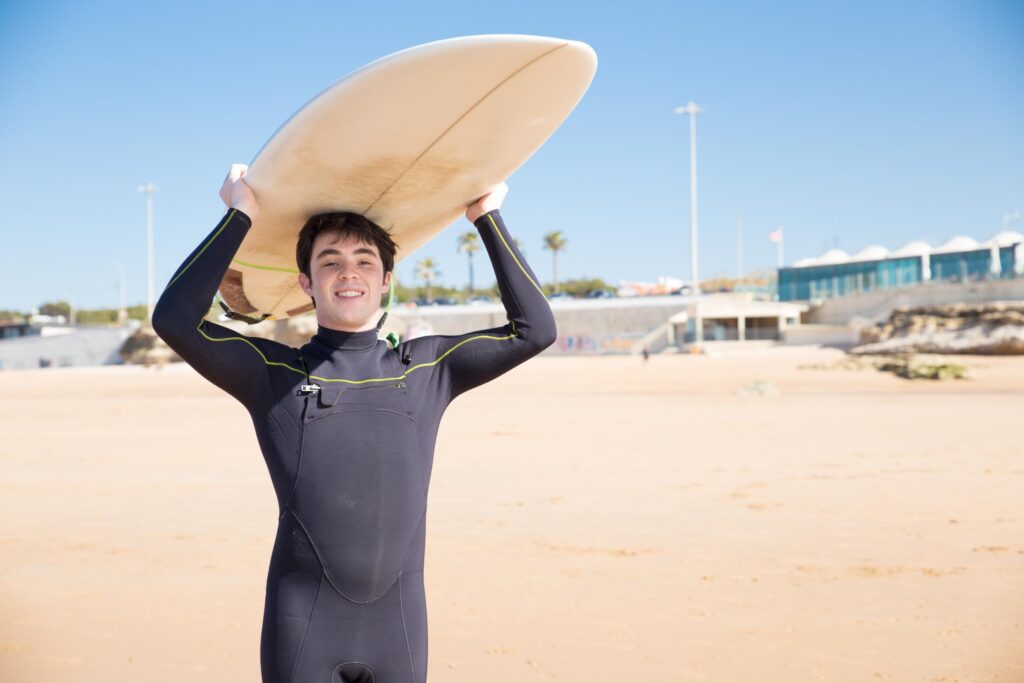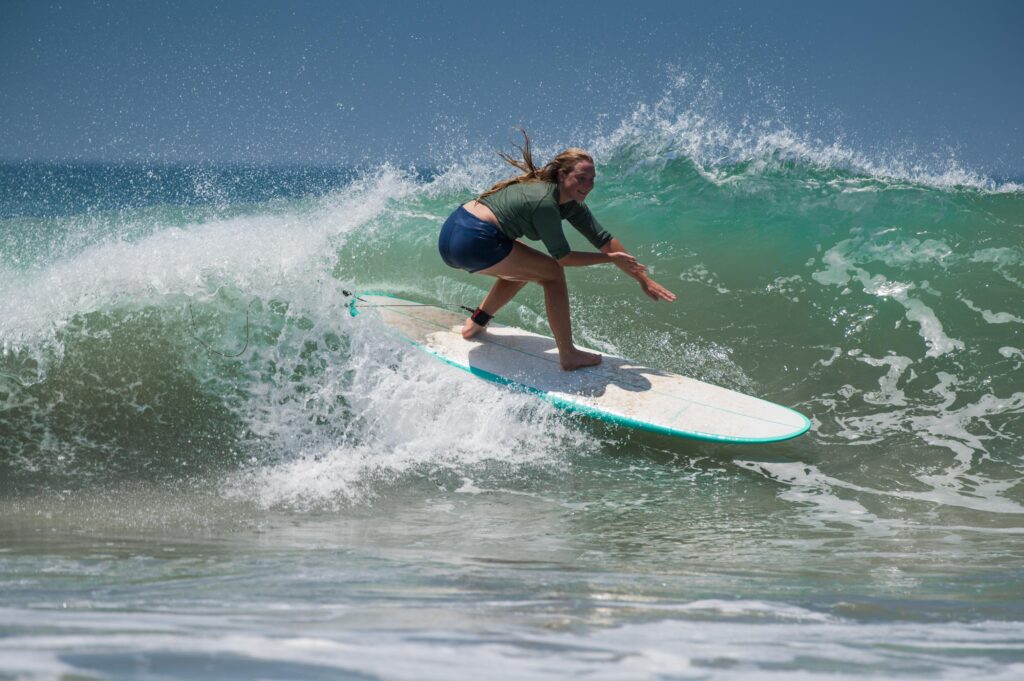

If you’ve never stood on a surfboard in your life and you’re flying to Morocco to learn, the safest surf spot in Morocco for beginners is Banana Beach in Tamraght, fifteen minutes north of Agadir on the Atlantic coast. It has a clean sandy bottom, slow-breaking whitewater, lifeguards in season, and a row of surf schools right on the sand.
That’s the short answer. The longer answer — which spot is right for you, when to go, and how to surf it safely — is what the rest of this guide is for.
Quick Answer: The Safest Surf Spot in Morocco for Beginners Is Banana Beach
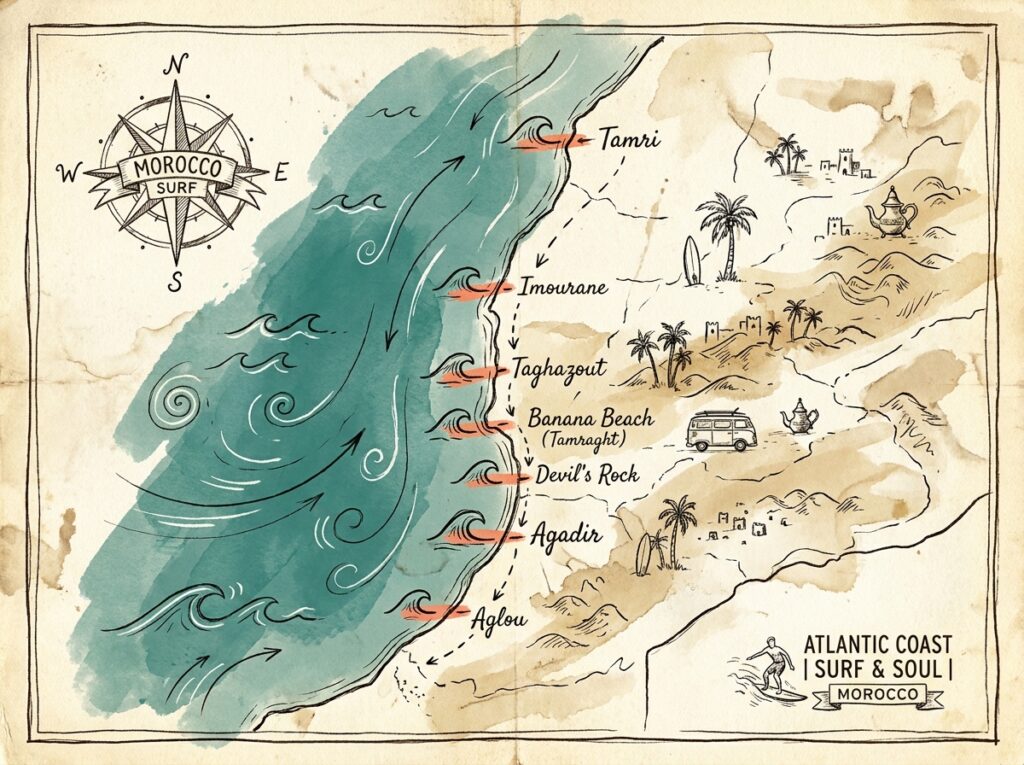
Banana Beach (also written “Bananas Beach”) sits in the village of Tamraght, on the same bay as the famous Devil’s Rock. It is the most consistent beginner break in the country for four simple reasons:
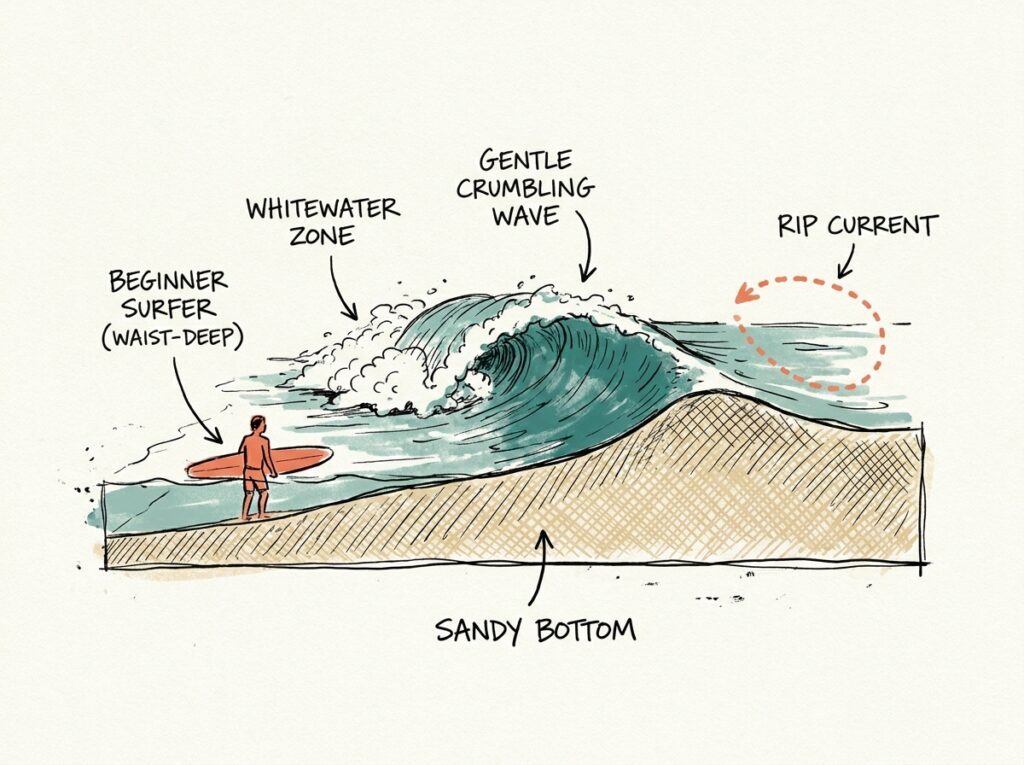
- Sandy bottom from shore to lineup — no reef, no urchins, no hidden rocks
- Slow, crumbly waves in the 1–3 foot range most days from spring through autumn
- Long whitewater rides that give you 20–40 seconds to practise standing up
- Active surf schools and seasonal lifeguards between March and November
If you’re flying into Agadir Al-Massira Airport and you’re nervous, point your taxi at Tamraght. You’ve already found your spot.
What Makes a Surf Spot “Safe” for Beginners?
Before we look at the alternatives, it’s worth understanding what actually makes one beach safer than another. Wave size is only part of the story.
A safe beginner break has a sandy bottom, so wipeouts don’t end on rock or reef. It has slow, crumbling waves that peel rather than dump, giving you time to react. The whitewater zone is wide and shallow enough to stand in, which means you can paddle out and recover without fighting deep water.
Equally important: a beach without strong rip currents running parallel to shore. The U.S. National Oceanic and Atmospheric Administration classifies rip currents as one of the most dangerous coastal hazards, and even confident swimmers get caught in them. Banana Beach does have rips on bigger swells, but they’re well-known and easy to avoid.
Crowds matter too. A beach packed with experienced shortboarders is dangerous for a first-timer who can’t yet steer. At Banana Beach, the sections used by surf schools sit slightly apart from the more advanced zone — a quiet local etiquette that protects beginners.
Banana Beach in Detail: What to Expect
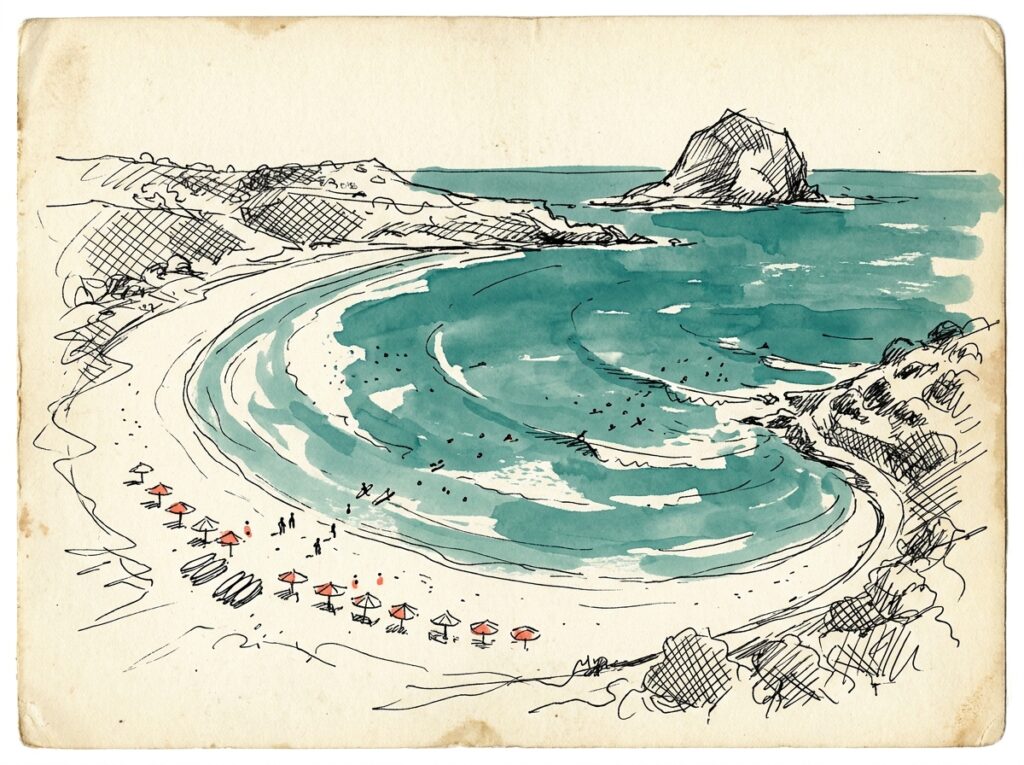
When you arrive, you’ll see a long crescent of golden sand backed by argan-covered hills. Surf schools line the parking area, kids play football on the flat sand, and surfers sit in clumps offshore. It looks more like a holiday beach than a serious lineup — and that’s exactly the point.
The wave at Banana Beach is a mellow beach break. On a typical autumn day you’ll find waves around waist-to-chest high, breaking 30 to 50 metres from shore. The whitewater rolls in long and even, which is what you want when you’re learning to pop up.
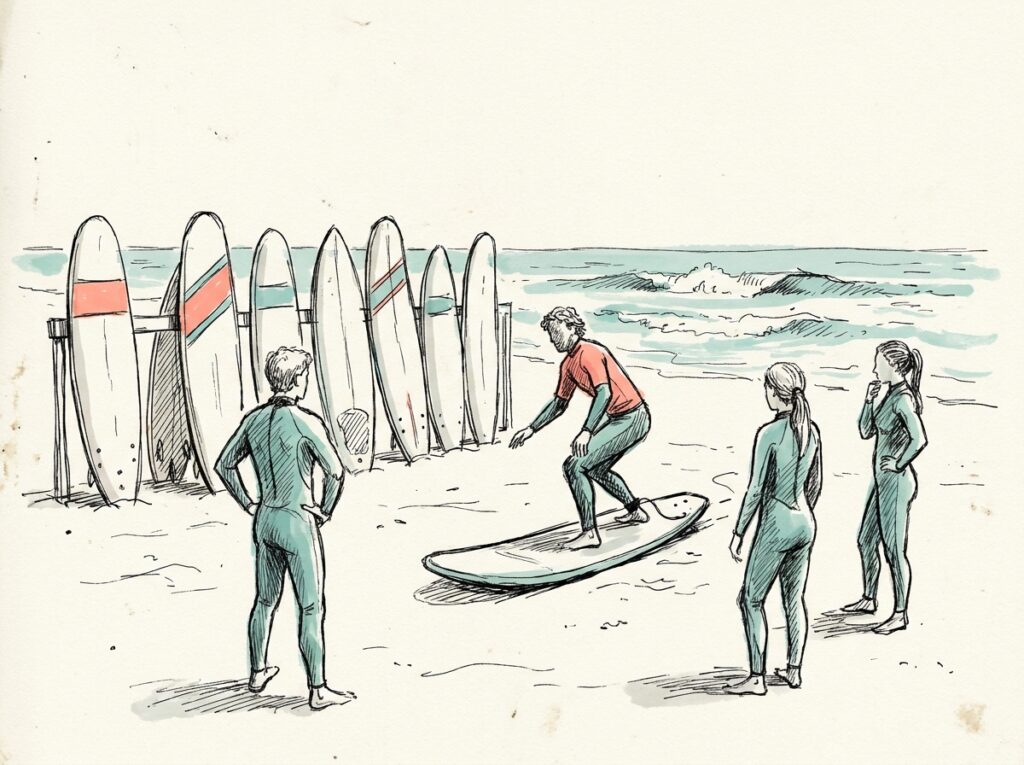
Sessions usually last 90 minutes to two hours. Most schools include the board, the wetsuit, and a qualified instructor who stays in the water with you. If you’ve never surfed before, taking a lesson on your first day at Banana is the single best decision you can make.
For a wider view of the region’s beginner-friendly options, our breakdown of the most reliable surf beaches around Agadir covers Banana, Devil’s Rock, and a few quieter alternatives nearby.
Other Safe Surf Spots in Morocco for Beginners (Beyond Banana Beach)
Banana isn’t the only option. Here are the other beaches genuinely suitable for absolute beginners, ranked roughly from easiest to slightly more challenging.
Devil’s Rock (Crocodile Beach)
Just south of Banana Beach, past the famous crocodile-shaped boulder, sits another stretch of forgiving sand. Devil’s Rock is a touch quieter than Banana, which is useful when the main beach is busy. The wave is similar — slow, sandy, ideal for learning.
The one caution: on bigger swells, the wave near the rock itself can break harder than expected. Stay 100 metres down the beach from the boulder and you’ll be fine.
Imourane Beach
A short drive north of Taghazout, Imourane (sometimes spelled “Imouran”) is a wide, lesser-known beach break with very mellow whitewater on small days. It’s a good “second session” spot once you’ve had a lesson at Banana and want a quieter lineup.
Aglou Beach (South of Agadir)
Aglou, about 90 minutes south near Tiznit, is a long flat beach with consistent, low-energy waves. It’s underrated for beginners and almost never crowded. The trade-off is the distance from the main Taghazout surf hub.
Tamri Beach
Tamri is bigger and more powerful than the others — a step up for confident beginners. Save it for week two of your trip, not day one. It catches more swell, so the same forecast that gives you knee-high waves at Banana can deliver overhead surf at Tamri.
For quieter alternatives still off the radar, our piece on Morocco’s lesser-known surf zones goes well beyond the obvious choices.
When Is It Safest to Surf Morocco as a Beginner?
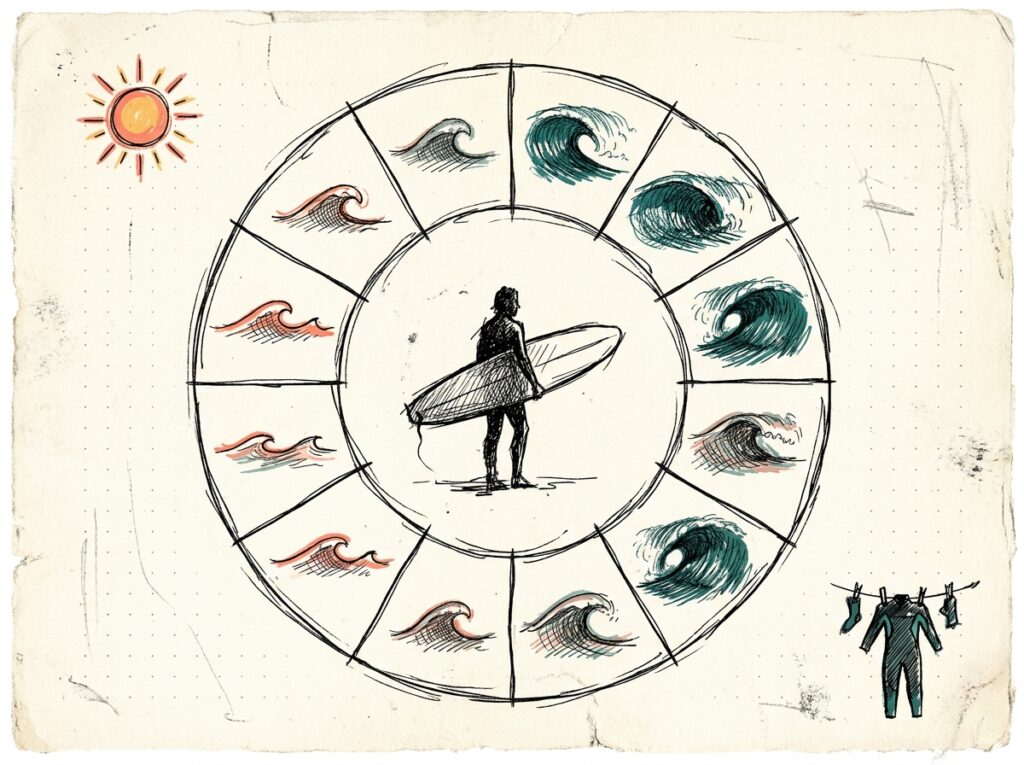
The wave that’s safe in October is not the same wave in January. Morocco’s surf season runs roughly September through April, but conditions vary enormously across those months.
For absolute beginners, the safest months are April, May, September, and October. Swells are smaller and cleaner, the water is warmer (a 3/2mm wetsuit is plenty), and the weather is comfortable. November through February can deliver bigger, colder, more challenging surf — exciting for intermediates, intimidating for someone who’s never paddled out before.
If you’re trying to time a trip properly, our month-by-month breakdown of Moroccan surf conditions explains what to expect on wave size, wind direction, and water temperature throughout the year.
How to Stay Safe Even at the Safest Spot
A sandy bottom is not a guarantee. Beginners get into trouble at safe beaches every year, almost always because they overestimated their ability or ignored the conditions. A few rules:
- Take at least one professional lesson before going out alone. Instructors teach you to read the rip current, identify the channel, and judge wave size — skills no YouTube video can replicate.
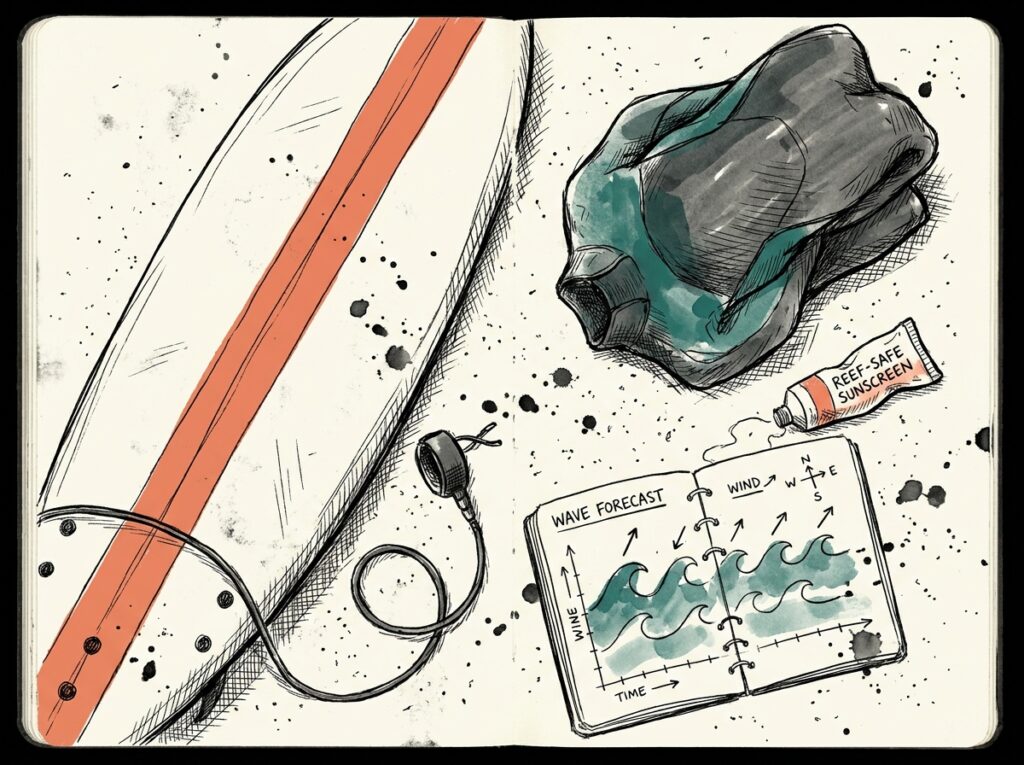
- Wear a leash and ride a soft-top board. A loose hard board in the whitewater can knock out teeth, including your own.
- Never paddle past where you can comfortably stand on your first day. Whitewater is enough.
- Check the forecast the night before and again on the morning of your session. A clean small swell can turn into a messy 6-foot session overnight.
If the idea of paddling out alone makes you uneasy, you’re not wrong — our honest look at the risks of solo surfing as a beginner explains why a buddy or instructor is non-negotiable in your first weeks.
Gear matters too. A wetsuit that’s too thin will leave you shivering after 40 minutes, and cold muscles make poor decisions. Our wetsuit thickness guide for surfing covers what to wear month by month.
What Does It Cost to Surf Morocco as a Beginner?
This is the second question every reader asks, so let’s answer it directly. A two-hour group lesson at Banana Beach in 2026 costs roughly 20 to 30 euros, including board and wetsuit rental. A full week of surf camp — lodging, lessons, transfers, and meals — runs anywhere from 350 to 700 euros depending on the camp.
That’s significantly cheaper than learning in Portugal, France, or Australia. For a full breakdown of flights, accommodation, food, and side trips, see our complete Morocco surf trip budget guide.
Picking the Right Surf School at Banana Beach
You will not be short of options. Banana Beach has dozens of schools, ranging from beachfront shacks to internationally accredited operations. The fundamentals to check:
- Instructor-to-student ratio of 1:6 or better — anything bigger and you won’t get individual attention
- Certified instructors (the International Surfing Association sets recognised global standards)
- Soft-top boards for first-timers, not hard fibreglass
- Wetsuits in good condition — torn seams mean a cold lesson
If you’d prefer personalised coaching beyond a generic group lesson, our team at surfstar.net runs small-group surf camps and private lessons across Tamraght, Taghazout, and the wider Agadir coast.
Frequently Asked Questions
What is the easiest surf spot in Morocco for total beginners?
Banana Beach in Tamraght is the easiest and safest surf spot in Morocco for absolute beginners. Its sandy bottom, slow waves, and active surf schools make it the standard choice for first-timers across the country.
Can you learn to surf in Taghazout itself?
You can, but most beginners are taken to nearby Banana Beach or Devil’s Rock instead. Taghazout’s main breaks — Anchor Point, Killer Point, Hash Point — are reef setups suited to intermediates and advanced surfers. The village is still a great base, with cafes, surf shops, and accommodation aimed at the surf crowd.
Is Morocco genuinely good for first-time surfers?
Yes. Morocco is one of the most beginner-friendly surf destinations in the world thanks to warm water (compared to northern Europe), consistent waves from autumn to spring, and an affordable surf-school infrastructure clustered around Taghazout and Tamraght. Read more in our piece on Taghazout’s rise as Africa’s surf capital.
How long does it take to learn to surf in Morocco?
Most absolute beginners stand up on their first lesson, ride green (unbroken) waves by day five, and feel confident in the lineup after a two-week trip. Progress is faster in Morocco than in colder destinations because you can comfortably surf two sessions a day.
Do I need to bring my own surfboard?
No. Every surf school provides boards and wetsuits, and rental shops in Tamraght and Taghazout cover any board you’d want as you progress. Travelling with a board is expensive, awkward, and unnecessary for your first trip.
What’s the water temperature at Banana Beach?
Water temperature ranges from around 16°C in January–February to 21–22°C in September–October. A 3/2mm full wetsuit covers the warm months; a 4/3mm is comfortable in winter.
Are there sharks at Banana Beach?
Shark encounters are essentially unheard of along the central Moroccan surf coast. It is one of the lowest-risk shark zones surfers travel to anywhere in the world.
Final Word
The safest surf spot in Morocco for beginners is Banana Beach in Tamraght — there’s no real debate among local instructors. Pair it with a proper lesson, the right wetsuit, and a trip booked for the shoulder season, and you’ll be standing up by the end of your first week. Before you book, it’s worth reading our step-by-step guide to planning a first surf trip — it covers visas, transfers, what to pack, and how to avoid the small mistakes that ruin first trips.