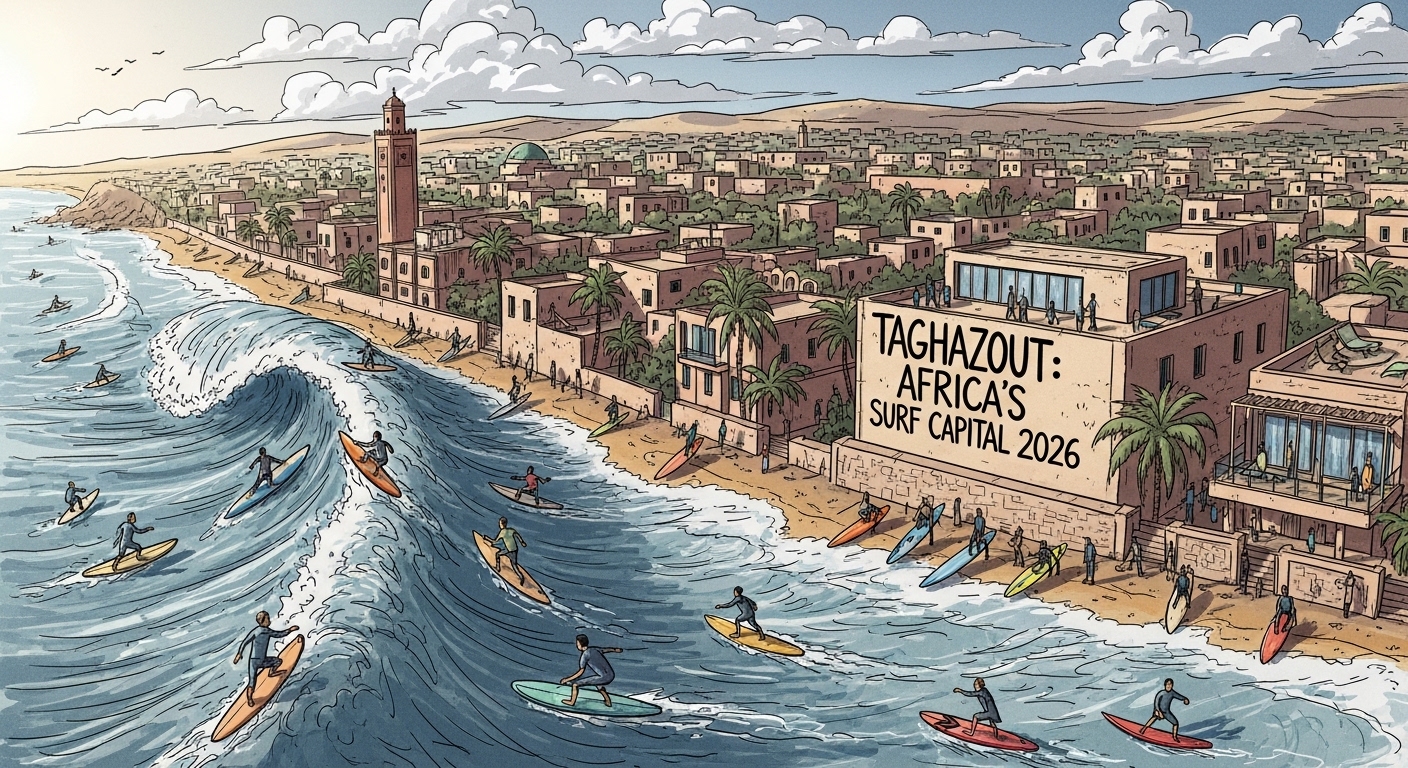

If you have been paying attention to the global surf scene lately, one name keeps surfacing in every conversation, every travel list, and every stoke-filled Instagram reel: Taghazout. This tiny Berber fishing village on Morocco’s Atlantic coast is no longer a hidden gem whispered about in lineup gossip. In 2026, the question is not whether Taghazout is becoming Africa’s surf capital — the question is whether any other destination on the continent can even compete.
With world-class point breaks, a booming surf infrastructure, and international recognition from Tripadvisor’s Travellers’ Choice Awards, Taghazout has earned its spot at the top of the African surf map. But what exactly is driving this transformation? And more importantly, what does it mean for surfers planning their next trip? Let’s paddle into the details.
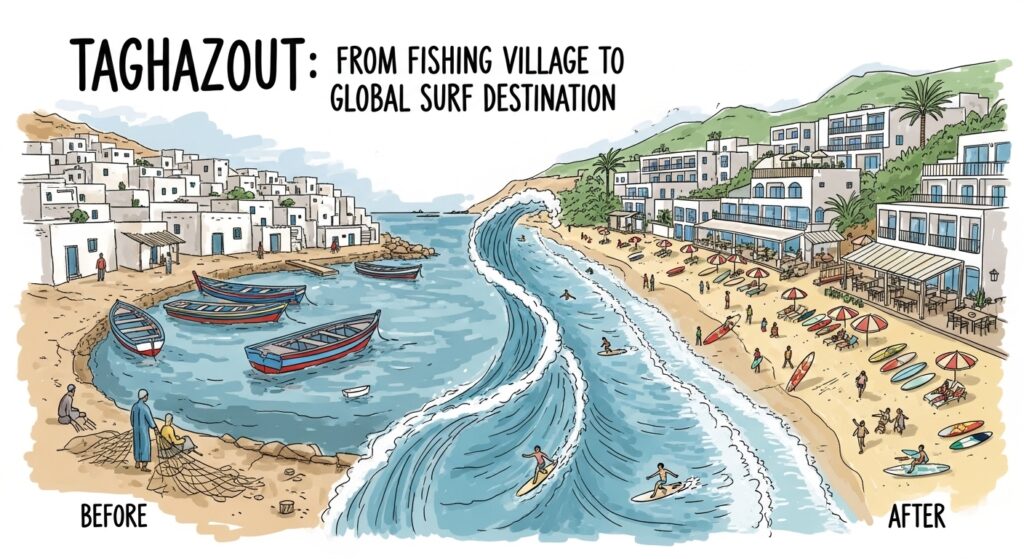
From Fishing Village to Global Surf Destination
Taghazout’s story begins the way most legendary surf towns do — with a handful of adventurous wave riders following swell charts into the unknown. In the late 1960s and early 1970s, traveling surfers from Europe and beyond discovered what local fishermen had known for centuries: the Atlantic delivers powerful, consistent waves to this stretch of Moroccan coastline.
Back then, Taghazout was a quiet village of blue-and-white buildings perched on rocky hillsides overlooking the ocean. Surfers camped on the beach, lived out of vans, and scored empty lineups at spots like Anchor Point and Hash Point.
Fast forward to 2026, and the scene looks dramatically different. The narrow streets are now lined with surf shops, rooftop yoga studios, and ocean-view cafés. Over 60 surf camps operate in and around the village, catering to everyone from first-time beginners to competitive shortboarders. If you are wondering how long does it take to learn how to surf, Taghazout is one of the best places on Earth to find out.
Why Taghazout Stands Out Among African Surf Destinations
Africa is a massive continent with thousands of kilometres of coastline. From Jeffrey’s Bay in South Africa to Skeleton Bay in Namibia, from the reefs of Senegal to the barrels of the Canary Islands off Morocco’s north, there is no shortage of world-class waves. So why does Taghazout keep claiming the crown?
Wave Variety That Suits Every Level
Within a 15-minute drive of Taghazout village, you can access over 20 named surf breaks. This is an extraordinary density of quality waves that very few destinations on the planet can match. The lineup includes powerful right-hand point breaks like Anchor Point, which can produce rides of 200 to 300 metres on a clean northwest swell. Killer Point offers heavy barrels over shallow reef for advanced riders.
Boilers, tucked into a wind-sheltered channel near Cap Ghir, lights up with offshore perfection when the swell is in the 6-to-10-foot range. For beginners and intermediate surfers, spots like Panoramas and Banana Beach provide sandy-bottom waves with gentle, forgiving faces — ideal for learning your pop-up and building confidence. If you are still figuring out how to choose the right surfboard size for these conditions, the local surf schools can guide you.
Consistency You Can Count On
Morocco’s position on the Atlantic coast means it receives swell almost year-round. The peak season runs from September to April, when powerful North Atlantic groundswells march south and wrap perfectly into the points. Even summer offers smaller, fun waves suitable for longboarding and learning. Taghazout enjoys over 300 days of sunshine a year, so flat spells are rare and short-lived.
If you are serious about reading ocean conditions, understanding a surfing wave forecast guide is essential before paddling out at any of these spots.
Affordability That Blows Other Destinations Away
A surf trip to Taghazout costs a fraction of what you would spend in Hawaii, Indonesia, or even Portugal. Quality surf lessons start from around €25 per session. Board and wetsuit rentals go for €10 to €15 per day. Accommodation ranges from €15 per night in backpacker hostels to €100-plus in boutique surf retreats.
You can realistically enjoy a full day of surfing, meals, and accommodation for €40 to €60 — making it one of the most budget-friendly surf destinations for beginners anywhere in the world.
The 2026 Boom: Infrastructure, Investment, and International Recognition
What truly sets 2026 apart from previous years is the scale of investment and recognition flowing into the Taghazout region. This is not just organic growth anymore — it is a coordinated push to position Taghazout as a world-class destination.
Tripadvisor’s Travellers’ Choice Awards
In early 2026, Tripadvisor named Taghazout as one of its top trending destinations globally. It was the only African location to make the list, which was otherwise dominated by European and North American cities. This recognition reflects a surge in traveller interest driven by the village’s unique combination of consistent waves, authentic culture, and a growing wellness scene.
Major Hotel Developments
The Taghazout Bay development project — a 615-hectare master plan along 4.5 kilometres of coastline — continues to reshape the area. In late 2025, the Radisson Residences Taghazout Bay opened with 208 serviced apartments, bringing the resort’s total capacity to over 4,000 beds.
The Taghazout Bay Marriott Resort also launched in early 2026 with 250 rooms and beachfront access. These are not small-scale surf hostels; these are international luxury brands betting big on this stretch of coast. Morocco itself is the second-largest hotel construction market in Africa, with 75 projects and over 10,600 rooms in development.
The Taghazout Surf Expo
Perhaps the strongest signal that Taghazout has arrived as Africa’s surf capital is the Taghazout Surf Expo. In just a few editions, this event has become Africa’s leading professional surf trade show and the second largest in the world. Over 80 exhibitors and 40,000 visitors gather annually in a 4,000-square-metre surf village at Anchor Point.
International brands like Firewire, O’Neill, and Soöruz share space with local Moroccan shapers, surf camps, and eco-projects. The expo also hosts academic research panels, workshops on sustainable surf tourism, and showcases for the next generation of Moroccan surf talent.
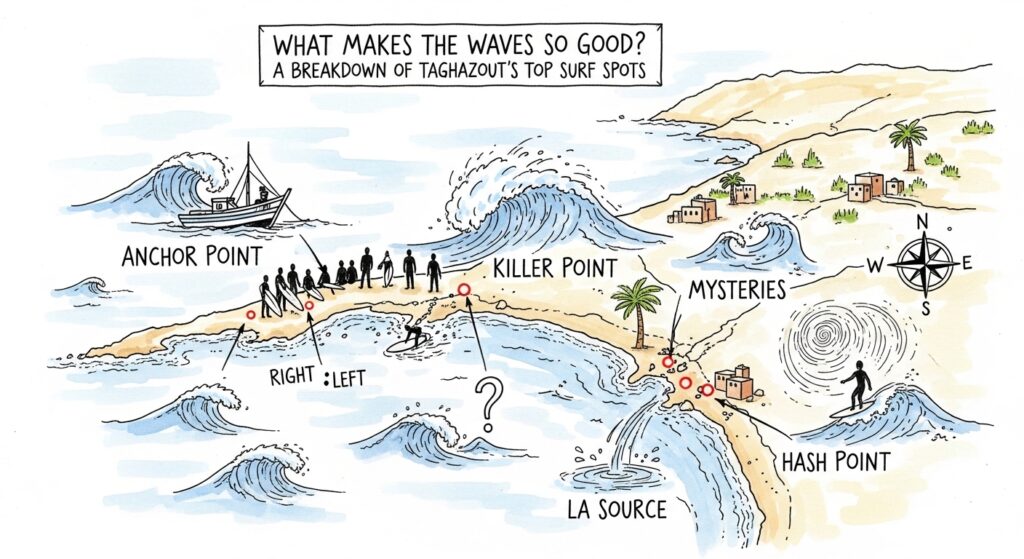
What Makes the Waves So Good? A Breakdown of Taghazout’s Top Surf Spots
Understanding why Taghazout’s waves are so special requires a quick look at geography. The coastline here bends and juts around rocky headlands and sandy bays, creating natural amphitheatres where swell wraps, focuses, and peels with mechanical precision. Morocco’s coast orientation also favours right-hand breaks — great news for the majority of surfers who ride regular-footed.
Anchor Point — The crown jewel. A right-hand point break that wraps around a boulder-studded headland, producing long, performance-oriented walls. Works best on northwest swells in the 4-to-8-foot range with east or northeast offshore winds.
Killer Point — Named for the urchins lurking below the surface. A powerful right over shallow reef, best left to experienced surfers comfortable with sharp entries and exits. The wave barrels consistently when the swell is right.
La Source — A left-and-right peak over sandy and reefy bottom, reportedly good enough for Kelly Slater when he visited Taghazout. Fast, fun, and rewarding for intermediate-to-advanced riders.
Panoramas — A mellow beach break with gentle rolling waves, perfect for beginners taking their first lessons. Sandy bottom and forgiving conditions make this the go-to learning spot for most surf schools.
Imsouane (nearby) — Just a short drive south, this traditional fishing village is home to what many consider Africa’s longest wave — rides of up to 700 metres on a perfect day. A paradise for longboard surfing enthusiasts.
Knowing what to wear surfing in Morocco is important too. Winter water temperatures hover around 15 to 17°C, requiring a 4/3mm or even 5/4mm wetsuit. Summer warms up to 20 to 22°C, when a 3/2mm suit or spring suit will do. If you need help selecting gear, check out this guide on how to choose a wetsuit for surfing.
Surf Culture, Community, and the Soul of Taghazout
Taghazout is not a purpose-built resort. Fishing boats still launch from the same beaches where surfers paddle out every morning. The call to prayer echoes between sets. Tajines simmer in clay pots at roadside restaurants while surfers wax up their boards on rooftop terraces.
This blend of authentic Moroccan life and international surf culture is what gives Taghazout its unique soul. The history of surf culture runs deep here — from the hippie travellers of the 1970s to the digital nomads filling co-working spaces in 2026.
The village has also become a magnet for yoga retreats, creative projects, and community-driven initiatives. The local skatepark, built entirely by volunteers through the Make Life Skate Life project, gives young Moroccans a space to ride when the ocean is flat.
For those who love the crossover between board sports, you might enjoy exploring whether surfing is like snowboarding — many visitors to Taghazout come straight from the slopes of the nearby Atlas Mountains.
Getting Surf-Ready for Taghazout: Fitness, Safety, and Preparation
Taghazout’s waves can be incredibly fun, but the ocean always demands respect. Before booking your trip, consider investing time in a proper surfing fitness guide to build the paddle endurance and core strength you will need, especially if you are chasing the points.
Ocean safety is equally important. Spots like Killer Point and Dracula’s involve shallow reefs, strong currents, and powerful rips. Reviewing essential surfing safety tips for challenging ocean conditions before you paddle out can make the difference between a session you will remember and one you would rather forget.
Even waxing your board properly matters — if you have ever wondered why you need to wax a surfboard, the answer becomes very clear the first time you slip off on a powerful Taghazout takeoff.
How SurfStar Connects You With Morocco’s Best Surf Experiences
Planning a surf trip to Taghazout can feel overwhelming, especially with dozens of surf schools, camps, and rental shops competing for your attention. That is where SurfStar comes in. SurfStar connects you with certified instructors, quality board rentals, and trusted surf camps across Morocco’s Atlantic coast.
Whether you are a total beginner looking for your first green wave or an experienced rider seeking guided access to secret spots, one message to SurfStar is all it takes to get matched with the right provider. No endless scrolling through reviews. No guessing whether a surf school is legit. SurfStar does the legwork so you can spend more time in the water.
The Mental Health Bonus of a Taghazout Surf Trip
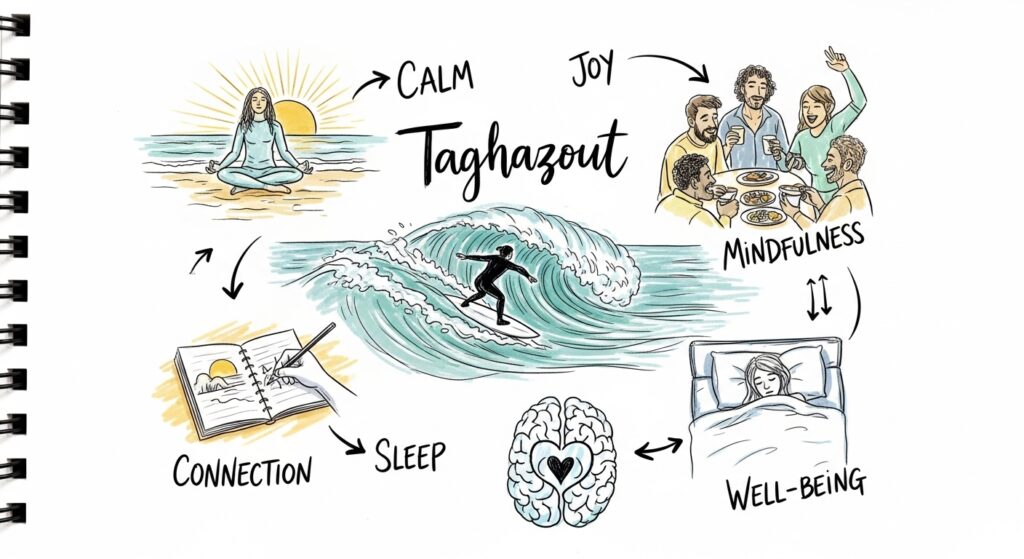
Beyond the waves and the culture, there is something deeper that draws people back to Taghazout year after year. The ocean has a profound impact on mental wellbeing, and surfing amplifies it. The combination of physical exercise, immersion in nature, mindfulness in the lineup, and the simple joy of riding a wave creates a powerful reset for the mind.
Research continues to support the connection between ocean activities and reduced anxiety, improved mood, and greater life satisfaction. If you are curious about surfing’s mental health benefits, a trip to Taghazout might be the best prescription you never knew you needed.
Sustainability: Can Taghazout Grow Without Losing Its Soul?
Growth always comes with challenges. Taghazout has dealt with pollution concerns, overcrowding at popular breaks, and the tension between development and preservation. The Taghazout Bay project has attempted to address this by building on only 10% of the 615-hectare site, leaving the rest as natural landscape.
The Taghazout Surf Expo has also championed sustainability, hosting workshops on marine conservation, coastal protection, and community-driven tourism. Morocco’s government has aligned the region’s development with its Blue Economy programme, aiming to balance economic growth with environmental stewardship.
For surfers who care about the environmental impact of their gear, exploring DIY eco board repairs is a meaningful way to reduce waste and extend the life of your equipment.
The Verdict: Is Taghazout Africa’s Surf Capital?
The evidence is overwhelming. No other destination on the African continent combines world-class wave variety, year-round consistency, international-grade infrastructure, cultural authenticity, and affordability the way Taghazout does in 2026. The Tripadvisor recognition, the Surf Expo, the Marriott and Radisson developments, the Royal Moroccan Surfing Federation’s investment in grassroots talent — all of it points in one direction.
Taghazout is not just becoming Africa’s surf capital. It already is.
Whether you are a beginner choosing your first surfboard or a seasoned traveller chasing your hundredth session at Anchor Point, Taghazout delivers. And with SurfStar ready to connect you with the best local providers, your next Moroccan surf adventure is just one message away.
See you in the lineup.