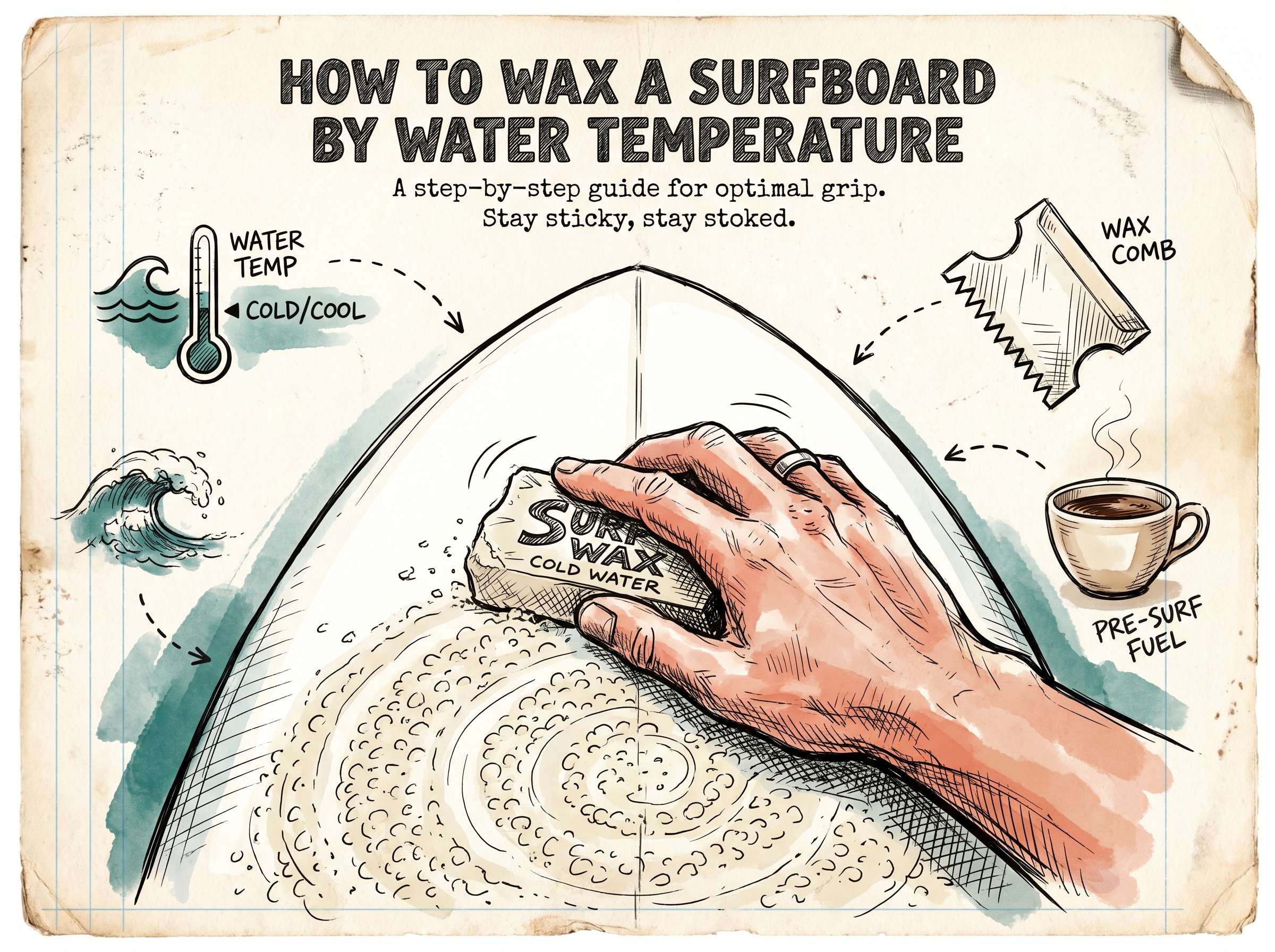

Learning how to wax a surfboard by water temperature is one of those small skills that separates surfers who slip on every takeoff from surfers who stick to their board through critical drops. Wax is the only thing between your feet and a slick fiberglass deck — and the wrong formula in the wrong water makes the difference between a glassy session and a frustrating swim. This guide walks you through choosing, applying, and maintaining surf wax based on the temperature of the water you actually surf in.
Whether you paddle out in tropical reefs or icy point breaks, the right wax keeps your grip dependable and your sessions enjoyable. We will cover the four main wax temperature categories, the step-by-step waxing process, common mistakes, eco-friendly options, and pro tips that experienced surfers rely on year-round.
Why Water Temperature Matters When Waxing Your Surfboard
Surf wax is a temperature-sensitive material. It is formulated to soften at a specific range so that when you press your feet down, tiny bumps deform just enough to grip your skin or wetsuit. Use a tropical wax in cold water and it stays rock-hard, offering zero traction.
Use a cold-water wax in tropical seas and it melts into a sticky mess that picks up sand, hair, and palm-leaf debris. The science is straightforward: wax is a blend of paraffin or natural waxes with additives that control its melting point.
Manufacturers tune each formula so the wax stays tacky — neither liquid nor solid — within a specific water temperature window. For a deeper look at the chemistry of grip, our guide on why wax is essential on every surfboard breaks down what is actually happening between your feet and the deck.
Choosing wax by water temperature is not optional for serious surfers. It is the foundation of consistent performance, especially when you are learning to read waves and time your pop-ups confidently.
Understanding the Four Main Surf Wax Temperature Categories
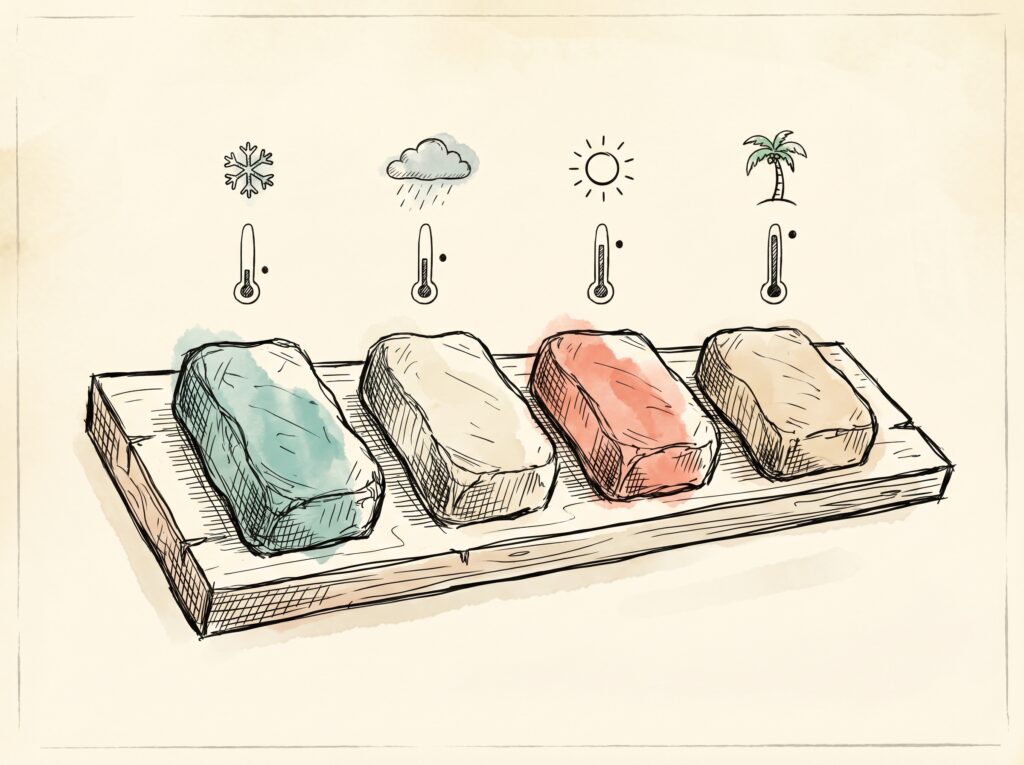
Most major wax brands — Sticky Bumps, Mr. Zog’s Sex Wax, Matunas, and Bubble Gum — divide their wax into four temperature tiers. Knowing these ranges helps you buy the right bar before every session or trip.
| Wax Type | Water Temp | Best For | Texture |
| Tropical | Above 75°F / 24°C | Indonesia, Fiji, Tropics | Firm, dense |
| Warm Water | 65–75°F / 19–24°C | California, Portugal, Morocco summer | Medium-firm |
| Cool Water | 58–68°F / 14–19°C | UK, France, Northeast US | Soft, tacky |
| Cold Water | Below 58°F / 14°C | Iceland, Norway, winter sessions | Very soft, gummy |
Tropical Wax is designed for water above 24°C (75°F). It is the firmest formula and resists melting in warm equatorial seas like Indonesia, Fiji, or northern Australia.
Warm Water Wax works between 19–24°C (65–75°F). This is the most commonly used category in places like Southern California, Portugal in summer, or the warm-water surf spots around Agadir during shoulder seasons.
Cool Water Wax covers 14–19°C (58–68°F). It softens easily so you still get traction even when the water nips your fingers. Spring and autumn sessions in temperate latitudes usually call for this formula.
Cold Water Wax is for anything below 14°C (58°F). It is the softest, almost gummy out of the wrapper, designed to stay tacky when the rest of the ocean is freezing your wetsuit. If you frequent cold-water surf destinations regularly, you will burn through a lot of this category.
How to Wax a Surfboard by Water Temperature Step by Step
Knowing how to wax a surfboard by water temperature is only half the job — applying the wax correctly is just as important. A great wax job has even bumps across the deck, no bald spots, and a base coat that anchors the top wax in place for weeks of riding.
Step 1: Clean the Deck Completely
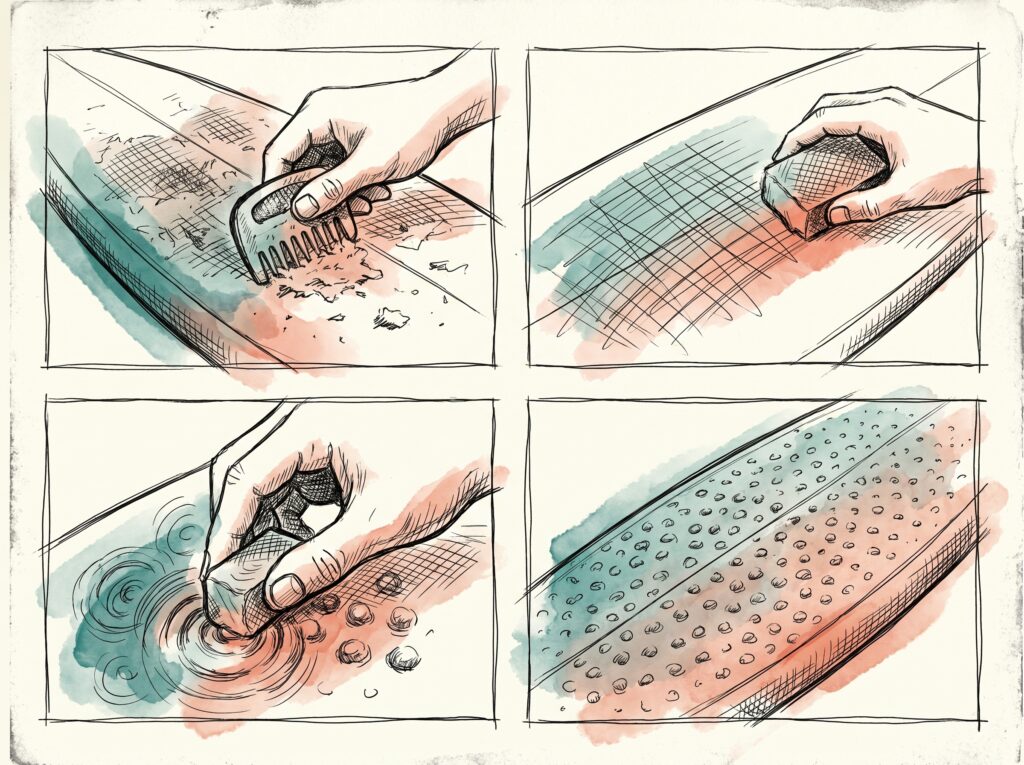
Before any new wax, the deck must be free of old wax, sand, sunscreen, and grit. Lay the board in the sun for ten minutes to soften old wax, then scrape it off with a plastic wax comb or a credit card. Wipe away residue with a citrus-based cleaner or coconut oil.
A clean deck holds wax far better than a dirty one. Skipping this step is one of the most overlooked reasons beginner surfers struggle to find footing on their board.
Step 2: Apply a Base Coat
The base coat is a hard wax — harder than your top coat — that creates an anchor layer for the temperature-specific wax to grip onto. Even tropical base coats are firmer than any standard top coat formula.
Rub the base coat across the deck in three patterns: parallel diagonal strokes one way, then the other, then small overlapping circles. The goal is to build small, evenly distributed bumps — not a smooth glossy layer.
Cover the area where your feet land. For a shortboard, that means the back two-thirds. For a longboard or mid-length, wax the full deck since your feet travel the whole length when cross-stepping or trimming.
Step 3: Apply the Temperature-Matched Top Coat
Now switch to the wax that matches your current water temperature. Use the same crosshatch pattern, applying with light pressure. The bumps from the base coat will grow into bigger, stickier knobs that grip your feet on every wave.
If you are new to surfing or unsure which formula fits your local spot, our complete beginner’s surfing guide explains how to assess local conditions before paddling out, including how water temperature interacts with your overall setup.
Step 4: Build, Don’t Smear
Stop when the deck has consistent, sticky bumps across the standing zone. Smearing too hard creates a smooth layer with no grip — the exact opposite of what you want. Light pressure and patience always beat brute force.
Tropical Water Waxing Above 75°F (24°C)
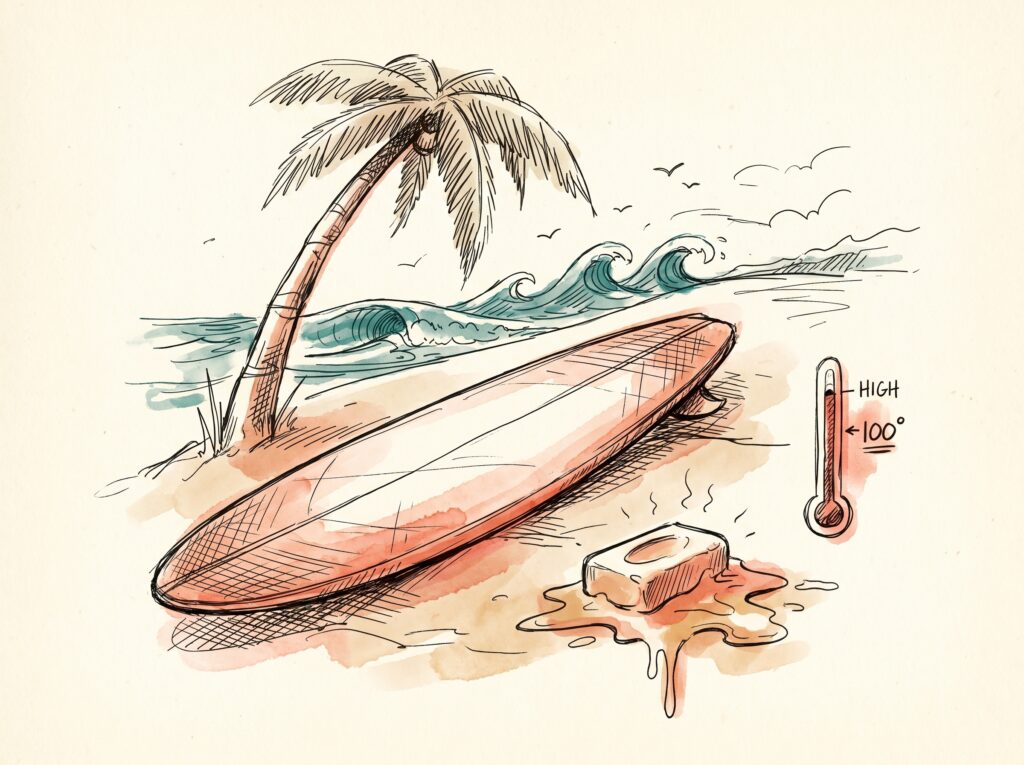
Tropical wax is the trickiest of the four because heat is your enemy. Even the firmest formula can melt if your board sits in direct midday sun. Apply tropical wax indoors or in the shade, then keep your board covered between sessions.
When surfing in 28°C (82°F) water — common in places like the equatorial Pacific or during peak summer at the destinations covered in our Morocco surf season guide — your tropical wax will still soften noticeably between waves.
Refresh the bumps with a light coat before each session. Never store your board flat in a hot car. The wax will pool to one side and you will need a full strip-and-redo before your next surf.
Warm Water Waxing 65–75°F (19–24°C)
Warm-water wax is the workhorse of most surfers. It is forgiving, lasts well, and grips reliably in the temperature band where the majority of popular surf destinations sit year-round.
Apply two layers: a base coat first, then a warm-water top coat. If you are surfing between warm and cool conditions, layer a warm-water base with a cool-water top coat for slightly more tackiness.
Surfers who ride longboards and traditional logs need to wax further forward toward the nose, since cross-stepping and noseriding require grip across more of the deck than a shortboard.
Cool Water Waxing 58–68°F (14–19°C)
Cool-water wax sits in the sweet spot for many European and North American surf zones. It is soft enough to grip wetsuit boots and bare feet alike, without melting in the spring or autumn sun.
In cool water you will likely be wearing a 3/2mm or 4/3mm wetsuit. Our complete wetsuit guide explains how suit thickness affects your stance and where you actually plant your feet — which in turn changes where you should focus your wax pattern.
Cool-water wax picks up dirt faster than tropical formulas. Wrap your waxed board in a board sock between sessions to keep the bumps clean and intact for as long as possible.
Cold Water Waxing Below 58°F (14°C)
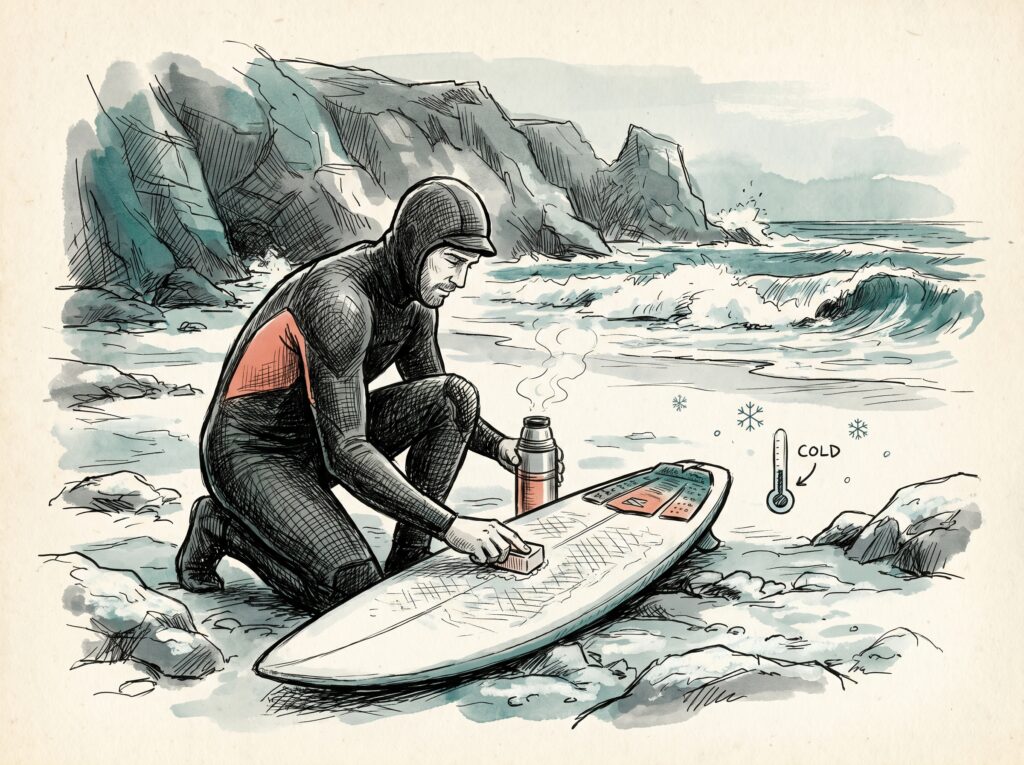
Cold-water wax is the softest formula on the market. Out of the package it almost feels like cookie dough, and it stays that way in water that would freeze tropical wax solid within minutes of paddling out.
The trick with cold-water wax is application temperature. If your board is freezing cold, the wax will not stick well. Bring your board indoors thirty minutes before waxing, or wax in your car with the heater on. Cold-water surfers should also consult the right wetsuit thickness for icy conditions before worrying about wax patterns.
Cold-water wax melts almost instantly in warm storage. Never leave a cold-water bar in a hot car or it will pool inside the wrapper and become unusable before your next trip.
Common Mistakes When Waxing by Water Temperature
Even experienced surfers slip up on the basics. Watch for these errors before they ruin your next session:
- Using one wax for all conditions. A single bar might ‘work’ everywhere, but you will get suboptimal grip in every session and burn through wax faster.
- Skipping the base coat. Top coat alone wears flat fast and never builds proper bumps that hold your feet.
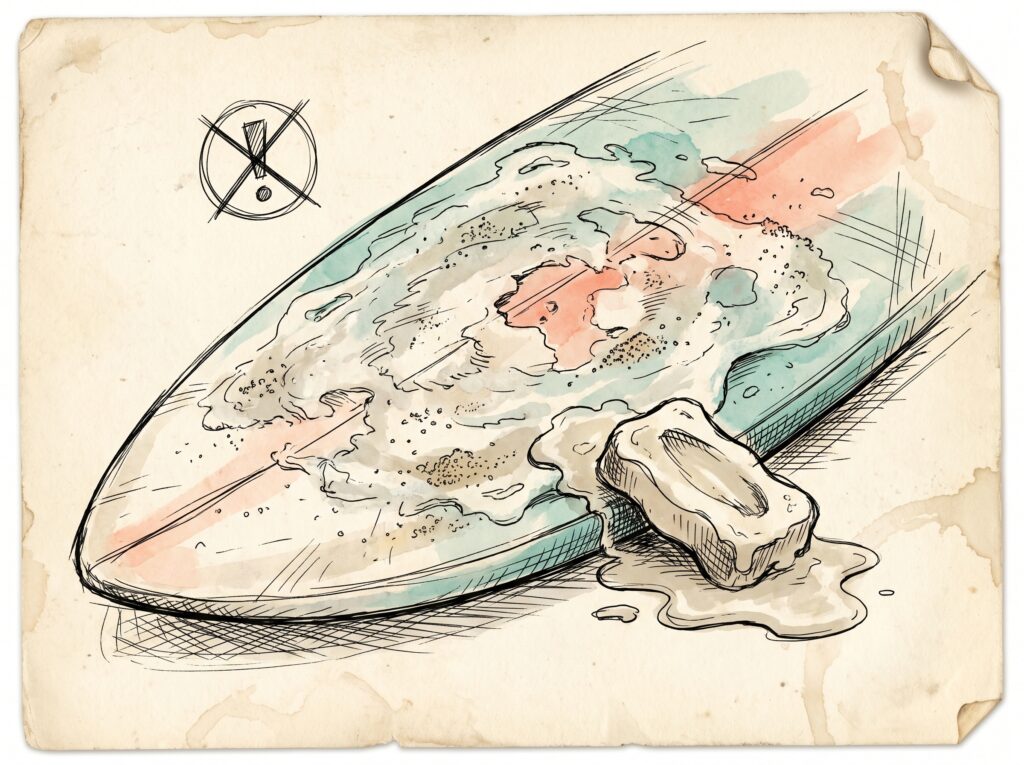
- Pressing too hard. Light circular motions build bumps. Heavy pressure smears wax into a slick, useless layer.
- Forgetting to refresh. Every two to three sessions, add a light top-up coat to keep your bumps fresh and tacky.
- Mismatched layers. Putting tropical wax on a cold-water base — or vice versa — creates an unstable surface that flakes off.
These small habits are also covered in our roundup of common beginner surfer questions. Wax is one of the most underestimated parts of the sport, yet it directly affects every wave you ride.
Eco-Friendly Wax Options for Every Water Temperature
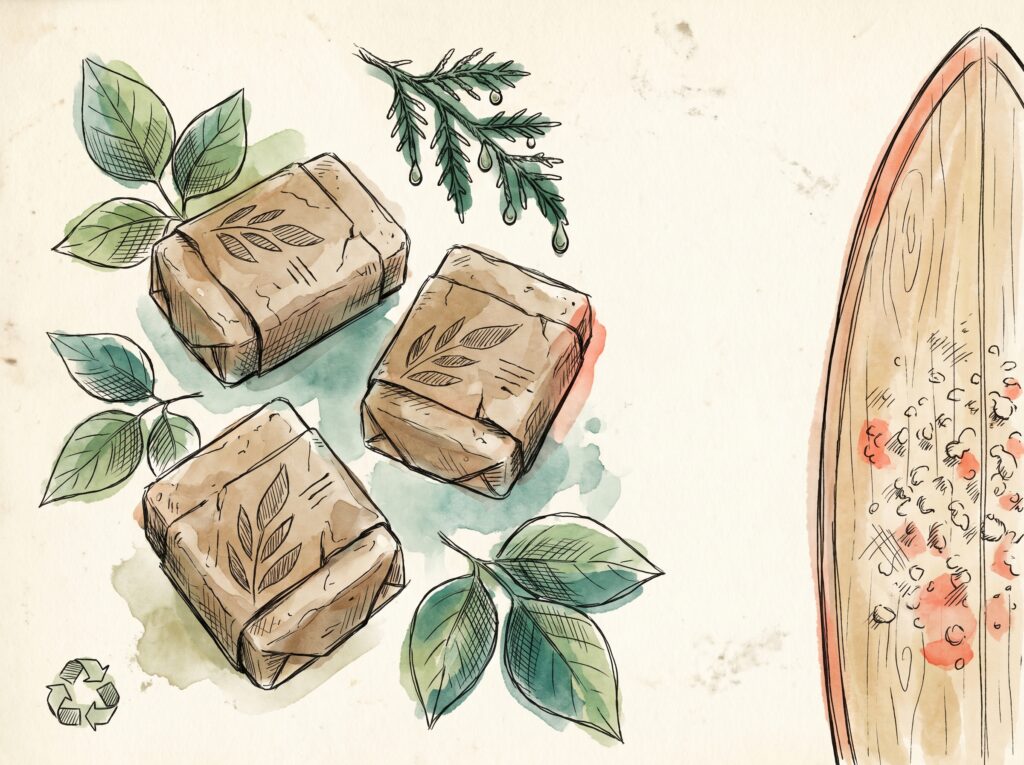
Traditional surf wax is petroleum-based, which is ironic given how much surfers care about clean oceans. Plant-based alternatives now cover every temperature range, with grip performance that rivals the classics.
- Matunas uses soy and tree-resin blends across all four temperature ranges.
- Famous Surf Wax (Eco Series) offers biodegradable bars for warm and cool water surfers.
- Sticky Bumps Soy is a hybrid that performs nearly as well as standard paraffin wax.
Eco wax sometimes softens slightly faster, so consider sizing up one temperature category if you are in borderline conditions. Many sustainability-minded surfers pair eco wax with DIY eco-friendly board repairs for a more sustainable overall kit.
When and How to Strip Old Wax
Wax does not last forever. Once the bumps wear flat, pick up grit, or yellow with age, it is time for a full strip and a fresh start.
Strip your wax when:
- You move from one climate to another, like a winter trip after a summer of tropical waxing
- The wax has visible discoloration or embedded sand and hair
- Bumps no longer rebuild after refresh coats
- You have gone a full season without stripping
Use the flat edge of a wax comb in direct sun, or a dedicated wax remover product. Then start fresh with a new base coat before your next session — never apply new wax over old, degraded wax.
Final Tips for Long-Lasting Wax Performance
A few habits will keep your wax working longer and your sessions cleaner all year round:
- Store your board in a shaded, ventilated space — never in direct sun or a hot car
- Use a board sock or bag to prevent wax pickup between sessions
- Refresh top coats every few sessions instead of waiting for a full strip
- Match your wax to forecasted water temperature, not air temperature
- Carry a spare bar of the right grade on every surf trip
If you are planning multi-zone travel — moving between temperate Europe and tropical Africa, for example — bring two wax bars and a comb in your travel kit. Surfers tackling longer journeys can find packing checklists in our complete surf trip planning guide.
Final Thoughts
Surf wax is a small thing that affects everything. Once you understand how to wax a surfboard by water temperature, your foot placement becomes more confident, your pop-ups more reliable, and your overall surfing more consistent. Match the bar to the ocean, build proper bumps with a base coat, refresh often, and strip when the time is right — and your board will reward you on every wave you catch, from tropical reefs to icy point breaks.