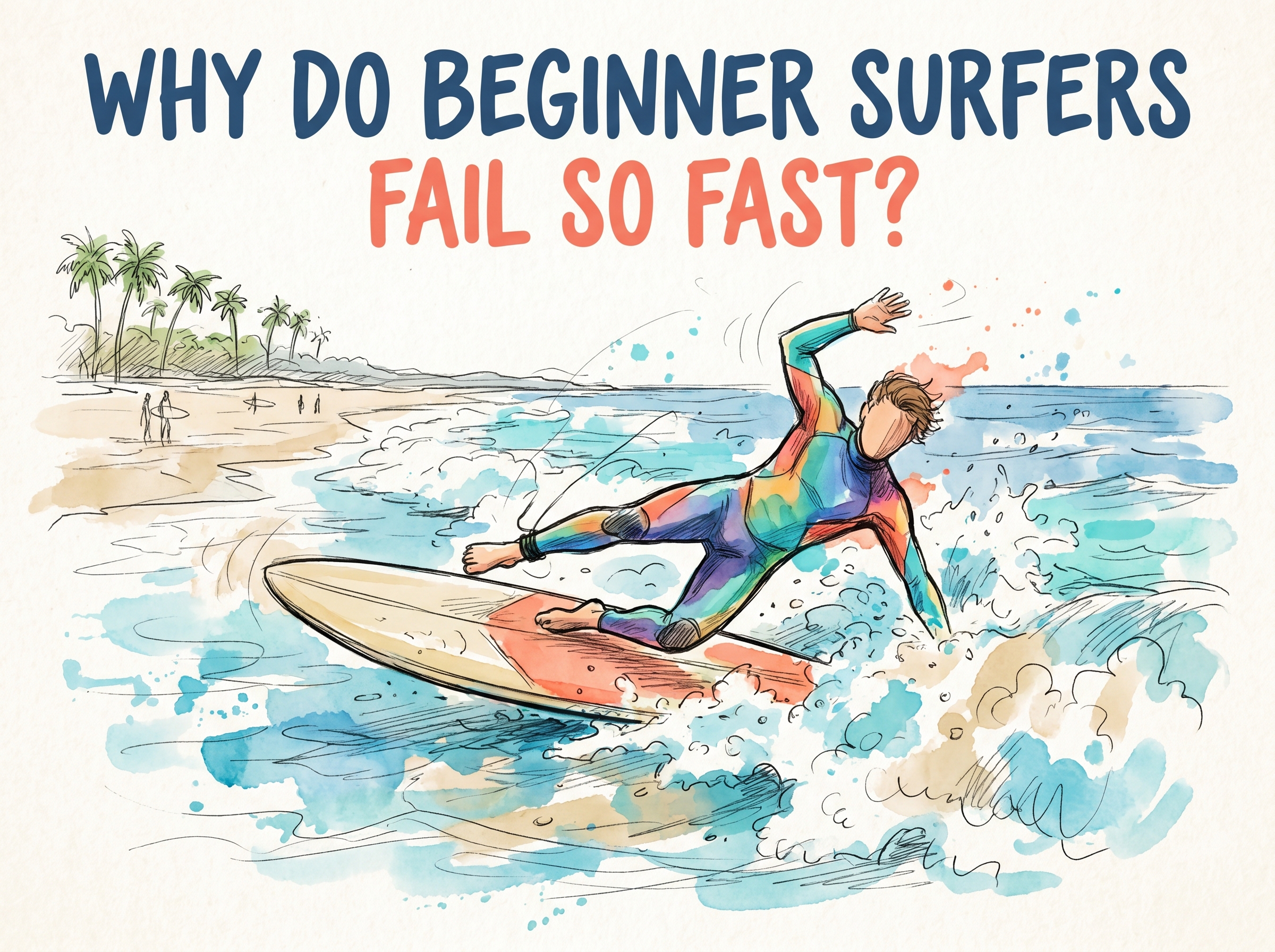

Surfing looks effortless from the shore. A wave rolls in, someone pops up, and they glide across the water like it’s the most natural thing in the world. But the reality for most newcomers is far less graceful. Beginner surfers fail at an alarming rate, and the reasons almost never have anything to do with talent or athleticism.
Instead, it comes down to a handful of avoidable mistakes that no one bothers to explain before you paddle out.
If you’ve tried surfing and walked away frustrated, exhausted, or convinced you’re just not built for it, you’re not alone. The good news is that once you understand what’s actually going wrong, you can correct course fast. Let’s break down the seven most common mistakes that cause beginners to quit before they ever catch a real wave.
Mistake #1: Choosing the Wrong Surfboard
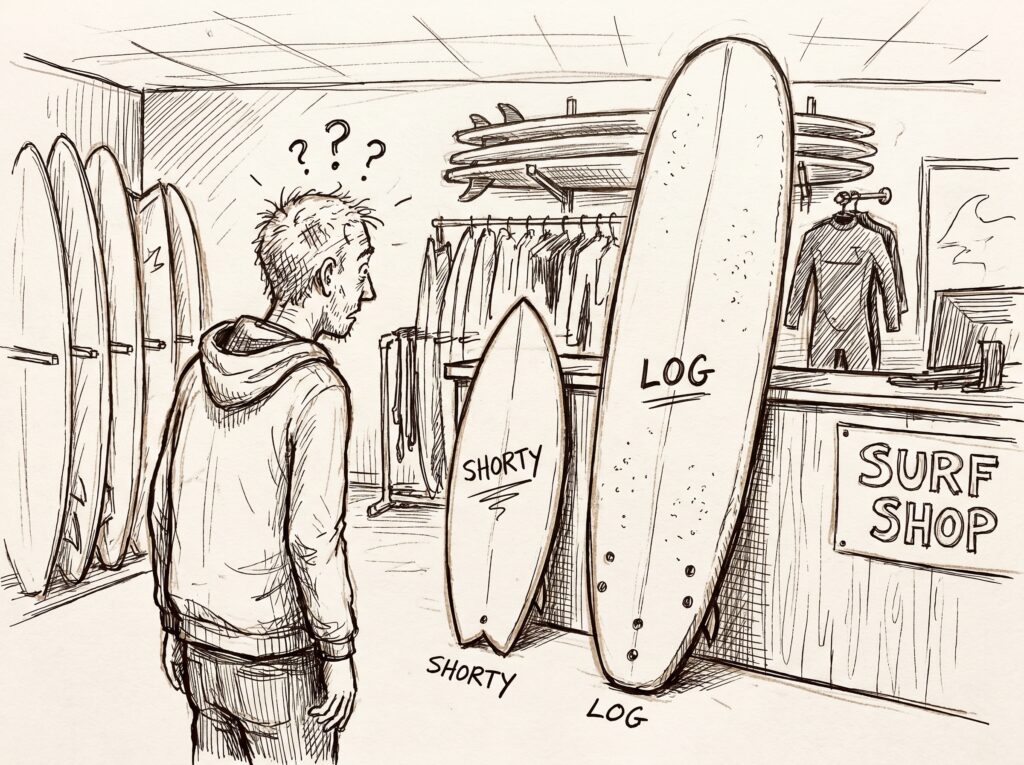
This is the single biggest reason beginner surfers fail in their first sessions. Walk into any surf shop and you’ll see rows of sleek, narrow shortboards that look incredible. The temptation to grab one is real. But riding a shortboard as a beginner is like learning to drive in a Formula 1 car.
Beginners need volume, width, and length. A board with more foam gives you more stability, more paddle power, and a much larger sweet spot for popping up. Soft-top longboards and funboards in the 8-to-9-foot range are ideal for your first months in the water. If you’re unsure where to start, check out our guide on the best surfboards for beginners to find the right match.
Choosing a board that’s too small means you’ll spend the entire session struggling to balance, missing waves, and burning through your energy before you even get a chance to practice standing up. Understanding how to choose the right surfboard size based on your weight, height, and skill level makes an enormous difference in how quickly you progress.
Mistake #2: Ignoring Ocean Conditions and Wave Selection
Many beginners show up at the beach, see waves, and paddle straight out. They don’t check the forecast, they don’t observe the break, and they don’t think about whether the conditions are actually suitable for learning. This is a recipe for a miserable session.
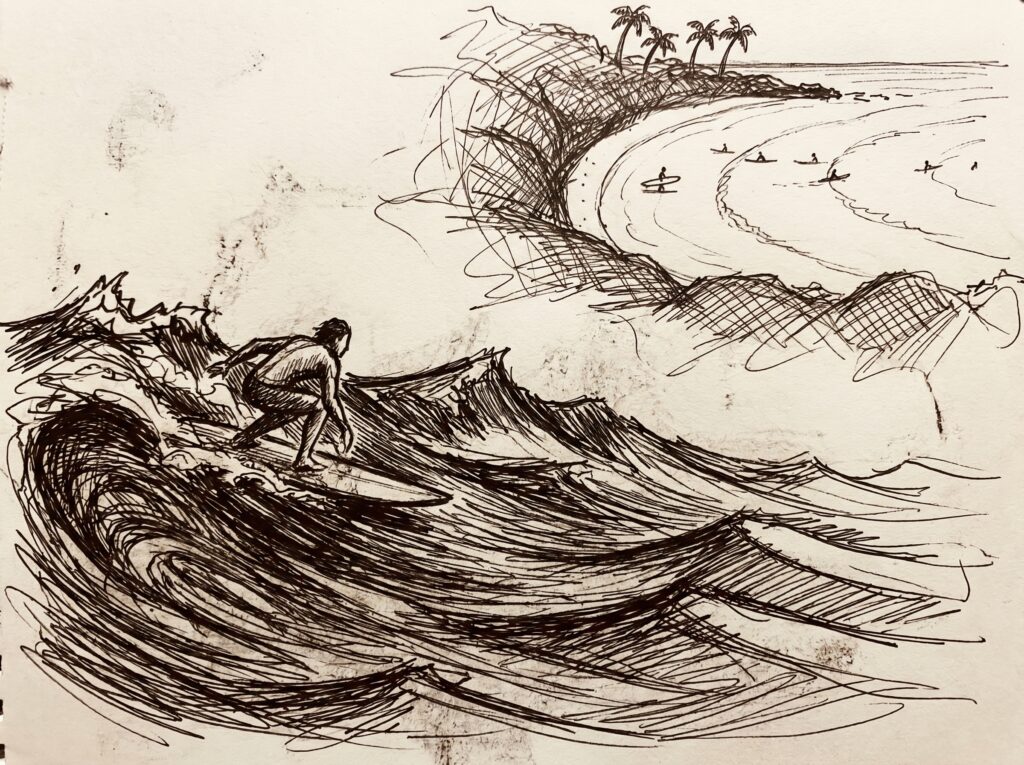
Not all waves are created equal. Beach breaks with gentle, rolling whitewater are perfect for beginners. Steep, hollow waves at a reef break will pummel you. Learning to read a surf wave forecast before you head out can save you hours of frustration and keep you safe in the process.
Ideal beginner conditions are small waves between one and three feet, a sandy bottom, and minimal current. If the surf report says overhead with a strong offshore wind, that’s a day to stay on the beach and watch.
It also helps to know which beaches cater to learners. Our list of the best surfing destinations for beginners covers locations around the world where conditions are consistently friendly for new surfers.
Mistake #3: Skipping Physical Preparation
Surfing demands more from your body than most people expect. It requires upper body endurance for paddling, core strength for balance, hip flexibility for the pop-up, and cardiovascular fitness to handle repeated efforts in moving water.
Most beginners gas out within 20 minutes. Their arms give up, their lower back tightens, and they can barely lift themselves onto the board. At that point, learning becomes impossible because your body simply can’t execute the movements your brain is trying to learn.
A simple pre-surf fitness routine can change everything. Focus on push-ups, planks, swimming, and hip-opening stretches in the weeks before your first session. For a complete breakdown of exercises that directly translate to better performance in the water, take a look at our surfing fitness guide.
According to the International Surfing Association, paddling accounts for roughly 50 percent of the time spent during a typical surf session. If your arms aren’t conditioned for sustained paddling, you’re fighting an uphill battle from the moment you enter the water.
Mistake #4: Having Unrealistic Expectations About the Timeline
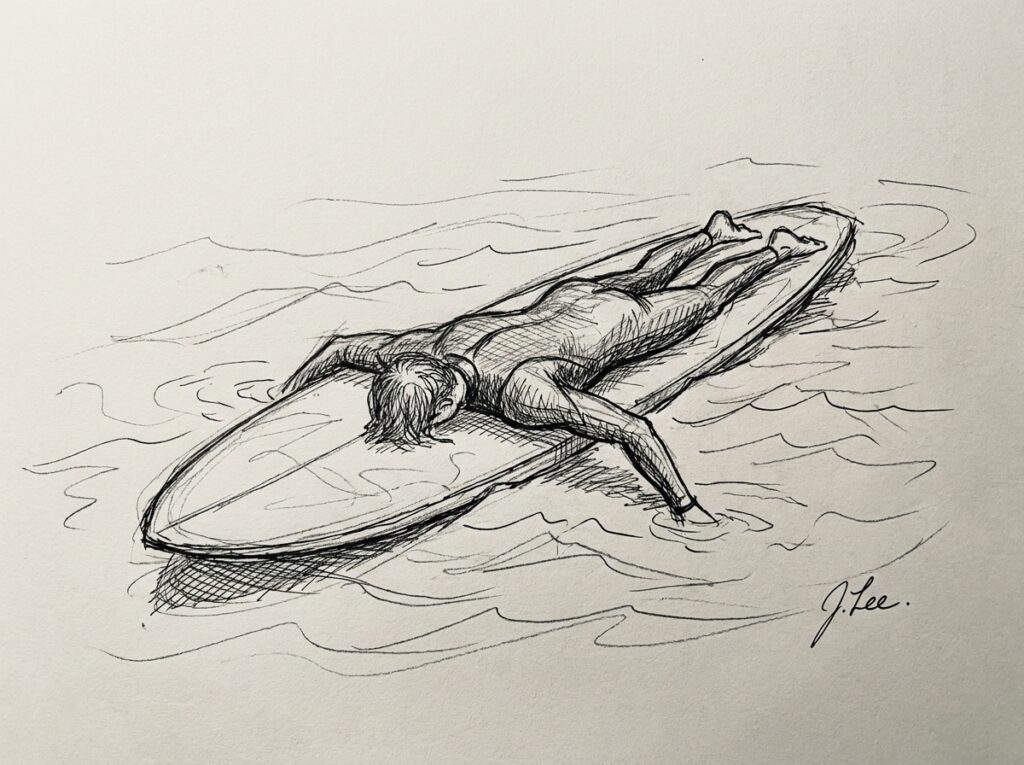
Hollywood and social media have done surfing no favors when it comes to setting realistic expectations. People see clips of surfers carving perfect waves and assume they’ll be doing something similar within a few lessons. The truth is that surfing has one of the steepest learning curves of any sport.
Most people need between two and six months of consistent practice just to reliably catch unbroken green waves and ride them with basic control. Our article on how long it takes to learn to surf lays out a realistic progression timeline so you can set proper benchmarks.
The key is to celebrate small victories. Your first successful pop-up in the whitewater is a big deal. Riding a wave for five seconds is progress. Surfing rewards patience and consistency more than raw talent. The people who stick with it aren’t necessarily more gifted. They just showed up more often.
Mistake #5: Neglecting Basic Safety and Etiquette
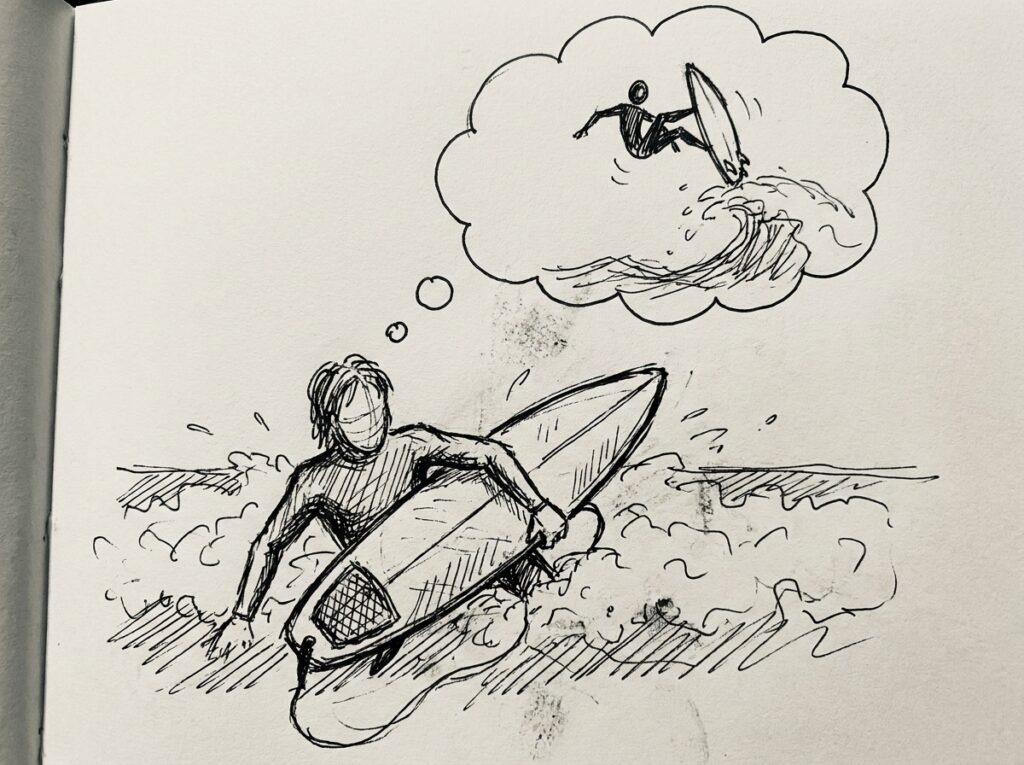
The ocean is not a swimming pool, and a surfboard is not a toy. Beginners who skip learning about safety put themselves and everyone around them at risk. Loose boards flying through the lineup, paddling directly into the path of other surfers, and surfing in dangerous conditions are all common beginner mistakes.
Before your first session, learn these fundamentals: never let go of your board in a crowded lineup, always look before you turn or paddle for a wave, and understand right-of-way rules. The surfer closest to the breaking part of the wave has priority. Dropping in on someone is not just rude. It’s dangerous.
Our guide on essential surfing safety tips for challenging ocean conditions covers everything from rip currents to proper fall techniques. The Royal National Lifeboat Institution (RNLI) also offers excellent free resources on beach safety that every beginner should review.
Understanding etiquette also makes your sessions more enjoyable. Local surfers are far more welcoming when they see a beginner who respects the rules, stays out of the way, and doesn’t snake waves.
Mistake #6: Wearing the Wrong Gear (or No Gear at All)
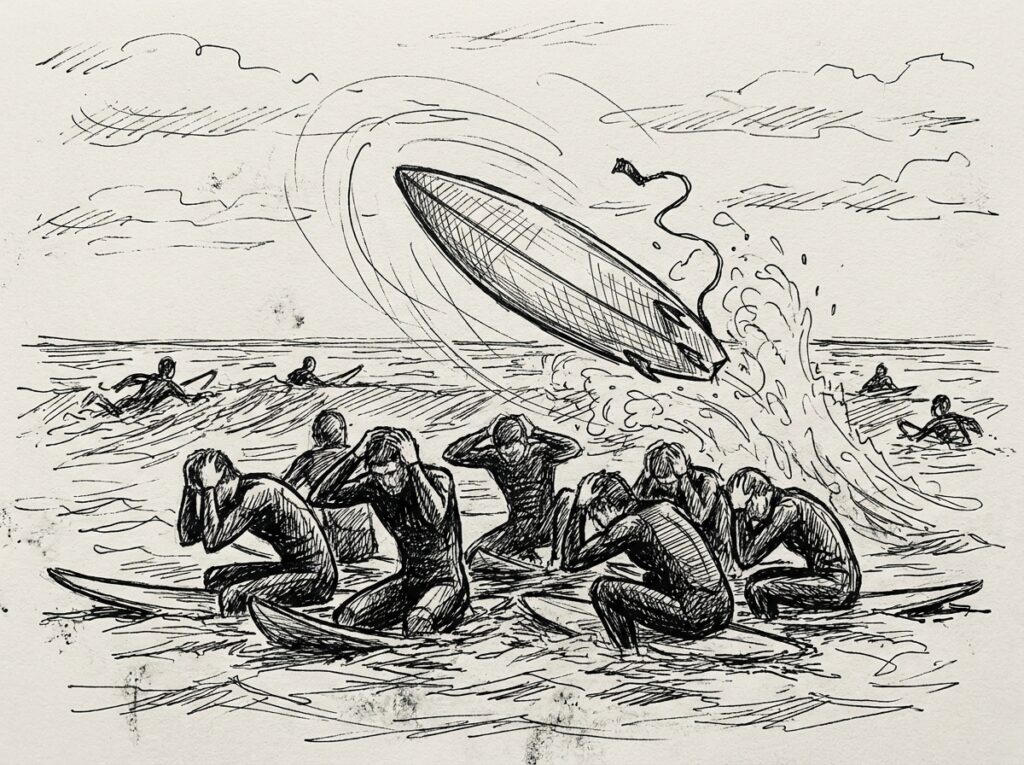
You’d be surprised how many beginners show up to surf in board shorts when the water is 58°F, or wear a wetsuit that’s two sizes too big and fills with water every time they duck under a wave. The wrong gear doesn’t just make you uncomfortable. It actively works against your performance.
A poorly fitting wetsuit restricts your paddle stroke, drains your body heat, and makes the pop-up harder than it needs to be. Knowing how to choose a wetsuit for surfing based on water temperature and your body measurements is essential.
Beyond the wetsuit, think about what goes on and under it. Rash guards, reef booties, and sunscreen all play a role depending on your conditions. Our guide on what to wear surfing breaks down the full checklist so you’re never caught off guard.
Small details like properly waxing your surfboard for grip also make a noticeable difference. Sliding off your board because you forgot to wax it is an incredibly common and completely preventable beginner mistake.
Mistake #7: Trying to Learn Entirely on Your Own
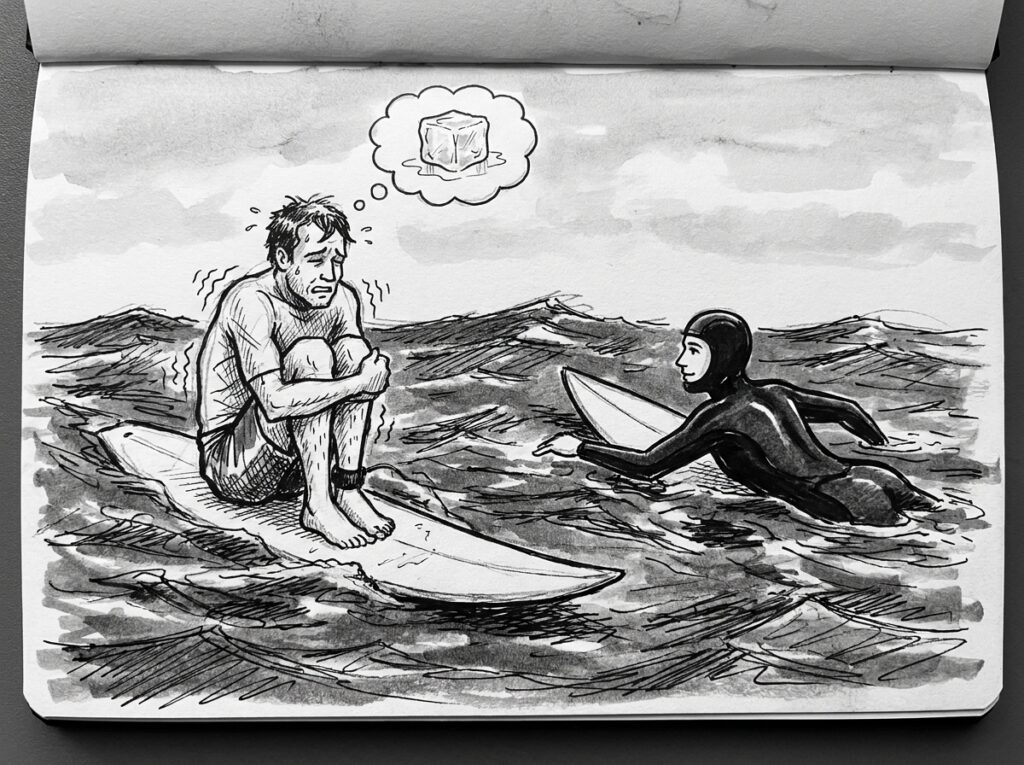
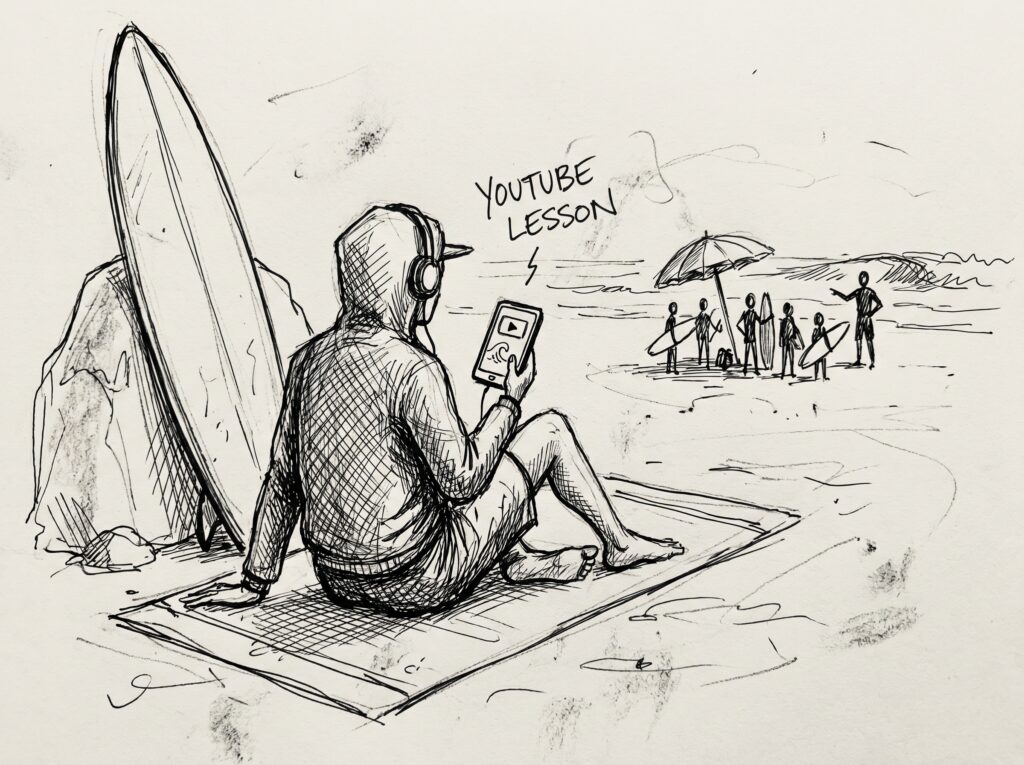
There’s a strong DIY culture in surfing, and many beginners assume they can figure it out by watching YouTube videos and paddling out solo. While self-teaching is possible, it’s also dramatically slower and often leads to bad habits that become harder to fix over time.
A few lessons with a qualified instructor will compress months of trial and error into days. An instructor can correct your pop-up technique in real time, position you in the right spot on the wave, and push you into waves at the right moment so you experience success early.
If private lessons aren’t in your budget, surf with a more experienced friend who can give you honest feedback. The history of surf culture is built on mentorship and community, and tapping into that is one of the smartest things a beginner can do.
Bonus: Overlooking the Mental Side of Surfing
Beyond the physical and technical mistakes, many beginners underestimate the mental demands of surfing. Fear of waves, frustration with slow progress, and anxiety about looking foolish in front of experienced surfers can all sabotage your sessions before you even catch a wave.
Surfing is as much a mental practice as a physical one. Learning to stay calm when you get held under, to let go of a bad session, and to trust your body in moving water takes time. The mental health benefits of surfing are well documented, but those benefits only come when you allow yourself to be present in the water rather than constantly judging your performance.
If you come from another board sport, you might find the transition easier in some ways. Our comparison on whether surfing is like snowboarding explores exactly which skills carry over and which ones you’ll need to build from scratch.
How to Set Yourself Up for Success Instead
Now that you know the mistakes, here’s a quick action plan to avoid them:
- Get the right board. Start with a soft-top longboard between 8 and 9 feet. Leave the shortboard for later.
- Check conditions before every session. Use forecast tools and stick to small, mellow waves.
- Build your fitness first. Two to four weeks of targeted exercise makes a world of difference.
- Take at least two or three lessons. Professional guidance in the beginning saves you months.
- Learn the rules. Study safety, etiquette, and ocean awareness before you paddle out.
- Dress for the conditions. A proper wetsuit and waxed board are non-negotiable.
- Be patient. Give yourself six months before you judge your progress.
If a board ever gets dinged up during your learning process, don’t panic. Minor damage is normal and fixable. Our guide on DIY eco-friendly board repairs walks you through simple fixes you can do at home without expensive shop visits.
Final Thoughts on Why Beginner Surfers Fail
The reason most beginner surfers fail isn’t a lack of ability. It’s a lack of information. They grab the wrong board, paddle into the wrong conditions, skip preparation, and expect results that aren’t realistic for the first few months.
But surfing is for anyone willing to respect the process. Every experienced surfer in the water today went through the exact same awkward, humbling, exhausting beginning. The difference is they kept showing up. They learned from their mistakes, adjusted their approach, and eventually reached the point where it all started to click.
If you’re feeling inspired to stick with it, you might also enjoy watching some of the best surfing movies to fuel your motivation and see what’s possible when the dedication pays off. The stoke is real, and it’s waiting for you on the other side of these early struggles.