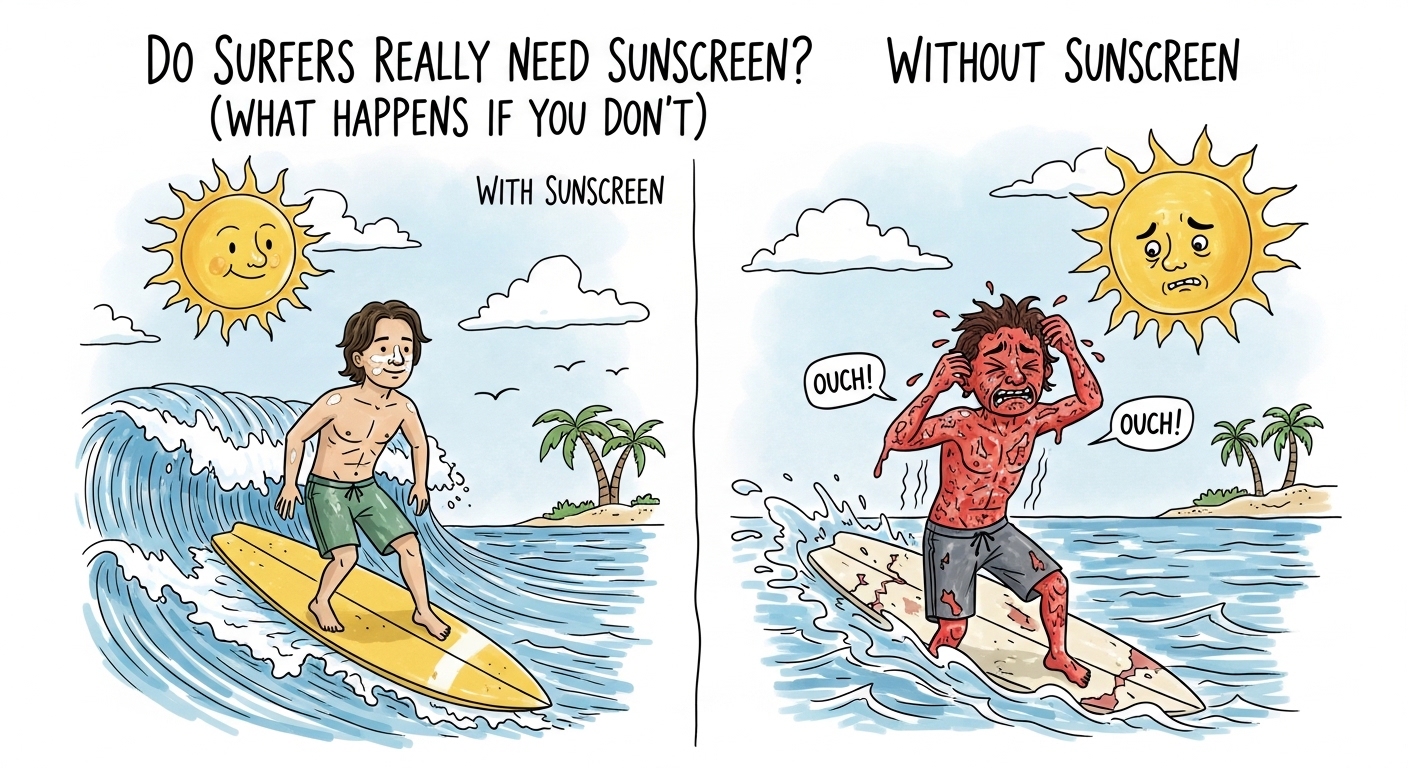

If you spend any amount of time in the water, you have probably asked yourself this question at least once — do surfers really need sunscreen? The short answer is an absolute yes, and the consequences of skipping it go far beyond a painful sunburn. Surfers face a unique combination of direct sunlight, reflected UV rays off the water, and hours of prolonged exposure that makes them one of the most at-risk groups for serious skin damage.
Whether you are just learning how to surf or you have been riding waves for decades, understanding why sunscreen matters could genuinely save your skin — and your health.
Why Surfers Face Higher UV Exposure Than Most People
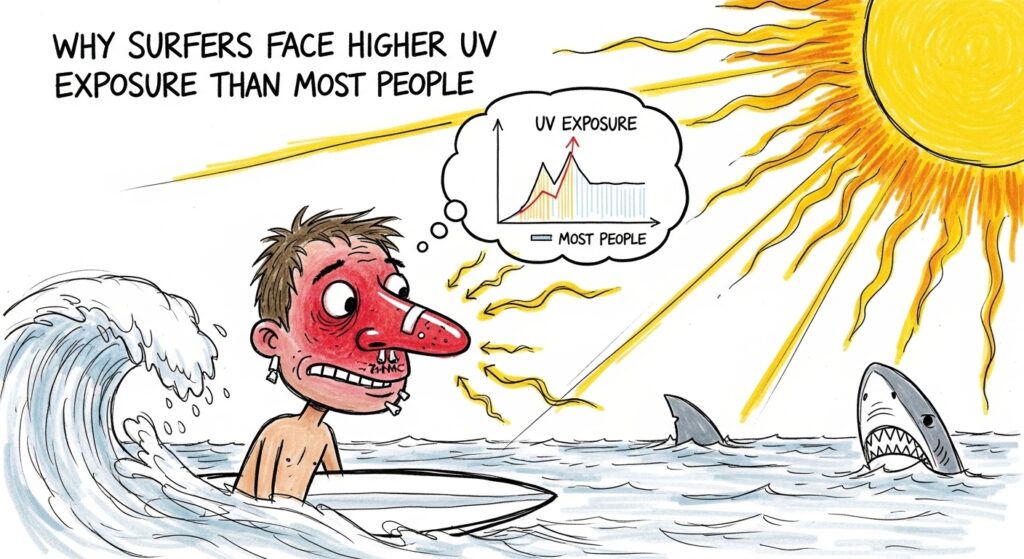
Most people think of a day at the beach as the main sun risk, but surfing takes that risk and amplifies it significantly. When you are sitting on your board waiting for a set, your face, neck, shoulders, and hands are directly exposed to the sun for hours at a time. Unlike a beach day where you can throw up an umbrella or retreat to a shaded spot, there is no shade in the ocean.
On top of that, water acts as a reflective surface for ultraviolet radiation. According to the World Health Organization, sea foam can reflect between 25 and 30 percent of UV rays, while dry beach sand adds another 15 to 18 percent. This means UV radiation hits you from above and bounces right back at you from below, creating a double exposure effect.
Altitude and latitude play a role as well. If you are surfing in tropical destinations or high-UV regions, the intensity increases further. Even on overcast days, thin cloud cover does very little to reduce UV levels, and many surfers let their guard down when the sky looks grey.
What Actually Happens to Your Skin Without Sunscreen
Skipping sunscreen during a single surf session might leave you with nothing more than a red nose and sore shoulders. But the real damage is cumulative, building up session after session over months and years. Here is what the science says about what happens when surfers go unprotected.
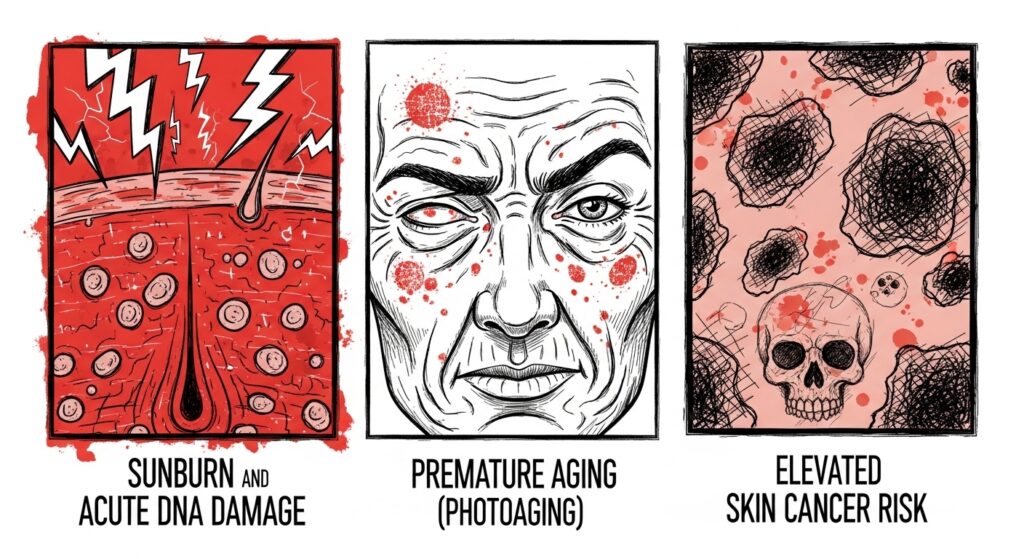
Sunburn and Acute DNA Damage
Every time you get sunburned, your skin cells suffer direct DNA damage from UVB rays. Your body tries to repair this damage, but the process is not perfect. Repeated sunburns, especially the blistering kind, significantly raise your lifetime risk of developing skin cancer.
A study published in the journal Cancers found that 93 percent of male surfers and 84 percent of female surfers reported being sunburned during the previous season alone.
Premature Aging (Photoaging)
If skin cancer statistics do not get your attention, consider this: UV radiation is responsible for approximately 80 to 90 percent of visible facial aging, according to research published in Clinical, Cosmetic and Investigational Dermatology. Wrinkles, dark spots, leathery texture, and loss of elasticity are overwhelmingly caused by sun exposure, not by getting older.
Surfers who skip sun protection consistently tend to develop deep lines around the eyes, rough and weathered skin on the face and neck, and uneven pigmentation far earlier than their age would suggest. That “rugged surfer look” might seem cool at 30, but it comes at a serious cost by 45.
Elevated Skin Cancer Risk
This is where it gets genuinely serious. A cross-sectional study of Australian surfers and swimmers published in the International Journal of Environmental Research and Public Health found that the prevalence of melanoma in surfers was 76 times higher than in the general population. Water sports have been specifically linked to increased risk of basal cell carcinoma and squamous cell carcinoma.
The combination of intermittent intense exposure, water washing away sunscreen, and sweating that increases skin photosensitivity creates a perfect storm for skin cancer development. Skin cancer is the most common cancer worldwide, and surfers sit squarely in the high-risk category.
Do Surfers Really Need Sunscreen on Cloudy Days?
Yes. This is one of the most common misconceptions in the surf community. Cloud cover reduces visible light and makes you feel cooler, but UV radiation penetrates through clouds far more effectively than most people realize. Thin or scattered clouds can even amplify UV levels through a scattering effect.
If you are heading out for a session and the sky is overcast, you still need protection. Checking a surf wave forecast before your session is smart for wave conditions — checking the UV index is equally important for your skin.
How Surfing Conditions Make Sunscreen Even More Critical
Several factors unique to surfing make sun protection harder to maintain compared to land-based activities.
Water Washes Sunscreen Away
Even products labelled water-resistant are only tested for 40 to 80 minutes of water exposure. After a two-hour session, most sunscreen has been significantly diluted or washed off entirely.
Reapplication is essential, which is why many experienced surfers carry a small tube of reef-safe, water-resistant sunscreen in their car and reapply before and during longer sessions.
Sweat Increases Photosensitivity
Research reviewed in a narrative study on athlete skin cancer risk found that sweating can increase the skin’s photosensitivity. Physical exertion also temporarily suppresses the immune system, which reduces your body’s ability to repair UV-induced DNA damage in real time. Surfing is a full-body workout, so your skin is under compound stress during every session.
Extended Exposure Windows
A typical surf session lasts anywhere from one to three hours, sometimes longer. That is a significant window of continuous UV exposure with no opportunity for shade. Compare that to a jog in the park where you can duck under trees, and it becomes clear why surfers need to be more vigilant.

What Kind of Sunscreen Should Surfers Use?
Not all sunscreens are created equal, and surfers have specific needs that standard lotions do not address well.
Mineral vs. Chemical Sunscreen
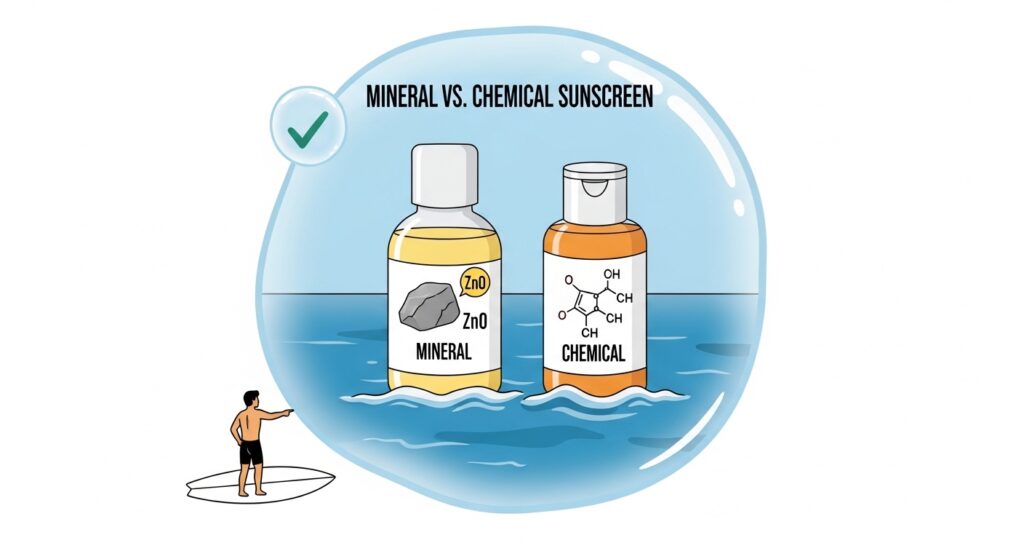
Mineral sunscreens, also called physical sunscreens, use zinc oxide or titanium dioxide to sit on top of the skin and physically block UV rays. Chemical sunscreens absorb UV radiation and convert it to heat. For surfers, mineral sunscreens tend to stay on better in the water and are less likely to sting your eyes.
Reef-Safe Formulas
This matters especially if you are surfing in beginner-friendly destinations with fragile coral ecosystems. Chemicals like oxybenzone and octinoxate found in many conventional sunscreens have been shown to contribute to coral bleaching. Choosing reef-safe options is better for the ocean and typically gentler on your skin too.
SPF 30 or Higher, Broad-Spectrum
The American Academy of Dermatology recommends SPF 30 as a minimum for outdoor activities. For surfers spending extended time in high-UV environments, SPF 50 is a safer choice. Always look for broad-spectrum protection, which shields against both UVA rays (aging and deep skin damage) and UVB rays (burning).
Beyond Sunscreen: Other Sun Protection Strategies for Surfers
Sunscreen should be your baseline, but it should not be your only line of defence. Smart surfers layer multiple forms of protection.
Wear UV-Protective Clothing
A good rashguard with UPF 50+ protection covers your torso and arms, dramatically reducing the amount of skin exposed to UV. When choosing what to wear surfing, prioritise long-sleeve rashguards for high-UV conditions.
If you are surfing in cold water and already wearing a full wetsuit, your body is mostly covered — but your face, ears, and the backs of your hands still need sunscreen.
Surf Hats and Timing Your Sessions
Surf-specific hats with chin straps are increasingly popular and provide shade for your face, ears, and neck. They are especially useful during long paddle-outs and flat spells when you are sitting upright on your board.
UV radiation is strongest between 10 a.m. and 4 p.m. Dawn patrol and late-afternoon sessions are not only better for wave quality in many spots, but they also significantly reduce your UV exposure.
Common Myths About Surfers and Sunscreen
“I Have a Base Tan, So I Don’t Need Sunscreen”
A tan is your skin’s stress response to UV damage. It provides roughly the equivalent of SPF 3 to 4, which is essentially meaningless during a multi-hour surf session. A base tan does not prevent DNA damage, photoaging, or skin cancer.
“Darker Skin Doesn’t Need Sunscreen”
While higher melanin levels do provide more natural UV protection, people with darker skin tones still develop skin cancer and photoaging. The difference is that skin cancer in people of colour is often diagnosed later, at more advanced stages. Everyone who surfs needs sun protection, regardless of skin tone.
“Zinc on My Nose Is Enough”
Applying a thick stripe of zinc oxide to your nose is better than nothing, but your forehead, ears, lips, cheekbones, jawline, neck, and the backs of your hands are all exposed too. Essential surfing safety goes beyond knowing how to handle currents — it includes protecting your skin from the invisible threat of UV radiation.
“Sunscreen Chemicals Are More Dangerous Than the Sun”
This claim circulates on social media regularly and is not supported by dermatological research. The risk of skin cancer from unprotected UV exposure is well documented across thousands of peer-reviewed studies. If you are concerned about chemical filters, mineral sunscreens using zinc oxide are widely regarded as safe and effective.
How to Apply Sunscreen Properly Before Surfing
Even the best sunscreen is useless if you do not apply it correctly. Apply 15 to 30 minutes before entering the water to allow the product to bond with your skin. Use a generous amount — most people apply only about 25 to 50 percent of the recommended quantity.
Cover easily forgotten areas like your ears, the back of your neck, the tops of your feet if you are not wearing booties, and your lower back where your rashguard may ride up. Reapply every two hours or immediately after towelling off.
Taking Care of Your Skin After a Surf Session
Sun protection does not end when you walk out of the water. Rinse off saltwater as soon as possible, as salt can dry out and irritate sun-stressed skin. Apply a moisturiser with aloe vera or hyaluronic acid to rehydrate.
If you are also practising eco-friendly board repairs and caring for your gear after sessions, add a skin-care step to that post-surf routine as well. Watch for any new or changing moles, spots, or lesions. Surfers should get a professional skin check from a dermatologist at least once a year.
The Mental Side of Sun Protection
Surfing is incredible for mental health. The last thing you want is for a preventable skin cancer diagnosis to take that away from you. Thinking of sunscreen as part of your surf routine — as essential as waxing your board — reframes it from an annoying chore into a simple act of self-care.
The history of surf culture is full of legends who spent their lives in the water. Many of them dealt with serious skin damage later in life. The generation of surfers coming up now has access to better products, better information, and zero excuses for skipping protection.
Final Thoughts
Do surfers really need sunscreen? The research is clear and the answer is unequivocal — yes. Surfers face amplified UV exposure from water reflection, extended session lengths, and the physical demands that make their skin more vulnerable. Without consistent protection, the consequences range from accelerated aging to significantly elevated skin cancer risk.
The good news is that protecting yourself is straightforward. Use a quality broad-spectrum, water-resistant sunscreen rated SPF 30 or higher. Layer it with UV-protective clothing. Time your sessions wisely. And make it a non-negotiable habit, just like checking the swell report or choosing the right surfboard for the conditions.
Your future self — still surfing, still healthy, still stoked — will thank you.