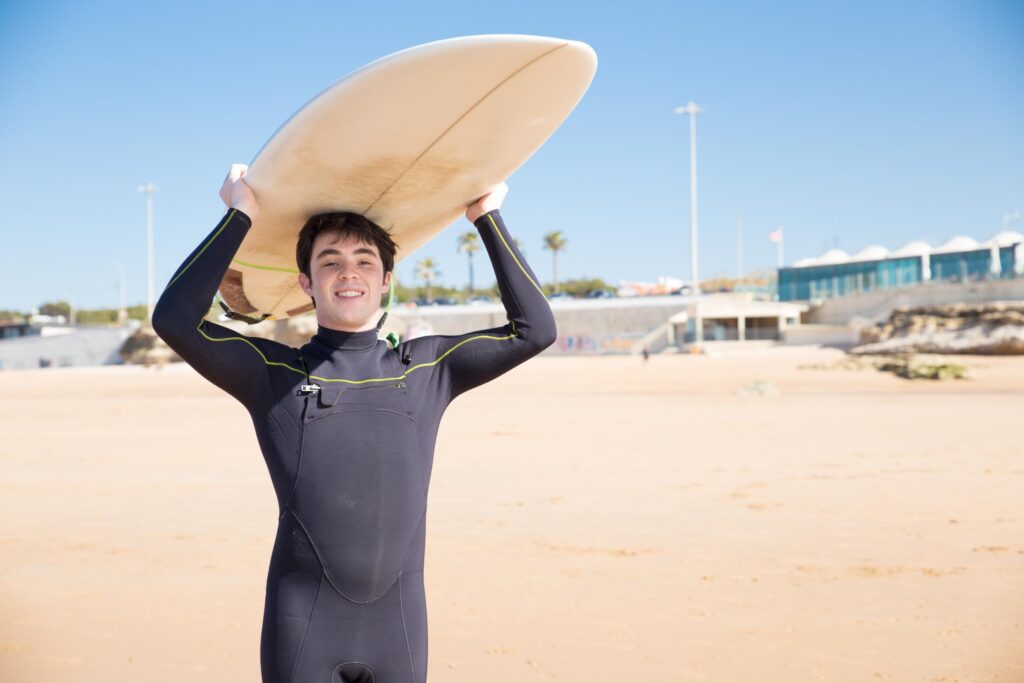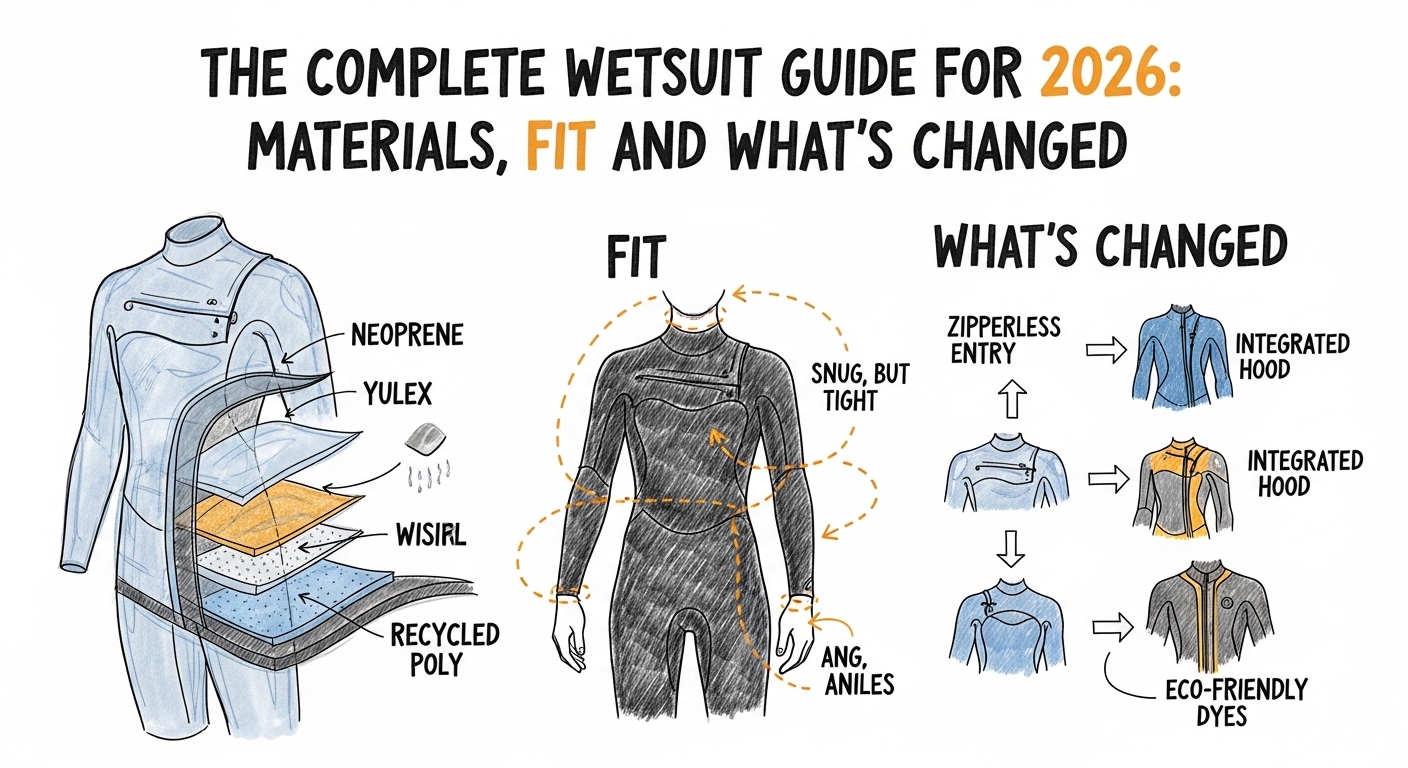

Choosing the right wetsuit can make or break your surfing sessions. Whether you’re paddling out into frigid winter swells or enjoying mellow summer waves, your wetsuit is your most important piece of gear after the board itself. This guide covers the best wetsuits 2026 has to offer, breaking down everything from thickness ratings and materials to fit, flexibility, and value. If you’re ready to upgrade or buy your first suit, you’re in the right place.
Before you even think about hitting the water, your wetsuit choice should match where you surf, when you surf, and how often you surf. Pairing the right suit with the right board is essential — if you’re still figuring out your setup, our guide on how to choose a wetsuit for surfing walks you through the basics in detail.
- Why Your Wetsuit Matters More Than You Think
- How Wetsuit Thickness Works
- Key Features to Look for in the Best Wetsuits 2026
- Wetsuit Styles Explained
- What’s New in Wetsuit Technology for 2026
- How to Find the Right Wetsuit Fit
- Caring for Your Wetsuit
- Wetsuit Price Ranges: What You Get at Every Level
- Cold Water vs. Warm Water: Matching Your Suit to Your Conditions
- How Often Should You Replace Your Wetsuit
- Common Wetsuit Mistakes to Avoid
- Final Thoughts
Why Your Wetsuit Matters More Than You Think
A wetsuit does more than keep you warm. It affects your paddle speed, your flexibility during pop-ups, and how long you can stay in the water before fatigue sets in. A poorly fitting suit creates drag, restricts movement, and lets cold water flush through the seams.
Modern wetsuits have come a long way from the stiff, heavy neoprene slabs of the past. The best wetsuits in 2026 use advanced materials like graphene-infused linings, limestone-based neoprene, and recycled rubber compounds that deliver warmth without bulk. These innovations mean you can wear a thinner suit and still stay comfortable in cold conditions.
If you’re new to surfing and unsure about all the gear you need, check out our breakdown of what to wear surfing for a full overview beyond just the wetsuit.
How Wetsuit Thickness Works
Wetsuit thickness is measured in millimeters and written as two or three numbers separated by slashes. The first number represents the torso thickness, and the second represents the limbs. For example, a 4/3mm suit has 4mm of neoprene around the core and 3mm on the arms and legs.
Here’s a quick reference:
- 2mm or spring suit — Warm water, summer sessions above 18°C (64°F)
- 3/2mm — The most versatile option, suitable for water between 14–20°C (57–68°F)
- 4/3mm — The go-to for cooler water, roughly 10–16°C (50–61°F)
- 5/4mm or thicker — Cold water and winter surfing below 10°C (50°F)
Knowing your local water temperature is key. If you regularly check conditions before paddling out, our wave forecast guide can help you plan sessions around both swell and temperature data.
Key Features to Look for in the Best Wetsuits 2026
Not all wetsuits are created equal, even within the same thickness category. Here are the features that separate a good wetsuit from a great one this year.
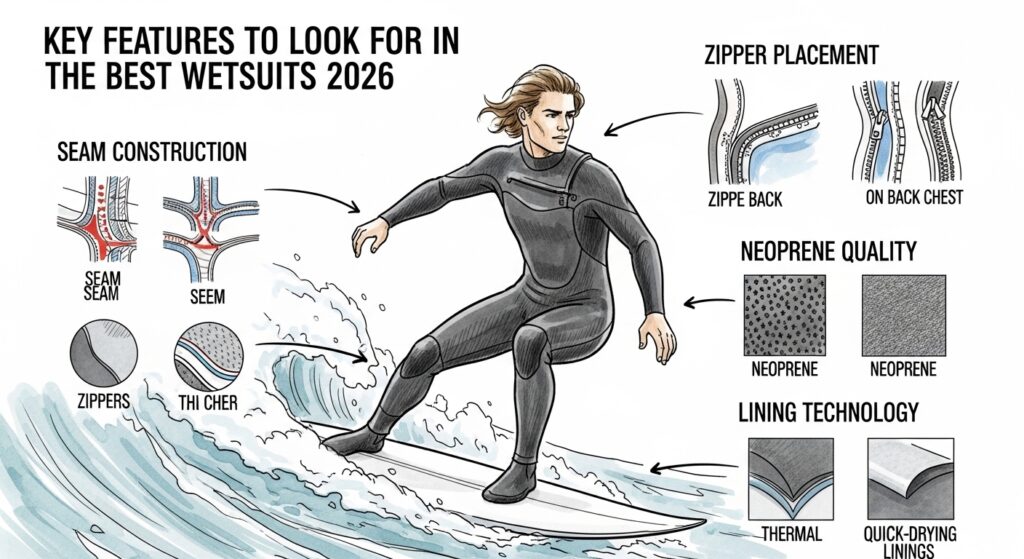
Seam Construction
Seams are where wetsuits fail first. Flatlock seams are cheaper but let water in through the stitch holes, making them suitable only for warm water. Glued and blind-stitched (GBS) seams are the standard for cold-water suits. The best wetsuits in 2026 add liquid-taped seams on the inside for extra waterproofing.
Zipper Placement
Back-zip wetsuits are easier to get in and out of, which makes them popular with beginners. Chest-zip and zip-free designs offer better flexibility and fewer flush points, but they require more effort to put on. If you’re just learning and still working on your technique, a back-zip is perfectly fine — you can read more about how long it takes to learn surfing and what gear works best at each stage.
Neoprene Quality
Entry-level suits use petroleum-based neoprene that’s heavier and less stretchy. Premium suits use limestone neoprene or plant-based alternatives like Yulex, which are lighter, warmer, and more eco-friendly. If sustainability matters to you, many brands now offer suits made with recycled materials — a shift that mirrors the growing movement toward eco-friendly board repairs and greener surf gear overall.
Lining Technology
Thermal linings trap body heat and speed up drying time. Look for quick-dry jersey linings in the torso and hollow-fiber thermal panels in the chest and back. Some 2026 models use infrared-reflective linings that convert body heat into radiant warmth, keeping you comfortable in water as cold as 5°C (41°F).
Wetsuit Styles Explained
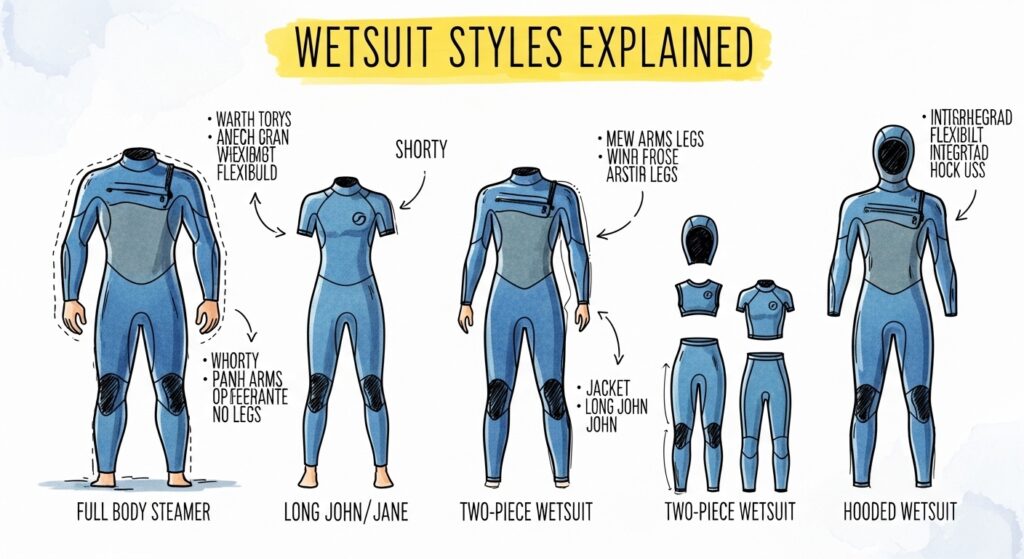
Different sessions call for different suits. Here’s a breakdown of the main styles you’ll encounter.
Full Suit (Steamer)
Covers the entire body from wrists to ankles. This is what most surfers wear for the majority of the year. Available in every thickness from 2mm to 6mm, full suits are the backbone of any wetsuit quiver.
Spring Suit (Shorty)
Short arms and short legs, typically 2mm throughout. Ideal for summer or tropical surfing where you need some warmth and sun protection but don’t want to overheat. If you’re planning a warm-water trip, our list of best surfing destinations for beginners highlights spots where a spring suit is all you’ll need.
Long-Sleeve Spring Suit
Full-length arms with short legs. Great for mornings when the air is cool but the water is warm, or for shoulder-season sessions where a full suit feels like overkill.
Hooded Wetsuit
Built-in hoods are essential for winter surfing in cold climates. A 5/4mm hooded suit paired with gloves and booties lets you surf comfortably through the coldest months. Staying safe in challenging winter conditions also means understanding ocean hazards — our surfing safety tips cover what to watch for.
What’s New in Wetsuit Technology for 2026
The wetsuit market evolves quickly, and 2026 brings some notable advances worth knowing about.
Graphene-enhanced neoprene is becoming more accessible at mid-range price points. Originally found only in premium suits, graphene linings distribute heat more evenly across the body and add durability without extra weight. Several brands have introduced it into their mid-tier lines this year.
Recycled neoprene is gaining serious traction. Brands like Patagonia and Vissla continue pushing plant-based and recycled rubber options, and new players are entering the space with competitive pricing. The surf industry’s move toward sustainability reflects a broader cultural shift — something you can explore in our piece on the history of surf culture.
Fit technology is also improving. Laser-cut panels and 3D body mapping now allow brands to offer more precise fits without the need for custom orders. This is particularly helpful for surfers who fall between standard sizes and used to struggle with off-the-rack suits.
How to Find the Right Wetsuit Fit
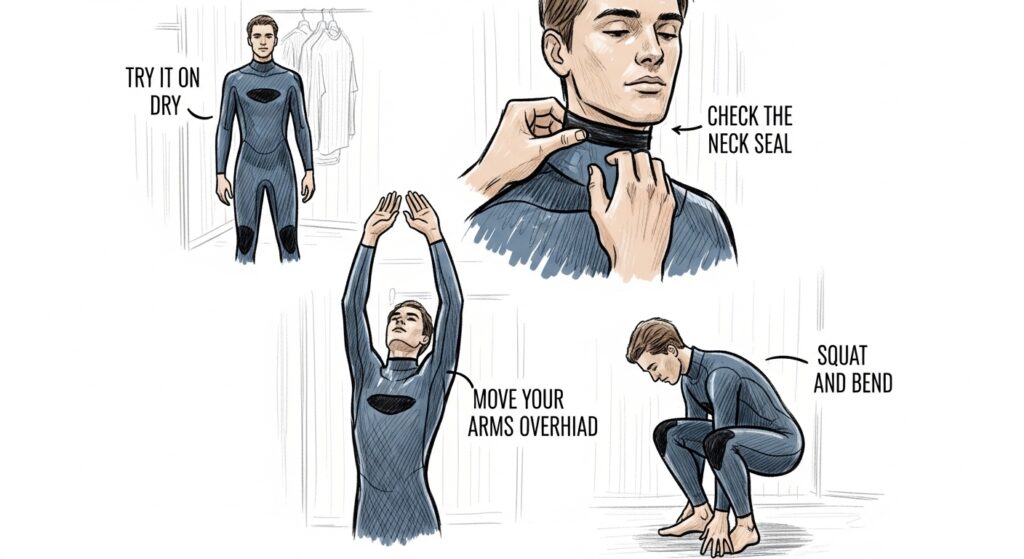
A wetsuit should feel snug everywhere without restricting your breathing or movement. There should be no gaps at the lower back, ankles, wrists, or neck. When you try one on, simulate a paddle motion — if the suit bunches at the armpits or pulls across the shoulders, it’s the wrong fit.
Keep these tips in mind:
- Try it on dry. Neoprene loosens slightly when wet, so if it’s comfortable dry, it may be too loose in the water.
- Check the neck seal. A loose neck lets cold water pour down your back with every duck dive.
- Move your arms overhead. If you can’t raise your arms comfortably, the suit will exhaust you during long paddles.
- Squat and bend. Ensure the suit doesn’t restrict your legs when you pop up.
Getting your wetsuit fit right is just as important as choosing the right surfboard size. Both directly affect your performance and comfort in the water.
Caring for Your Wetsuit
A well-maintained wetsuit can last three to five years. A neglected one might barely survive a single season. Here’s how to keep yours in top shape.
Rinse your suit with fresh water after every session. Saltwater and sand break down neoprene over time, so a quick rinse goes a long way. Hang it on a wide hanger or drape it over a railing — never use a thin wire hanger, which creates stress points in the shoulders.
Avoid direct sunlight when drying. UV rays degrade neoprene faster than anything else. Dry your suit in the shade, and turn it inside out halfway through so both sides dry evenly.
Store your wetsuit flat or hung on a thick hanger in a cool, dry place. Folding it creates permanent creases that thin the neoprene and reduce insulation over time. If you notice small tears or holes, repair them immediately with wetsuit-specific cement before they spread.
Wetsuit Price Ranges: What You Get at Every Level
Understanding what you’re paying for helps you avoid overspending on features you don’t need — or underspending on a suit that won’t keep you warm.
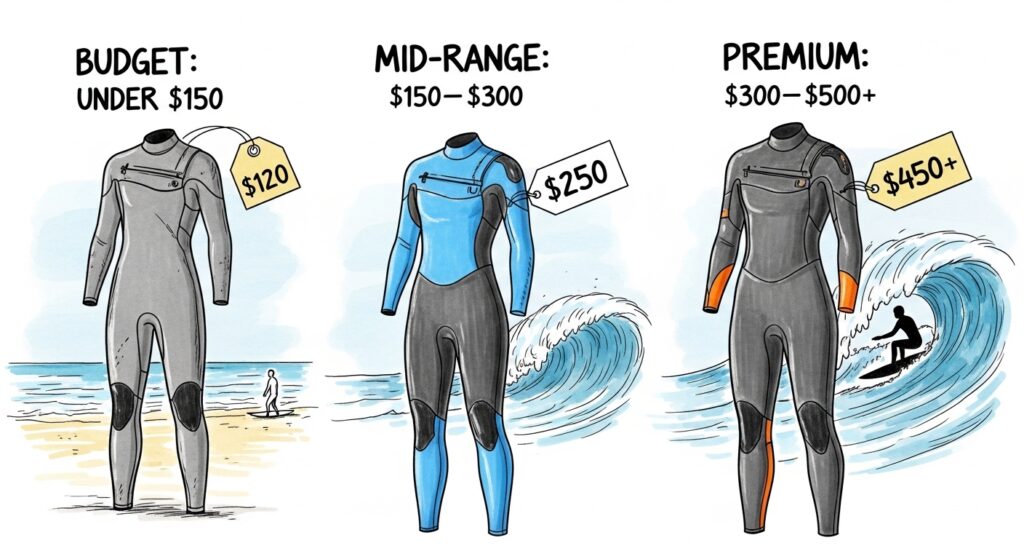
Budget: Under $150
Entry-level suits from brands like O’Neill, Rip Curl, and Hyperflex. These use standard neoprene with flatlock or basic GBS seams. They work well for warm-water surfing and occasional use. If you’re a beginner putting together your first setup alongside the best surfboards for beginners, a budget wetsuit is a reasonable starting point.
Mid-Range: $150–$300
This is the sweet spot for most surfers. You get GBS seams with taping, better neoprene stretch, quick-dry linings, and more refined fits. Brands like Vissla, Xcel, and O’Neill’s mid-tier lines offer excellent value here.
Premium: $300–$500+
Top-tier suits from Rip Curl, Patagonia, and Hurley. These feature the lightest, most flexible neoprene, fully taped and sealed seams, thermal linings, and eco-friendly materials. Worth the investment if you surf frequently in cold water. For our detailed, hands-on comparison of specific models and which suits offer the best value this year, head to our full roundup of the best wetsuits in 2026.
Cold Water vs. Warm Water: Matching Your Suit to Your Conditions
Surfers in Southern California have very different needs from surfers in Scotland or New England. Choosing the right suit thickness is critical, but accessories matter too.
For cold-water surfing below 12°C (54°F), pair a 5/4mm or 4/3mm suit with neoprene booties, gloves, and a hood. These extras keep your extremities functional — cold hands make it nearly impossible to grip your board or paddle effectively. Cold-water surfers also benefit from staying in peak physical condition, so following a solid surfing fitness routine helps you handle longer sessions.
For warm water above 20°C (68°F), a 2mm spring suit or even boardshorts with a rash vest may be enough. The key is sun protection — sunburn and heat exhaustion are real risks during long tropical sessions.
How Often Should You Replace Your Wetsuit
Even the best wetsuits don’t last forever. Signs it’s time for a replacement include visible thinning in the knees and elbows, seams that no longer seal properly, a persistent cold-water flush, or neoprene that has lost its stretch and feels stiff.
If you surf three to four times per week, expect to replace your primary suit every 12 to 18 months. Weekend warriors can get two to three years out of a good suit with proper care.
Rotating between two suits helps extend the life of both. Use a thicker suit for winter and a thinner one for summer, and let each one fully dry between sessions.
Common Wetsuit Mistakes to Avoid
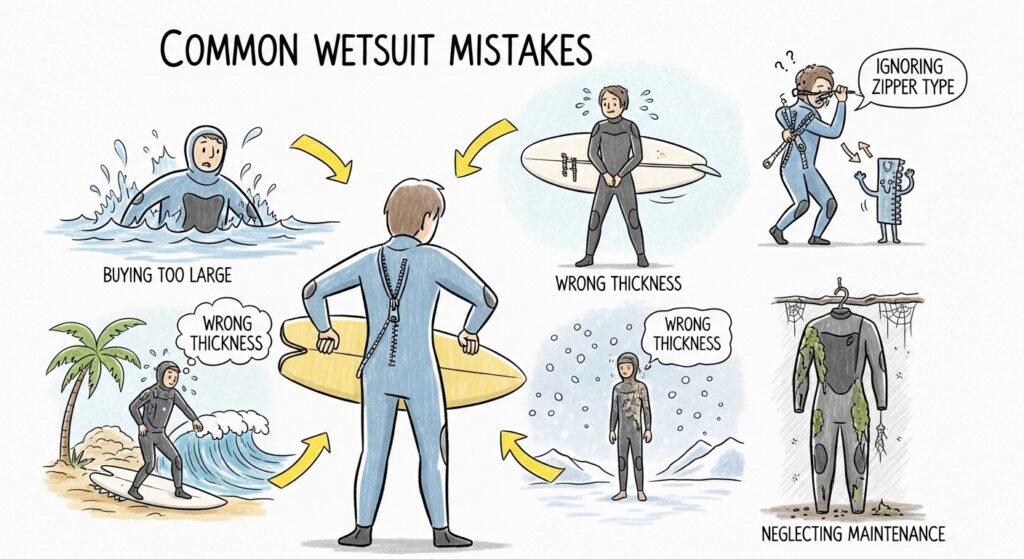
Even experienced surfers make mistakes with their wetsuits. Here are the most common ones.
Buying too large. A loose wetsuit flushes constantly and provides almost no insulation. When in doubt, size down rather than up. Neoprene stretches to conform to your body over the first few sessions.
Ignoring the zipper type. Back-zip suits are convenient, but if you’re surfing in cold water, a chest-zip or zip-free suit reduces flushing significantly. The right choice depends on your priorities and experience level.
Using the wrong thickness. Wearing a 3/2mm suit in 8°C water is a fast track to hypothermia. Always match your suit to your local conditions, and don’t hesitate to go slightly thicker if you run cold.
Neglecting maintenance. Throwing your wet suit in the trunk and leaving it there overnight is one of the fastest ways to destroy it. Rinse, dry, and store it properly every single time.
Final Thoughts
Finding the right wetsuit is about understanding your own needs — your local water temperature, how often you surf, your budget, and how much flexibility you need for your style of riding. The best wetsuits in 2026 offer incredible warmth, stretch, and durability at every price point.
Surfing is one of the most rewarding activities you can pursue, both physically and for your mental health. Getting the right gear — starting with a quality wetsuit — removes barriers and lets you focus on what matters: catching waves. Whether you’re a complete beginner wondering if surfing is similar to snowboarding or an experienced rider looking for your next winter suit, investing in the right wetsuit pays off every time you paddle out.
Ready to pick your next suit? Check out our detailed reviews and top picks in the best wetsuits 2026 roundup and find the perfect match for your surfing life.