
Surfing alone for the first time is one of those ideas that sounds either thrilling or reckless, depending on who you ask. You have probably watched a few videos, maybe taken a lesson or two, and now you are thinking about paddling out on your own. The freedom of it is appealing. No schedules, no waiting for friends, just you and the ocean.
But here is the thing: the ocean does not care about your enthusiasm. Every year, rip currents alone account for roughly 100 drowning deaths along U.S. beaches, and many of those victims are people who underestimated the water. So before you grab your board and head out solo, let us break down whether surfing alone for the first time is genuinely smart, completely stupid, or somewhere in between.
Why So Many Beginners Consider Surfing Alone
There are plenty of understandable reasons why a new surfer might want to go it alone. Maybe there is no surf school nearby, or your friends are not interested. Perhaps you feel self-conscious about learning in front of experienced riders.
Surfing has deep roots as a solo pursuit. Historically, it has always carried an image of the lone rider communing with the waves. That romantic idea makes going solo feel natural, even poetic. And truthfully, surfing does offer incredible mental health benefits that are amplified in solitude: reduced stress, mindfulness, and a powerful sense of accomplishment.
The problem is that beginners often confuse the freedom of solo surfing with readiness for solo surfing. Experienced surfers who paddle out alone have years of ocean knowledge backing every decision. A first-timer does not have that safety net built in yet.
The Real Risks of Surfing Alone as a Beginner
Let us be direct: surfing alone as a complete beginner carries real danger. This is not about being dramatic. It is about understanding what can go wrong when nobody is watching.
Rip Currents and Ocean Hazards
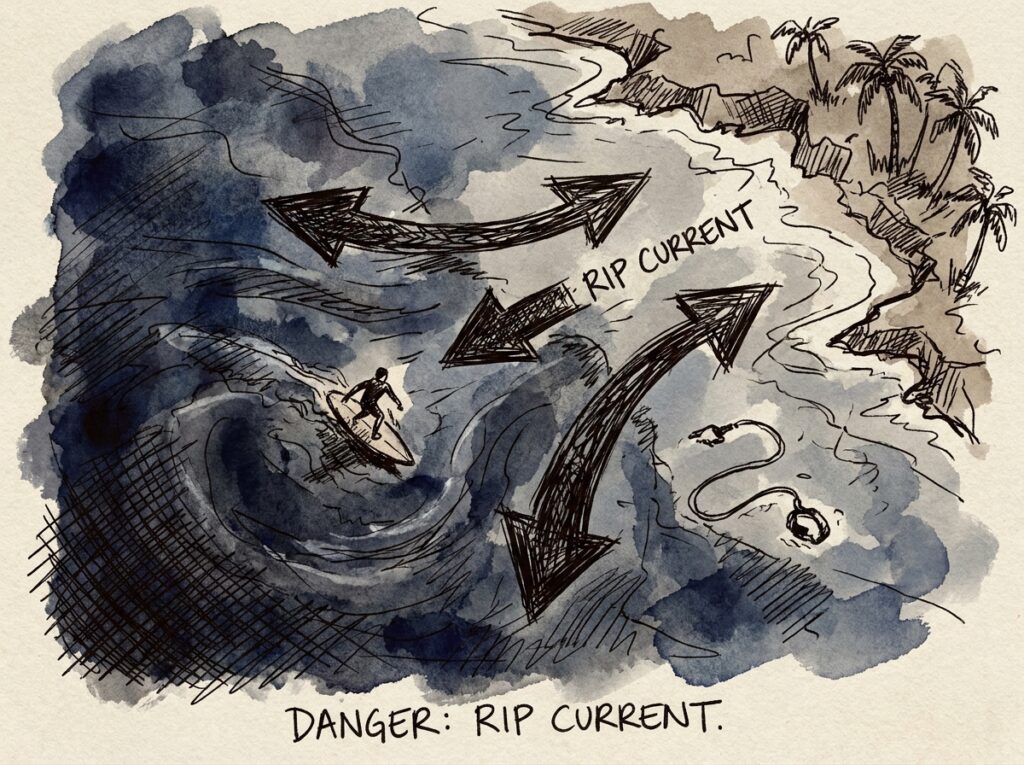
Rip currents are narrow, fast-moving channels of water that pull you away from shore. They are responsible for the majority of lifeguard rescues at beaches worldwide. In Australia, a 2025 study published in Injury Prevention found that 407 people died from rip currents over a 19-year period, with 59% of those deaths occurring in regional or remote areas away from lifeguard patrols.
For a beginner, spotting a rip current is difficult. They often look like calm patches of water between breaking waves, which is exactly where an inexperienced surfer might choose to paddle out. Understanding how to read ocean conditions takes time, and without that skill, you are essentially surfing blind.
No One to Help If Something Goes Wrong
If your leash snaps, you lose your board, or a wave holds you under, having someone nearby can be the difference between a scary moment and a tragedy. When you surf alone without experienced people around, you are your own lifeguard. That is a heavy responsibility for someone still learning how to pop up.
Even strong swimmers get into trouble. Fatigue sets in faster than you expect, especially when you are battling currents or waves that are slightly bigger than anticipated. Being in good surfing shape matters, but fitness alone cannot replace the safety of having other people in the water.
Lack of Ocean Knowledge
Beginners do not yet understand how tides shift the conditions at a break, how sandbars move, or how wind direction changes wave quality within minutes. This knowledge is critical for staying safe, and it only comes with experience.
If you are still in the early stages and wondering how long it takes to learn to surf, know that most instructors recommend at least 10 to 15 supervised sessions before anyone considers paddling out without guidance.
When Surfing Alone Can Actually Work
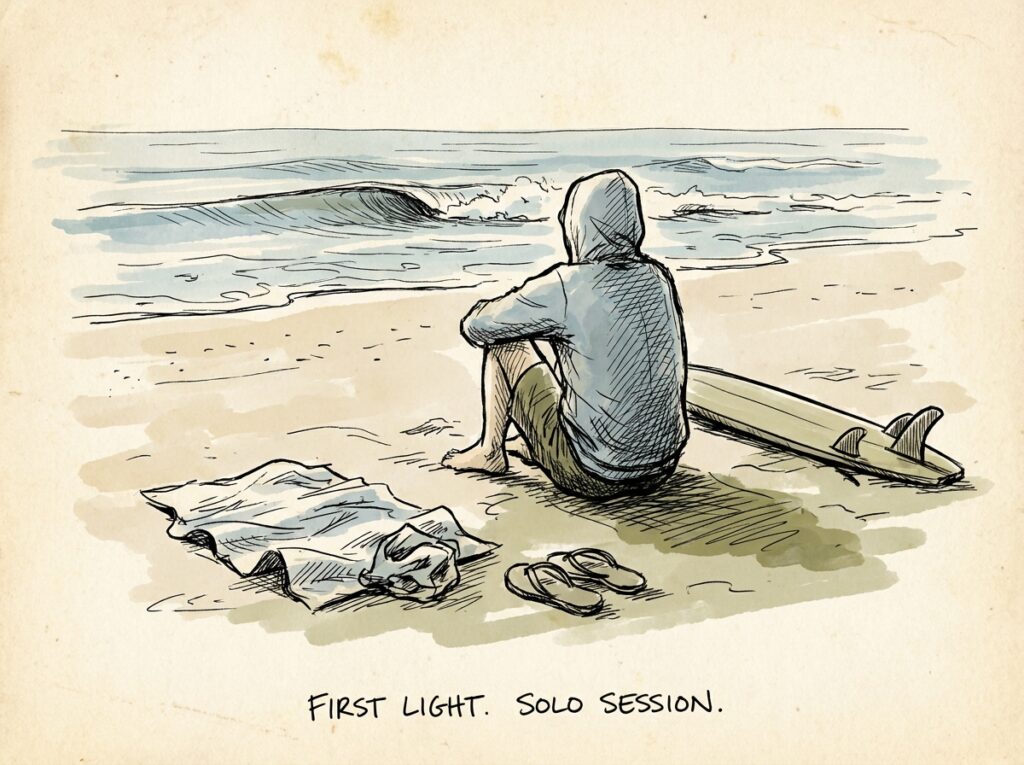
Here is the nuance that most articles skip: surfing alone does not always mean surfing in complete isolation. There is a big difference between heading to the beach without a friend and paddling into empty water where nobody can see you.
If you go to a popular, lifeguarded beach and surf near other people (even strangers), you are technically “alone” but still in a relatively safe environment. Other surfers in the lineup will notice if you get into trouble. Lifeguards are watching. This is a very different scenario from driving to a remote point break at dawn and paddling out solo.
So when people ask whether surfing alone for the first time is smart or stupid, the answer often comes down to location. Choosing beginner-friendly surf destinations with gentle waves, sandy bottoms, and lifeguard coverage makes solo surfing dramatically safer than going to an unfamiliar reef break.
How to Stay Safe If You Surf Alone for the First Time
If you have decided to go out on your own, preparation is everything. These are not suggestions. They are essentials.
Choose a Lifeguarded Beach With a Sandy Bottom
This is non-negotiable for a solo beginner. A beach with active lifeguards, a sandy bottom free of rocks and reef, and gentle whitewash waves is your safest bet. Ask locals or check online forums for recommendations specific to your area.
Avoid river mouths, harbour entrances, and any beach where you cannot see other people in the water. If nobody else is out, there is probably a reason.
Check the Forecast and Understand the Conditions
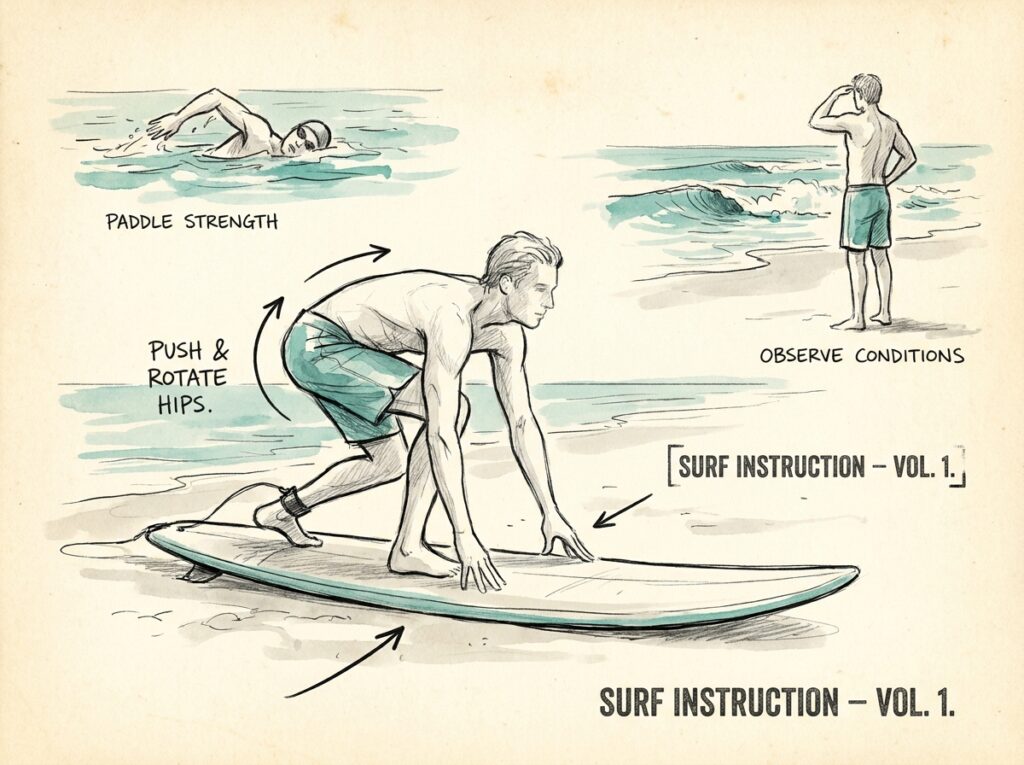
Before you leave the house, check the swell size, wind direction, and tide times. A good wave forecast guide will teach you how to interpret this data. Apps like Surfline and Magic Seaweed give real-time updates and webcams so you can see conditions before you arrive.
Ideal beginner conditions are small waves (under one metre), light offshore wind, and a mid to high tide. If the forecast shows anything above your comfort level, wait for another day.
Tell Someone Where You Are Going
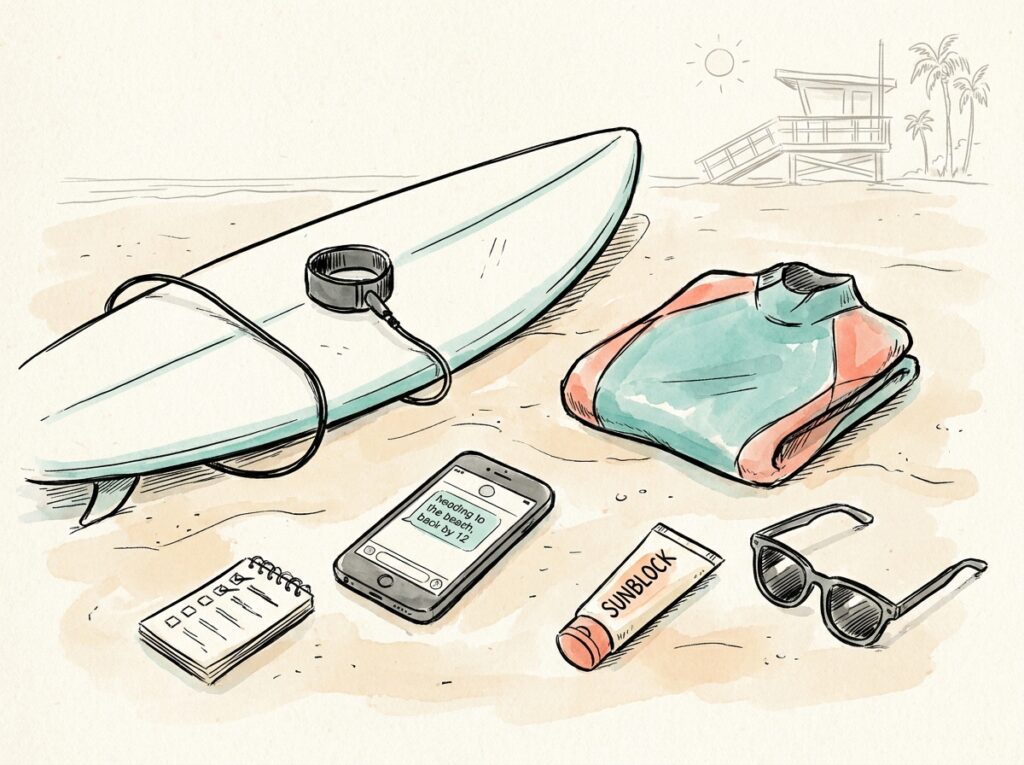
Before every session, text a friend or family member with your location and an estimated time you will be back in. This simple habit ensures somebody will raise the alarm if you do not check in.
Start in the Whitewash
Do not paddle out to the lineup on your first solo session. Stay in the whitewash (the foamy broken waves closer to shore) where you can stand up if needed. This is where most beginner surfboards perform best anyway, and it keeps you in shallow, manageable water.
Practise your pop-up, get comfortable on your board, and build confidence gradually. There is no shame in spending weeks in the whitewash before venturing further out.
Wear the Right Gear
Your gear is your lifeline. Make sure your leash is in good condition and properly attached. Use a board appropriate for your size and skill level. If you are unsure, a guide on choosing the right surfboard size will point you in the right direction.
If the water is cold, picking the right wetsuit is essential. Hypothermia can set in quickly and impair your judgement and strength. Even in warmer water, know what to wear surfing to protect yourself from sunburn, rashes, and reef cuts.
Better Alternatives to Surfing Completely Alone
Before you commit to going fully solo, consider some middle-ground options that give you independence without the added risk.
Taking a beginner surf lesson is the obvious starting point. A qualified instructor will assess the conditions, position you in the safest part of the beach, and watch you throughout the session. Most surf schools offer group lessons, which also means you will meet other beginners to surf with later.
Joining a local surf club or online community is another smart move. Many areas have Facebook groups or meetups where people organise sessions together. Surfing with even one other person, regardless of their level, reduces your risk significantly.
If you are transitioning from another board sport, the crossover is not as seamless as you might hope. People who have tried snowboarding and surfing often note that while balance transfers somewhat, ocean dynamics are a completely different challenge.
Essential Skills to Build Before Surfing Solo
Whether or not you end up surfing alone, there are foundational skills that every surfer should develop before going out without supervision.
Swimming ability comes first. You should be able to swim at least 200 metres comfortably in open water. If you cannot do that, you are not ready to surf, period.
Learn to identify rip currents from shore. Look for channels of churning, discoloured water, gaps in the breaking waves, or debris floating seaward. Practise this skill at the beach before you even get in the water.
Understand basic surfing safety and etiquette. Know the right-of-way rules, learn how to fall safely (away from your board, protecting your head), and understand how to signal for help if needed.
Get comfortable with your equipment. Know how to wax your board properly, check your fins, and inspect your leash before every session. Board maintenance, including handling small ding repairs, is part of being a self-sufficient surfer.
A stable, forgiving board makes a massive difference when you are learning alone. Longboards are the go-to choice for beginners because of their buoyancy, stability, and wave-catching ability. You will progress faster and feel more secure on a board that works with you, not against you.
The Verdict: Is Surfing Alone for the First Time Smart or Stupid?
The honest answer is: it depends entirely on what “alone” means to you and how well you prepare.
Going to a lifeguarded beach, surfing in the whitewash near other people, telling someone your plans, and sticking to small, manageable conditions? That is a reasonable approach for a confident beginner who has done their homework.
Driving to an unfamiliar beach, paddling into overhead waves with no one around, and assuming everything will be fine because you watched some tutorials? That is genuinely dangerous, and no wave is worth your life.
The ocean rewards respect and punishes overconfidence. If you choose to surf alone for the first time, treat every session as a calculated decision, not an impulsive one. Check the conditions. Pick the right spot. Bring the right gear. Start small.
And if you are still building up the courage or the skills, that is perfectly fine. There is no deadline on learning to surf. Get inspired by watching some classic surf films, keep practising, and go when you are genuinely ready, not just eager.