
| Drone | Best For | Sensor | Flight Time | Weight | Price | Buy |
|---|---|---|---|---|---|---|
| DJI Air 3S | Overall Pick | 1 inch CMOS | 45 min | 724g | $1,099 | View Deal |
| DJI Mavic 4 Pro | Professional Filmmakers | 4/3 CMOS Triple Lens | 51 min | 1063g | $2,199 | View Deal |
| DJI Mavic 3 Pro | Cinematic Pros | 4/3 Hasselblad Triple | 43 min | 958g | $2,199 | View Deal |
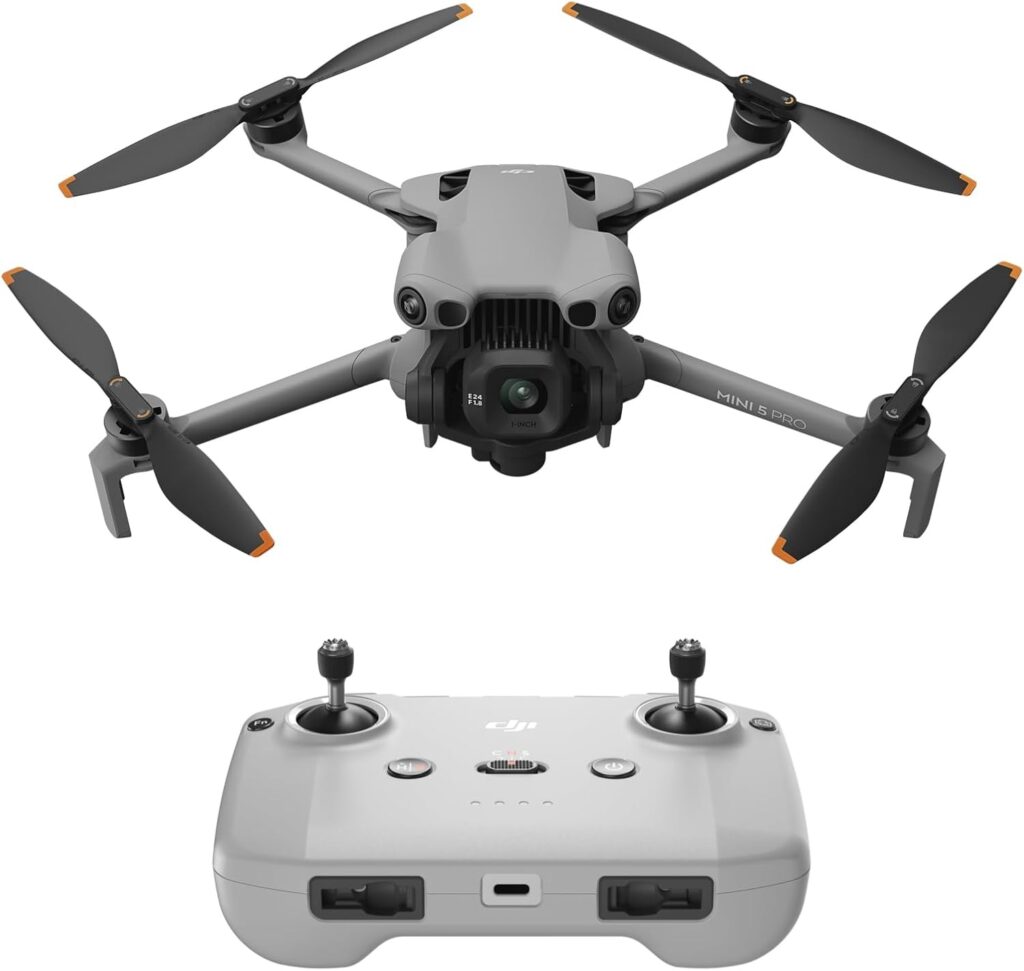
| DJI Mini 5 Pro | Travel Surfers | 1 inch CMOS | 36 min | Under 250g | $799 | View Deal |
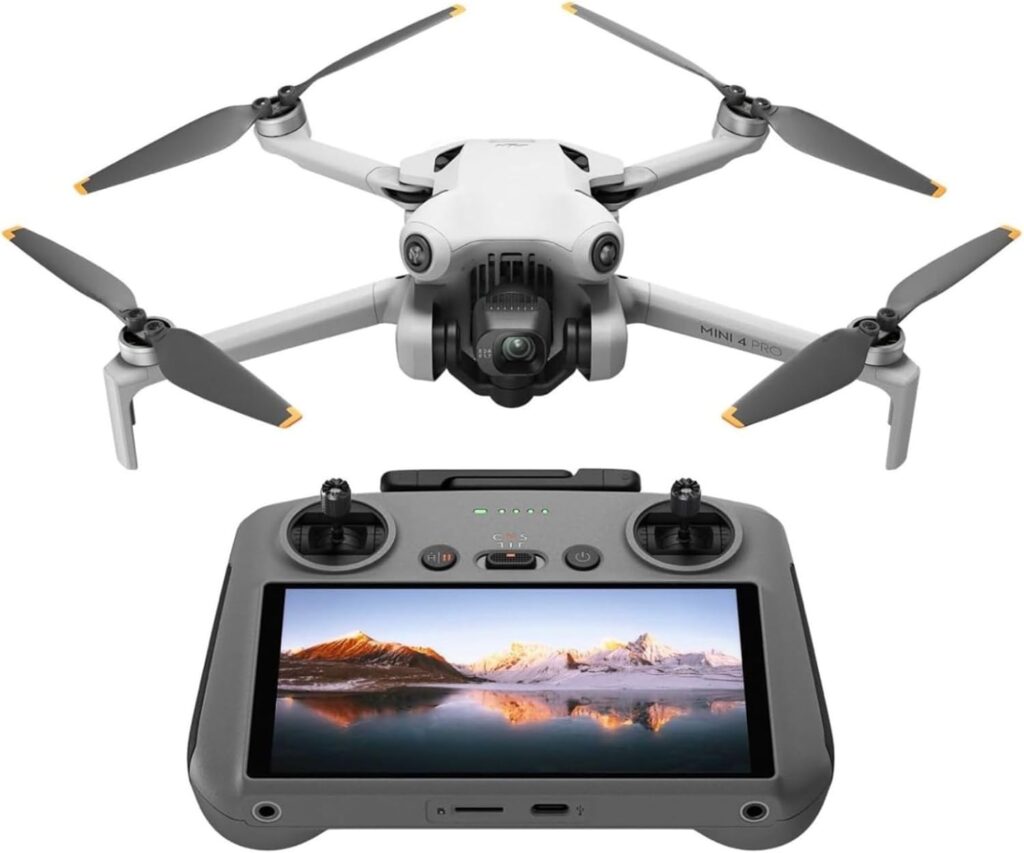
| DJI Mini 4 Pro | Budget Travel | 1/1.3 inch CMOS | 34 min | Under 249g | $759 | View Deal |
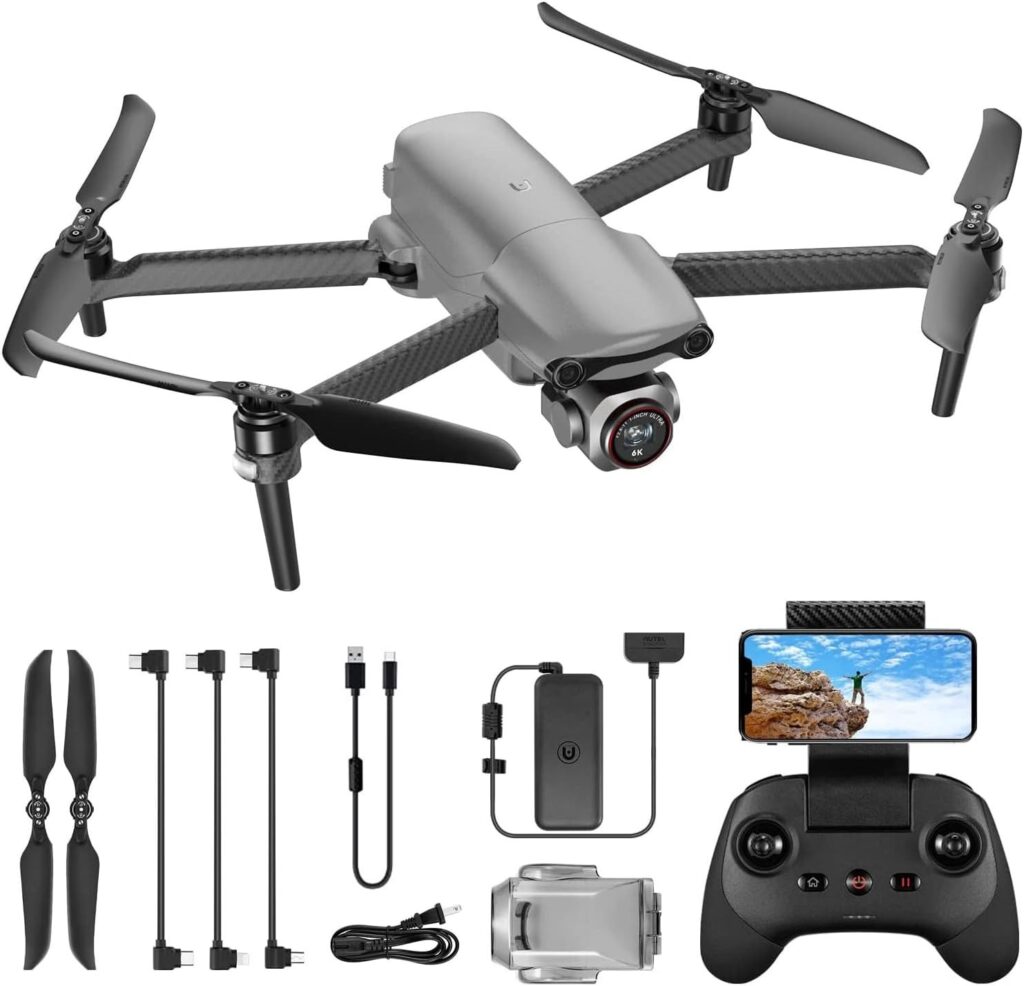
| Autel EVO Lite+ | Best DJI Alternative | 1 inch CMOS | 40 min | 820g | $1,049 | View Deal |
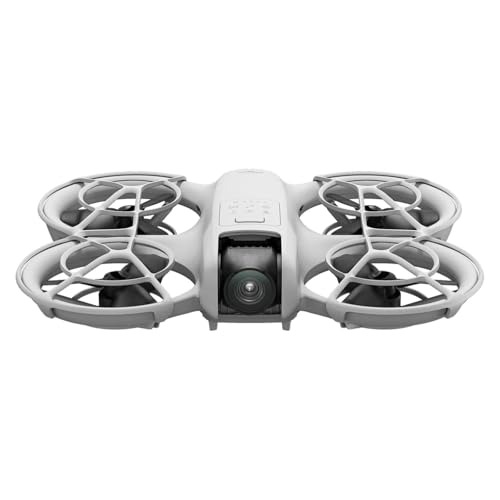
| DJI Neo | Beginners and Selfie Tracking | 1/2 inch CMOS | 18 min | 135g | $199 | View Deal |
The best drones for surf photography open up a perspective that no in water camera can match. From above, you see the wave shape, the lineup pattern, the lip throwing forward, and the surfer drawing lines across the face. It is the kind of footage that turns a normal session into something cinematic, and the kind of image that fills surf magazines and Instagram feeds in 2026.
Surf photography from the air used to require helicopters, big budgets, and professional crews. Now it fits in a backpack. Modern drones offer 4K and even 8K video, intelligent tracking, long flight times, and image quality that rivals dedicated cameras. For both content creators and surfers documenting their own progress, the right drone changes the game.
This guide breaks down what to look for, how to fly safely over the ocean, and seven solid drones worth your money this year.
Why Drones Changed Surf Photography Forever
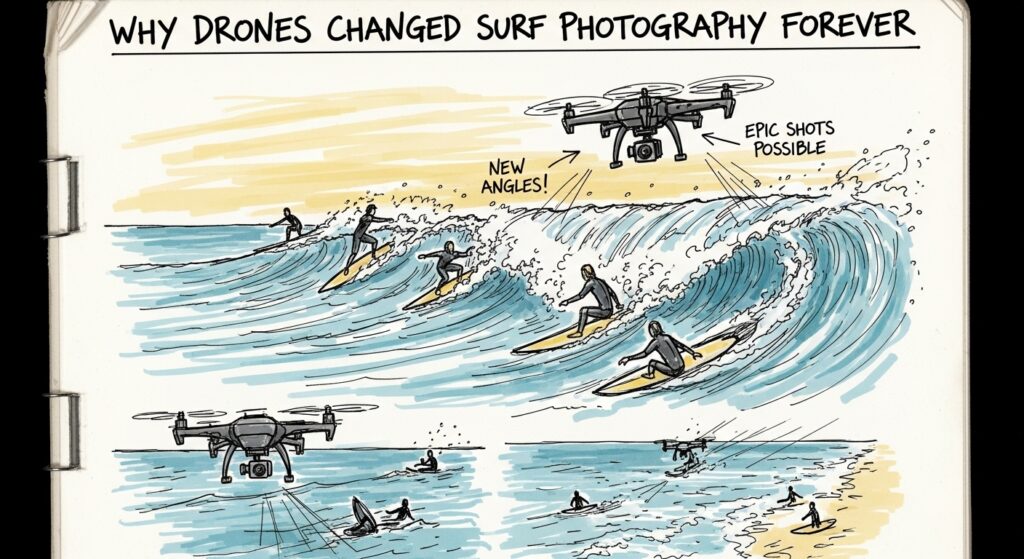
Before drones, capturing surf from above meant chartering a helicopter or hiking to clifftop vantage points. Most of those shots came from a handful of well known spots like Pipeline, Teahupoo, or Hossegor where elevation gave photographers the angle they needed.
Today, a single surfer with a portable drone can shoot world class footage at any break in the world. From small reef setups in remote Indonesia to crowded beach breaks at home, the aerial perspective is now accessible to anyone willing to learn the basics. This shift opened the door for solo content creators, surf schools, and even casual surfers who want to document their progress.
Drones also reveal what surfers and coaches could never see clearly before. The wave’s true shape, the surfer’s line through the section, the position of other riders, the exit from each maneuver, all of it becomes visible. Coaches now use drone footage as one of the most effective teaching tools available.
For surfers building a full creative toolkit, drones complement other gear like underwater housings and dedicated bodies covered in our complete surf camera guide.
What Makes a Drone Great for Surf Photography
Not every drone handles ocean conditions well. Wind, salt spray, glare, and the need for fast tracking all create challenges that consumer drones were not originally built for. Knowing what to prioritize saves money and frustration.
Wind Resistance
Coastal environments are windy by default. A drone rated for level 5 winds or higher will hold its position over the lineup without drifting or struggling. Lighter drones below 250 grams are easier to travel with but lose stability the moment a gust comes off the headland.
For most surf use, a sub 1 kilogram drone with strong wind tolerance hits the right balance.
Camera Quality and Sensor Size
The sensor matters more than the megapixel count. A 1 inch sensor captures noticeably better detail, color, and low light performance than the smaller sensors found in entry level drones. Look for 4K video at 60 frames per second minimum, with 10 bit color depth if you plan to edit footage seriously.
Slow motion at 120 or 240 frames per second is a major asset for surf, where every section happens fast.
Flight Time
Real flight time, not the manufacturer’s optimistic number, decides how much footage you actually get. Most modern drones advertise 30 to 45 minutes per battery, but in windy ocean conditions, expect closer to 20 to 30 minutes of usable time.
Always carry at least two extra batteries. A single battery is rarely enough to wait for sets, frame the shot, and capture multiple rides.
Tracking and Subject Recognition
Active tracking is what turns a drone into a real surf photography tool. The drone locks onto the surfer, follows them along the wave, and adjusts framing automatically. This frees you to focus on flight position while the camera handles the subject.
The latest models can identify surfers specifically, ignoring whitewater and other distractions that used to confuse older tracking systems.
Portability
A drone you can fit in a backpack with the rest of your surf gear is the one you will actually use. Folding designs from companies like DJI and Autel set the standard for travel friendly form factors that still pack pro level capability.
For surfers planning trips to multiple breaks, portability matters as much as image quality. If you are also figuring out gear logistics, our guide to planning your first surf trip covers what to take and what to leave behind.
Things to Consider Before Buying a Surf Photography Drone
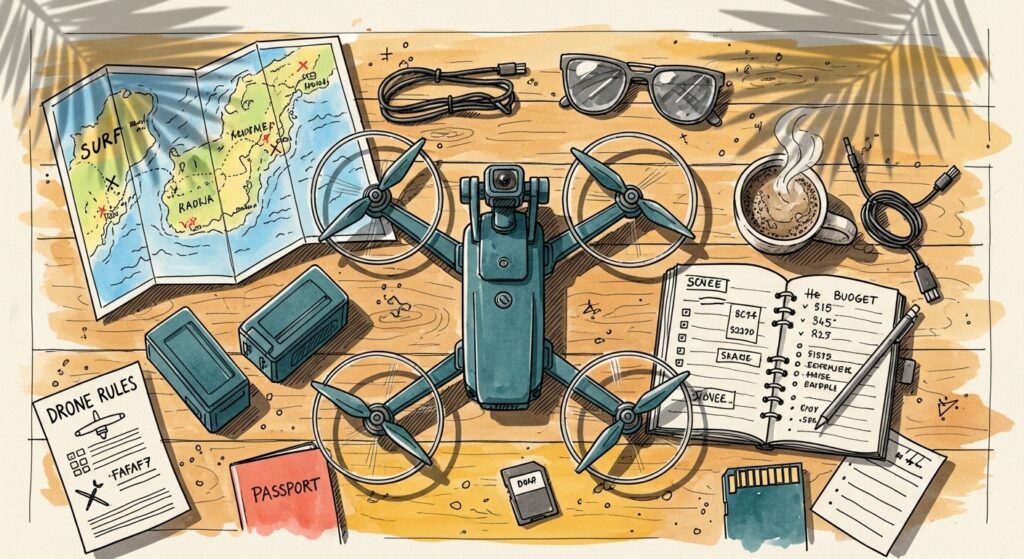
Drones are a serious investment. A few practical points worth thinking through before you commit.
Your Budget
Entry level surf capable drones start around $400 to $500. Mid range models with serious camera quality run $1,000 to $1,500. Professional level rigs can exceed $3,000 once you add accessories.
A higher budget gets you better wind resistance, stronger transmission range, and significantly better video. But beginners should start mid range and learn before upgrading.
Your Local Surf Conditions
Big wave spots demand drones with maximum wind tolerance and long range. Mellow beach breaks are forgiving and work with most consumer models. Match the drone to where you actually surf, not where you hope to surf one day.
Local Drone Regulations
This is the part most beginners skip and regret. Many countries require drone registration, pilot licenses, or both. Some popular surf destinations, including parts of Morocco, Indonesia, and Hawaii, have strict no fly zones or require permits.
The Federal Aviation Administration in the United States and EASA in Europe both publish clear rules. Check before you travel, not when you arrive.
Replacement Parts and Support
Surf flying breaks things. Salt corrodes, sand jams motors, rough water landings happen. Pick a brand with strong customer service and easy parts availability. Brands like DJI dominate the market partly because their support network handles repairs better than smaller competitors.
Top 7 Best Drones for Surf Photography in 2026
DJI Air 3S
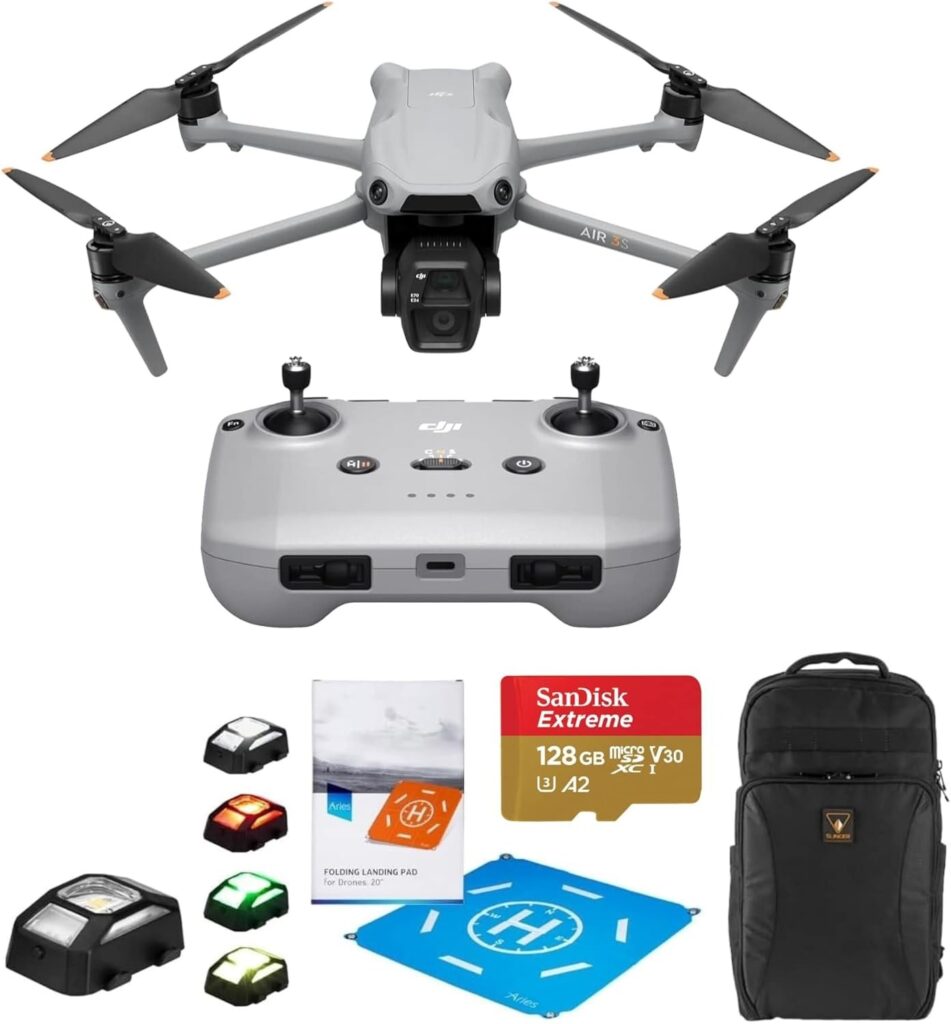
Best For: Most surf photographers and content creators
Price: $1,099 (standard) / $1,599 (Fly More Combo)
The DJI Air 3S is the drone most surf photographers should buy in 2026. It sits at the price to performance sweet spot, offering pro level features in a package that does not break the bank or your back. At 724 grams, it stands up to 20 mph sustained coastal winds with confidence, which is exactly what you need over the lineup.
The dual camera system pairs a 1 inch main sensor with a 70mm medium tele camera. Both shoot 4K at 60 frames per second with 10 bit D Log M color, giving you the same flexibility in post that working pros expect from much pricier drones. ISO performance pushes up to 12,800, which keeps footage usable even at dawn and dusk surf sessions.
ActiveTrack subject recognition has been refined to lock onto surfers more reliably than older models, and the next generation Smart Return to Home handles emergency situations smoothly. Real world flight time sits around 30 to 35 minutes per battery, more than enough for multiple rides per outing.
Pros
- Excellent wind resistance for coastal conditions
- 1 inch sensor with 10 bit color depth
- Strong ActiveTrack for surfer tracking
- 42GB internal storage
- Forgiving for new pilots while pro capable
Cons
- No telephoto lens beyond 70mm
- Heavier than the Mini series
- Premium price compared to entry models
DJI Mavic 4 Pro — Professional Filmmakers
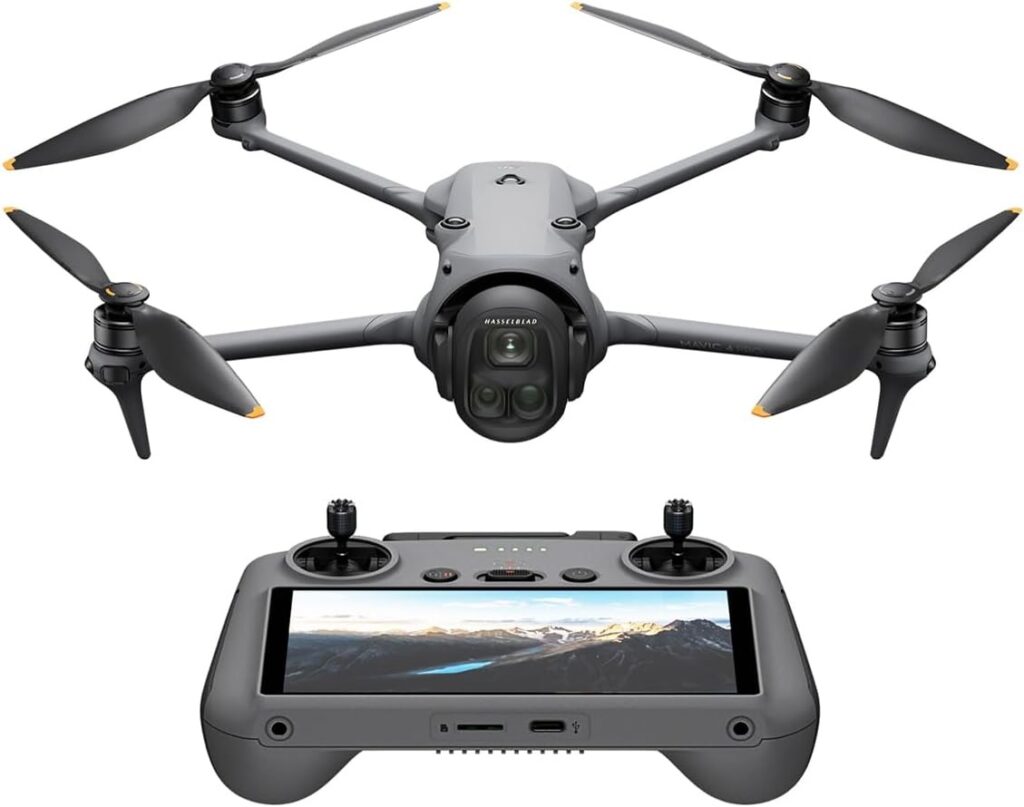
Best For: Working filmmakers and pro content creators
Price: $2,199 (standard) / $3,099 (Creator Combo)
The DJI Mavic 4 Pro is the most capable consumer drone on the market in 2026. Released in May, it brings three cameras to the air, including a 28mm wide with a 4/3 sensor, a 70mm medium tele, and a 168mm telephoto. For surf, that telephoto changes the game by letting you sit further offshore while still capturing tight shots of the rider.
Flight time stretches to a class leading 51 minutes per battery in optimal conditions, and the new O4+ transmission system reaches up to 30 kilometers in FCC mode. Wind resistance rates at 12 m/s, the same as the Air 3S, but the heavier 1063 gram weight gives it a slight edge in raw stability during gusts.
The rotating gimbal allows true vertical filming, which has become essential for surf content posted to TikTok and Instagram Reels. Subject tracking now identifies a single person up to 50 meters away, doubling the Air 3S range. For pro work, this matters.
Pros
- Three camera system including 168mm telephoto
- 51 minute flight time
- Rotating gimbal for vertical shooting
- Extended subject tracking range
- O4+ transmission for reliable signal
Cons
- Premium price point
- Heavier and bulkier than mid range options
- Overkill for casual users
DJI Mavic 3 Pro
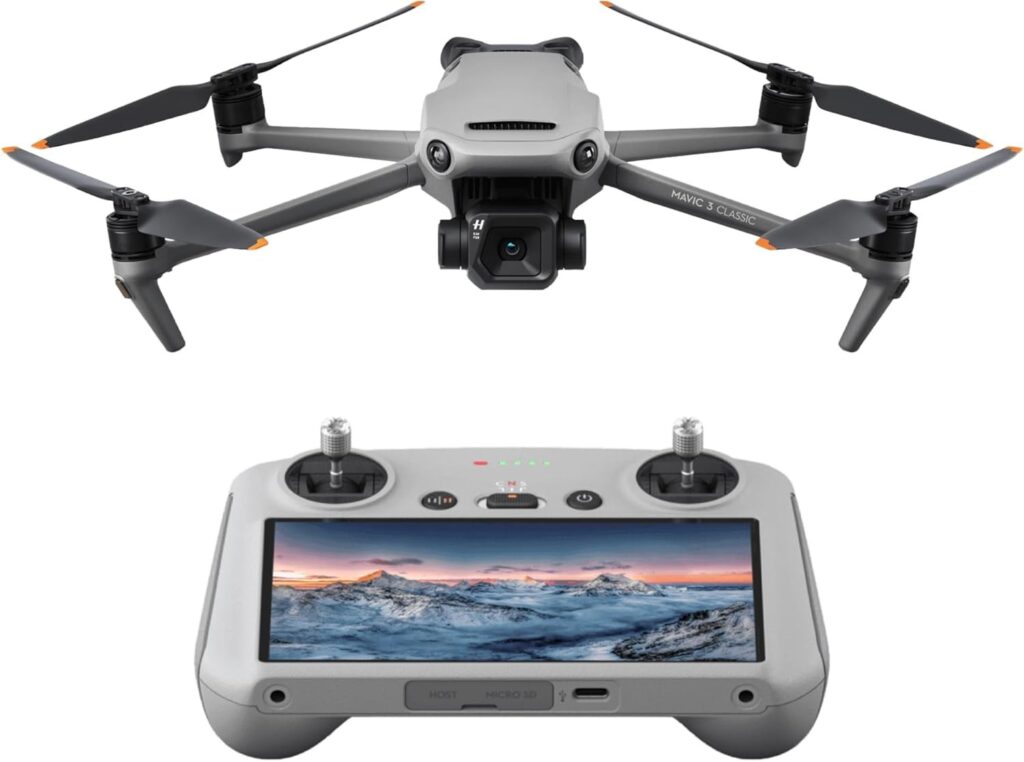
Best For: Surf cinematography on a slightly older platform
Price: $2,199 (with RC remote)
The DJI Mavic 3 Pro held the cinematography crown for years before the Mavic 4 launched, and it still delivers exceptional surf footage in 2026. The Hasselblad branded main camera shoots 5.1K video with native color science that many filmmakers prefer for skin tones and ocean blues.
Three lenses span 24mm, 70mm, and 166mm equivalents, giving you flexibility from wide lineup shots to tight rider close ups. Wind tolerance matches the newer Air 3S and Mavic 4 at 12 m/s, and the omnidirectional obstacle avoidance keeps the drone safe in cluttered environments like coastal cliffs and palm groves.
For surfers who want pro level results without paying the Mavic 4 premium, this remains a strong choice. Used and refurbished prices are also dropping as the new model takes over the top spot. Just be aware that the original DJI RC remote is weak and the upgraded version is worth the extra cost.
Pros
- Hasselblad 5.1K cinema quality
- Triple lens system with telephoto
- Omnidirectional obstacle avoidance
- Excellent wind resistance
- Trusted by working pros for years
Cons
- Original RC remote not recommended
- Only 8GB internal storage
- Older transmission system than Air 3S
DJI Mini 5 Pro — Travel Surfers
Best For: Surfers chasing waves around the world
Price: $799 (standard) / $1,099 (Fly More Combo)
The DJI Mini 5 Pro is the best sub 250 gram drone ever built. The under 250 gram weight class matters because it skips most registration requirements in the United States, the European Union, and many other countries, making it the easiest drone to travel with for surf trips.
DJI engineered a true 1 inch sensor into this tiny body, which previously seemed impossible at the weight. Video quality reaches 4K at 60 fps with 10 bit D Log M, putting it within striking distance of the Air 3S in image quality terms.
The trade off is wind tolerance. At around 10.7 m/s, the Mini 5 Pro is more vulnerable to coastal gusts than the Air 3S or Mavic 4 Pro. On clean morning sessions it performs beautifully, but afternoon onshore wind days will challenge it. For traveling surfers who fly often and surf mostly in lighter wind windows, the trade is usually worth it.
Pros
- Under 250 grams for easier travel rules
- 1 inch sensor in tiny body
- 4K 60fps with 10 bit color
- Folds down small for luggage
- Forgiving for newer pilots
Cons
- Lower wind tolerance than larger drones
- Smaller battery than mid range models
- Tracking range shorter than Mavic series
DJI Mini 4 Pro
Best For: Entry level surf photographers on a budget
Price: $759 (standard) / $959 (Fly More Combo)
The DJI Mini 4 Pro remains an excellent choice in 2026 for surfers who want capable performance without the premium price of the Mini 5 Pro. It uses a smaller 1/1.3 inch sensor but still delivers 4K HDR video, vertical shooting, and omnidirectional obstacle avoidance in a sub 249 gram body.
ActiveTrack 360 is the standout feature here. It allows the drone to circle the subject, follow at angles, and adjust framing dynamically, which is ideal for surf where the wave moves in unpredictable directions. For solo content creation, this kind of automation is genuinely useful.
Wind resistance rates at the same level as the Mini 5 Pro, so the same caveats apply. Stick to morning sessions or wait for offshore winds. For learning, traveling, and building your first surf portfolio, the Mini 4 Pro punches well above its weight class.
Pros
- Excellent value at this price
- Under 249 grams for travel ease
- ActiveTrack 360 for advanced tracking
- Vertical shooting for social content
- Strong obstacle avoidance
Cons
- Smaller sensor than the Mini 5 Pro
- Wind sensitivity limits use on stormy days
- Less low light performance than 1 inch models
Autel EVO Lite+ — Best DJI Alternative
Best For: Pilots who want a non DJI option with pro features
Price: $1,049 (standard) / $1,449 (Premium Bundle)
The Autel EVO Lite+ is the best alternative to the DJI ecosystem in 2026, especially relevant given ongoing regulatory uncertainty around DJI in some markets. It features a 1 inch CMOS sensor with an adjustable aperture from f/2.8 to f/11, which is rare at this price and especially useful for managing bright coastal light without ND filters.
Video quality reaches 6K at 30 fps or 4K at 60 fps, and Autel’s moonlight algorithm pulls clean footage from low light scenes. The 40 minute flight time per battery beats most DJI mid range drones, and the level 7 wind resistance handles coastal gusts well.
The trade off comes in software. Autel’s Sky App is less polished than DJI Fly, and ActiveTrack 2.1 lags behind the latest DJI tracking algorithms for fast moving subjects like surfers. Hardware is excellent. Software is good but not class leading.
Pros
- True 1 inch sensor with adjustable aperture
- 6K video and 40 minute flight time
- No geo fencing restrictions
- Strong wind tolerance
- Independent of DJI ecosystem
Cons
- Tracking less refined than DJI
- App less polished
- Smaller third party accessory ecosystem
DJI Neo — Beginners and Selfie Tracking
Best For: Beginners filming their own sessions
Price: $199 (Neo only) / $349 (Fly More Combo)
The DJI Neo is the entry point for surfers who want to film themselves without a long learning curve. At just 135 grams, it falls well below registration thresholds in most countries and can be launched directly from your palm. For solo sessions, that simplicity is hard to beat.
Video reaches 4K with electronic image stabilization, which works surprisingly well for the size. Subject tracking is the headline feature. The Neo locks onto you and follows automatically, allowing you to surf while it captures the shot. For surfers who travel solo and want footage without a camera operator, this is a real option.
The limits are clear. Wind tolerance is modest, flight time is short at around 18 minutes per battery, and image quality cannot match a 1 inch sensor drone. For casual social content and personal session review, it works well. For professional surf photography, it should be a secondary tool.
Pros
- Easy to fly straight out of the box
- Hand launch and tracking modes
- Under 250 grams for regulation ease
- Lowest price of any DJI drone
- Great for solo content creation
Cons
- Short flight time per battery
- Lower wind tolerance
- Smaller sensor than mid range models
- Limited manual controls
How to Choose the Right Surf Drone for You
With seven different options, the right choice depends on what you actually need from your drone.
Beginners filming their own sessions should prioritize ease of use, strong tracking, and forgiving controls over raw camera quality. Crashing happens more in the early months than later, so a drone with obstacle avoidance and return to home features pays for itself.
Intermediate creators building a portfolio need better camera sensors, 10 bit color, and consistent performance in real wind. The middle of the price range usually delivers the best value here.
Professional surf photographers and filmmakers should look at top tier flagship models with the largest sensors, longest range, and best low light performance. The extra investment pays back fast in client work and stock footage sales.
Travel focused surfers chasing waves around the world should weigh portability and battery life as heavily as image quality. The lightest folding drones make long trips much easier.
If your goal is shooting events and competitions, both WSL Taghazout Pro 2026 and other top tier contests are increasingly filmed from drones. Capturing event quality footage requires both gear and serious permits.
Practical Tips for Better Surf Drone Photography
The right drone is only the first step. Capturing memorable surf footage takes practice and a few hard learned habits.
Fly High, Then Drop In
Start your shot from higher altitude to capture the wave shape and lineup context. As the surfer takes off, descend smoothly to follow the ride. This gives you cinematic variety in a single take.
Use Manual Camera Settings
Auto mode struggles with high contrast surf scenes. Sunlight reflecting off water confuses exposure meters and washes out detail. Switch to manual, set your ISO low, lock shutter speed at twice your frame rate, and adjust aperture for proper exposure.
A neutral density filter is essential for bright midday shooting.
Follow From the Beach, Not the Water
Launching from the beach gives you the most stable signal and the easiest emergency landing options. Flying over open water with no recovery plan is how drones end up at the bottom of the ocean.
If you have to launch from a boat or paddleboard, use a drone with strong waterproof features and practice in calm conditions first.
Time Your Sessions With Forecasts
Drones perform best in mid wind, soft light conditions. Early morning and late afternoon offer the best light and usually the lightest wind. Tools like AI surf forecasting help you predict the best windows for both surf and flying.
Check both wave forecasts and wind forecasts before every session.
Keep Spare Batteries Warm
Cold batteries lose flight time quickly. Keep extras in a padded case or in your car until you swap them in. A small detail that adds real minutes to your overall shooting window.
Common Mistakes Beginners Make With Surf Drones
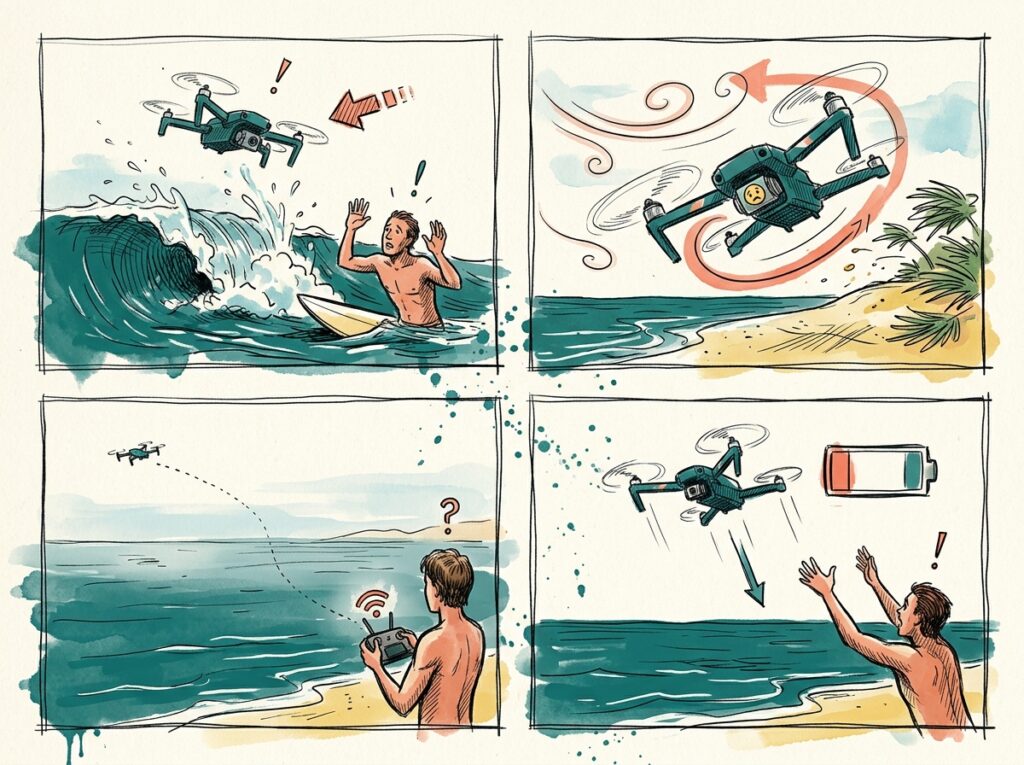
A few errors come up over and over again with new drone surf photographers. Avoid them and your gear lasts longer.
Flying too low over the water is the classic mistake. Spray, glare, and unexpected wind gusts can put a drone in the ocean instantly. Stay at least 10 to 15 meters above wave height during active sessions.
Forgetting to check local regulations is the second biggest error. Confiscated drones and fines have become common in popular surf destinations. Always check before you fly in a new country.
Trying to film from too far out is another. Transmission range numbers are based on perfect conditions. In real life, salt air, humidity, and obstructions cut that range significantly. Stay well within tested limits.
Finally, ignoring battery life kills more drones than any other mistake. Always return to land with 25% battery minimum to handle unexpected wind or recovery situations.
Drone Regulations in Top Surf Destinations
Each surf country has its own rules. A quick overview of what to expect at some of the most popular destinations.
In Morocco, drone use requires advance authorization and is restricted in many coastal areas. Tourist zones around Agadir and Taghazout are particularly monitored. Check the latest rules with local authorities before flying near popular surf points covered in our guide to Morocco’s secret surf spots.
In Indonesia, drone use is generally allowed for personal recreation but commercial filming requires permits. Bali and the Mentawai islands have specific local restrictions during ceremonies and around airports.
In Portugal, drones must be registered, and pilots over a certain weight need licenses. Most surf coastlines allow recreational flying with proper registration.
In Hawaii, drone use is heavily regulated. Many beaches and state parks ban drones outright. Always check posted signs before launching.
In Australia, the Civil Aviation Safety Authority maintains clear consumer rules. Drones must be kept within visual line of sight, below 120 meters, and away from people and emergency operations.
Drone Care and Maintenance for Salt Environments
Salt destroys drones faster than any other condition. A few habits keep your gear alive much longer.
After every flight near the ocean, wipe down the body, propellers, and motors with a microfiber cloth. Salt spray lands on the drone even when it stays well above the water. Compressed air helps clean small openings without damaging electronics.
Store your drone in a hard case with silica gel packs to absorb humidity. Coastal storage rooms get damp fast, and humidity inside electronics causes long term failure.
Replace propellers regularly. They are cheap, and damaged blades cost more flight stability than people realize. Visible nicks or warping mean it is time for a new set.
Service motors annually if you fly frequently in coastal conditions. Professional cleaning costs little compared to motor replacement after corrosion damage.
Frequently Asked Questions About Surf Drones
Are drones waterproof?
Most consumer drones are not waterproof. Splashes and full submersion will damage them. A few specialized models are water resistant or waterproof, but most surf photographers use standard drones and keep them well above the water at all times.
What is the best altitude for surf drone footage?
For wide shots, 30 to 60 meters above the water gives the best wave context. For tighter tracking shots, 10 to 20 meters works, but only in calm wind. Higher altitudes are safer and produce more cinematic results.
How long does a drone battery last in real surf conditions?
Most batteries deliver 20 to 30 minutes of real flight time in wind. Manufacturer numbers are usually based on calm indoor testing. Always carry at least two spare batteries for serious sessions.
Can I fly a drone over other surfers in the lineup?
Most countries require you to keep drones away from people. Beyond legal issues, flying over other surfers without consent is poor etiquette and creates safety risks. Always fly from a position where a crash will not hit another surfer.
Do I need a license to fly a drone for surf photography?
It depends on the country and the drone’s weight. Recreational flying of small drones often requires only registration. Commercial work, including stock footage sales and client projects, usually requires a license. Check your local regulations.
How much should I spend on my first surf drone?
For most beginners, a budget between $700 and $1,200 hits the right balance of camera quality, wind tolerance, and ease of use. Avoid the cheapest models, which often fail in real ocean conditions.
Final Thoughts on the Best Drones for Surf Photography
A great surf drone transforms how you see the ocean. Whether you are shooting your local point break, documenting a surf trip, or building a creative career around wave photography, the right gear makes the work feel effortless. The seven models in this guide each earn their place for different reasons.
Match your choice to your real surf conditions, your travel needs, and your honest skill level. Buy the drone you will actually fly often, not the one with the best spec sheet on paper. The footage you capture, and the lessons you learn through every flight, are what build your eye over time.
For inspiration on what world class surf footage looks like, our roundup of iconic surf movies shows how aerial perspectives changed the visual language of surf forever.
Fly carefully, respect local rules, and bring back footage that captures what makes surfing worth filming in the first place.