
Gear, settings, flight technique and the rules that keep your aircraft dry
Few things changed surf media as fast as the drone. Choosing a drone for surf videography used to mean a helicopter budget; today a folding aircraft in a backpack delivers the same bird’s-eye view of a peeling wave. But the ocean is a hostile place for flying electronics — salt, wind, glare and white water all conspire against you. This guide walks beginners and working filmers through the gear, camera settings, flight technique and rules that turn a risky hobby into repeatable, cinematic footage.
Why Surf Filmmakers Switched to Drones
A drone gives you angles that are simply impossible from the sand or the channel: the top-down look that reveals a wave’s shape, the tracking shot that holds a surfer through a long wall, and the pull-back that frames a tiny figure inside a huge ocean. It is also safer than swimming a heavy water housing into a crowded impact zone.
For coaching, the overhead view is unbeatable for reading line choice, speed and rail engagement. If you are still deciding which board suits the waves you film most, our guide to choosing the right surfboard size pairs neatly with footage review — you can literally watch how volume and length change a session.
Choosing the Best Drone for Surf Videography
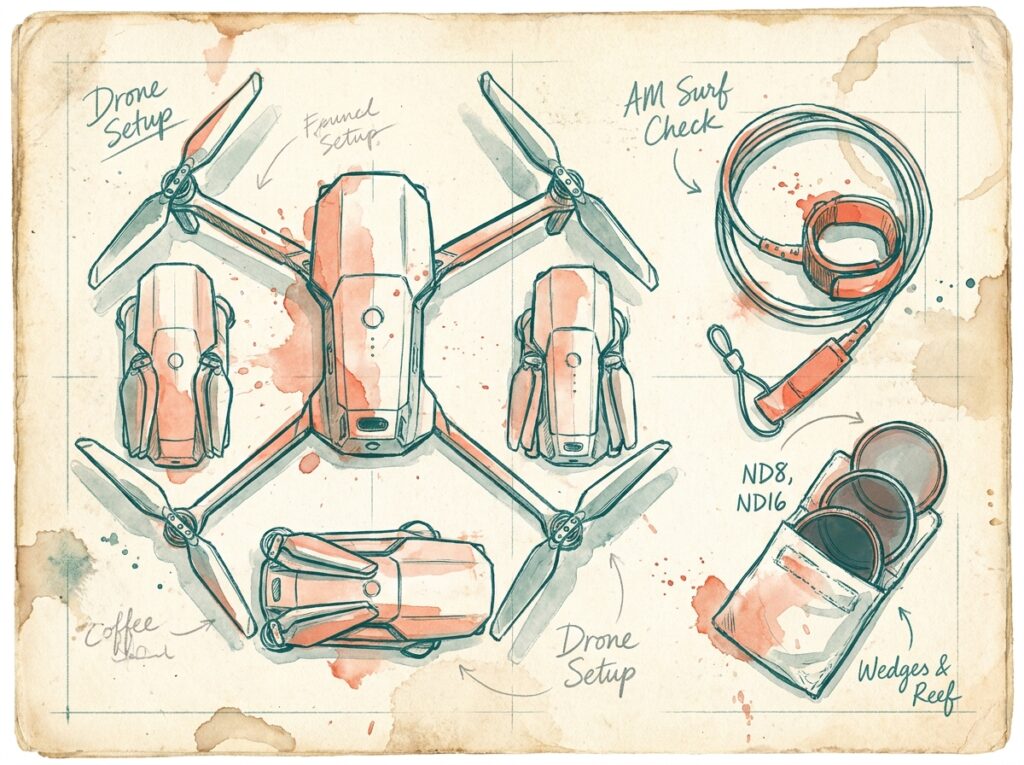
The right aircraft balances four things: camera quality, wind resistance, battery life and how easily you can launch and recover it near water. A larger camera sensor handles the ocean’s extreme brightness far better than a budget model, while heavier drones simply hold position better in coastal gusts.
Quick Comparison of Popular Surf Drones
| Drone | Best For | Wind Resistance | Standout Spec |
| DJI Air 3S | All-round surf filming | 12 m/s (~Force 6) | 1-inch sensor, dual-camera |
| DJI Mavic 3 Pro | Pro cinematography | 12 m/s | Hasselblad 5.1K, triple lens |
| DJI Mini 4 Pro | Travel / no registration | 10.7 m/s | Sub-250g, 1/1.3-inch sensor |
| DJI Neo / HOVERAir X1 | Hands-free self-filming | Lower | Auto-tracking, palm launch |
| SwellPro SplashDrone 4+ | Waterproof / rough water | Strong | Floats & self-rights on water |
Sources: drone testing roundups from The Drone Girl and Surfd (2025–2026).
What the Specs Actually Mean on a Beach
- Wind resistance: Sub-250g drones avoid registration in many countries but struggle once the sea breeze fills in. A heavier Air or Mavic body is steadier in the gusts you get at most points and reefs.
- Sensor size: A 1-inch sensor captures usable footage at dawn and dusk — the glassy, golden-hour windows surfers love.
- Tracking: “Follow” or “ActiveTrack” modes let a solo surfer film themselves, though over moving water they need supervision.
- Waterproofing: Sealed, buoyant drones like the SwellPro SplashDrone 4+ float and self-right after a splash — overkill for casual use, invaluable for boat or rough-water work.
Camera Settings for Clean Surf Footage
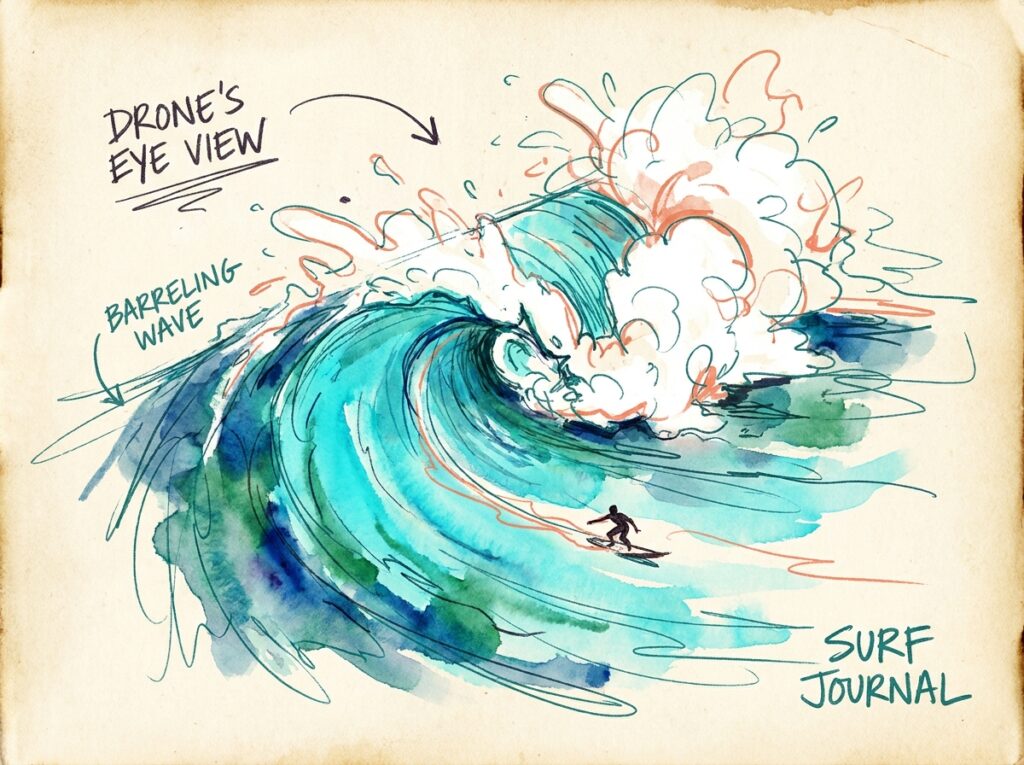
The ocean is, in the words of one drone instructor, a nightmare for camera sensors: direct sun, mirror-bright reflections and blinding white foam all fight your exposure. Lock your settings down before you launch rather than fixing them in the air.
The Core Settings
- Use ND filters. These act like sunglasses for the lens. Match the filter so your shutter speed is roughly double your frame rate — about 1/50s when filming at 25fps — for natural motion blur. Carry ND16, ND32 and ND64.
- Add a polarizer (CPL). A polarizing filter cuts surface glare and lets the camera see into the wave, bringing out turquoise barrel colour.
- Keep ISO low. Small drone sensors get noisy fast, so hold ISO near 100 and control brightness with shutter speed.
- Lock white balance. Set a fixed Kelvin value (around 5500–6500K). Auto white balance shifts colour as the frame moves between blue water and white foam.
- Shoot 4K or higher. Extra resolution lets you crop and stabilise in the edit without losing detail.
Flight Technique Over the Lineup
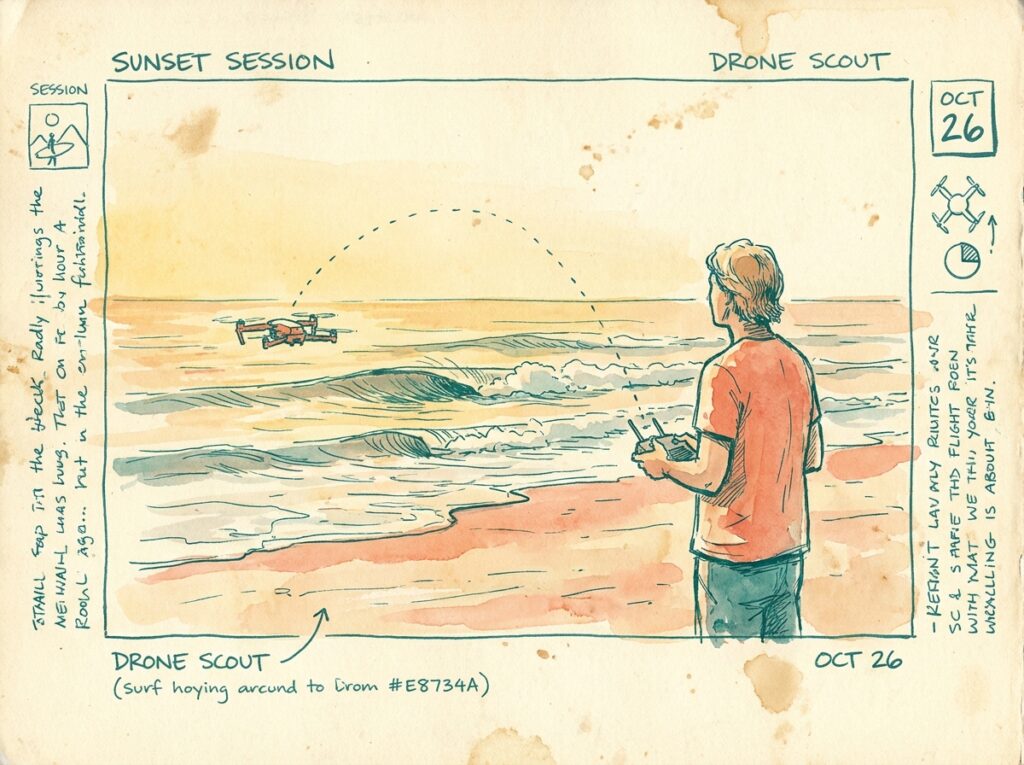
Launch and Recovery Near Water
Sand is the enemy of exposed motors. Launch and land from a portable pad, or hand-launch and hand-catch on a beach where there is no flat, grit-free surface. When catching, let the drone do the work — let it settle gently into your palm rather than snatching it from a hover, which only makes it fight back.
Positioning and Movement
- Keep the aircraft facing the swell and let waves roll toward the lens — it reads as far more dynamic.
- Fly lower than you think; coastal topography often means less wind near the surface, but always clear the wave height with margin.
- Mix your moves: a high top-down for shape, a low skimming pass for speed, and slow orbits or tracking shots for the ride itself.
- Use the rule of thirds — place the surfer off-centre against the open face of the wave.
Timing matters as much as position. Shoot as waves are well-defined and cresting, and capture surfers at the peak of a manoeuvre — the drop, a hard turn, or an air. Light, weather and swell all factor in; our guide to reading the surf forecast helps you pick a session where the waves photograph well in the first place. Golden hour around sunrise and sunset gives water its warmest glow.
Protecting Your Drone From Salt and Sand
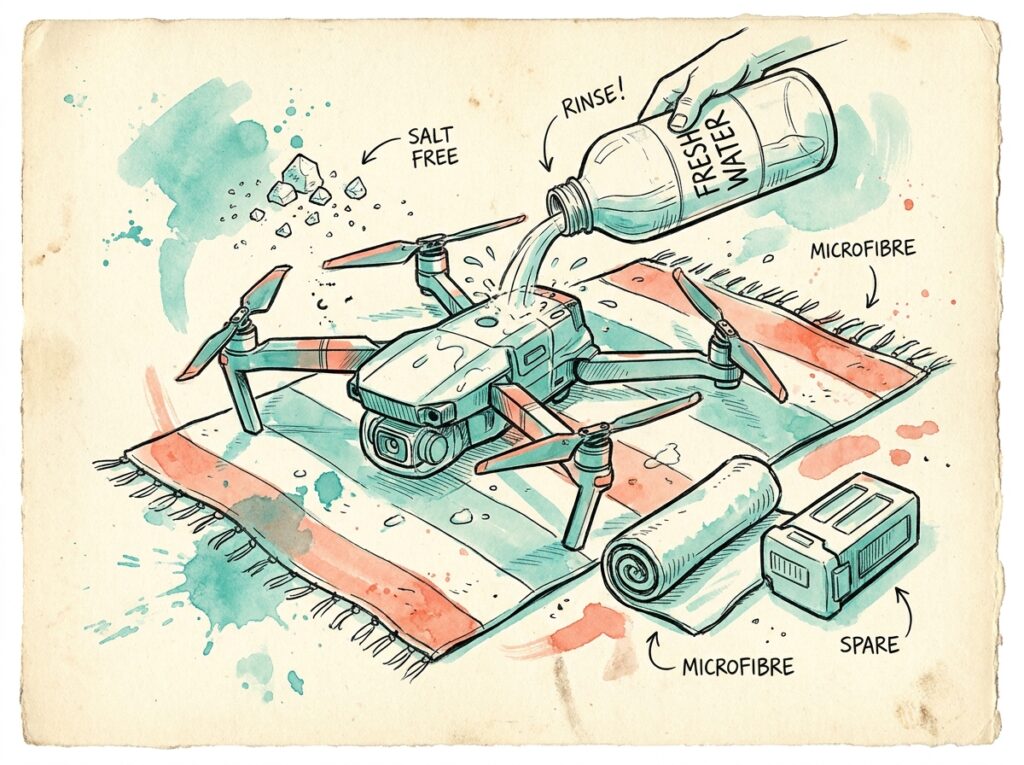
Saltwater is the single biggest threat to any drone. Once seawater evaporates it leaves crystals that jam motors and corrode contacts overnight. After every ocean session, wipe the aircraft down with a cloth dampened in fresh water (battery bay sealed), dry it fully and let it air out before storing.
- Never fly the battery to empty over water — start full and leave margin for a slow return-to-home.
- Always enable GPS return-to-home; it stabilises the hover and saves the aircraft if the link drops.
- Consider a flotation kit or rescue jacket if you fly close to the surface a lot.
The same respect for conditions applies to the surfer you are filming. Solid ocean safety habits matter more than any shot — and if you are heading out to film alone, read our notes on surfing solo for the first time before you do.
Rules, Etiquette and No-Fly Zones
Drone law varies sharply by country and even by beach. In the United States the FAA’s recreational and Part 107 framework sets registration and licensing rules — commercial surf content generally needs a Part 107 certificate. Many beaches are bird sanctuaries or carry local no-fly ordinances, so check before you launch.
- Never fly directly over swimmers or surfers who are not part of your shoot; a falling drone can injure.
- Keep the aircraft in sight at all times, even with tracking enabled.
- Be mindful of noise and crowding — buzzing a busy peak wave after wave sours the vibe for everyone in the water.
Etiquette in the air mirrors etiquette in the water. The same courtesy laid out in our surfing etiquette guide applies overhead: don’t ruin someone else’s session for your footage.
Drone Surf Videography: Pros and Cons
| Advantages | Trade-offs |
| Angles impossible to get from the beach or water Reveals wave shape, line choice and speed clearly Safer than swimming a heavy water housing into impact zones Auto-tracking modes let you film yourself solo | Salt and wind are constant threats to the aircraft Glare and white foam easily blow out highlights Noise and crowding can disturb other surfers Rules and no-fly zones vary by beach and country |
A Simple Workflow for Your First Surf Edit
- Scout the spot. Pick a session with clean, well-defined waves and light wind; check the forecast and the local rules.
- Prep on shore. Fit ND/CPL filters, lock white balance and ISO, format a fast card and charge at least three batteries.
- Fly with intent. Capture a mix of top-down, tracking and pull-back shots; let waves come toward the lens.
- Recover and rinse. Hand-catch, then clean off salt the moment you’re back on the sand.
- Edit and grade. Cut to the best moments, stabilise lightly and colour-correct the blues and whites.
If filming is part of a bigger adventure, fold it into your first surf trip plan — and if you’re flying internationally, know the rules for travelling with a surfboard on a plane, since your drone kit adds to the baggage puzzle. For destinations worth the airfare, our best surf spots in Agadir roundup highlights points that film beautifully from above.
Final Thoughts on Filming Surf From the Sky
Mastering a drone for surf videography is less about owning the priciest aircraft and more about respecting the environment you fly in. Lock your settings, fly with margin, protect the drone from salt, and follow local rules and ocean etiquette. Do that and you’ll come home with cinematic footage — not a waterlogged drone. Start simple, log hours over safer water, and let your eye for the wave develop alongside your flying.