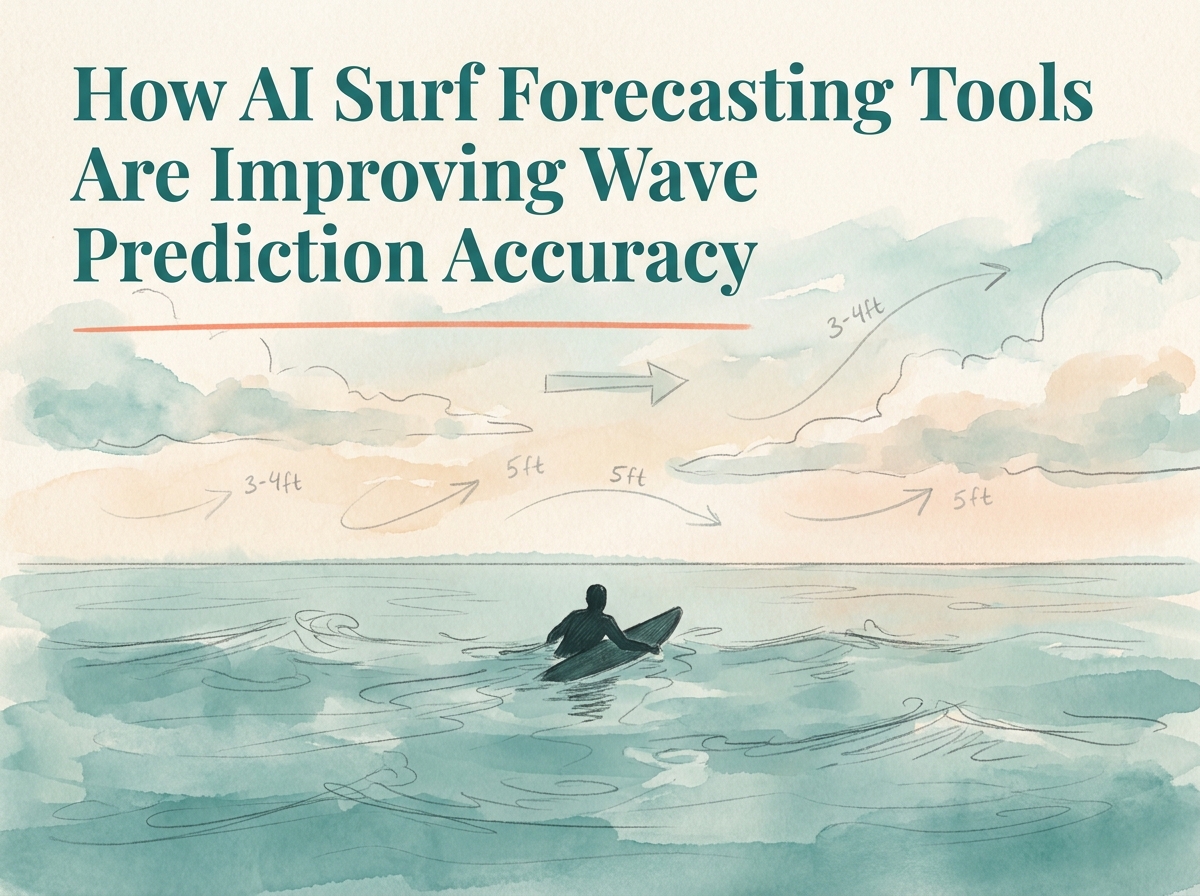

For decades, scoring good waves meant reading charts, calling the local shop, and trusting a forecaster’s gut. That balance is shifting fast. AI surf forecasting tools now sift through buoy data, satellite scans, bathymetric maps, and millions of human surf reports to predict wave behavior with a precision that earlier models simply couldn’t match.
This guide walks through how these tools actually work, where the accuracy gains are coming from, which platforms lead the field, and where AI still falls short. Whether you check the forecast once a week or plan trips around perfect swells, understanding what’s behind the predictions will help you read them better.
Why Wave Prediction Has Always Been Hard
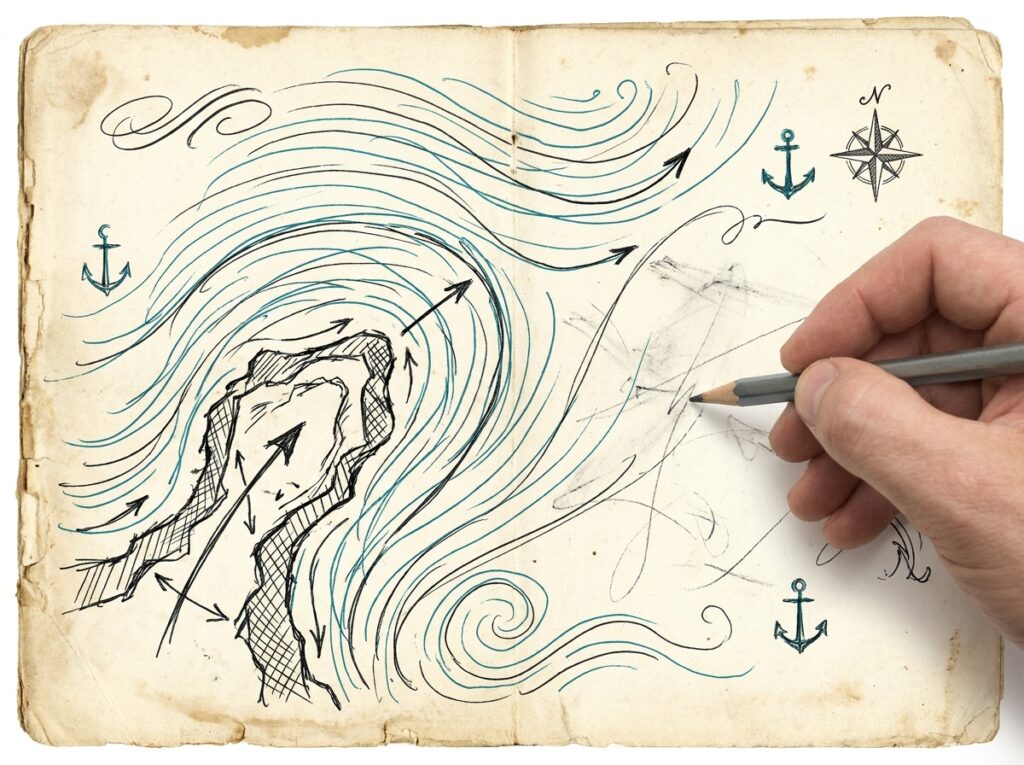
Waves are messy. A single swell is shaped by storm intensity hundreds of miles offshore, water depth, seafloor contours, local wind, tide stage, and the orientation of the coast. Traditional forecasts have leaned on numerical weather prediction models like NOAA’s WaveWatch III and the wave model from the European Centre for Medium-Range Weather Forecasts.
These physics-based models solve fluid dynamics equations on a grid. They are powerful, but expensive to run and limited in resolution. Near the coast, where waves refract over reefs, sandbars, and points, generic grid models often miss the fine detail that determines whether a spot will be firing or flat.
Human forecasters used to bridge that gap. At Surfline, professional forecasters spent decades watching charts, comparing them to what actually showed up at the beach, and refining mental models for each break.
That accumulated judgement is exactly what machine learning has now started to encode at scale. The result is forecasts that lean on physics where physics is reliable and on learned patterns where it isn’t.
How AI Surf Forecasting Tools Work
At the core of modern AI surf forecasting tools is a simple idea: feed the algorithm enormous quantities of past observations and let it learn the patterns. Inputs typically include offshore swell height, period, and direction; wind speed and direction; tide stage; bathymetric data; satellite altimetry; and historical surf reports.
Neural networks, often convolutional or transformer-based, learn how those inputs combine to produce real-world wave conditions at a specific break. Instead of solving physics from scratch each run, the model recognises that this swell, this period, this wind, at this tide, at this spot has produced waves of a certain size and shape before.
Surfline’s engineering team has described how they couple their nearshore model with a neural net trained on more than a million human surf observations going back to Sean Collins’s journals. The net learns to predict surf reports the way an experienced forecaster would, only across every spot at once.
The Data Stack Behind the Forecast
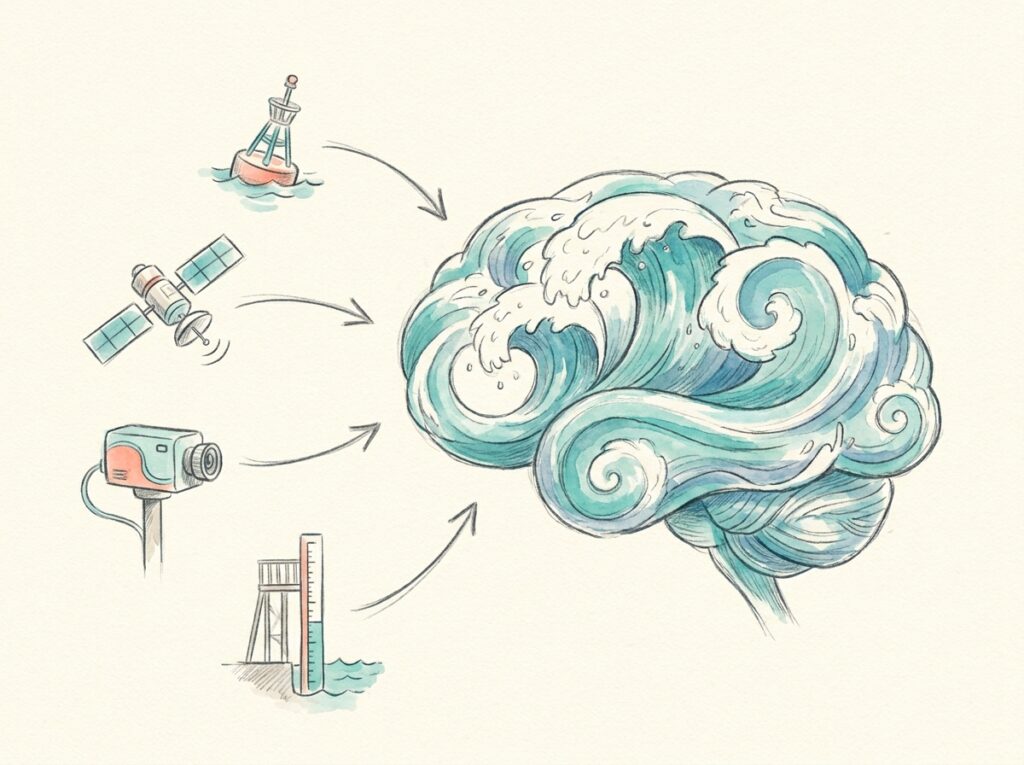
Several streams feed today’s surf forecasting AI:
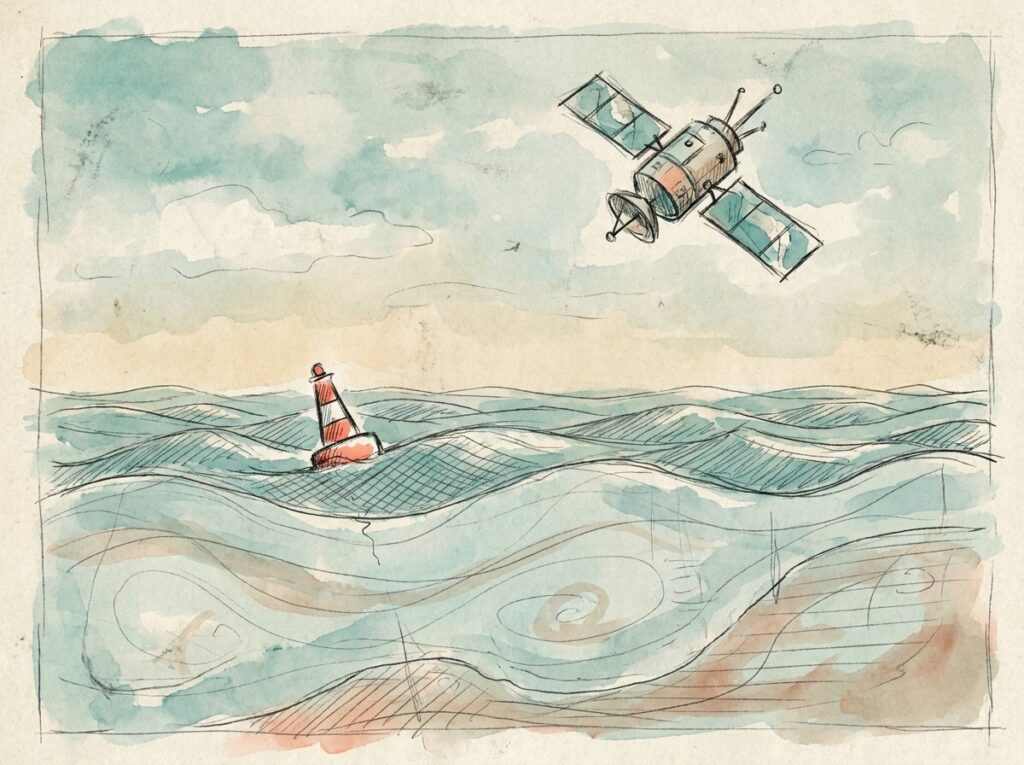
- Offshore buoys — real-time wave height, period, and direction from networks like the NOAA National Data Buoy Center.
- Satellite altimetry — sea surface height and wind measurements from missions like Sentinel-6 and Jason-3.
- Numerical weather models — global wind and pressure fields from ECMWF, NOAA, and others.
- Bathymetric charts — high-resolution seafloor maps that shape how swell refracts at the coast.
- Surf cameras and human reports — ground-truth data used to validate and retrain the models.
The more spot-specific data a model has, the better its local predictions. This is why a popular break with a long history of cam footage and reports will usually have a more reliable forecast than a remote, rarely surfed point.
What’s Driving the Accuracy Leap
The gains are measurable. Surfline has reported cutting its error rate roughly in half in recent years as it added live cam data and machine learning. A 2024 study from the Scripps Institution of Oceanography measured around a 15 percent improvement in wave prediction accuracy when AI was layered on top of traditional methods.
Computer Vision from Live Surf Cams
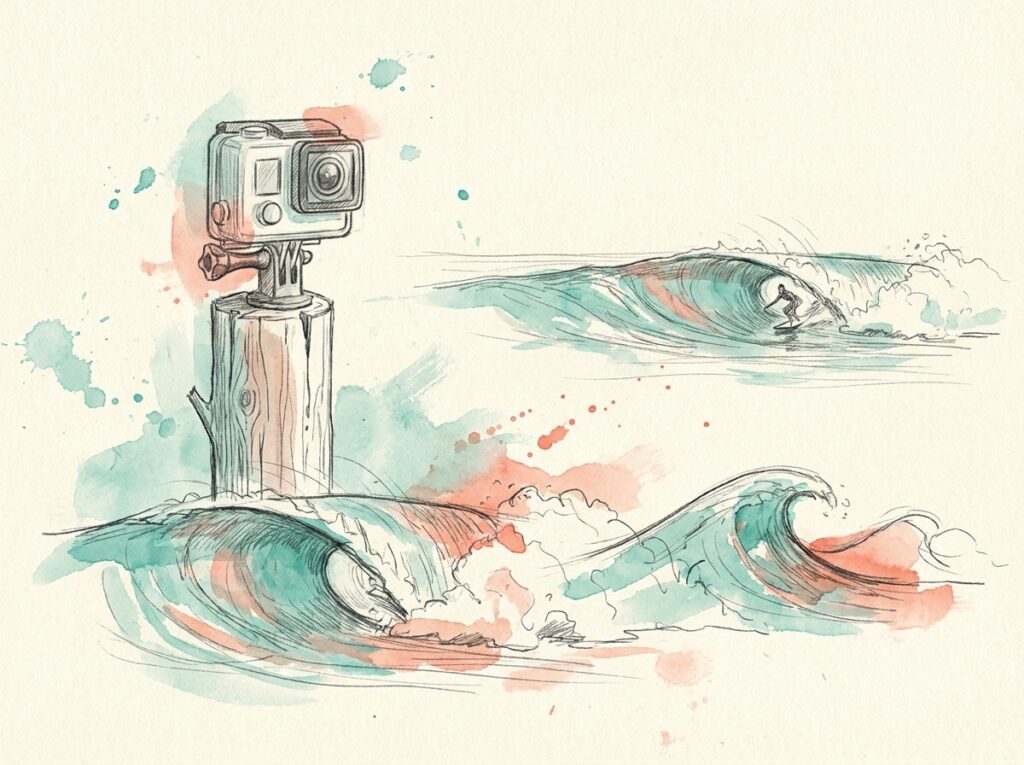
High-definition surf cams are not just for checking conditions before you drive. They now feed computer vision pipelines that count rides per hour, measure wave shape, and detect how quickly each set breaks. That stream provides hard ground truth — the model can score its own predictions against what waves actually did, and adjust.
Personalised, Spot-Specific Models
Older forecasts treated every surfer the same. Modern systems can weight predictions toward your skill level, board type, and preferred conditions. A beginner-friendly forecast highlights mellow chest-high days at a forgiving break; an experienced surfer’s view promotes solid overhead windows at reef breaks.
If you’re still working through how long it takes to learn to surf, this kind of curation matters: pointing newer surfers at appropriate conditions is one of the most useful things AI forecasting can do.
Faster, Cheaper Global Models
Beyond surf-specific platforms, the broader weather science world has been transformed by AI models like GraphCast, Pangu-Weather, and ECMWF’s AIFS. Recent analyses show these models match or beat traditional numerical weather prediction on most metrics at medium range, and they run in minutes on a single GPU instead of hours on a supercomputer. The downstream effect on wave models is a richer, fresher input stream.
Leading AI Surf Forecasting Tools in 2026
Several platforms are now using machine learning to some degree. Here’s how the most-used options compare for everyday surfers.
| Platform | AI / ML Features | Best For | Coverage | Free Tier |
| Surfline | Neural net trained on 1M+ surf reports plus computer vision from live cams | Accuracy, cam access, US/Europe/Australia spots | 700+ HD cams worldwide | Yes (limited) |
| Windy | Multi-model viewer (ECMWF, GFS, ICON) with AI-enhanced visualisation | Visual comparison of weather models | Global | Yes |
| Stormglass | Aggregated model API with ML post-processing | Developers, data-driven surfers | Global (API-based) | Free tier |
| Windguru | NOAA-based model fine-tuned with ML corrections | Wind-focused forecasting | Global | Yes |
| Surf Prophet | Session-based ML personalisation, NOAA buoy data | Tracking personal best conditions | User-driven, expanding | Yes |
Each has a different strength. Surfline leads on accuracy and cam coverage, particularly across North America, Europe, and Australia. Windy is the choice for visual learners who want to compare multiple weather models side by side. Stormglass appeals to developers and data-minded surfers. Surf Prophet and a newer wave of session-logging apps are pushing personalisation further.

What the Accuracy Numbers Actually Mean
A “90 percent accurate” forecast doesn’t mean the swell will hit exactly as predicted. It usually means the model is within an acceptable margin — say, half a foot of wave height and a few degrees of direction — for a defined window. Accuracy also degrades with time. A 24-hour forecast is far more reliable than a 7-day one.
A few practical rules apply across all platforms:
- Short range beats long range. Inside 72 hours, predictions are usually solid. Beyond five days, treat them as scenarios.
- Direction matters more than size. A few degrees of swell direction shift can turn a great day into a closeout.
- Local wind is the wild card. Even the best model can be undone by an unexpected onshore breeze.
- Tide windows are often decisive. Many spots only break properly on a narrow tide.
This is why even data-driven forecasters still cross-reference multiple sources. A practical wave forecast guide will tell you the same thing: use AI as a strong starting point, then verify with cams and your own eyes.
Where AI Still Falls Short
AI is excellent at recognising patterns it has seen before. It struggles in genuinely novel conditions — an unusual storm track, a recent bathymetric change after a hurricane, or a remote break with sparse data. The model can confidently produce a forecast that looks plausible but is wrong, because nothing in its training set matches what’s actually happening.
Other limitations include:
- Edge cases at small, exposed spots where micro-features dominate.
- Tropical-cyclone-driven swell that arrives at unusual angles or short periods.
- New or undocumented breaks with no historical observations.
- Crowd dynamics — the forecast might be perfect, but if 80 people show up, the session is different.
Ocean conditions can also turn unexpectedly. No algorithm replaces situational awareness in the water, and reviewing essential safety habits for challenging ocean conditions matters more than any forecast accuracy figure.
How to Use AI Surf Forecasting Tools Effectively
Treat the forecast as the start of your decision, not the end of it.
- Check two sources. If Surfline and Windy agree, confidence is high. If they disagree, the situation is uncertain.
- Watch for forecast consistency. A swell that’s been on the charts for four days running is more reliable than one that just appeared.
- Use cams when possible. Live conditions trump any prediction.
- Calibrate to your spot. Track how forecasts compare to reality at your local break for a season. You’ll learn each model’s bias.
- Match the forecast to your gear. A six-foot day at 14 seconds with offshore winds calls for different equipment than a three-foot windswell day, and choosing the right surfboard size plus choosing the right wetsuit both depend on what the forecast says.
AI tools also help with travel. Planning a trip around predicted swell windows is far more practical now than even five years ago, and combining AI forecasts with research on beginner-friendly surf destinations or remote points can make the difference between scoring and skunking.
Pros and Cons at a Glance
| Pros | Cons |
| Faster, more frequent forecast updates than older models. | Black-box decisions that are hard to interrogate. |
| Spot-specific predictions that account for local bathymetry. | Less reliable at remote or rarely surfed breaks. |
| Personalisation based on skill level and preferences. | Struggles with genuinely novel storm patterns. |
| Free or low-cost access for most surfers. | Can create false confidence in uncertain forecasts. |
| Better long-range planning windows for surf travel. | Requires internet connectivity for most platforms. |
| Continuous improvement as more data is collected. | Won’t replace situational judgement in the water. |
The Future of Wave Prediction
A few trends are worth watching. Edge AI — machine learning running on phones, watches, and wearables — is starting to deliver hyper-local, near-real-time updates that don’t depend on a constant cloud connection. Continuous learning systems that retrain nightly on the previous day’s cam footage are closing the gap between model and reality.
There’s also a useful side effect: the same models that predict waves are starting to inform coastal management, erosion forecasting, and climate adaptation work. Better wave science benefits more than surfers.
For now, the most important thing is to treat these tools as what they are: an extraordinarily powerful aid that still benefits from a surfer’s eyes, ears, and judgement. Use the data, but don’t outsource the decision. The ocean has been humbling forecasters for centuries — algorithms or not, that part hasn’t changed. If you’re newer to all this, building up your surf-specific fitness and reading into the history of surf culture will make the AI’s output more useful, not less. Forecasts read better when you know what you’re looking for.