
Learning how to pop up on a surfboard is the single most important skill that separates paddling around from actually riding a wave. The pop up is the fast, fluid movement that takes you from lying flat on your board to standing in your surf stance in under one second. Master it and everything else in surfing starts to click. Rush it or fake it with bad habits, and you will keep falling on wave after wave.
This guide breaks the movement down for total beginners while giving experienced surfers the finer points that sharpen a slow or sloppy takeoff. We cover positioning, paddling, the pop up itself, dry land drills, common mistakes, and how to progress from whitewater to green waves.
What Is a Pop Up in Surfing?
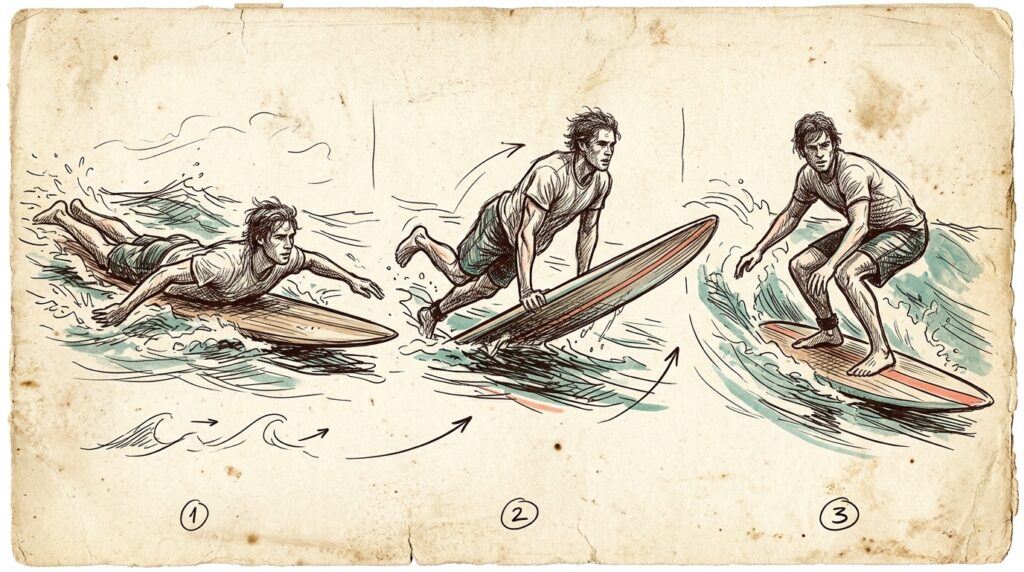
The pop up is the motion that takes you from paddling flat on your stomach to standing upright and balanced on a moving wave. Think of it as a dynamic push up that ends in a low, athletic crouch. It happens in one explosive burst, not a series of paused steps.
A correctly performed pop up does a few things at once. It keeps your forward momentum so you stay with the wave. It creates space between your body and the board so your feet can swing through freely. And it lands you in a stance wide enough to balance on an unstable surface.
The entire movement takes less than one second when done well. Advanced surfers can pop up in under half a second, which lets them catch steep, late waves that beginners simply cannot make. Speed matters because every moment you spend transitioning is a moment the wave can outrun you.
Before You Pop Up: Find Your Stance
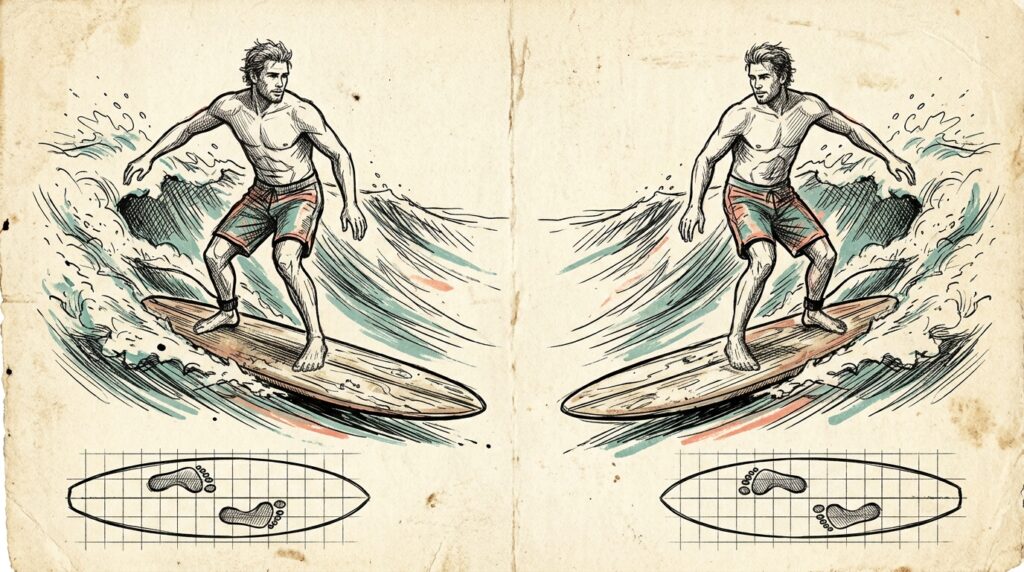
Before you ever touch a wave, you need to know which foot goes forward. There are two options. Regular footers ride with the left foot forward and the right foot back. Goofy footers ride with the right foot forward.
Neither stance is better. It comes down to which feels natural, much like being right or left handed. Studies suggest only around 30 to 40 percent of surfers are goofy footed, so regular is more common, but plenty of world champions ride goofy.
A simple way to find yours is the push test. Stand relaxed with feet together and have a friend gently push you from behind. The foot you step forward with to catch your balance is usually your front foot. Another reliable option is the jump test: run and leap off one leg, and the leg you naturally launch from tends to be your back, or dominant, foot.
If you already play a board sport or kick a ball with a clear dominant side, that instinct often carries over. When in doubt, an instructor can spot your natural stance in minutes. If you are booking a lesson or planning your first paddle out, our guide on how to surf for the first time walks through everything a new surfer needs.
Setting Up: Board Choice and Positioning
Your equipment shapes how easy the pop up feels. A soft top longboard of nine feet or more gives you glide time and a stable platform, which means more seconds to complete the movement. Smaller, lower volume boards leave far less margin for error.
If you are still choosing a board, our breakdown of the best surfboards for beginners and our guide to picking the right surfboard size will point you toward something forgiving. Understanding surfboard shapes and how they ride also helps you see why volume and length matter so much early on.
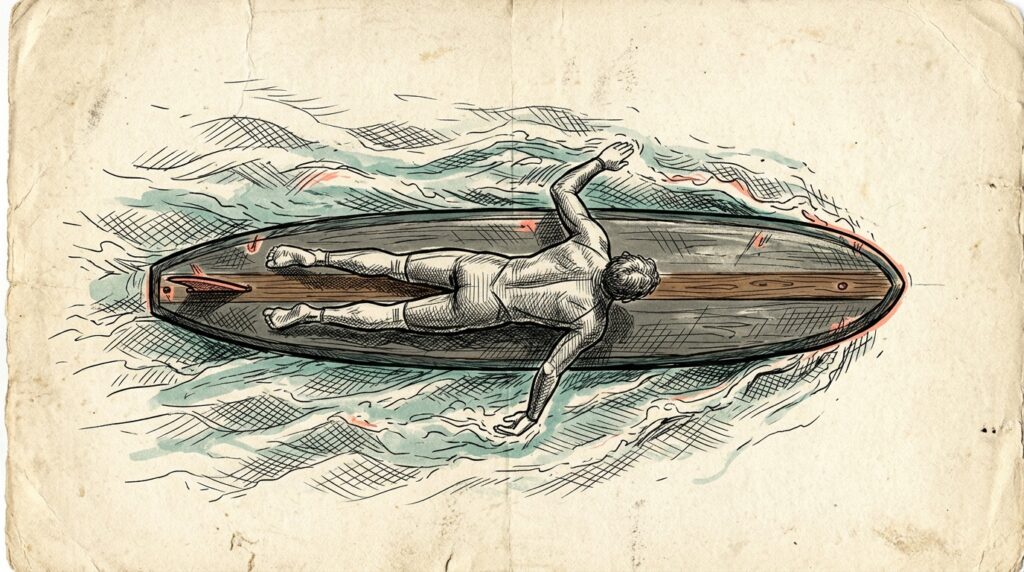
Once you are on the board, positioning is everything. Lie centered along the stringer, the center line running nose to tail, with your body straight. Too far forward and the nose digs in and pearls. Too far back and the board plows water and stalls. The sweet spot leaves the nose about an inch or two above the surface.
The Paddle: Building the Speed You Need
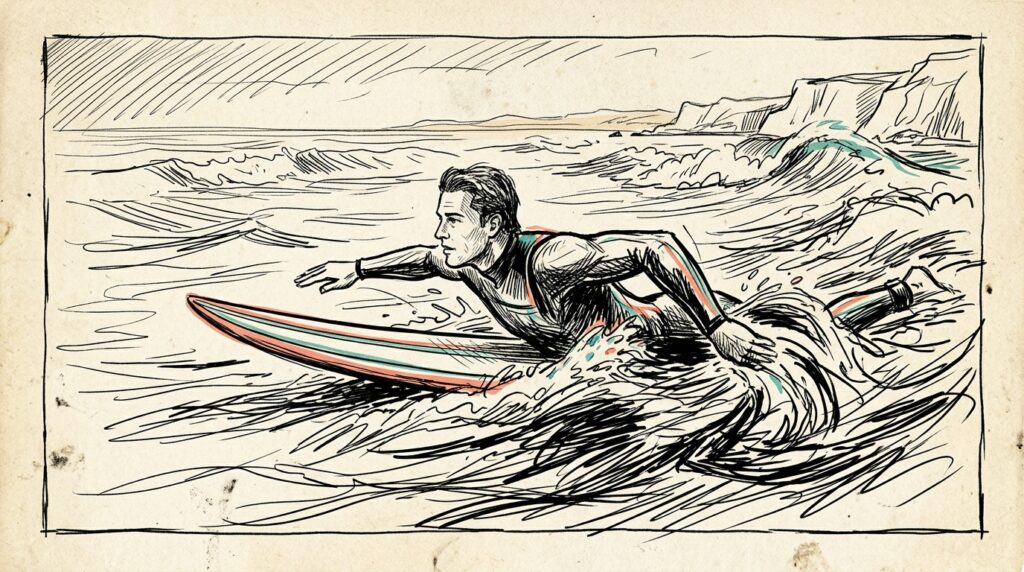
You cannot pop up on a wave you have not caught, and you cannot catch a wave without paddle speed. This is where most beginners quietly fail.
Use long, deep strokes. Reach forward and pull the water all the way past your hips, keeping your fingers together to move more water per stroke. Alternate arms in a steady rhythm and keep your gaze on the beach, not down at the board.
As the wave begins to lift the tail, accelerate. Give two, three, or even four more powerful strokes as the nose starts to drop down the face. Many beginners stop paddling too early. These final strokes force the board down the wave and build the momentum that carries you through the pop up. When you feel the board planing on its own, it is time to move.
How to Pop Up on a Surfboard: Step by Step
Here is the core movement, broken into components. Practice each piece, then blend them into one fluid burst.
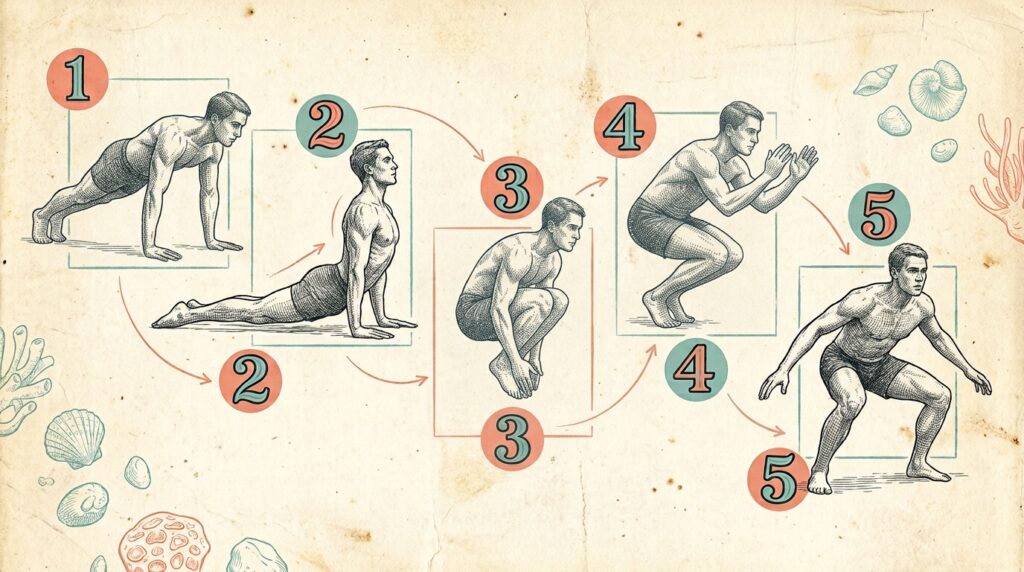
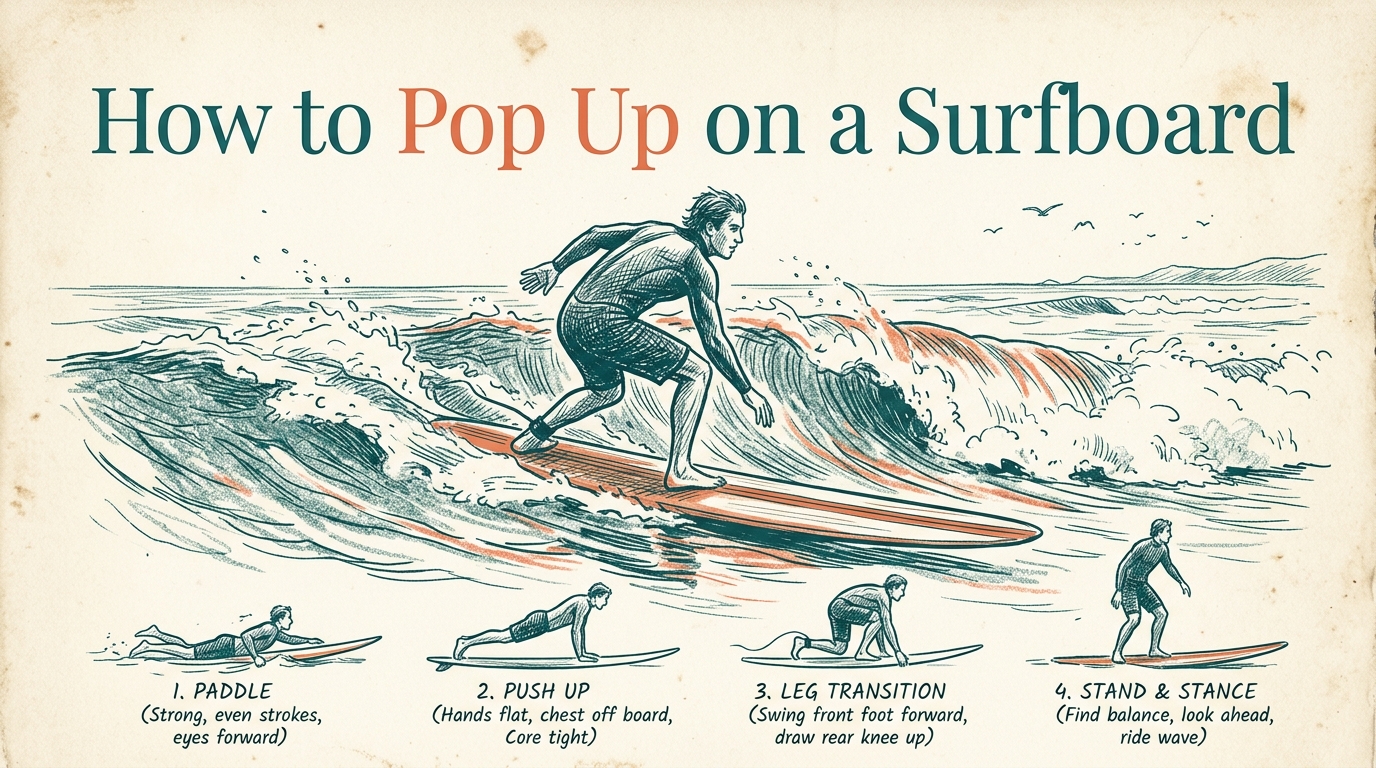
Step 1: Plant your hands. Place both palms flat on the deck beside your lower ribcage, roughly chest level. Keep hands flat, never gripping the rails. Gripping the rails tilts the board, adds drag, and makes falling far more likely.
Step 2: Press up into cobra. Push through your palms to lift your chest and arch your upper body, like a cobra yoga pose. Keep your hips and lower body connected to the board for now. This creates the space your feet need to travel through.
Step 3: Swing your feet through. In one explosive motion, drive your knees and hips forward and swing both feet underneath you. Bring your back foot down first, just in front of the fins, then your front foot lands flat in the middle of the board between your hands. Done fast, it looks simultaneous.
Step 4: Release and rise. As your front foot lands, release your hands from the deck and rise into your stance. Stay low. Do not spring fully upright too soon.
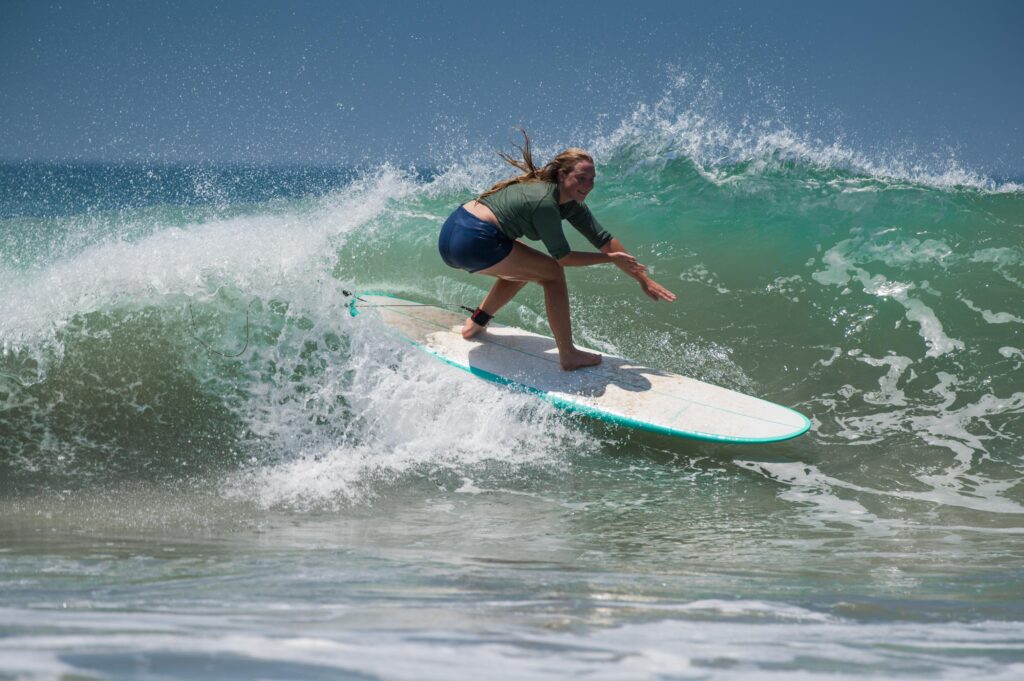
Step 5: Find your stance. Settle with feet shoulder width apart, centered over the stringer, knees bent, back straight, arms up and engaged for balance. Keep your eyes forward toward where you want to go.
The whole sequence should flow as a single motion. It will feel choppy and divided at first. With repetition it becomes one smooth, quick pop that you no longer think about in steps.
Common Pop Up Mistakes and How to Fix Them
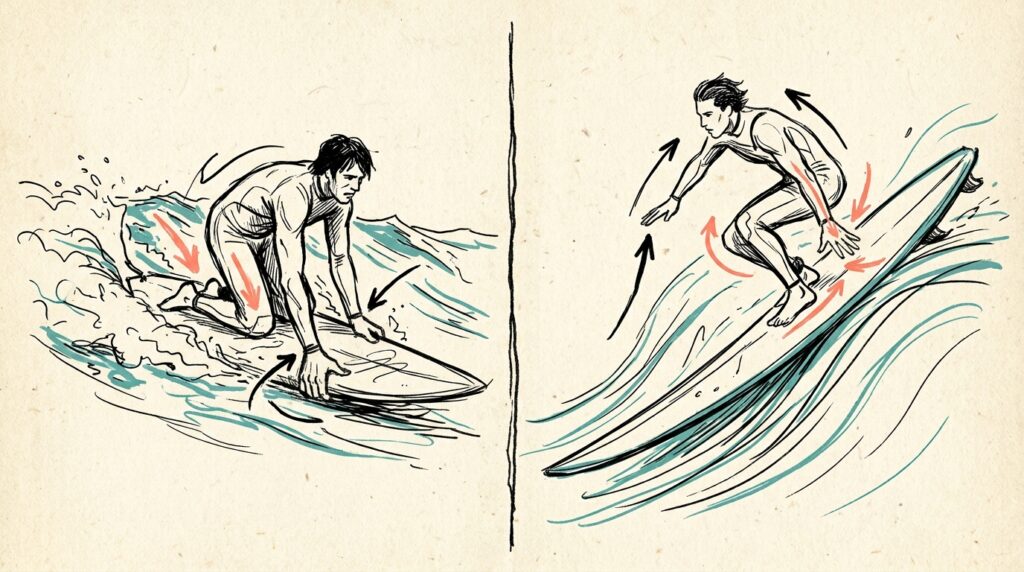
Even with good intentions, certain errors show up again and again. Fixing these will speed up your progress more than anything else. If you want the bigger picture on early plateaus, our piece on why beginner surfers struggle is worth a read.
- Using your knees. Dropping to one or both knees before standing is the most common trap. It slows you down and forces a second, wobbly movement. Commit to landing straight on your feet. If you cannot yet, drill it on land until you can.
- Grabbing the rails. Flat hands on the deck only. Rails create drag and tilt the board.
- Popping up too slowly. A paused, staged pop up kills your momentum and the wave leaves without you. Aim for one explosive burst.
- Looking down. Where your eyes go, your body follows. Staring at your feet sends you face first into the water. Keep your chin up and eyes on the horizon.
- Standing too tall too soon. A high, straight legged stance narrows your balance. Stay low with bent knees for control.
- Feet too close or off center. Aim for a shoulder width stance centered over the stringer.
- Hands too far forward. This leaves no room to swing your feet through. Try placing a small sticker on the deck as a hand placement guide.
Dry Land Drills to Master the Pop Up
The best news about the pop up is that you can practice it anywhere. Dry land drills build the muscle memory and explosive strength that make the movement automatic in the water.
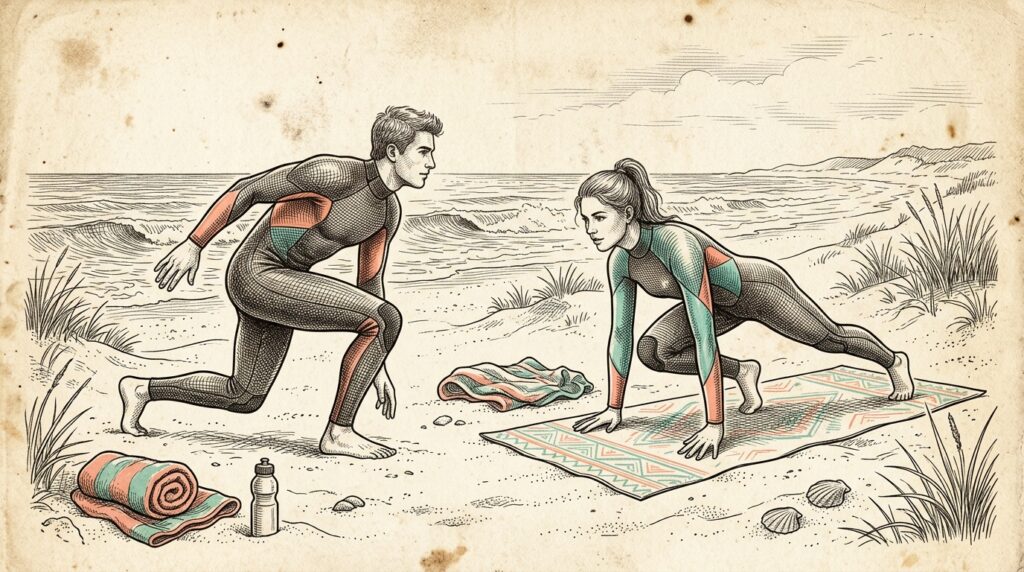
Try these before every session and on rest days:
- Mat pop ups. On a yoga mat or the sand, run through the full movement slowly, then gradually faster. Aim for 10 to 20 reps before you paddle out, and do daily sets to build the pattern.
- Surf stance burpees. Drop into a burpee, but instead of jumping straight up, land in your low surf stance with front foot forward and eyes up. This builds the hip flexor explosiveness the pop up demands.
- Plank to push up. Strengthens the pushing muscles and core that power the transition off the deck.
- Balance training. A BOSU ball, Indo board, or even single leg balance mimics the instability of a moving board.
Just five to ten minutes a day makes a real difference. Pair this with a broader routine and you will progress faster. Our surfing fitness guide covers the strength and mobility work that supports a quick, clean takeoff.
From Whitewater to Green Waves
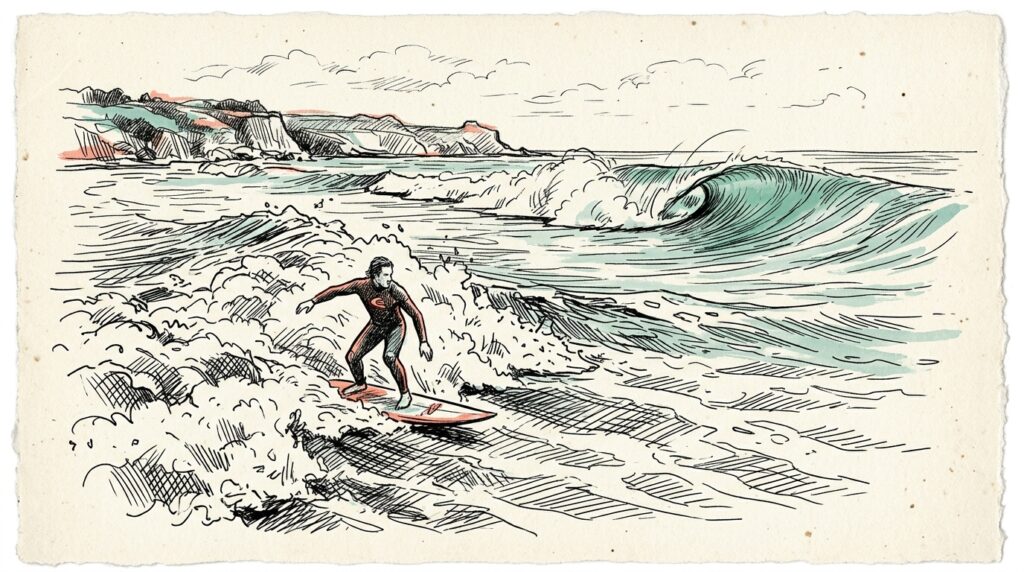
Whitewater, the broken foam of already broken waves, is the ideal classroom for learning the pop up. It is predictable, slower, and forgiving, giving you repeated chances to drill the movement without the pressure of a steep drop.
Stay in the whitewater until the pop up itself is reliable. A good benchmark: you can pop up and ride the foam eight out of ten attempts without falling on the pop up. At that point you are ready to try unbroken green waves, where timing and wave reading become the new challenge.
As you move to green waves you will catch them later and steeper, which shrinks your window and demands a faster pop up. This is also where separate skills like the duck dive come into play for getting past breaking waves. Learning the ocean also means learning to share it. Brush up on surfing etiquette and the unwritten rules of the lineup before you paddle out among others.
How Long Until It Feels Natural?
Be patient with yourself. A realistic progression looks like this: your first handful of sessions are about catching whitewater and standing at all, even if you fall right after. Over weeks, the movement smooths out and speeds up until it stops feeling like separate steps.
Everyone learns at a different pace based on fitness, board choice, and how often they surf. For a fuller answer, see our guide on how long it takes to learn to surf. The surfers who improve fastest are simply the ones who practice the pop up on land daily and get in the water often.
A bigger body or stiffer joints do not prevent a good pop up. They just mean you may want a larger board and a bit more patience with the drill work. The movement is available to almost everyone willing to put in the repetitions.
Practicing in Warm, Beginner Friendly Waves
Where you learn matters too. Warm, consistent, gentle waves let you focus on technique instead of fighting cold or chaotic conditions. Morocco is one of the best places on earth for this, with long forgiving beach breaks and a year round season.
If you are dreaming of a learning trip, our roundup of the best surf spots around Agadir highlights beginner friendly zones with mellow whitewater perfect for pop up practice. And if you will be surfing in cooler water, the right rubber keeps you comfortable enough to practice longer, which our wetsuit guide can help you sort out.
Final Takeaway
The pop up rewards two things above all: strong fundamentals and heaps of repetition. Nail your positioning, generate real paddle speed, and commit to one explosive movement that lands you low and balanced with your eyes up. Skip the knees, keep your hands flat, and drill it relentlessly on dry land.
Get this right and you unlock the rest of the sport. There is a reason surfers chase that feeling for life. Beyond the skill itself, riding waves brings real mental health benefits that keep people coming back. Practice the pop up patiently, and your first proper ride will be closer than you think.