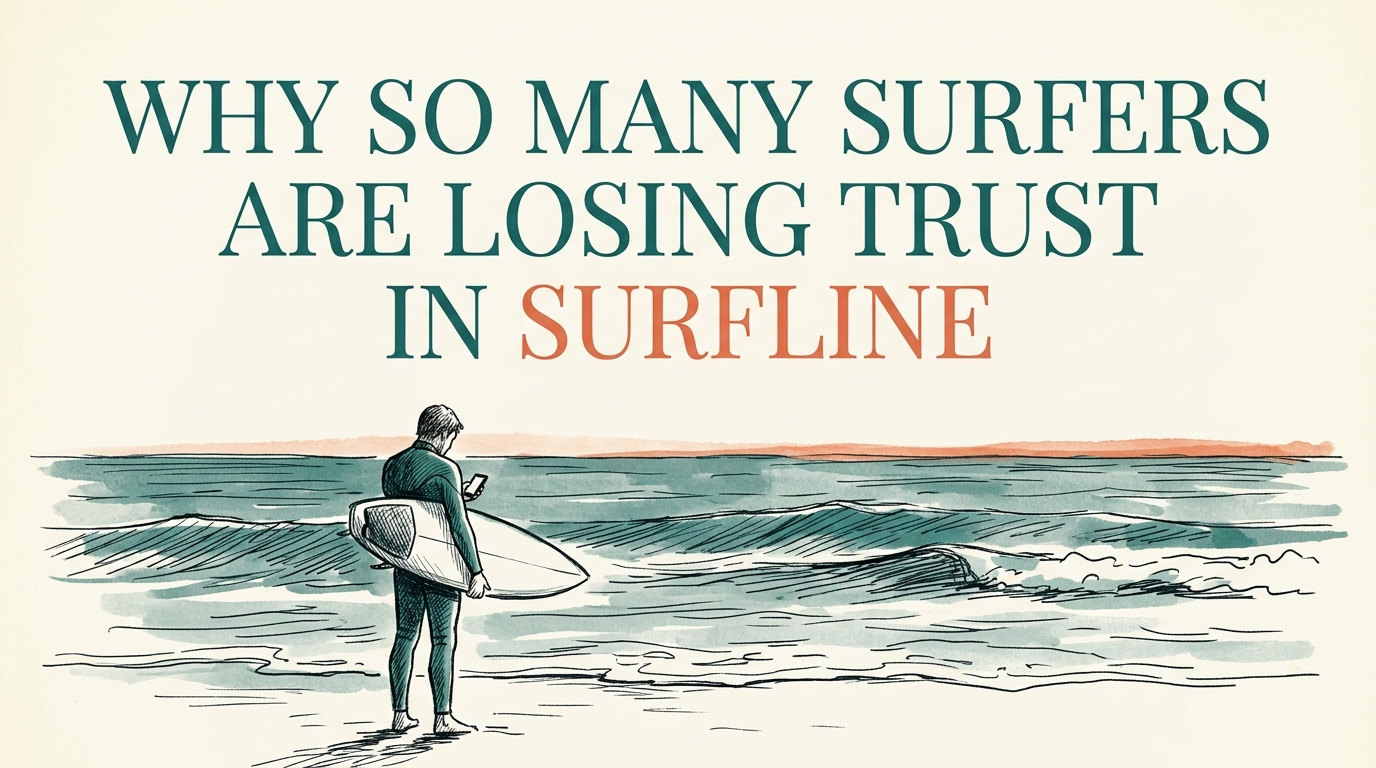

Ask any lineup what they think of the world’s biggest surf forecasting platform and you will get an earful. Surfline has been the default surf forecast for four decades, but the mood has shifted hard. Reddit threads about the app pull hundreds of comments, App Store reviews have turned brutal, and the phrase “Surfline is getting worse” now returns results going back three straight years.
This article looks at what is actually driving the frustration, which complaints hold up under scrutiny, and which ones are surfers blaming a forecast for the ocean being the ocean. Some of the anger is fully earned. Some of it is a misunderstanding of what a wave model can physically do.
The MagicSeaweed Shutdown Still Defines the Grievance
Almost every complaint thread eventually circles back to one date. On May 15, 2023, MagicSeaweed went dark. After 22 years of providing free surf forecasts, the site redirected to Surfline. No warning period. No archive. No way to access saved spots or preferences.
Surfline had acquired MSW back in 2017. The official announcement framed it as consolidation, saying that running two platforms meant their best ideas were divided across two places, and that they would bring the best features over to Surfline.
What made this sting was scale. Three million monthly users, including surfers, sailors, fishermen, kayakers, and divers, lost their free ocean conditions tool overnight.
The single most missed feature was the simplest one. MagicSeaweed’s 1-5 star rating let you glance once and know whether to get in the car. Surfline has a conditions label, but it requires scrolling through data.
This matters because it reframes the whole debate. Many people who say Surfline got worse are really saying the free thing they liked was bought and switched off. That is a genuine grievance, but it is a business complaint, not a forecasting one.
The Free Tier Is the Loudest Complaint
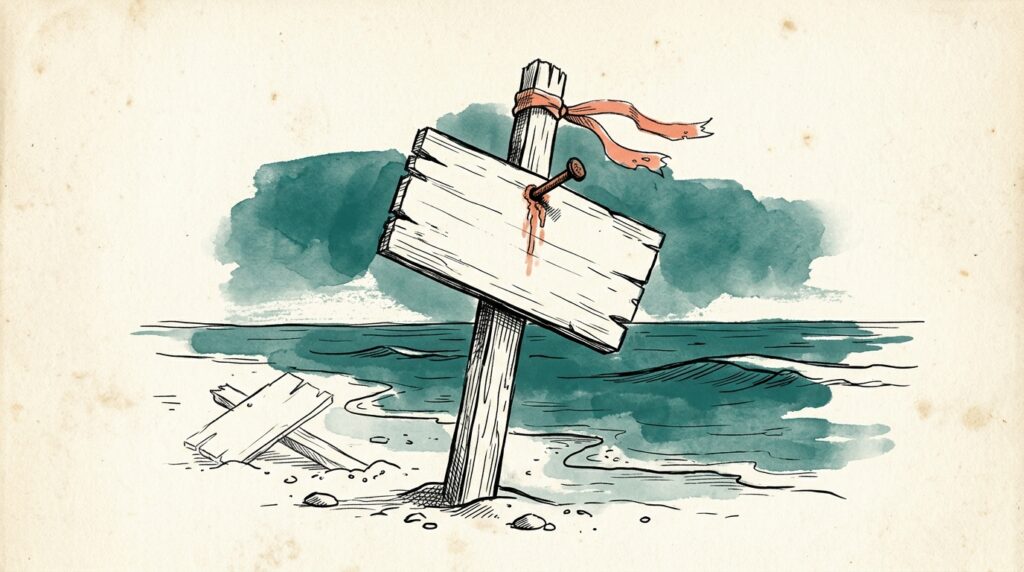
The change that generated the most fury was the introduction of “surf checks.” Free accounts now get a small weekly allowance of report views instead of unlimited access.
App Store reviewers describe the mechanics in painful detail. One notes the update only lets you check the surf report a handful of times per week, even if the break has no cam and even if you checked it five minutes earlier.
That last part is the real irritant. Another reviewer explains that if you forget to read something on screen and reopen Surfline a minute after your surf check, it counts as another check.
The characterisation that spread furthest came from a review quoted widely across forums. One user wrote that the app does its best to annoy you into buying the premium service.
There is also a fairness argument that comes up constantly. Reviewers point out that most average surfers do not travel the world surfing hundreds of breaks, they surf the spots where they live, and ask why they should pay full price for global cam access they will never use.
Then Came the Price Rise
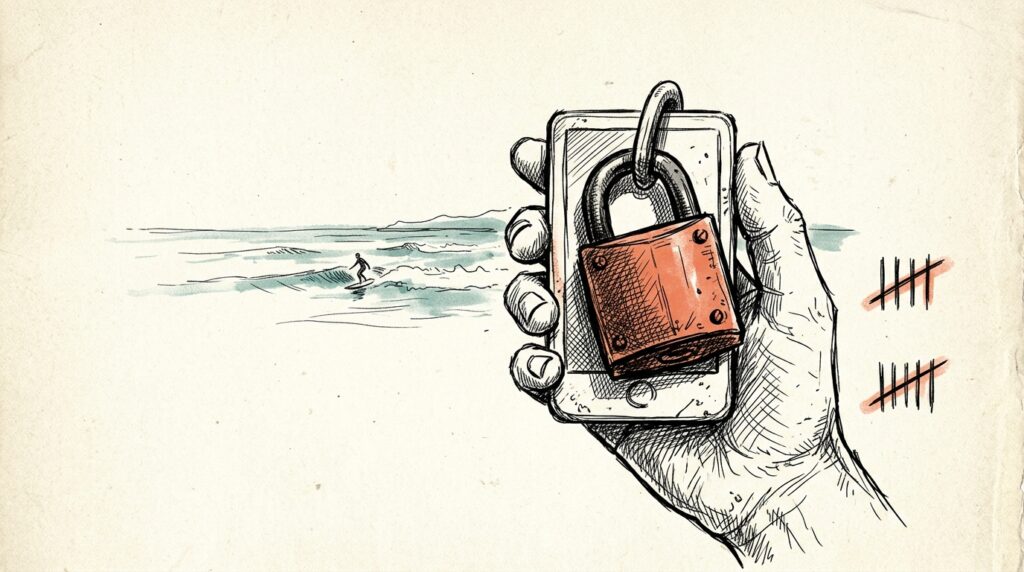
Effective April 8, 2025, Surfline Premium memberships in the US moved to updated prices. For annual subscribers this was roughly a 21 percent jump, from about $99 to about $120.
To Surfline’s credit, they published a rationale rather than sneaking it through. They cited costs for people, cameras, and data, and noted their last major price increase was in 2018 when the annual plan was $96, arguing that adjusted for inflation that would be $120 today.
That inflation math is defensible. Whether it lands with a surfer who remembers checking MagicSeaweed for free is another question entirely.
What the Forecasting Complaints Get Wrong
Here is where the discussion usually goes off the rails. Surfers say the forecast is inaccurate, and Surfline’s actual published numbers are more interesting than either side admits.
Surfline runs its own model rather than repackaging free government data. LOTUS combines high resolution bathymetry mapping and nearshore wave models with real time validation using satellites and buoys, built on NOAA’s Wavewatch III source code.
They also publish where it falls short, which most companies would never do. In the 4-6ft surf height range, Surfline reported being accurate to within 1.5ft approximately 62% of the time, and openly stated there is clearly room for improvement.
Read that carefully. In head high to overhead surf, the model is off by more than a foot and a half nearly four times out of ten. That is not a scandal, it is the honest state of nearshore wave prediction.
The company has even named specific systematic errors. They identified swell events where the model tends to undercall surf height during north westerly longer period swells.
Why Nearshore Forecasting Is Genuinely Hard
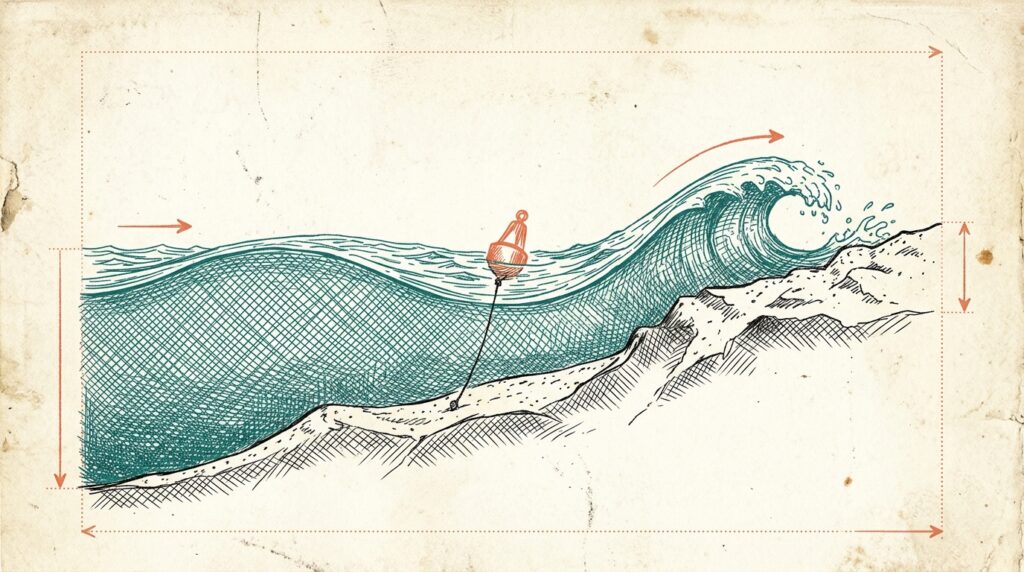
Most ocean models were never built for surfers. Marine weather forecast models are designed for open sea navigation, so their accuracy is deficient for near shore conditions, which is exactly where surfers need accuracy.
Buoy readings are also less straightforward than they appear. A typical buoy reading is only a generalised reading that does not necessarily account for secondary and tertiary swell energies, which can significantly impact nearshore wave conditions.
This is the core of it. Predicting the breaking wave height on one sandbar, at one tide, on one morning, is a much harder problem than predicting swell in open water. If you want to understand the raw inputs yourself, our guide to reading a surf forecast breaks down what each number actually means.
The Human Forecaster Is the Part Worth Paying For
Buried in Surfline’s own engineering writing is the strongest argument for the subscription, and it undercuts the “they just resell free data” accusation.
Comparing raw LOLA model forecasts to the human team’s adjusted forecasts, Surfline’s forecast team more than halved the error of their sophisticated nearshore modelling approach.
Halving the error is enormous. It also explains the pattern surfers report anecdotally, where forecasts feel sharp at Huntington or Pipeline and vague at their unnamed local beachie. Staffed spots get human eyes. Unstaffed spots get raw model output.
That feedback loop is deliberate. Expert forecasters make multiple daily observations, adjusting surf height and ratings based on what they are actually seeing, which teaches the model.
Where the Cutback Complaints Have Substance
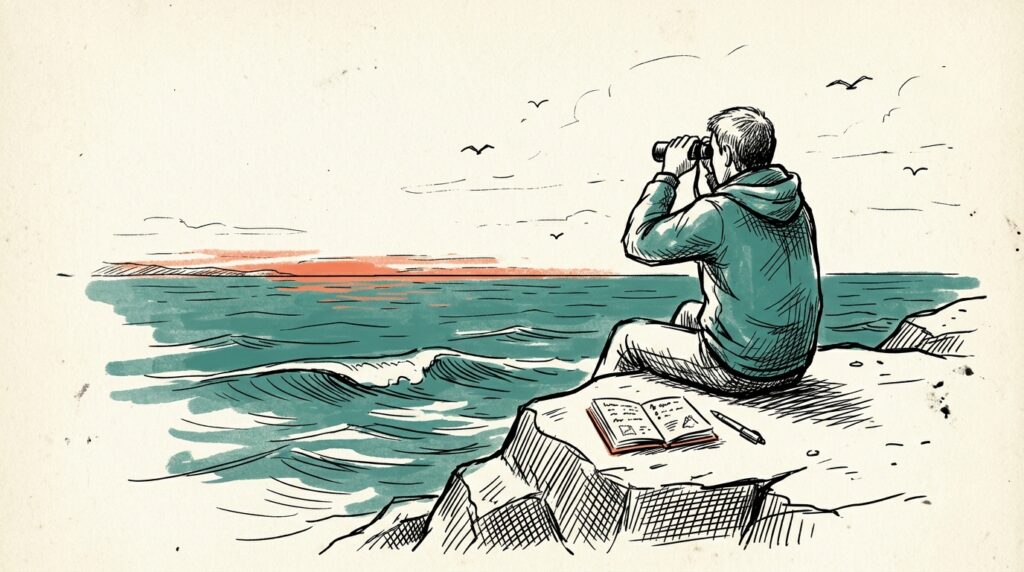
The perception that service quality dropped is not purely imagined. In 2023, an industry outlet published claims from inside the company.
BeachGrit reported a whistleblower alleging that the Indian Ocean had been abandoned in terms of detailed analysis, with cutbacks in California, Europe, and Australia, along with forced departures and slashed hours.
The quote that circulated most widely was blunt. The source described the strategy as capitalism 101, dominate at any cost, then up prices and reduce services and beat off any start ups with dominance and market share.
Treat this with appropriate caution. It is a single anonymous source in an outlet known for a combative editorial voice, and it is not independently verified. But it aligns with what users report about regional forecast depth thinning out.
Surfline’s Real Advantage: The Cameras
Even the platform’s sharpest critics concede one point. The cam network has no equal.
Surfline offers live surf cams at over 1,000 breaks around the world, alongside daily reports from forecasters, wave height, live wind, weather, water temperature, and tide.
Even a directly competing app admits Surfline wins on live surf cams with 500+ worldwide and nothing coming close, and that at popular breaks with dedicated forecasters the reports are genuinely good.
This is the honest crux. A camera is not a forecast, it is ground truth. It shows you what is happening right now, which no model can guarantee. For surfers with a long drive to the coast, that alone can justify the cost.
Pros and Cons: An Objective Look
| Strength | Weakness |
| Unmatched live cam network at 1,000+ breaks | Free tier limited to a few surf checks per week |
| Human forecasters more than halve model error | Human accuracy concentrated at staffed spots |
| Proprietary nearshore model, not repackaged data | 62% accuracy within 1.5ft in the 4-6ft range |
| Publishes its own accuracy limitations openly | Roughly 21% price increase in April 2025 |
| 16-day long range forecasts on premium | Absorbed and shut down a free competitor |
| Real time satellite and buoy validation | Reported regional forecast cutbacks since 2023 |
The Alternatives Surfers Actually Migrated To
The shutdown did not consolidate the market the way Surfline may have hoped. Users scattered.
Surf-Forecast.com became the closest direct replacement. It provides detailed surf forecasts for over 7,000 breaks worldwide with a rating tool to find exactly when to go. The interface is dated and there is no native app, but the spot database is deep.
Windy attracted the weather-literate crowd. It offers detailed weather forecast visualisation trusted by pilots, paragliders, kiters, surfers, and boaters. It is superb for understanding why a swell is coming, and poor at telling you whether your beach is worth checking at 7am.
Windguru holds the European wind sports audience, running more weather models than almost any consumer tool. It rewards people who already know how to read raw model output.
NOAA buoy data remains the free ground truth underneath everything. It costs nothing and it does not care about your subscription status.
Most surfers who left did not find one replacement. They assembled a stack: one tool for spot forecasts, one for weather maps, buoys for verification, and a group chat for local knowledge. If you are building your own setup, our roundup of AI surf forecasting tools covers the newer entrants worth testing.
How to Get More Out of Any Forecast
Whether you pay or not, forecast literacy beats forecast loyalty. A surfer who reads swell period correctly will out-predict a subscriber who only reads the star rating.
- Trust period over height. A 3ft swell at 16 seconds carries far more energy than 4ft at 8 seconds.
- Check the wind first. Offshore wind at 2ft beats onshore wind at 5ft nearly every time.
- Verify against a live buoy. Buoys report what exists now, models predict what might exist later.
- Learn your spot’s tide window. Most breaks work in a narrow tidal band that no app knows for you.
- Watch the cam before driving. One glance at real water beats any rating.
Tide sensitivity is where local knowledge crushes any algorithm, and it is worth pairing this with an understanding of how different surfboard shapes handle the conditions you are reading about.
So, Is Surfline Actually Getting Worse?
The fair answer is that Surfline is getting more expensive and more restrictive, while its forecasting technology is measurably improving.
LOTUS reduced errors by over 25% compared to the previous model, with particular gains for low and mid period swells affecting the US East Coast, New South Wales, and Queensland. That is real progress, not marketing.
But product quality and user goodwill are different things. Surfline bought the beloved free alternative, closed it, tightened the free tier, and raised prices. People experience that as decline even when the underlying forecast improves.
There is also a structural point worth sitting with. Surfline’s forecasting has always had an uncomfortable side effect, noted since the very beginning. Sean Collins’ accurate long range forecasting triggered a backlash against Surfline and similar services for overcrowding beaches with the best waves and taking the search for waves out of the surfing experience.
That criticism is nearly forty years old. The pricing complaints are new, but the deeper unease about outsourcing wave-hunting to an app is not.
The Verdict
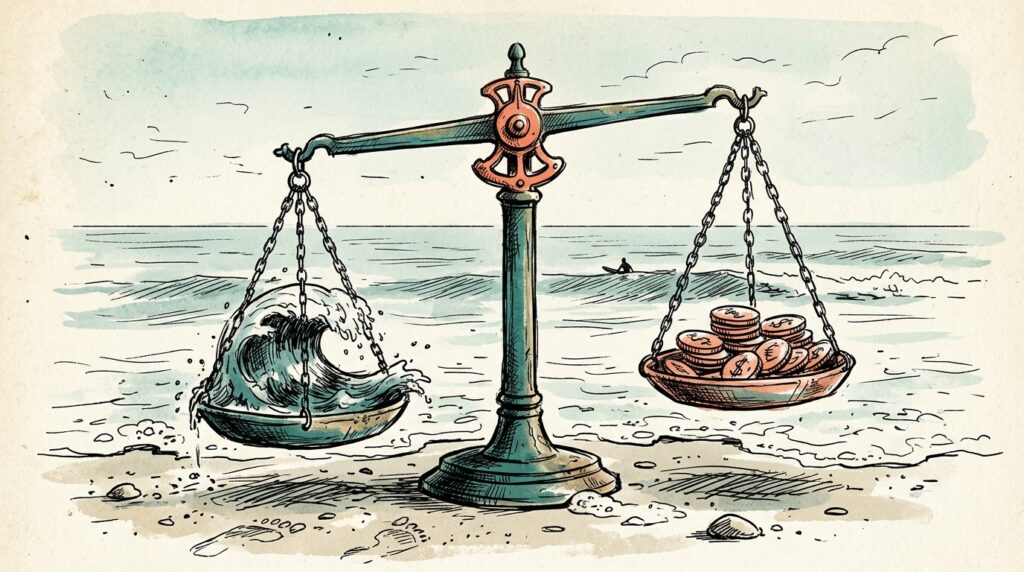
Surfline is worth it if you live near a camera, drive more than twenty minutes to surf, and value not wasting a session. It is poor value if you surf one uncammed local break you already understand.
The surfers most angry at Surfline are often the ones who used MagicSeaweed casually and never wanted a subscription at all. They did not lose a good product. They lost a free one, which is a different loss and deserves to be named accurately. The most useful response is not picking a side but building forecast skill. Learn to read swell period, direction, wind, and tide yourself, and every tool gets better, including the free ones. Understanding how conditions affect safety in challenging surf matters more than any subscription tier.