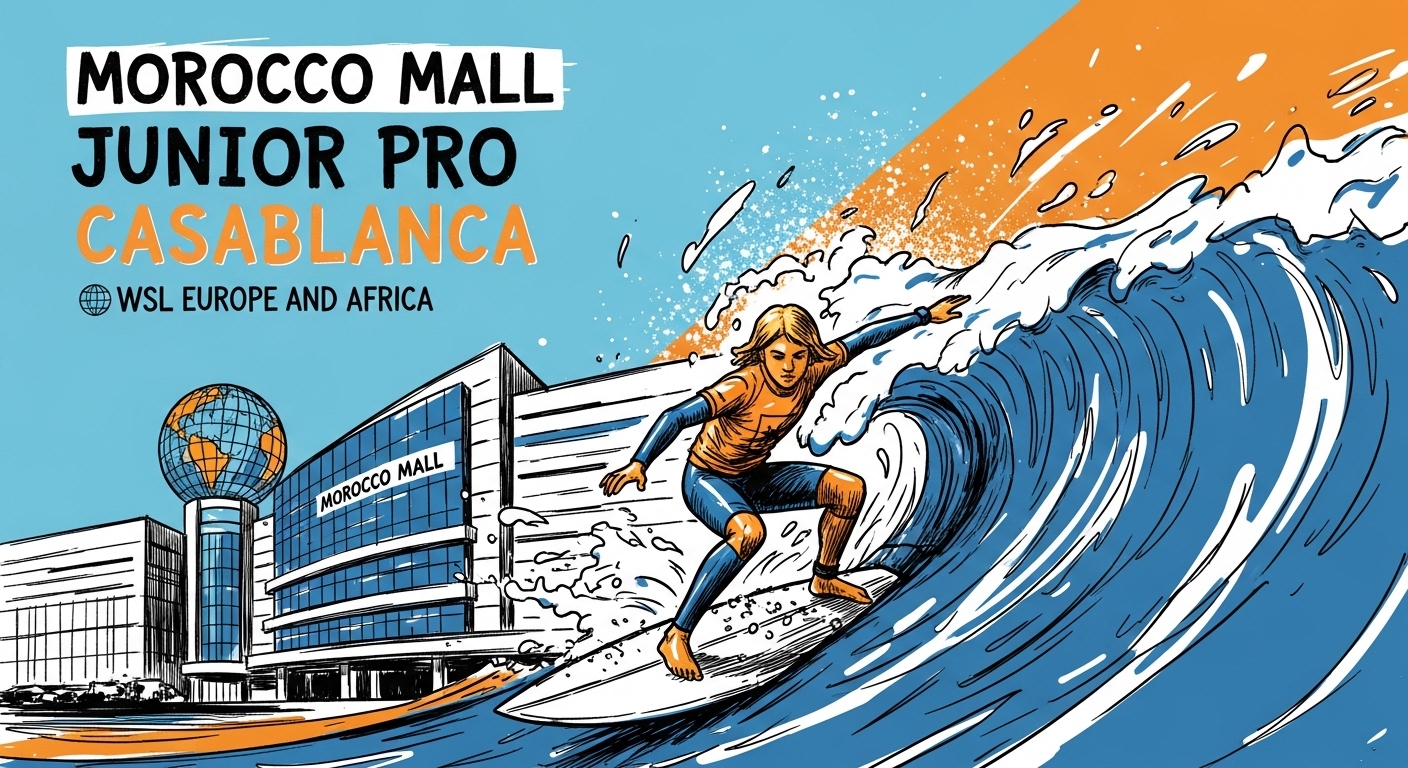

The Morocco Mall Junior Pro Casablanca is set to open the 2026 Pro Junior season for WSL Europe and Africa, marking a historic milestone for competitive surfing on the African continent. Scheduled from May 6 to 10 at the iconic Aïn Diab beachbreak, this fourth edition of the event will welcome the most talented under-20 surfers from two continents for a week of high-stakes competition.
For the first time ever, the event is co-sanctioned by both the WSL Europe and WSL Africa regions, allowing young athletes to accumulate ranking points for their respective regional tours simultaneously.
Whether you are a devoted follower of professional surfing or someone just discovering the sport, this event represents everything exciting about the future of wave riding. It combines raw junior talent, a world-class venue, and the growing influence of Morocco as a global surf destination.
What Is the Morocco Mall Junior Pro Casablanca?
The Morocco Mall Junior Pro Casablanca is a stop on the World Surf League’s Junior Qualifying Series (JQS). The JQS serves as the proving ground for surfers aged 20 and under who are chasing a spot at the prestigious WSL World Junior Championships. Think of it as the development league for professional surfing, where tomorrow’s champions get their first taste of competitive pressure on a global stage.
Casablanca first appeared on the WSL calendar in 2015 as a Qualifying Series (QS) venue. After hosting QS events for several years, the city pivoted to the junior format to give younger competitors the opportunity to compete on Moroccan soil.
Past editions have crowned impressive champions including Noa Dupouy of France, Tim Elter, and Annette Gonzalez Etxabarri of Spain. Many of these athletes have gone on to compete at the highest levels, proving that this event is a legitimate launchpad for professional careers.
Why the 2026 Edition Is Making History
The 2026 Morocco Mall Junior Pro stands apart from every previous edition for one groundbreaking reason: it is the first JQS event to be co-sanctioned by both the WSL Europe and WSL Africa regions. In practical terms, this means a French surfer and a Moroccan surfer competing in the same heat can both earn ranking points toward their respective regional standings.
Luqmaan Bruce, Regional Tour Manager of WSL Africa, emphasized the significance of this collaboration, noting that it creates new competitive pathways designed to benefit athletes from both circuits. He highlighted how the event will allow rising Moroccan talents to test themselves against the best junior surfers from across Europe and the African continent.
Rob Gunning, Regional Tour Manager of WSL Europe, described the competition as one of their largest-format events and expressed enthusiasm about relaunching the season in Casablanca. The event’s return to the calendar required considerable effort, and the result is a competition that carries meaningful weight for both regions.
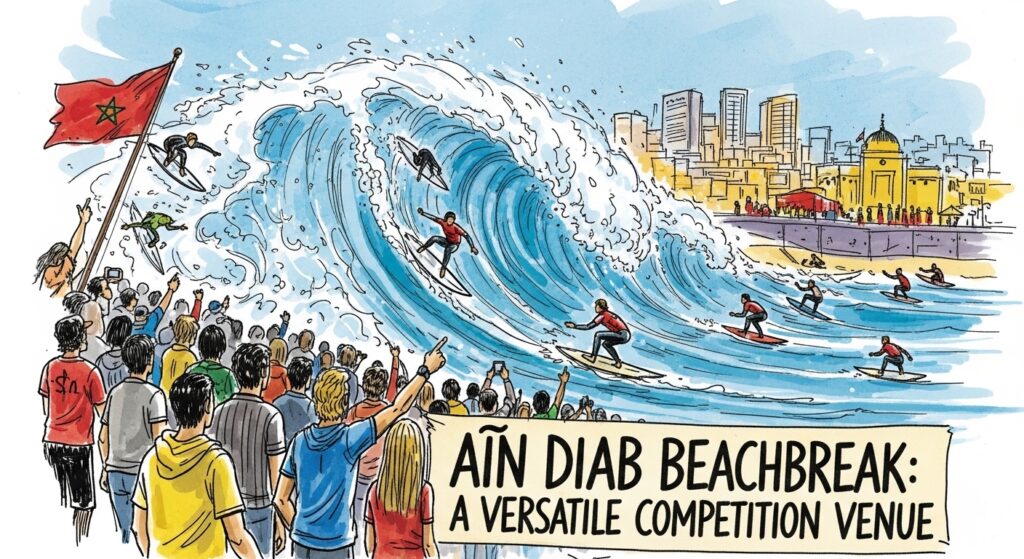
The Aïn Diab Beachbreak: A Versatile Competition Venue
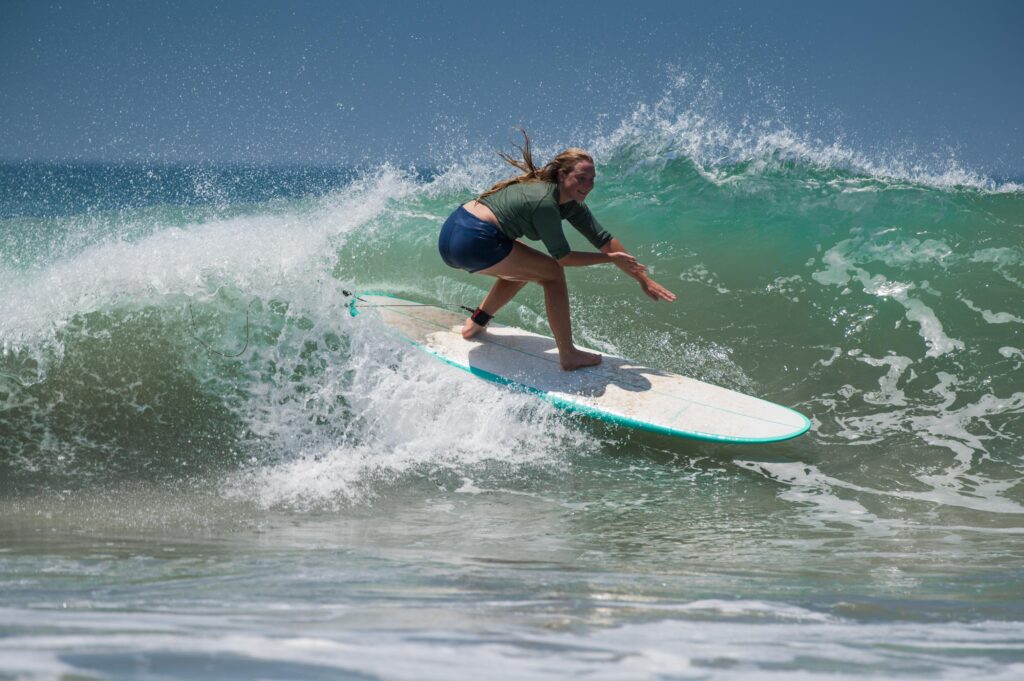
Aïn Diab sits on the southern edge of Casablanca, where the Atlantic Ocean delivers consistent swell year-round. The beachbreak is known for its versatility, producing conditions that range from long, peeling walls to fast, hollow barrels depending on the day. Waves can be short and punchy or lined-up and powerful, giving competitors a genuine test of their all-around surfing styles.
This variety is actually a major advantage for a junior competition. Unlike a point break that rewards one style of surfing, a beachbreak with shifting peaks forces young surfers to adapt on the fly. They need to read wave conditions quickly, choose the right peak, and adjust their approach heat by heat.
Casablanca’s climate is another plus. May brings warm air temperatures, manageable water temperatures, and generally favorable winds. Competitors can focus on their performance rather than battling the cold, although a good wetsuit selection remains important for early morning sessions when the water is cooler.
Top Seeds and Surfers to Watch
Registrations for the 2026 edition have been flooding in, and the seeded competitors include some of the most promising names in European and African junior surfing.
Axel Dominguez (France) arrives as one of the top male seeds. France has consistently produced strong junior surfers who go on to compete at the Challenger Series and Championship Tour levels. Dominguez represents the latest in that pipeline.
Lukas Skinner (Great Britain) is another name to follow closely. British surfing has seen a surge of talent in recent years, and Skinner’s presence among the top seeds signals his growing reputation on the European circuit.
Rayna Squalli (Morocco) will carry the hopes of the home crowd. Squalli has been a standout in previous editions, and competing at her home beachbreak gives her a significant advantage.
Victoria Backhaus (Italy) and Anais Blanchard (France) round out the key seeds on the women’s side, bringing competitive depth to a field that promises intense matchups from the opening rounds.
How the Junior Qualifying Series Works
For anyone new to competitive surfing, the structure of the WSL tours can seem complex at first glance. Here is a simplified breakdown of how the JQS fits into the bigger picture.
The WSL operates a tiered system. At the top sits the Championship Tour (CT), where the world’s best surfers compete for the world title. Below that is the Challenger Series (CS), and below the CS is the Qualifying Series (QS), where regional surfers earn their way toward the Challenger Series.
The Junior Qualifying Series runs parallel to all of this but is exclusively for surfers aged 20 and under. Each WSL region holds multiple JQS events throughout the year. The top-ranked surfers from each region at the end of the season qualify for the World Junior Championships, where the global junior title is decided.
Winning or finishing highly at the WJC has historically been a career-defining achievement. Past junior world champions include names like Gabriel Medina, Sally Fitzgibbons, Joel Parkinson, and most recently, Dane Henry and Isla Huppatz of Australia.
Morocco’s Growing Role in Global Surfing
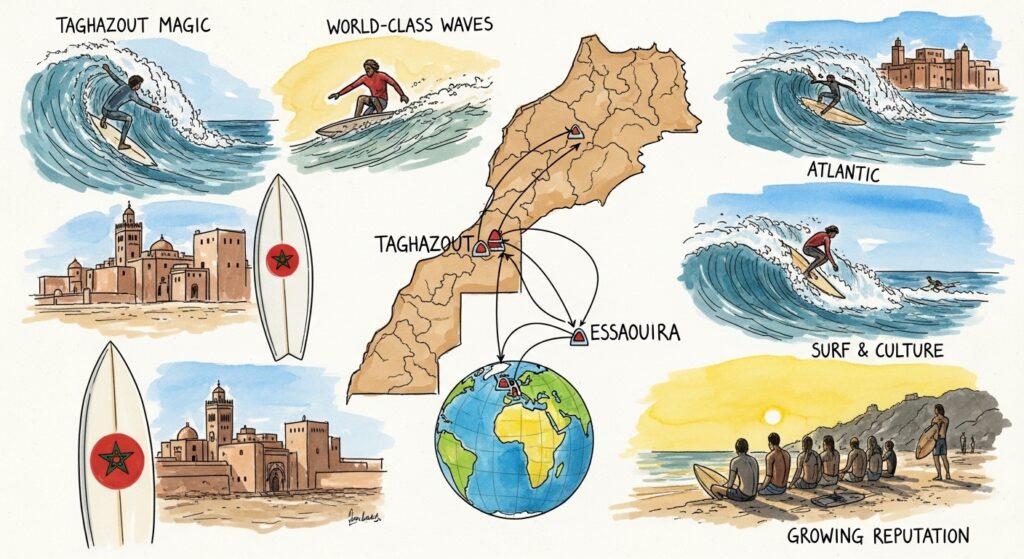
Morocco has quietly established itself as one of the most important surfing nations in Africa and a respected destination for European surfers. The country’s Atlantic coastline stretches for thousands of kilometers, offering a remarkable diversity of breaks from the powerful right-hand point breaks around Taghazout to the consistent beachbreaks of Casablanca.
The country has produced professional surfers like Ramzi Boukhiam from Agadir, who has competed on the WSL Championship Tour and represented Morocco at the Olympic Games. Younger talents like Lilias Tebbaï, Redouane Regragui, and Aboubakar Bouaouda have also been making waves on the international stage.
For visitors inspired by Morocco’s surf scene, the country offers incredible opportunities for beginners looking to learn. Morocco’s Atlantic coast is home to numerous surf schools and camps, and services like SurfStar connect travelers with vetted local instructors and quality surf camps along the coastline.
Morocco is also recognized as one of the best surfing destinations for beginners thanks to its warm waters, consistent swell, and welcoming local culture. The combination of affordable living, beautiful coastline, and world-class waves has made it a magnet for surfers of all abilities.
What Young Surfers Need to Compete at This Level
Competing in a JQS event like the Morocco Mall Junior Pro requires far more than just being able to ride waves. These young athletes need a complete skill set that spans physical fitness, mental resilience, wave knowledge, and equipment expertise.
Physical preparation is foundational. Junior surfers at this level follow rigorous surfing fitness programs that include paddle endurance training, explosive power work for maneuvers, flexibility routines, and breath-hold exercises for ocean safety.
Equipment selection plays a critical role as well. Choosing the right surfboard for the conditions is a skill in itself. At Aïn Diab, where conditions change from heat to heat, surfers typically bring a quiver of boards to cover every scenario.
Mental toughness is arguably the biggest differentiator at the junior level. Many of these surfers are competing far from home, managing travel fatigue, and dealing with the pressure of accumulating ranking points. The mental health benefits of surfing are well documented, but competition adds a layer of stress that requires deliberate coping strategies.
The Broader Impact of the Event on Casablanca
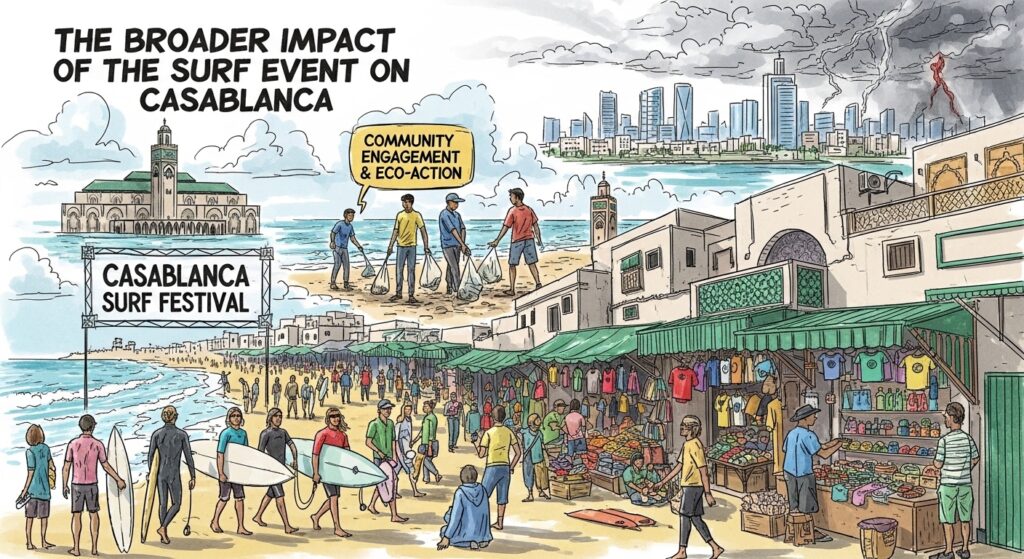
Beyond the competition itself, the Morocco Mall Junior Pro brings tangible benefits to Casablanca and its local community. International surf events generate tourism revenue, media exposure, and cultural exchange that extend well beyond the competition window.
Local businesses near Aïn Diab — from hotels and restaurants to surf shops and rental providers — see a boost during the event. The Morocco Mall’s sponsorship underscores the commercial interest in aligning with surfing’s growing global appeal.
For young Moroccan surfers, the event is priceless. Having a WSL-sanctioned competition on home soil removes the financial and logistical barriers of international travel. It gives local athletes the chance to compete against top-ranked Europeans without leaving the country.
The event also shines a spotlight on surf culture in Morocco more broadly. As more international eyes turn to the Moroccan coastline, the country’s surf community grows stronger, attracting investment in infrastructure, coaching, and youth development programs.
How to Follow the Action
The Morocco Mall Junior Pro Casablanca runs from May 6 to 10, 2026. The WSL provides live coverage of its events through worldsurfleague.com, the WSL app, and their YouTube channel. Results, video highlights, and heat analyses will be available throughout the competition window.
If you cannot watch live, the WSL typically publishes daily recap videos and post-event highlight reels that capture the best performances. Social media channels for WSL Europe and WSL Africa will also be active with real-time updates.
For those who want to attend in person, Aïn Diab beach is easily accessible from central Casablanca. The venue sits near the Morocco Mall, making it a convenient destination with plenty of amenities nearby. Knowing what to wear for a day at the beach and understanding the local environment will make your spectator experience much more enjoyable.
What This Means for the Future of Junior Surfing
The co-sanctioning of the Morocco Mall Junior Pro by both WSL Europe and WSL Africa is not just a logistical change. It signals a philosophical shift in how the WSL views the development of young talent across regions. By creating joint events, the organization is building bridges between surfing communities that have historically operated in separate ecosystems.
This approach mirrors the broader trend in professional surfing toward inclusivity and global growth. The WSL has been expanding its footprint in Africa, with events in South Africa, Morocco, and other nations demonstrating the continent’s competitive depth.
For surfers who are just starting their journey, events like the Morocco Mall Junior Pro serve as inspiration. They show that with dedication, proper training, and access to competition, a young surfer from any background can rise through the ranks.
If watching the competition sparks your interest in the sport, there is no better time to pick up a board. Whether you are drawn to the performance side of surfing or simply want to enjoy the longboard lifestyle, the ocean is open to everyone. Understanding the basics like why surfers wax their boards or how to repair minor dings can help you feel more confident as you progress.
Final Thoughts
The 2026 Morocco Mall Junior Pro Casablanca represents a new chapter for junior competitive surfing in Europe and Africa. With its historic co-sanctioning, world-class venue, and a field stacked with emerging talent, this event is set to deliver memorable performances and shape the careers of future champions. Casablanca is ready, the waves are calling, and the next generation of professional surfers is about to take center stage.