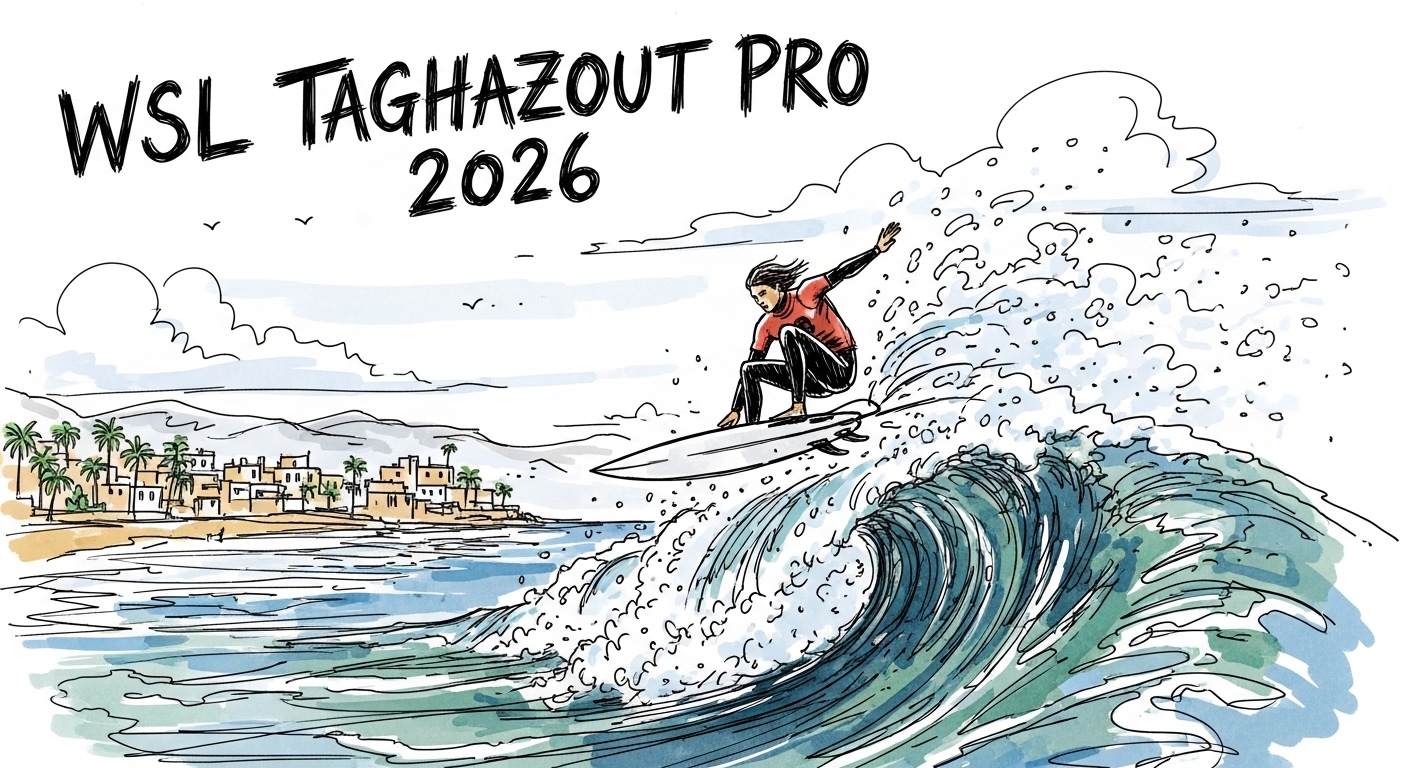

The WSL Taghazout Pro 2026 is one of the most anticipated surfing events on the European and African Qualifying Series calendar. Officially known as the Pro Taghazout Bay, this competition returns to Morocco’s iconic coastline for an upgraded edition that carries more points, higher stakes, and deeper significance for surfers chasing their professional dreams. Whether you’re a hardcore surf fan tracking the QS rankings or someone curious about surf culture and its rich history, this guide covers everything you need to know about the event.
What Is the WSL Taghazout Pro 2026?
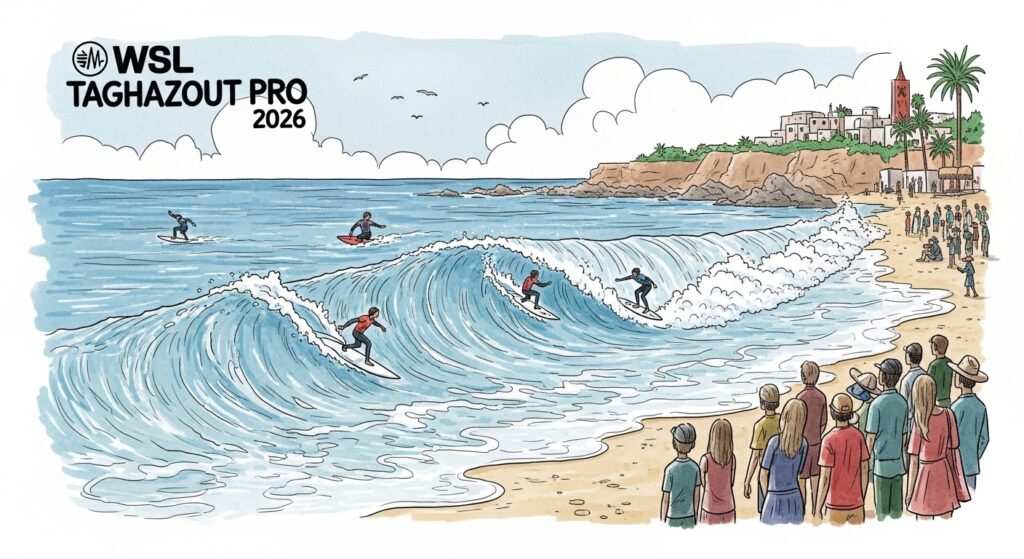
The Pro Taghazout Bay 2026 is a QS 4,000 event co-sanctioned by WSL Europe and WSL Africa. That’s a significant upgrade from the 2025 edition, which was a QS 3,000 event. The increase in rating means more ranking points are available, making this stop even more critical for athletes fighting to qualify for the Challenger Series — the bridge between the Qualifying Series and the elite Championship Tour.
The Qualifying Series is the grassroots level of professional surfing. Surfers accumulate points across multiple events, with only their three best results counting toward regional qualification. This format means every competition matters, but higher-rated events like the Taghazout Pro offer a disproportionate opportunity to leap up the rankings.
WSL Taghazout Pro 2026 Dates and Competition Window
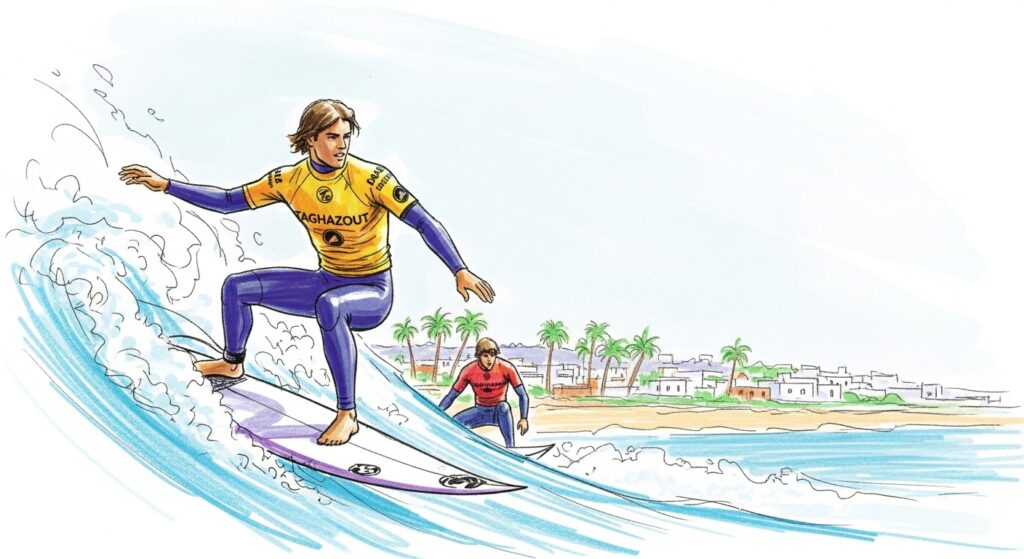
The competition window for the Pro Taghazout Bay 2026 runs from March 22 to March 29, 2026. A “competition window” in professional surfing means that organisers have a set number of days in which to run the event, but the actual heats only take place when conditions are favourable. Contest directors evaluate swell, wind, and tide data each morning before deciding whether to call the competition on or off for the day.
If you’re planning to attend, understanding how to read a surf forecast will help you figure out which days are most likely to see action. March is still within Morocco’s prime surf season, and the region typically receives consistent northwest groundswells throughout the month.
In addition to the main QS event, WSL has confirmed the Junior Pro Taghazout Bay will take place later in the year from November 11 to 15, 2026, serving as the European junior season finale.
Where Is the WSL Taghazout Pro 2026 Held?
The event takes place at Taghazout Bay on Morocco’s Atlantic coast, approximately 20 kilometres north of Agadir. Competition will be split between two breaks: Anchor Point and Anza Beach. Each offers a very different wave and serves a specific purpose within the contest format.
Anchor Point — Morocco’s Most Famous Wave
Anchor Point, known locally as Madraba, is widely considered Morocco’s premier surf spot. It’s a long right-hand point break that peels along a rocky headland, offering hollow sections, performance-friendly walls, and rides that can stretch for several hundred metres on the right swell. The wave jacks up on a rock shelf and barrels at the takeoff before walling up and sectioning down the line.
It works best on medium to large northwest groundswells at low tide, with offshore winds from the northeast. During the 2025 edition, the break delivered consistent four-to-six-foot waves throughout the week. For surfers interested in understanding wave mechanics, learning about surfboard fins and how they affect performance becomes especially relevant when riding a technical point break like Anchor Point.
Anza Beach — The Versatile Backup
Anza Beach sits south of Taghazout and provides a more exposed beach break with both lefts and rights. Contest directors can move heats here when conditions at Anchor Point are too small or when the swell direction is better suited to the beach’s orientation. Anza previously hosted rounds during the inaugural 2020 Pro Taghazout Bay event and offers a completely different challenge — punchy, fast peaks that demand quick decision-making.
Event Schedule and Format
The Pro Taghazout Bay follows a standard WSL Qualifying Series format. Men’s and women’s draws run simultaneously through a series of elimination rounds, starting with large early rounds and narrowing to quarterfinals, semifinals, and a final. Each heat typically lasts 20 to 30 minutes, with surfers scored on their two best waves out of a possible 20 points combined.
The QS 4,000 rating means larger draw sizes and more rounds compared to lower-tier events. Expect opening rounds to begin as soon as conditions allow within the March 22–29 window, with finals potentially running on the last available day. The event is sanctioned for both Europe and Africa, meaning surfers from both regions can earn crucial qualification points.
The top seven men and top four women from the European QS rankings will earn spots in the 2026 Challenger Series, making this the last chance for many competitors to make their move. If you’re new to competitive surfing and wonder how long it takes to learn to surf at a basic level, keep in mind that these athletes have typically been training for over a decade.
Qualification Stakes and What’s on the Line
The Pro Taghazout Bay 2026 serves as the final event of the 2025/2026 European QS season and the second-to-last stop on the African tour. Because only each surfer’s best three results count, a single strong performance in Morocco can dramatically change someone’s ranking position.
For surfers sitting just outside the qualification bubble, this event represents a last-ditch opportunity. The pressure creates thrilling competition and often produces upsets, as athletes with nothing to lose surf with aggressive freedom. The mental health benefits of surfing are well documented, but competition surfing at this level tests psychological resilience in ways that casual surfing does not.
Moroccan surfer Ramzi Boukhiam, who competes on the Championship Tour and acts as an ambassador for Taghazout Bay, was a finalist at the 2025 event and has been vocal about the importance of hosting high-level WSL events in Morocco for the growth of the sport across the region.
Key Surfers to Watch at the WSL Taghazout Pro 2026
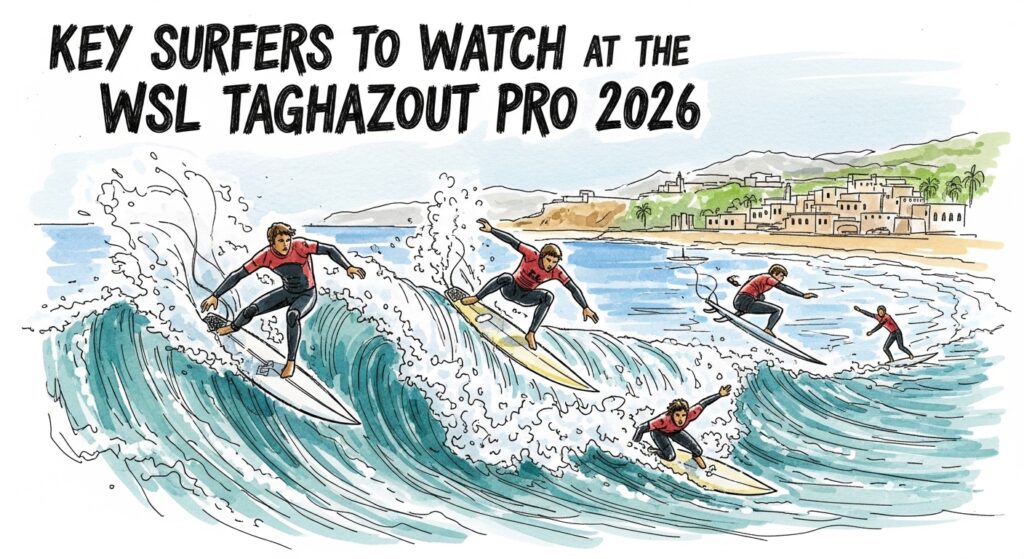
While the full competitor list is finalised closer to the event, several storylines are already emerging. Jorgann Couzinet of France won the 2025 edition with a near-perfect final score and will be looking to defend his crown. Francisca Veselko of Portugal took the women’s title in 2025 and established herself as one of Europe’s most consistent performers.
British surfers including Lukas Skinner, Patrick Langdon-Dark, and Alys Barton are among those competing with Challenger Series qualification in their sights. Skinner, who won a QS event at Fistral earlier in the season, enters as one of the higher-seeded British competitors.
Local Moroccan talent always adds excitement at Taghazout, as athletes who grew up surfing Anchor Point hold a significant home-wave advantage. Watching them perform on a break they know intimately is one of the highlights of any Taghazout Bay event. Competitive surfing demands peak physical fitness, and these athletes train year-round to maintain the explosive power needed for high-performance manoeuvres.
What Makes Taghazout Bay a World-Class Surf Destination
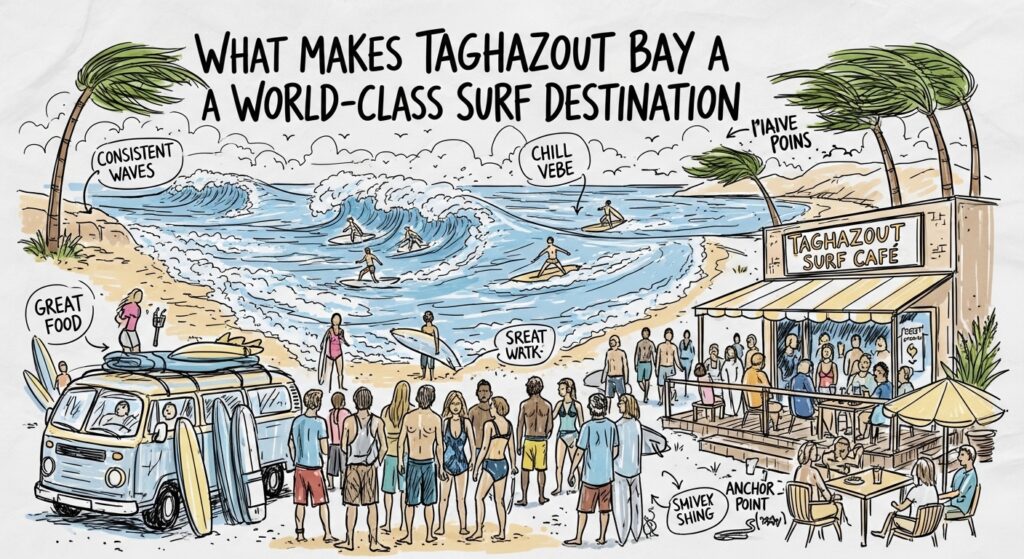
Taghazout has enjoyed legendary status among surfers since the late 1960s, when travellers on the African hippie trail discovered the quality of its point breaks. Today it’s a thriving surf hub with dozens of camps, schools, and accommodation options ranging from budget hostels to boutique hotels.
Within a 30-minute drive of the village, you can access over 25 different surf spots catering to every ability level. Panorama Beach offers gentle rolling waves perfect for beginners, Hash Point provides fun intermediate sessions, and Anchor Point challenges even the most experienced riders. If you’re considering Morocco as a beginner surf destination, the Taghazout area offers an exceptional variety of waves.
The region also benefits from a mild climate. Water temperatures in March sit around 16–19°C, making a good quality wetsuit essential for comfort. Air temperatures are warm and pleasant, typically between 18–24°C, so you can enjoy the town’s laid-back atmosphere between sessions.
How to Watch the WSL Taghazout Pro 2026
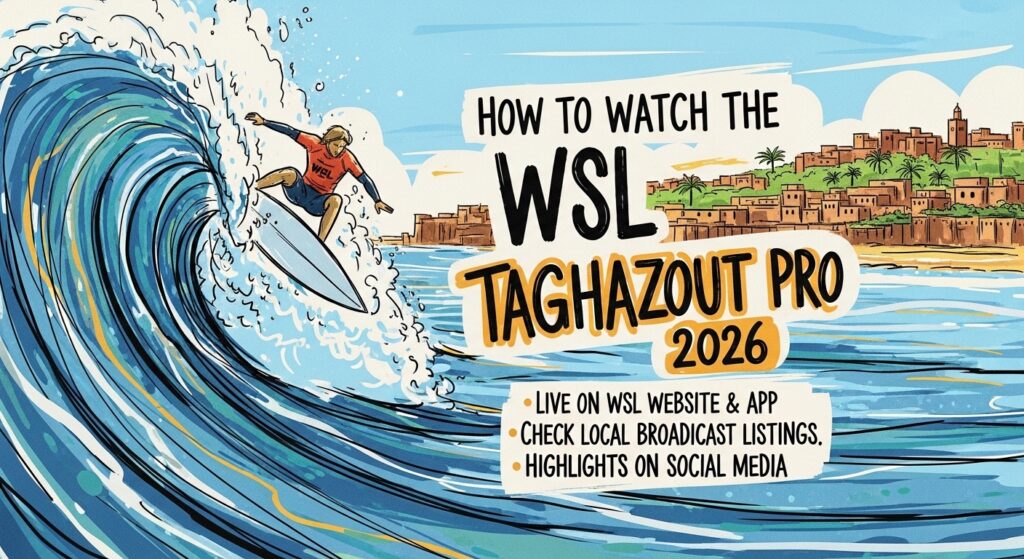
The WSL livestreams all QS 4,000 events through the official World Surf League website and app. Commentary teams provide real-time analysis, wave scoring, and surfer interviews between heats. For those who enjoy reliving great surf moments, the WSL also publishes daily highlight reels on YouTube, much like some of the best surfing movies that capture the drama of competitive surfing.
The WSL app also includes features like Fantasy Surfing, heat-by-heat notifications, and on-demand replays. It’s free to download and gives you complete access to the event’s live coverage.
Tips for Visiting Taghazout During the Competition
If you’re planning to attend the WSL Taghazout Pro 2026 in person, here are some practical tips to make the most of your trip.
What to Pack for a Morocco Surf Trip
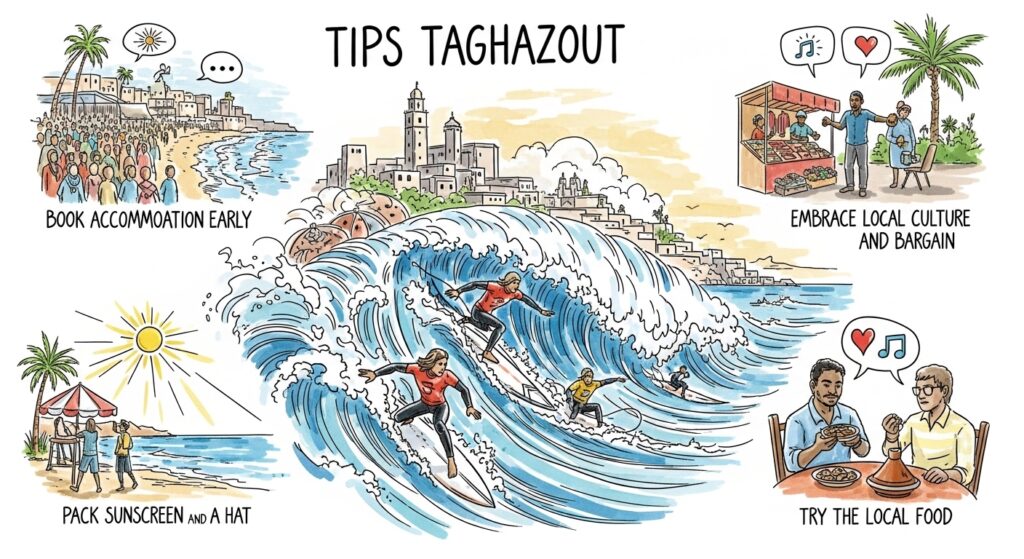
March in southern Morocco is warm during the day but can cool off significantly at night and in the water. Knowing what to wear surfing in these conditions is important — a 3/2mm wetsuit is the minimum for March sessions, and some surfers prefer a 4/3mm for early morning surfs. Don’t forget reef-safe sunscreen, a hat for spectating, and comfortable walking shoes for the rocky paths down to the breaks.
Before heading out, make sure your board is in solid shape. If you notice any dings from travel, understanding eco-friendly surfboard repair techniques can save you time and money. Also, taking a moment to properly wax your board for the water temperature will make a real difference in your grip.
Getting There
The nearest airport is Agadir Al Massira Airport (AGA), located roughly 45 to 60 minutes south of Taghazout by car. Budget airlines operate direct flights from several European cities, and transfers can be arranged through most surf camps. Renting a car is also affordable at around €20 per day and gives you the freedom to explore nearby breaks.
Most passport holders do not need a visa to enter Morocco, with a free visa waiver allowing stays of up to 90 days. Once you arrive, Taghazout is very walkable, and local buses connect the surrounding villages for under a euro each way.
Staying Safe in the Moroccan Surf
Watching world-class surfers at Anchor Point can be inspiring, but the same powerful waves demand respect from anyone who paddles out during the competition window. Strong currents, rocky reef sections, and crowded lineups all present hazards. Brushing up on essential surfing safety tips before your trip is highly recommended, especially if you’re unfamiliar with point break dynamics.
If you’re a beginner, it’s best to stick to the more forgiving beach breaks nearby like Panorama or Banana Beach. Choosing the right surfboard for your level will also make a significant difference in your enjoyment and safety. A longer, more stable board gives you easier paddling and wave-catching ability in unfamiliar conditions.
Understanding how to choose the right surfboard size based on your weight, ability, and the waves you’ll be surfing is one of the most important preparation steps before any surf trip.
Looking Back — Highlights From the 2025 Edition
The 2025 Pro Taghazout Bay, held from February 22 to March 1, showcased the incredible potential of this event. Anchor Point delivered nearly a full week of pumping surf, and the action was nothing short of spectacular.
In the men’s final, France’s Jorgann Couzinet claimed victory with a combined heat score just over 19 points out of a possible 20, narrowly edging out Morocco’s Ramzi Boukhiam. On the women’s side, Francisca Veselko of Portugal took the title over Spain’s Janire Gonzalez Etxabarri.
The success of the 2025 event was a major factor in the WSL’s decision to upgrade the 2026 edition to QS 4,000 status, reflecting the growing importance of Morocco on the global competitive surfing map. For those who enjoy action sports crossovers, it’s worth noting that surf skills can translate to other board sports — many athletes explore similarities between surfing and snowboarding during the off-season.
Final Thoughts
The WSL Taghazout Pro 2026 represents the perfect intersection of world-class waves, high-stakes competition, and the vibrant culture of Morocco’s surf scene. With the upgrade to QS 4,000 status and its position as the European season finale, this event will attract the region’s most talented surfers competing for life-changing qualification spots. Whether you plan to watch the livestream from home or make the trip to Anchor Point yourself, the Pro Taghazout Bay promises a week of outstanding surfing in one of the world’s most scenic competitive venues. Keep an eye on the WSL website and app for schedule updates, and don’t miss the chance to witness the future stars of professional surfing battling it out on Morocco’s legendary right-hand points.