
Choosing the right surfboard can feel overwhelming, especially when you’re faced with countless shapes, sizes, and designs.
Whether you’re a complete beginner paddling out for the first time or an experienced surfer looking to expand your quiver, understanding surfboard shapes is essential to improving your performance and enjoyment in the water.
The shape of your board directly affects how it handles waves, how stable it feels, and what kind of surfing style you can develop.
Surfboard shapes have evolved dramatically over the decades, from the heavy wooden planks of early surf culture to today’s high-performance foam and fiberglass designs.
Each shape serves a specific purpose, designed to work with different wave conditions, skill levels, and surfing styles.
In this comprehensive guide, we’ll explore the most popular surfboard shapes, explain how each one performs, and help you determine which design best suits your needs and abilities.
Understanding the Basics of Surfboard Design
Before diving into specific surfboard shapes, it’s important to understand the fundamental elements that define how a board performs. Every surfboard consists of several key components: the outline (the board’s shape when viewed from above), the rocker (the curve from nose to tail), the rails (the edges of the board), and the bottom contours.
These elements work together to determine how the board moves through water, generates speed, and responds to your movements.
The outline of a surfboard refers to its overall silhouette and width distribution from nose to tail. Wider boards offer more stability and paddle power, making them ideal for beginners or smaller waves.
Narrower boards provide less surface area, allowing for quicker turns and better performance in larger, more powerful waves. The rocker—the banana-like curve you see when viewing a board from the side—affects how the board interacts with the wave face. More rocker allows for tighter turns and better performance in steep waves, while flatter rocker generates more speed in smaller conditions.
Longboards: The Classic Wave-Riding Experience
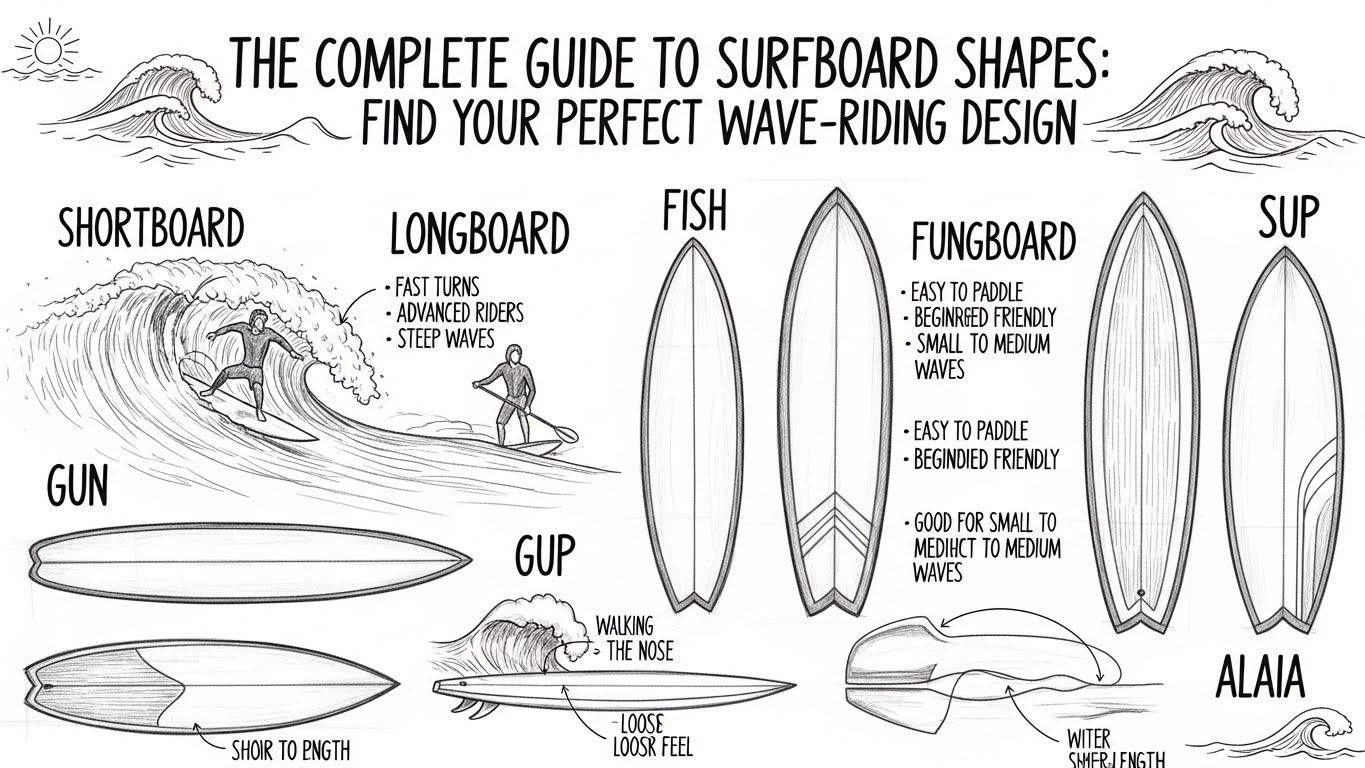
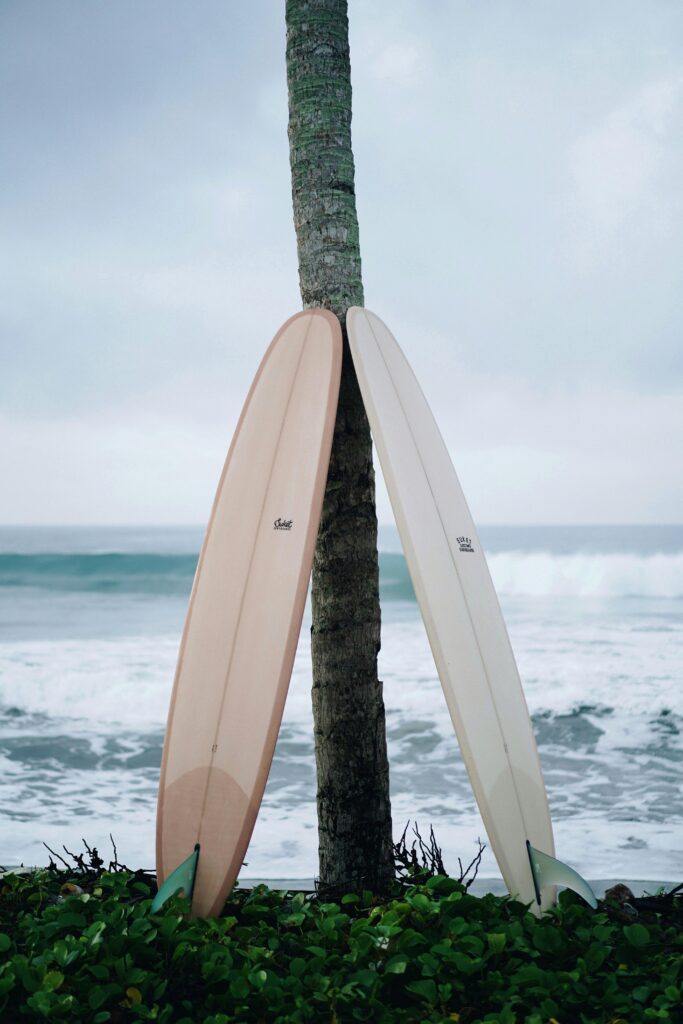
Longboards typically measure 9 feet or longer and represent the traditional style of surfing that dominated the sport for decades. These surfboard shapes feature rounded noses, wide outlines, and relatively flat rockers, making them incredibly stable and easy to paddle. The generous surface area allows riders to catch waves earlier than shorter boards, and the stability makes them perfect for beginners learning fundamental techniques.
The performance characteristics of longboards make them versatile across various conditions. They excel in small to medium waves where shorter boards struggle to generate speed. Many experienced surfers maintain longboards in their collection specifically for mellow summer days or point breaks with long, rolling waves.
The classic longboard experience includes cross-stepping, nose-riding, and stylish, flowing turns that emphasize grace over aggressive maneuvers.
Modern longboard designs have diversified significantly. Traditional “logs” feature thick rails, single-fin setups, and 50/50 rail profiles for maximum nose-riding capability. Performance longboards incorporate more contemporary elements like thinner rails, multiple fin configurations, and increased rocker for more progressive surfing.
When considering the best longboard surfboard for your needs, think about whether you prefer traditional styling or a more performance-oriented approach.
Shortboards: High-Performance Surfboard Shapes
Shortboards generally range from 5’6″ to 6’10” and represent the high-performance end of the surfboard spectrum. These surfboard shapes feature narrow outlines, pointed noses, pulled-in tails, and significant rocker.
The reduced surface area and refined shapes allow skilled surfers to execute radical maneuvers, fit into critical sections of waves, and generate explosive speed through powerful turns.
The design philosophy behind shortboards prioritizes responsiveness and maneuverability over stability and paddle power. This makes them challenging for beginners but incredibly rewarding for intermediate to advanced surfers who have developed proper technique.
Shortboards typically use thruster (three-fin) or quad (four-fin) setups, which provide drive, control, and the ability to surf vertically on the wave face.
Different shortboard variations exist for specific conditions and preferences. “Grovelers” feature slightly wider outlines and flatter rockers for generating speed in weaker waves. Step-up boards increase length and volume while maintaining performance characteristics for bigger, more powerful surf.
Choosing the right shortboard depends heavily on your skill level, local wave conditions, and the type of surfing you want to pursue.

Funboards and Mini-Mals: The Middle Ground
Funboards, also called mini-mals or mid-lengths, bridge the gap between longboards and shortboards, typically measuring 7 to 8 feet in length. These versatile surfboard shapes combine the paddle power and stability of longer boards with the maneuverability of shorter designs.
For surfers transitioning from longboards to shortboards, funboards provide an ideal stepping stone that maintains enough float while introducing more responsive handling.
The design characteristics of funboards vary considerably depending on their intended use. Most feature rounded noses for easier paddling and wave catching, moderate rocker for a balance between speed and turning, and fuller rails for added stability.
This combination makes them excellent choices for small to medium waves and suitable for surfers who want one board that handles various conditions reasonably well.
Many surf schools recommend funboards for students who have mastered the basics on longboards but aren’t quite ready for the demands of shortboard surfing.
Understanding how long it takes to learn how to surf helps set realistic expectations about progression through different board shapes. Funboards allow developing surfers to practice turning techniques and positioning while maintaining enough stability to build confidence.

Fish Surfboards: Retro Design Meets Modern Performance
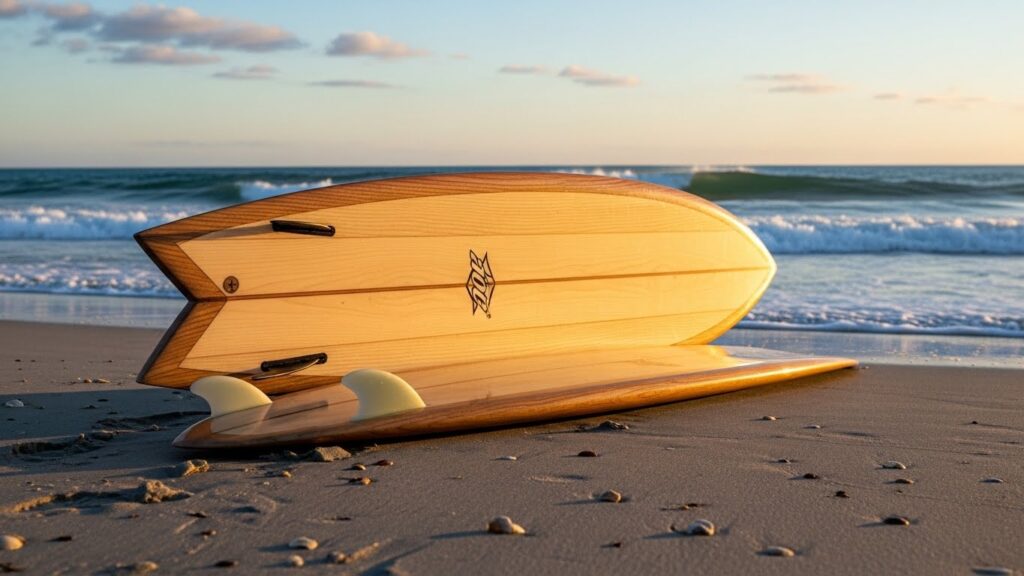
Fish surfboards feature a distinctive swallowtail and typically measure between 5’2″ and 6’2″, making them shorter and wider than traditional shortboards. These surfboard shapes originated in the 1970s and have experienced a major resurgence as surfers rediscover their unique performance characteristics.
The wider outline and flatter rocker create exceptional speed generation in small to medium waves where conventional shortboards struggle.
The defining feature of fish designs is the swallowtail, which creates two distinct release points at the tail. This design allows water to flow smoothly off the board while maintaining drive through turns.
Fish boards typically use twin-fin or quad-fin setups, which contribute to their loose, skatey feel. The combination of width, flat rocker, and minimal fins creates a fast, flowing surfing experience that emphasizes speed and arcing turns over vertical maneuvers.
Modern fish designs have evolved beyond the classic retro templates. Contemporary versions incorporate performance elements like refined rails, increased rocker, and varied tail shapes while maintaining the core characteristics that make fish boards so enjoyable.
These boards excel in mushy summer waves, point breaks, and any conditions where you want maximum speed from minimal wave power. Many experienced surfers keep fish boards in their rotation specifically for those smaller days when a traditional shortboard feels sluggish.
Hybrid Surfboard Shapes: Versatility and Innovation
Hybrid surfboards represent the newest evolution in board design, combining elements from multiple traditional shapes to create versatile, user-friendly options.
These surfboard shapes typically feature shortboard-length dimensions with increased width, thickness, and flatter rockers borrowed from fish and funboard designs. The result is a board that paddles easily, catches waves well, yet still turns responsively once you’re riding.
The philosophy behind hybrid designs acknowledges that most surfers don’t ride perfect waves every session. By incorporating volume and width into a shorter package, shapers create boards that perform across a wider range of conditions than traditional shortboards.
Common hybrid characteristics include fuller noses for paddle power, wide points pushed forward for stability, and performance tails for maneuverability. This combination makes them excellent choices for intermediate surfers or anyone wanting one board for varied conditions.
Popular hybrid categories include the “groveler” for small wave performance, the “step-down” for reducing length while maintaining volume, and the “performance funboard” that shrinks mid-length dimensions into a more maneuverable package.
These designs reflect how modern surfboard shaping has moved away from rigid categories toward more nuanced, purpose-built solutions. When considering how to choose surfboard size, hybrids often allow you to ride shorter lengths than traditional formulas would suggest.
Gun Surfboards: Built for Big Wave Riding
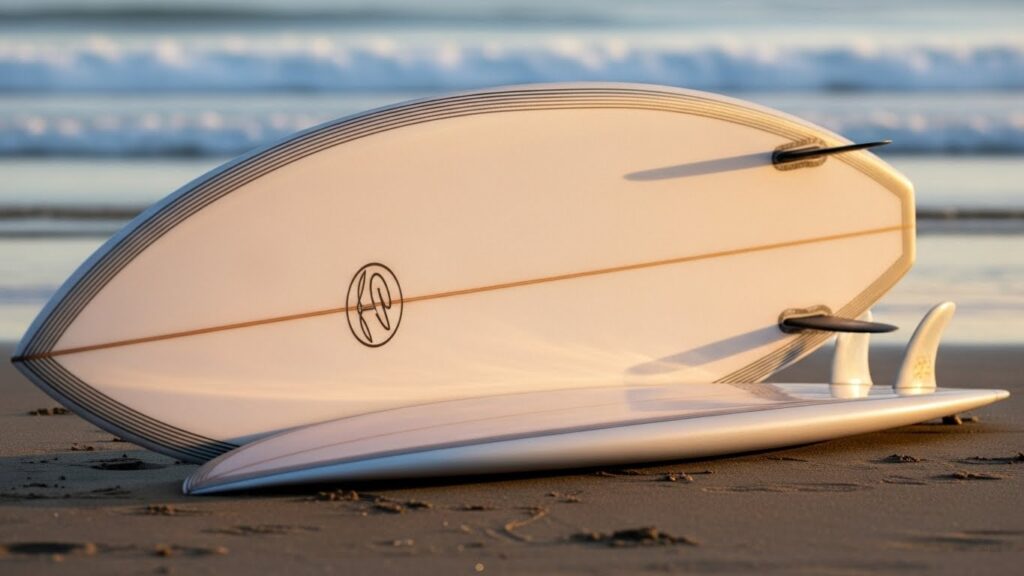
Gun surfboards are specialized designs built specifically for large, powerful waves. These surfboard shapes typically range from 7 to 10 feet (or even longer for extreme big-wave surfing) and feature narrow outlines, pointed noses, pulled-in tails, and significant rocker.
The elongated shape provides stability at high speeds while the narrow outline allows the board to fit into steep, fast-moving wave faces.
The design priorities for guns differ dramatically from everyday surfboards. Paddle speed is crucial for catching waves that may be moving 25-30 mph or faster.
The length and volume provide the paddle power needed while the narrow outline maintains control at extreme speeds. Rails are typically refined and sharp to create precise hold in powerful surf, and rocker is carefully balanced to handle steep drops without nose-diving.
Most recreational surfers will never need a gun, as these boards are designed for waves exceeding 10-12 feet. However, understanding their design principles illustrates how surfboard shapes must adapt to specific conditions.
For surfers progressing to larger waves, “semi-guns” or “step-ups” offer similar design elements in more manageable packages. Anyone venturing into bigger surf should also review essential surfing safety tips for challenging ocean conditions before paddling out.
Specialty Shapes: From Bodyboards to Alternative Designs
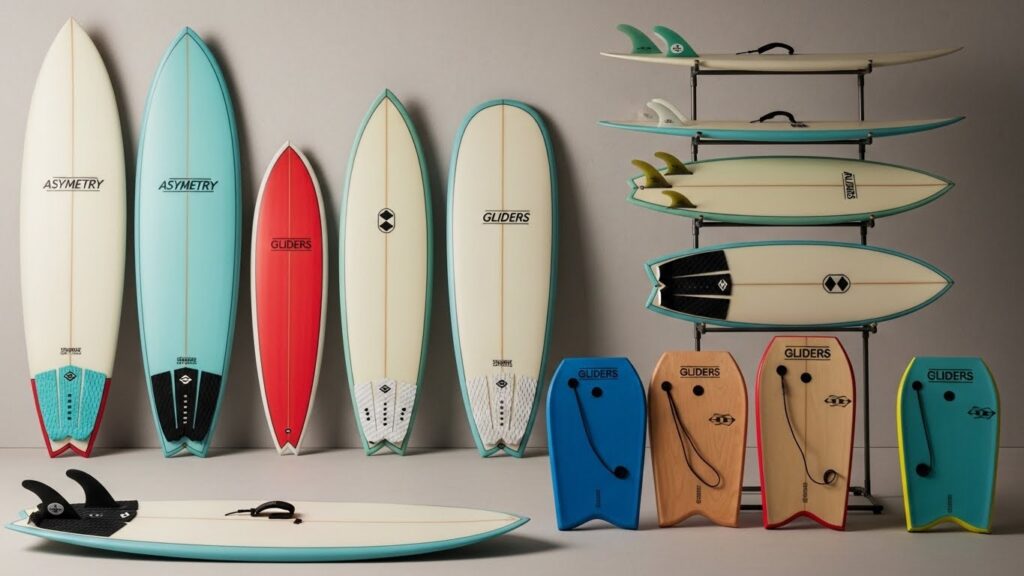
Beyond the main surfboard shapes, numerous specialty designs serve specific niches within surfing culture. Bodyboards, though technically not surfboards, deserve mention as an accessible entry point for wave riding.
Stand-up paddleboards (SUPs) incorporate surfboard shaping principles into larger, more stable platforms. Soft-top foam boards have revolutionized surf education by providing safe, buoyant options for beginners.
Alternative surfboard shapes continue to push the boundaries of wave-riding design. Asymmetrical boards feature different outlines and rocker on heel-side versus toe-side to match how surfers actually ride waves.
Finless designs, called “alaias,” hearken back to ancient Hawaiian surfing and provide a unique, skatey riding experience. Twin-fin “bonzers” incorporate specific bottom contours and side-bite fins for distinctive performance characteristics.
These experimental shapes remind us that surfboard design continues to evolve. Shapers constantly test new concepts, borrowing ideas from skateboarding, snowboarding, and other board sports.
While mainstream surfboard shapes serve most riders well, alternative designs offer experienced surfers new ways to interact with waves. The diversity of available shapes reflects surfing’s creative culture and the endless pursuit of the perfect ride.
How Tail Shapes Affect Performance
The tail area of a surfboard significantly influences how it performs, particularly during turns and in critical sections of waves. Common tail shapes include squash tails (rounded corners that balance release and control), round tails (full curves that provide maximum hold), pintails (pointed tails for control in large, powerful waves), and swallowtails (split tails that create speed and looseness).
Each design affects how water releases from the board and how much surface area engages the wave face during maneuvers.
Wide tail designs increase the planing surface at the back of the board, generating speed in small waves and providing stability for beginners. Narrow tails reduce the planing area, allowing for tighter turns and better control in powerful waves.
The width and shape of the tail must match the board’s overall dimensions and intended use. A wider, fuller tail on a fish board creates speed in weak waves, while a narrow pintail on a gun provides control in life-threatening surf.
Tail rocker (the curve at the back of the board) works together with tail shape to determine performance. More tail rocker allows for tighter, more vertical turns but reduces speed generation. Flatter tail sections create speed but limit how sharply the board can pivot.
Understanding these relationships helps you communicate with shapers about custom boards or evaluate off-the-rack options more effectively.
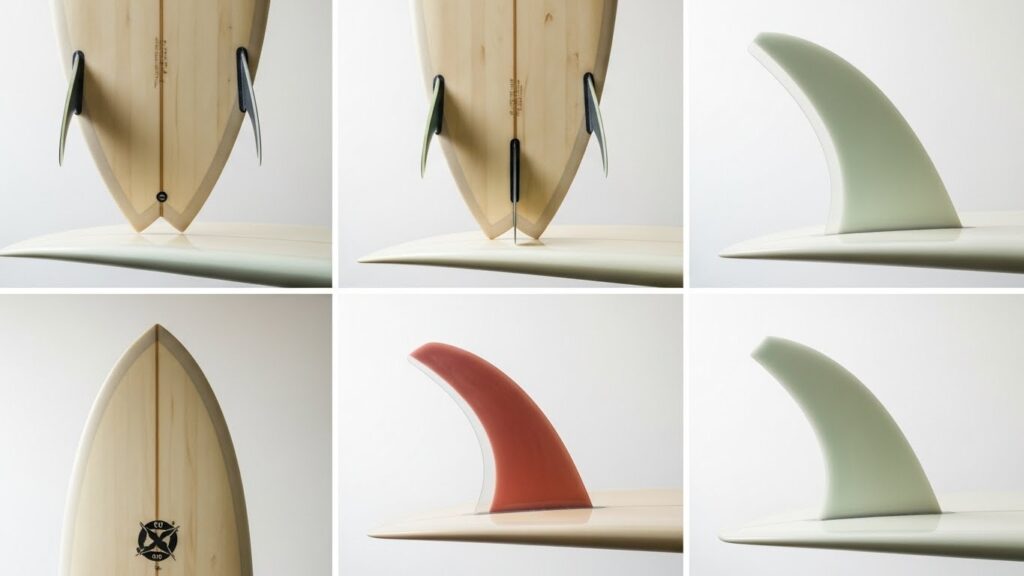
Rail Design and Volume Distribution
Rails—the edges of the surfboard—play a crucial role in how a board performs but often receive less attention than more obvious shape elements. Rail profiles range from soft and rounded (forgiving and stable) to hard and sharp (responsive and precise).
The rail apex (the thickest point of the rail) can be positioned at 50/50 (centered), down (toward the bottom), or up (toward the deck), each creating different performance characteristics.
Thicker rails increase volume and buoyancy, making boards easier to paddle and more stable. Thinner rails reduce volume, allowing the board to sit deeper in the water and respond more quickly to pressure.
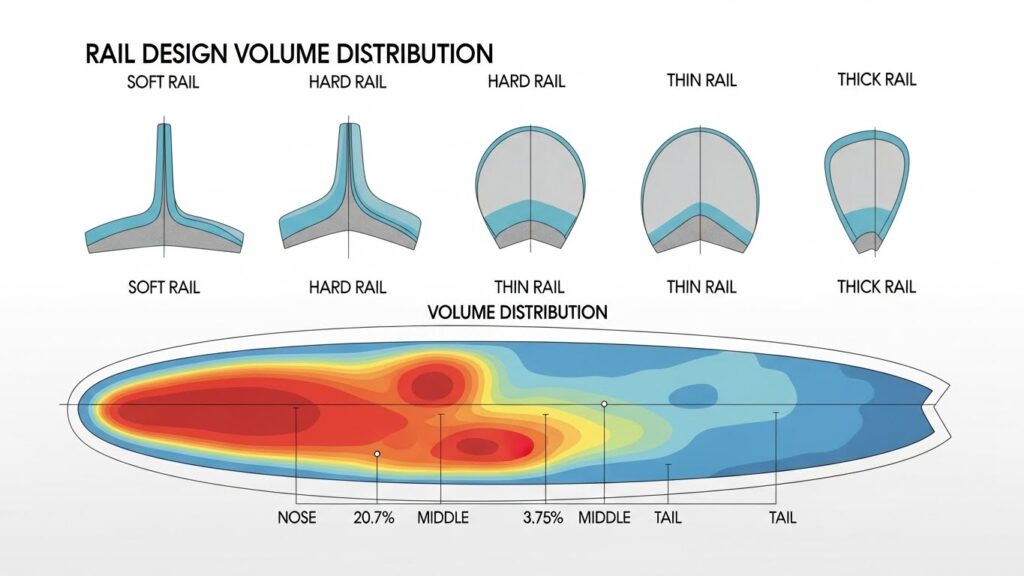
The rail profile typically varies along the board’s length—softer and fuller in the nose for paddling, refined and sharp in the tail for performance. This sophisticated volume distribution reflects decades of shaping evolution and countless hours of testing.
Volume distribution throughout the board determines how it floats and moves. Volume pushed forward aids paddling and wave catching. Volume concentrated in the center provides stability. Volume in the tail area affects how the board releases during turns.
Modern shapers carefully control volume distribution to create specific performance characteristics, and understanding these concepts helps surfers choose the right surfboard shape for their abilities and local conditions.
Rocker: The Curve That Defines Performance
Rocker refers to the curve of the surfboard when viewed from the side, and it’s one of the most critical elements affecting performance. Nose rocker (the curve in the front third) prevents the nose from diving when dropping into waves and allows the board to handle steep sections.
Tail rocker (the curve in the back third) enables tighter turns and allows the board to fit into critical, vertical sections of waves. The rocker through the center section influences speed generation and how the board feels underfoot.
Boards with more rocker perform better in powerful, hollow waves where you need to make tight turns and fit into vertical sections. The increased curve allows the board to follow the wave face’s contour without catching rail or nose.
However, more rocker creates more drag, reducing speed in small or weak waves. Conversely, flatter rocker generates speed in mushier conditions by maximizing the board’s contact with the water surface, but this limits turning ability in powerful surf.
The relationship between rocker and other design elements creates the board’s overall performance envelope. A fish board’s flat rocker complements its width to generate speed in small waves. A gun’s refined rocker works with its length and narrow outline for control in massive surf.
Understanding rocker helps explain why certain surfboard shapes work better in specific conditions and why you can’t simply judge a board by its length and width alone.
Choosing the Right Surfboard Shape for Your Skill Level
Selecting the appropriate surfboard shape depends on honestly assessing your current abilities and the waves you typically surf. Beginners benefit from longer, wider boards with lots of volume—typically longboards or large funboards.
These shapes provide the stability needed to stand up, the paddle power to catch waves, and the forgiveness to make mistakes without constant wipeouts. Many surf schools use soft-top boards around 8 feet long, which offer ideal learning characteristics.
Intermediate surfers who can consistently catch waves, perform basic turns, and understand positioning should consider transitioning to shorter, more responsive shapes. Funboards or hybrid designs provide a good progression point, offering increased maneuverability while maintaining enough volume to catch waves.
This phase involves developing a quiver—a collection of boards for different conditions. What to wear surfing matters for comfort, but having the right board for the conditions matters even more for progression.
Advanced surfers typically maintain multiple boards matched to specific conditions. Shortboards for powerful, hollow waves. Fish or hybrid designs for small summer surf. Longboards for mellow point breaks. Step-ups for when the swell builds.
Building an effective quiver requires understanding not just your ability level but also your local wave conditions. A surfer in Southern California needs different boards than someone surfing the consistent beach breaks of France or the reefs of Indonesia.
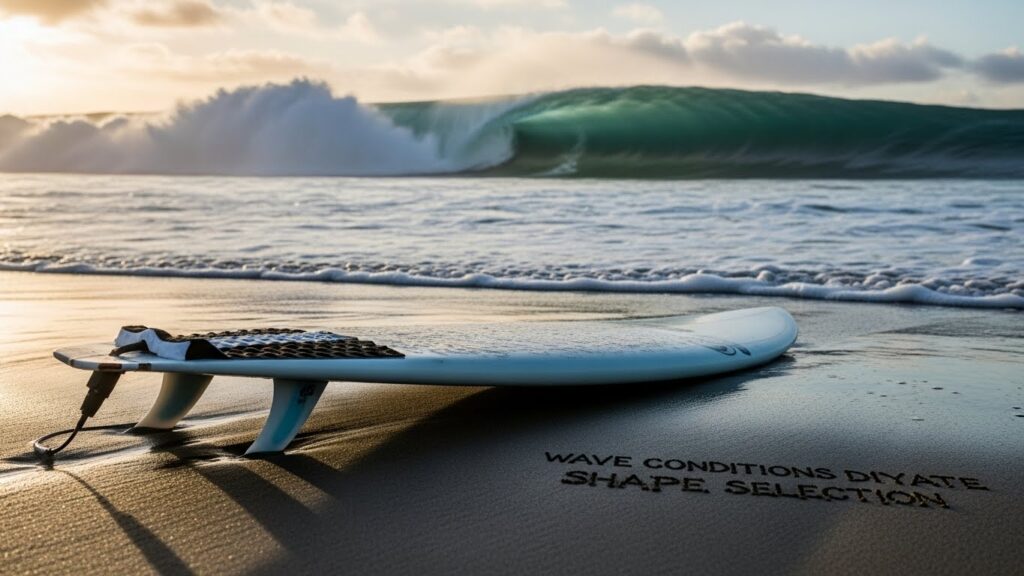
How Wave Conditions Dictate Shape Selection
The waves you surf should heavily influence your surfboard shape choices. Small, weak waves (1-3 feet) perform best with boards that generate speed easily—typically wider, flatter designs like fish, hybrids, or longboards.
These shapes maximize planing surface and maintain speed through slow sections. The additional volume helps you catch waves earlier and maintain momentum through weak spots.
Medium-sized waves (3-6 feet) with clean faces offer the most versatility, allowing you to ride various surfboard shapes depending on your skill level and preferred style.
This is where shortboards begin to shine for advanced surfers, while intermediate riders still benefit from funboards or longer hybrids. Understanding how to read a surfing wave forecast helps you predict conditions and choose the right board before heading to the beach.
Large, powerful waves require boards designed for control and speed. Narrower outlines, increased length, more rocker, and refined rails become essential as wave size increases. The water is moving faster and generating more force, so boards must handle these conditions without being thrown off line or becoming difficult to control.
Anyone regularly surfing overhead waves should seriously consider dedicated boards for those conditions rather than trying to make a small-wave board work in bigger surf.
The Role of Fin Configuration in Overall Shape Performance
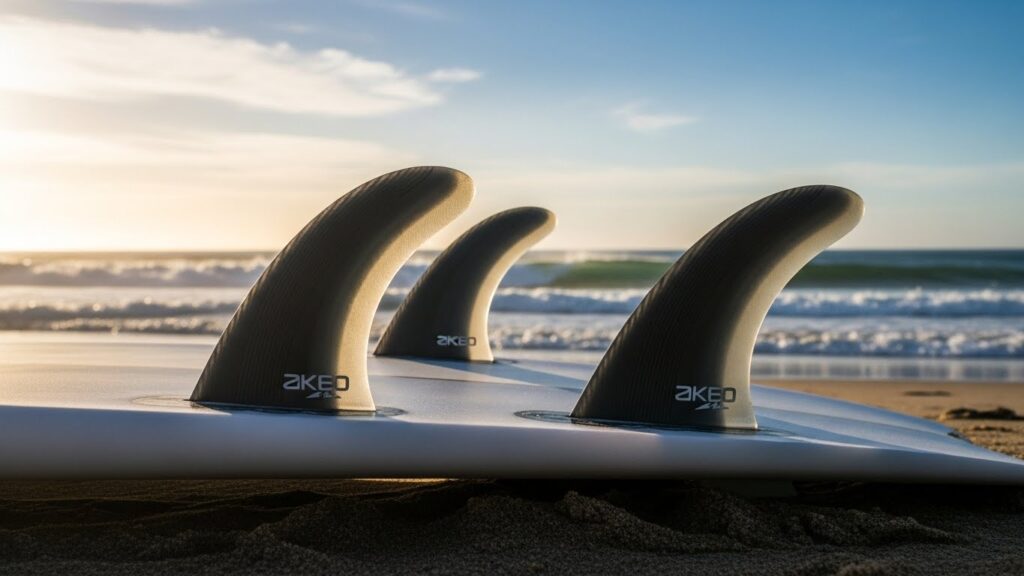
Fin setup works together with surfboard shape to determine how a board performs. Single fins, traditional on longboards, provide a stable, drivey feel with smooth, arcing turns. Twin fins, common on fish designs, create loose, fast, skatey performance with reduced drag.
Thrusters (three fins) offer versatility with drive, control, and maneuverability, making them the most popular configuration for shortboards. Quad setups (four fins) generate speed while maintaining control, particularly in weak or hollow conditions.
The size, shape, and positioning of fins must match the board’s overall design and intended use. Larger fins provide more control and drive, while smaller fins reduce drag and increase looseness. Fin placement relative to the tail affects pivot point and turning characteristics.
Modern removable fin systems (FCS, Futures, US Box) allow surfers to experiment with different configurations on the same board, fine-tuning performance for conditions and preferences.
Understanding how fins interact with surfboard shapes helps you optimize performance. A fish board with small twin fins feels fast but loose. The same board with larger twins or added side bites provides more control.
A shortboard with a thruster setup turns differently than the same board with a quad setup. These adjustments allow you to customize your equipment as your skills develop and your understanding of wave riding deepens.
Custom Versus Off-the-Rack: Getting Your Shape Right
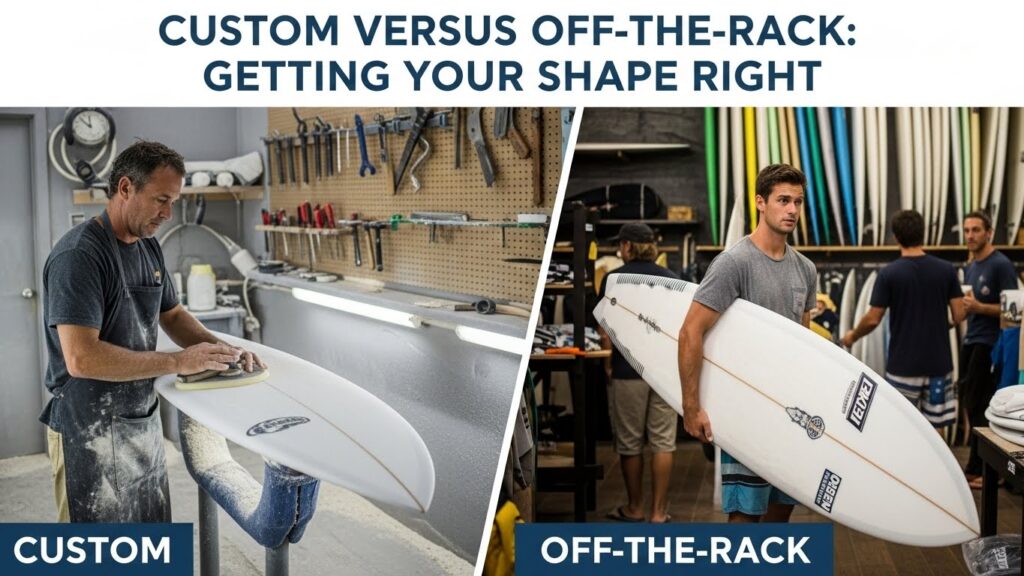
Choosing between custom-shaped and mass-produced surfboards represents a significant decision for serious surfers. Off-the-rack boards offer consistency, immediate availability, and often lower prices.
Major manufacturers use sophisticated design software and controlled production processes to create quality boards at various price points. For beginners and intermediate surfers, production boards provide excellent performance and value.
Custom boards allow you to work directly with a shaper to create a design precisely matched to your dimensions, ability level, local waves, and preferences. Experienced shapers incorporate subtle refinements impossible to find in mass-produced boards—tweaked rockers, personalized volume distribution, and modifications based on your specific surfing style.
Custom boards become increasingly valuable as you develop more refined preferences and understand exactly what works for your surfing.
The custom process typically involves discussing your height, weight, ability level, local conditions, and riding style with a shaper. They’ll recommend dimensions and design elements, possibly referencing boards you’ve ridden before.
Most shapers charge premium prices reflecting their expertise and the time-intensive handcraft process. However, a well-designed custom board that perfectly suits your needs performs better than an off-the-rack compromise, potentially justifying the additional investment for committed surfers.
Maintaining Your Board’s Shape and Performance
Proper care extends the life of any surfboard and maintains its intended performance characteristics. Dings and damage should be repaired quickly to prevent water absorption, which adds weight and eventually causes delamination.
Even small dings compromise structural integrity over time. Learning basic DIY eco-board repairs helps you maintain your equipment without constantly visiting professional repair shops.
Storage conditions significantly affect surfboard longevity. Avoid leaving boards in direct sunlight or hot cars, as extreme heat can cause delamination and weaken foam cores.
Store boards in padded bags or racks that support them properly without creating pressure points. Rinse boards with fresh water after each session to remove salt, sand, and contaminants that accelerate wear.
Understanding why wax a surfboard and maintaining proper wax application ensures consistent traction and performance. Different wax formulas work better in various water temperatures, and old wax should be removed and replaced periodically for optimal grip.
These maintenance practices preserve your board’s shape and performance characteristics, protecting your investment and ensuring consistent performance session after session.
The Evolution of Surfboard Shapes and Future Trends
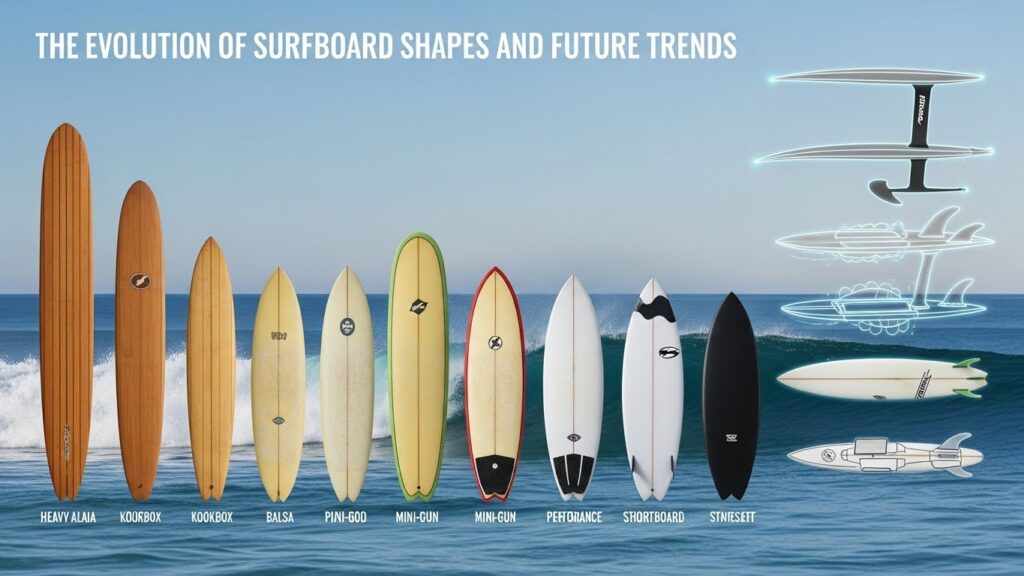
Surfboard design has evolved dramatically since ancient Hawaiians rode heavy wooden planks. The introduction of foam and fiberglass in the 1950s revolutionized construction, allowing for lighter, more maneuverable shapes.
The shortboard revolution of the late 1960s fundamentally changed performance expectations. Each decade since has brought innovations in materials, shaping techniques, and design philosophy. Understanding the history of surf culture provides context for how we arrived at today’s diverse array of shapes.
Modern technology continues to push surfboard design forward. Computer-aided design (CAD) and CNC shaping machines allow for precision impossible with hand-shaping alone.
New materials like carbon fiber, epoxy resins, and expanded polystyrene (EPS) foam create lighter, stronger boards with different flex characteristics. 3D printing may eventually allow for custom boards produced on-demand with previously impossible internal structures.
Future trends point toward further specialization and customization. As surfers become more educated about board design, demand increases for shapes matched to specific conditions and preferences.
Environmental concerns drive innovation in sustainable materials and construction methods. Computer modeling and fluid dynamics analysis help shapers optimize designs before building physical boards. This ongoing evolution ensures that surfboard shapes will continue to improve, giving riders even better tools for connecting with waves.
Developing Your Understanding Through Experience
The best education in surfboard shapes comes from riding different boards in various conditions. Each board teaches you something about how design elements affect performance. A flat-rockered fish shows you how to generate speed in weak waves.
A high-performance shortboard demonstrates responsiveness and drive in powerful surf. A classic longboard reveals the beauty of trimming and nose riding. This experiential knowledge surpasses anything you can learn from articles or specifications.
Many surf shops offer demo programs that allow you to test boards before purchasing. Borrowing boards from friends exposes you to shapes you might not otherwise try. Renting different boards while traveling lets you experiment with designs from various shapers and regions.
Each experience refines your understanding of what works for your surfing and helps you make more informed decisions about future purchases.
The physical and mental benefits extend beyond board selection. Surfing’s mental health benefits and the surfing fitness guide both improve through consistent water time on appropriate equipment. Finding the right surfboard shape for your current ability accelerates progression, increases wave count, and deepens your connection to surfing.
This journey of discovery continues throughout your surfing life as conditions change, abilities evolve, and new designs emerge.
Exploring Surfing Culture Through Different Destinations
Where you surf influences which surfboard shapes work best and helps you appreciate design diversity. Best surfing destinations for beginners typically feature beach breaks with consistent, manageable waves where longer, more forgiving shapes excel.
Intermediate to advanced spots with reef breaks, point breaks, or powerful beach breaks require more specialized designs matched to those specific conditions.
Traveling to different surf regions exposes you to local shaping traditions and preferences. California’s beach breaks favor versatile all-rounders and performance shortboards. Hawaii’s powerful reefs demand boards with control and commitment.
Indonesia’s perfect barrels require designs that generate speed and fit into hollow sections. European beach breaks often suit hybrid shapes that handle variable conditions. Each region’s waves have influenced local shaping culture, creating distinct design philosophies.
When traveling, research local wave conditions and consider renting or buying boards shaped for those specific breaks. Many surf destinations offer rental options specifically designed for local conditions.
This approach provides better performance than traveling with your home quiver and exposes you to designs you might not encounter otherwise. Plus, you might discover inspiring films about these locations through the best surfing movies, which showcase different boards and styles worldwide.

Conclusion: Finding Your Perfect Surfboard Shape
Choosing the right surfboard shape represents a personal journey of discovery, experimentation, and growing understanding. No single design works perfectly for everyone or every condition. Your ideal shape depends on your ability level, physical characteristics, local waves, and surfing goals.
The learning curve involves trying different boards, making mistakes, experiencing breakthrough sessions, and gradually developing preferences based on real experience rather than marketing hype.
Start with shapes appropriate for your current skill level rather than aspirational designs beyond your abilities. Be honest about your abilities and the waves you typically surf.
As you progress, gradually transition to more performance-oriented shapes while potentially keeping versatile boards for different conditions. Build a quiver that covers the range of waves you encounter rather than searching for one magical board that does everything.
Remember that even the perfect surfboard shape won’t automatically make you a better surfer—consistent practice, proper technique, and time in the water develop skills. However, riding appropriate equipment accelerates progression, increases enjoyment, and helps you maximize every session.
Whether you’re catching your first waves on a stable longboard or threading critical barrels on a refined shortboard, understanding surfboard shapes empowers you to make informed choices and deepen your connection to surfing.