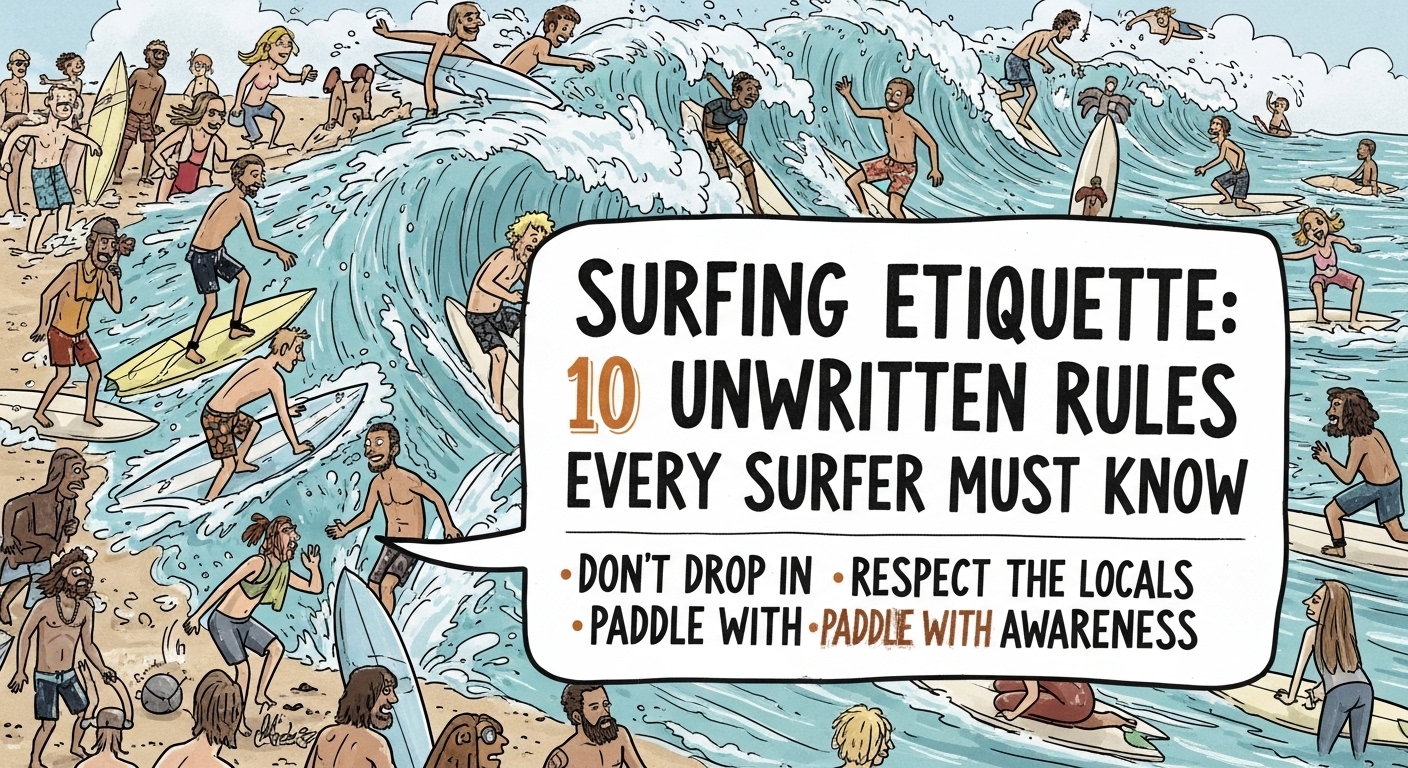

The ocean belongs to everyone, but the lineup operates by a specific code. Surfing etiquette represents the unwritten rules that keep surfers safe, prevent conflicts, and ensure everyone gets their fair share of waves.
Whether you’re just learning how to surf or you’ve been riding waves for years, understanding and following these rules is essential for a positive surf experience.
Breaking surfing etiquette doesn’t just annoy other surfers. It creates dangerous situations, leads to collisions, and can damage the welcoming atmosphere that makes surf culture special. These rules have evolved over decades through the history of surf culture and continue to govern lineups worldwide.
Why Surfing Etiquette Matters
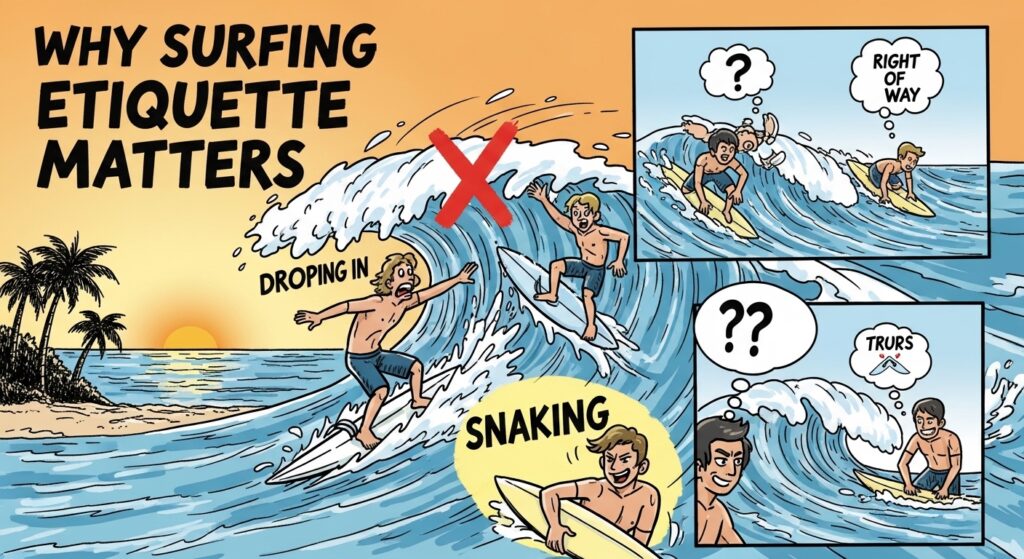
Surfing etiquette exists for practical safety reasons, not arbitrary tradition. When multiple surfers compete for the same waves in a limited space, chaos erupts without agreed-upon rules. Collisions can cause serious injuries, damaged boards, and hostile confrontations.
Beyond safety, these rules create fairness in the lineup. They ensure beginners and experts alike get opportunities to catch waves based on position, patience, and respect rather than aggression or entitlement.
Following proper etiquette demonstrates respect for the ocean, other surfers, and the local community.
Many surf spots have locals who’ve been riding those waves for decades. They’ve earned their priority through dedication, knowledge, and contribution to their surf community. Respecting their position while learning the lineup’s specific dynamics helps you integrate rather than alienate.
The mental health benefits of surfing diminish significantly when lineup tension replaces the peaceful connection with nature. Proper etiquette maintains the positive, stress-relieving atmosphere that draws people to surfing.
The 10 Essential Surfing Etiquette Rules
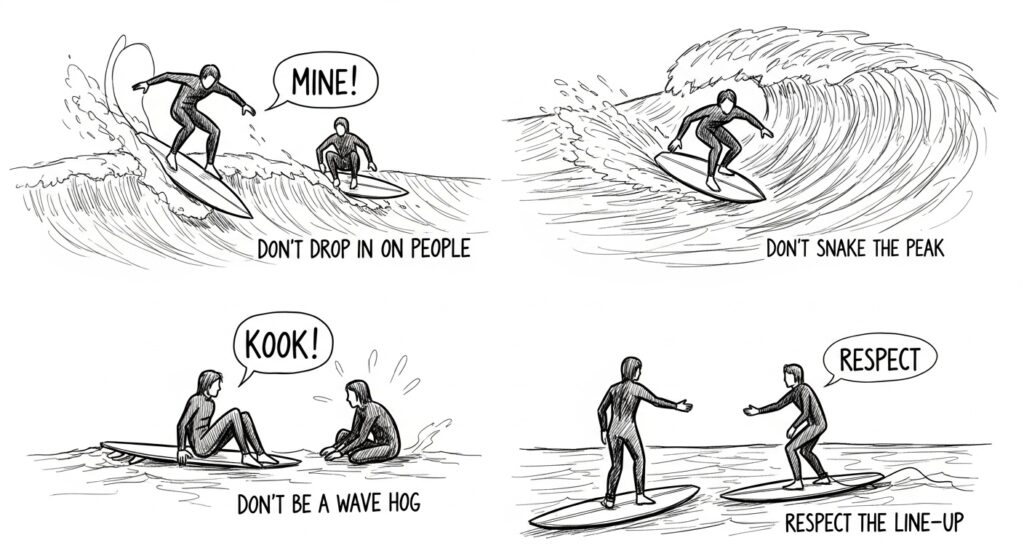
Let’s explore the fundamental rules that govern every surf lineup around the world. These principles apply whether you’re surfing beginner-friendly destinations or challenging reef breaks.
1. The Surfer Closest to the Peak Has Priority
This is surfing’s most fundamental rule. The surfer positioned closest to where the wave is breaking has the right of way.
If someone is already up and riding, you cannot take off on the same wave in front of them.
When a wave has both left and right sections, two surfers can share it if they go opposite directions. However, if the wave only breaks one way, only the person closest to the peak should take off.
Violating this rule is called “dropping in” or “snaking,” and it’s the fastest way to earn a bad reputation.
Understanding wave dynamics helps you determine priority. The peak is where the wave first breaks and creates the steepest, most critical section. Position yourself properly and wait your turn rather than paddling around others to steal waves.
2. Don’t Drop In on Another Surfer
Dropping in means taking off on a wave when another surfer already has priority and is riding it. This creates collision risks and ruins the other person’s ride.
Even if you didn’t see them, you’re still responsible for looking before taking off.
Before committing to any wave, always check both directions to ensure no one else is already riding. If you accidentally drop in, kick out immediately and apologize.
Everyone makes mistakes, especially when learning, but acknowledging errors shows respect.
Some surfers intentionally drop in to intimidate others or assert dominance. This aggressive behavior has no place in the lineup and reflects poorly on the perpetrator.
The surf community generally self-polices this behavior, and chronic offenders find themselves unwelcome.
3. Don’t Snake or Paddle Around Others
Snaking occurs when you paddle around another surfer who’s been waiting in position to get closer to the peak and steal their priority. This deceptive practice violates the queue system that maintains lineup order.
Surfers earn their position through patience and strategic placement. Paddling around them to gain an advantage breaks the unspoken agreement that everyone waits their turn.
The exception is when someone is clearly out of position and won’t make the wave.
If you’re unsure about position, communicate. Ask if someone is going for the wave before paddling around them.
This simple courtesy prevents misunderstandings and shows you’re trying to follow proper etiquette.
4. Communicate in the Lineup
Clear communication prevents conflicts and dangerous situations. Call out whether you’re going left or right on split peaks.
Let others know if you’re paddling for a wave or passing on it.
If you have priority but decide not to take a wave, signal to the next person in line so they know they can go. Simple gestures like pointing or verbal calls keep the lineup organized.
Understanding how to read wave forecasts also helps you position yourself better and communicate intentions.
When paddling back out, tell approaching surfers which way you’re going so they can avoid you. This prevents last-second collisions where neither person knows which direction to turn.
Don’t assume others can read your mind.
5. Paddle Wide Around the Lineup
When returning to the lineup after a ride or wipeout, paddle around the breaking waves rather than through the impact zone where others are trying to catch waves. Paddling through the lineup forces surfers to avoid you, potentially causing them to miss waves.
This rule requires extra effort, especially when you’re tired. But paddling wide shows consideration for others and keeps you safer.
Getting hit by someone’s board while paddling through the lineup can cause serious injuries.
If you must paddle through the impact zone, do so quickly and stay aware of surfers catching waves. If someone is riding toward you, paddle toward the whitewater (behind them) rather than toward the shoulder where they’re trying to go.
Never paddle directly in front of someone riding a wave.
6. Don’t Ditch Your Board
Letting go of your board in the surf zone creates a dangerous projectile that can injure other surfers. Your board is your responsibility at all times.
Hold onto it during wipeouts, or ensure your leash keeps it close.
Learn to turtle roll or duck dive your board rather than abandoning it when waves approach. These techniques keep your board under control while allowing waves to pass.
Choosing the right surfboard size makes these maneuvers easier.
If you’re learning and can’t control your board effectively yet, surf away from crowded areas. Empty beach breaks provide safer environments for practicing without endangering others.
Consider starting with a beginner-friendly board that’s easier to control.
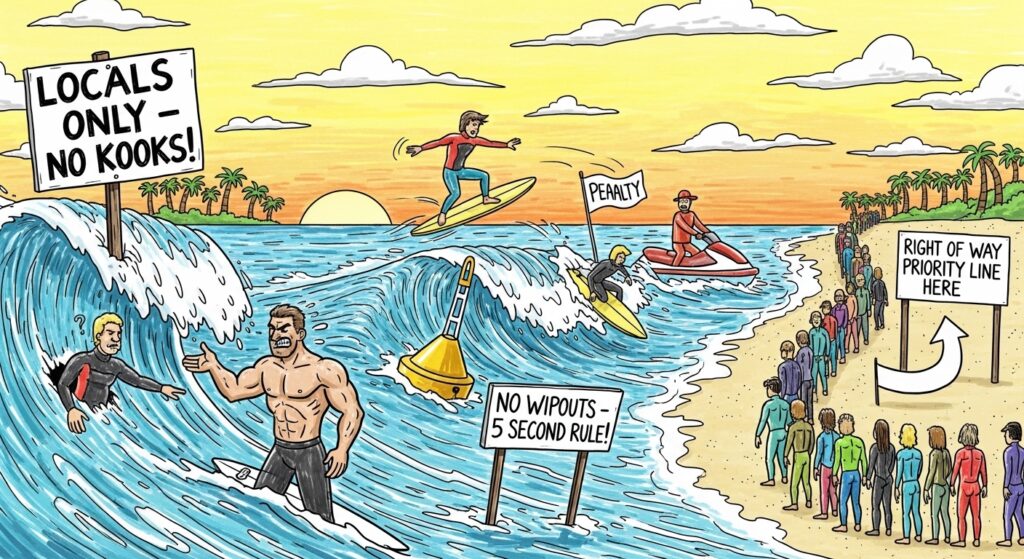
7. Respect the Locals
Local surfers have dedicated years to their home break. They understand the waves, hazards, and rhythms better than visitors.
Show respect by observing before paddling out, not catching every wave, and being friendly.
Don’t show up at a new spot with a large group and dominate the lineup. This behavior breeds resentment and can lead to confrontations.
Earn your place gradually by demonstrating respect and proper etiquette.
Some breaks have established pecking orders where locals get priority. While this might seem unfair, remember that these surfers maintain the beach, deal with crowds year-round, and have invested countless hours at their break.
Accept the hierarchy and work within it.
8. Know Your Limits and Surf Appropriate Breaks
Paddling out in conditions beyond your ability endangers yourself and others. Struggling surfers create hazards by losing boards, needing rescue, and disrupting the lineup’s flow.
Be honest about your skill level and choose appropriate spots.
If waves are overhead and powerful, but you’ve never surfed anything bigger than waist-high, stay on shore. Watch, learn, and return when conditions match your ability.
Following essential safety tips for challenging conditions helps you assess when you’re ready.
Progressing gradually through different wave sizes and types builds skill safely. Pushing too hard too fast leads to dangerous situations and frustrates more experienced surfers who must avoid you.
A proper surfing fitness program helps you prepare for more challenging conditions.
9. Share the Waves
Don’t be a wave hog. Even if you’re the best surfer in the lineup, taking every good wave is poor etiquette.
Let others catch waves, especially if they’ve been waiting patiently.
Pay attention to who hasn’t caught waves recently. Acknowledge when someone’s been sitting outside for a while and let them have priority on the next set.
This generosity creates positive energy and usually gets returned to you.
If you’re surfing on a longboard, remember that your paddle advantage makes it easier to catch waves. Show restraint and let shortboarders catch some too.
Balance between getting your waves and ensuring others enjoy their sessions.
10. Help Others and Stay Positive
Surfing culture should be welcoming and supportive. Help beginners learn proper etiquette politely rather than screaming at them.
Assist surfers in trouble, retrieve lost boards, and maintain positive energy.
If someone breaks etiquette rules, address it calmly and constructively. Many violations come from ignorance rather than malice.
A friendly explanation often prevents future issues better than aggressive confrontation.
Share information about conditions, hazards, and local knowledge with respectful visitors. This openness makes surf culture stronger and more inclusive.
Remember that you were once a beginner too.
Understanding Why These Rules Exist
Each surfing etiquette rule addresses specific problems that arise in crowded lineups. The priority system prevents multiple surfers from attempting the same wave simultaneously, which leads to collisions and injuries.
Following these rules isn’t about being uptight or creating unnecessary restrictions.
The rules create predictability in an unpredictable environment. When everyone follows the same code, surfers can focus on riding waves rather than avoiding chaos.
This structure actually increases wave count for everyone by eliminating confusion and wasted opportunities.
Safety remains the primary concern behind surfing etiquette. Surfboards are hard, heavy objects that can cause concussions, broken bones, and lacerations.
The ocean itself presents dangers from currents, rocks, and marine life.
Regional Variations and Local Rules
While the core surfing etiquette rules apply worldwide, some breaks have additional local customs. Certain spots reserve the best waves for regulars during peak hours.
Other locations have specific entry and exit points to manage crowds.
Research any new surf spot before paddling out. Watch from shore, talk to locals respectfully, and observe how the lineup operates.
Some breaks work on a rotation system where position constantly shifts based on wave sets.
Tropical destinations often have more relaxed atmospheres than cold water spots with established local crews. However, don’t mistake friendliness for lack of rules.
Even laid-back locations expect proper etiquette from all surfers.
Teaching Etiquette to New Surfers
Experienced surfers have a responsibility to teach beginners proper etiquette. Rather than getting angry at someone who doesn’t know the rules, take a moment to explain them kindly.
Most new surfers appreciate guidance and want to do the right thing.
Surf schools should emphasize etiquette as much as technique. Understanding the rules before entering a lineup prevents dangerous situations and helps new surfers integrate smoothly.
Movies about surfing often showcase proper lineup behavior and can be educational tools.
Encourage new surfers to observe before participating. Watching a lineup for 15-20 minutes reveals the dynamics, regular surfers, and unspoken patterns.
This observation period helps newcomers understand what they’re entering.
Consequences of Breaking Surfing Etiquette
Violating surfing etiquette carries real consequences. Minor infractions might earn verbal warnings or dirty looks.
Repeated or egregious violations can lead to physical confrontations, though these should always be avoided.
Your reputation spreads quickly in surf communities. Break the rules consistently, and you’ll find cold shoulders wherever you paddle out.
Locals remember wave hogs, dangerous surfers, and disrespectful visitors.
Beyond social consequences, breaking etiquette creates genuine safety hazards. Collisions from dropped-in waves cause injuries requiring medical attention.
Lost boards from ditching can hit other surfers with devastating force.
Surfing Etiquette in Different Conditions
Etiquette application shifts based on conditions and crowd levels. During small, mellow swells with few people out, the atmosphere relaxes.
Surfers might share waves more freely or take turns on each set.
However, when conditions improve and crowds increase, strict adherence to rules becomes critical. Big swells with limited takeoff zones require precise positioning and clear communication.
Everyone must follow protocol to prevent chaos and injuries.
Empty beach breaks allow more flexibility than crowded reef passes with single takeoff points. Adjust your approach based on the specific situation while maintaining core principles.
Understanding what to wear when surfing different conditions also shows your preparation and respect.
Equipment Care and Etiquette
Taking care of your equipment demonstrates respect for the sport and other surfers. Keep your board properly maintained with appropriate wax and check your leash before each session.
Equipment failures can endanger others.
If you damage someone else’s board through your mistake, accept responsibility. Offer to pay for repairs and apologize sincerely.
Accidents happen, but how you respond to them defines your character.
Don’t leave trash on the beach or in the parking lot. Many surf communities organize beach cleanups and environmental protection efforts.
Participate in these activities to show you care about preserving surf spots for future generations.
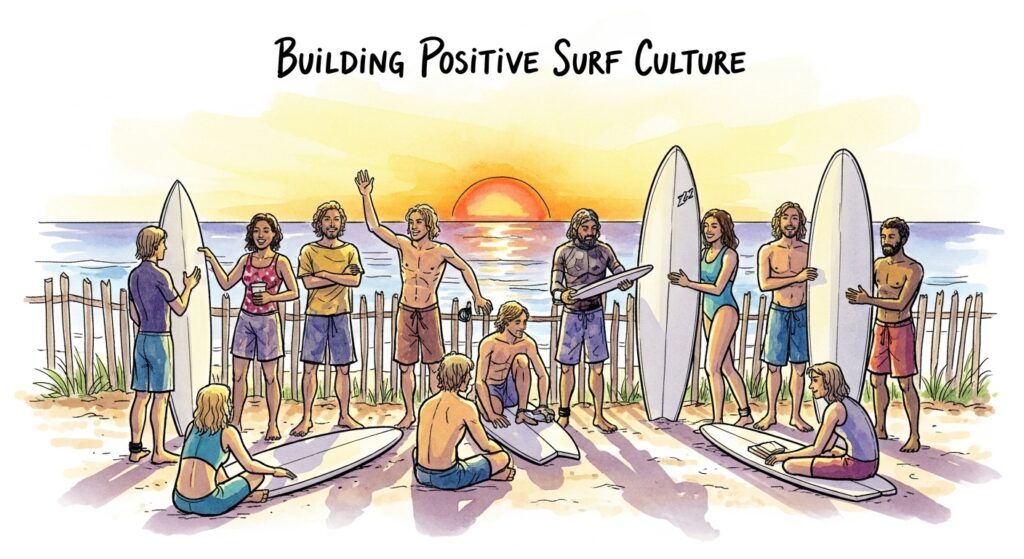
Building Positive Surf Culture
Surfing etiquette forms the foundation of positive surf culture. When everyone follows these rules, lineups become welcoming spaces where skill levels mix constructively.
Veterans help newcomers, and everyone benefits from organized, safe sessions.
Challenge yourself to be part of the solution rather than the problem. Call out friends who break rules, but do so privately and constructively.
Lead by example through your own behavior in the water.
The future of surfing depends on maintaining these standards as the sport grows. More people discovering surfing means more pressure on existing breaks.
Proper etiquette ensures everyone can enjoy waves without endless conflicts.
Conclusion
Surfing etiquette isn’t optional or old-fashioned. These 10 unwritten rules create safe, fair, and enjoyable conditions for everyone in the lineup.
From respecting priority to communicating clearly, each principle serves specific purposes that benefit the entire surf community.
Learning these rules should happen before you paddle out, not through trial and error that endangers others. Take time to understand why each rule exists and how following them improves everyone’s experience.
Watch experienced surfers, ask questions, and enter lineups with humility and respect.
Whether you’re surfing world-class reef breaks or small beach breaks, these etiquette guidelines apply universally. Follow them consistently, teach them to others, and help maintain the welcoming culture that makes surfing special.
The ocean provides enough waves for everyone when we share them respectfully and safely.