
There is something deeply satisfying about watching a longboarder glide to the tip of the board and hang ten over a glassy wave. Noseriding is often considered the purest expression of longboard surfing, a skill that blends balance, timing, and wave knowledge into a single elegant movement. Whether you are just starting your surfing journey or looking to refine your style on a classic log, understanding how to noseride opens up a whole new dimension of wave riding.
This guide covers everything from the history of noseriding to the equipment, technique, and wave selection that will help you walk the board with confidence. Along the way, you will discover why longboarding continues to captivate surfers of every generation and how mastering noseriding connects you to the very roots of surf culture and its rich history.
What Is Noseriding and Why Does It Matter?
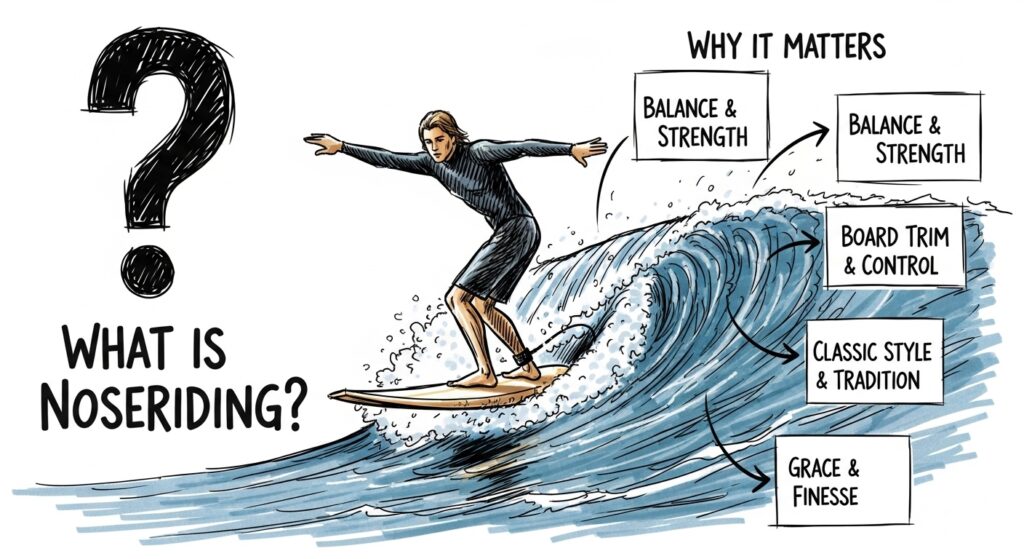
Noseriding is the act of walking to the front third of a longboard and riding with your toes over or near the nose of the surfboard. When both feet are positioned on the nose with all ten toes curled over the edge, it is called a hang ten. When only five toes extend past the tip, it is a hang five.
This manoeuvre matters because it represents one of the highest skill expressions in longboard surfing. Unlike aggressive shortboard turns that rely on speed and power, noseriding demands a subtle understanding of trim, wave shape, and weight distribution. It is as much about reading the ocean as it is about physical ability.
For many surfers, noseriding is the reason they pick up a longboard in the first place. The feeling of standing on the very tip of a nine-foot board while a wave carries you forward is unlike anything else in the sport. If you are curious about how long it takes to learn to surf at a basic level, know that noseriding adds a rewarding challenge that keeps experienced riders progressing for years.
A Brief History of Noseriding in Longboard Surfing
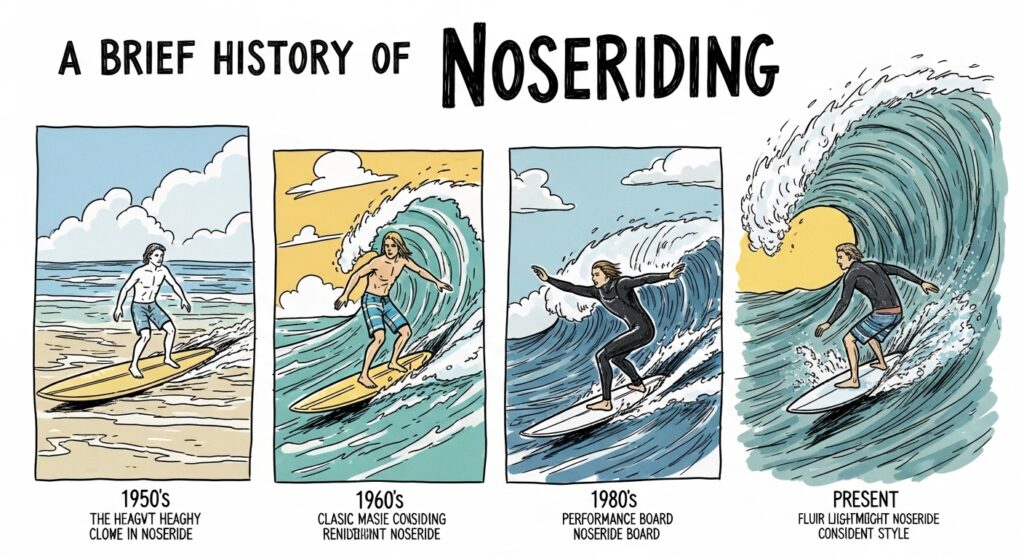
Noseriding traces its origins to the golden age of surfing in the late 1950s and 1960s. Before the shortboard revolution changed the direction of board design, longboards were the standard craft. Surfers in California and Hawaii began experimenting with walking the board, and riders like David Nuuhiwa and Phil Edwards turned noseriding into an art form.
During this era, board shapers designed heavy, wide-tailed longboards specifically to lock into waves and support a rider on the nose. Concave nose sections were introduced to create suction against the wave face, making extended noserides possible. Many of these design principles remain in modern noserider longboards today.
The shortboard revolution of the late 1960s temporarily pushed longboarding out of the competitive spotlight. However, a revival beginning in the 1980s brought longboarding and noseriding back into mainstream surfing. Today, dedicated noseriding competitions celebrate the tradition, and classic longboard culture thrives around the world. You can see this passion reflected in some of the best surfing movies of all time that document the evolution of wave riding.
Choosing the Right Longboard for Noseriding
Not every longboard is designed for noseriding. To hang five or hang ten consistently, you need a board with specific characteristics that anchor the tail in the wave while freeing the nose for you to stand on. Choosing the right board is arguably the single most important factor in your noseriding success.
Length, Width, and Volume
A dedicated noserider is typically nine feet or longer. The extra length provides the glide and stability you need to walk forward without the board stalling. Wider boards with more volume offer a more forgiving platform, which is especially helpful when you are learning cross-stepping technique. If you are unsure what dimensions suit your body type, our guide on how to choose the right surfboard size breaks down the key measurements.
Tail Shape and Rocker
A wide, squared-off or D-fin tail is the hallmark of a noserider longboard. This tail shape sits deep in the wave face when weighted, effectively acting as an anchor that keeps the board locked in while you walk to the nose. A flatter rocker through the middle of the board maintains speed and trim on smaller, mellower waves.
Some shapers add a slight kick in the tail rocker to help the board pivot during turns, but too much rocker will sacrifice the flat trim speed that noseriding requires. If you are exploring your first longboard purchase, our roundup of the best longboard surfboards includes several excellent noserider options.
Nose Concave and Bottom Contours
The underside of the nose is where the magic happens. A concave section carved into the bottom of the nose creates a suction effect against the wave face. When water flows over this concave area, it generates lift and hold, allowing you to stand on the tip without the board pearling or sliding out.
Flat to slight vee bottom contours through the midsection help the board track smoothly down the line. Combined with a single fin setup, these design elements create the predictable, flowing feel that noseriding demands.
Single Fin Setup
Most dedicated noserider longboards use a single large fin, usually between eight and ten inches. The large fin provides the hold and drag at the tail that keeps the board stable when your weight moves forward. A properly sized fin is essential because it counterbalances your body position on the nose.
Experimenting with fin placement can also fine-tune your board’s behaviour. Moving the fin further back increases tail hold and makes noseriding easier, while moving it forward loosens the board for more manoeuvrability during turns.
Noseriding Technique: Step-by-Step Fundamentals
Noseriding is a sequence of interconnected skills. You cannot simply run to the nose and hope for the best. Each step builds on the previous one, and the foundation starts well before you ever leave your starting position on the board.
Reading the Wave
Successful noserides begin with wave selection. You need a wave that is peeling slowly and evenly with a smooth, open face. Steep, fast-breaking waves will not give you the time or the stable surface you need to walk forward. Understanding how to read a surf forecast will help you identify the right conditions before you paddle out.
Ideally, you want small to medium-sized waves in the waist-to-shoulder-high range. Point breaks and gentle reef breaks that produce long, predictable walls are perfect training grounds. Beach breaks can work too, but look for sections where the wave lines up cleanly.
The Bottom Turn and Setup
After catching the wave, perform a smooth bottom turn to angle your board along the wave face. The bottom turn positions you in the pocket, the steepest section of the wave just ahead of the breaking white water. This is where the wave’s energy is strongest and where the tail of your board will be held in place.
A common mistake is rushing forward before the board is properly trimmed. Take a moment after your bottom turn to feel the board accelerate and lock into the wave face. When the board feels stable and the wave is peeling cleanly ahead of you, it is time to start walking.
Cross-Stepping to the Nose
Cross-stepping is the elegant technique of walking forward by crossing one foot over the other. This is far more stable and controlled than shuffling your feet. Keep your knees slightly bent, your arms relaxed at your sides or slightly extended for balance, and your eyes looking forward along the wave rather than down at your feet.
Each step should be deliberate and smooth. Place your weight over the centre line of the board as you walk. Rushing creates instability, so think of each cross-step as a rhythmic, flowing movement. Many surfers practise cross-stepping on land before taking it to the water. A solid surfing fitness routine that includes balance drills will accelerate your progress significantly.
Holding the Noseride
Once your front foot reaches the nose, shift your weight slightly forward and press your toes over the edge. Your back foot should be positioned just behind the front foot, providing a secondary point of balance. The key to holding the noseride is keeping your hips centred over the board and staying low with your knees bent.
Look down the line of the wave, not at the nose of your board. Your body will follow your gaze, and looking ahead helps you anticipate changes in the wave that might require you to adjust your position or step back.
Walking Back
Exiting a noseride gracefully is just as important as getting there. When the wave section starts to shift or close out, walk back towards the tail using the same cross-stepping technique. Stepping back re-engages the tail and allows you to set up for another section of the wave or kick out cleanly.
Common Noseriding Mistakes and How to Fix Them
Even experienced longboarders struggle with consistent noserides. Here are the most frequent mistakes and practical solutions to overcome them.
Rushing to the nose too early is probably the most common error. If you walk forward before the wave has properly formed and the tail is not locked in, the board will simply nose-dive. The fix is patience: wait until you feel the wave lifting the tail before you begin cross-stepping.
Poor wave selection derails many noseride attempts. Waves that are too steep, too fast, or too closed out will not support a noseride no matter how good your technique is. Spend time studying ocean safety and challenging conditions so you can recognise which waves to ride and which to let pass.
Looking down at your feet instead of down the line throws off your balance and disconnects you from the wave. Keep your chin up and focus on the section ahead. Your feet will learn where to go through repetition and muscle memory.
Shuffling instead of cross-stepping reduces stability and looks awkward. It may feel safer at first, but cross-stepping distributes your weight more evenly and allows for smoother transitions. Commit to the technique even if it feels unnatural at the beginning.
Best Waves and Conditions for Noseriding
Not every wave is suitable for noseriding. The ideal noseriding wave is a gently peeling, medium-speed wall with a smooth face and minimal chop. Offshore or light onshore winds help groom the wave surface, and a rising or mid tide often produces the clean, mellow waves that longboarders crave.
Point breaks are widely considered the best wave type for practising noserides because they offer long, predictable walls that give you time to set up, walk forward, hold your position, and walk back. Destinations known for gentle point breaks are excellent places to develop your longboarding. If you are planning a trip, our guide to the best surfing destinations for beginners highlights spots with waves that are perfect for longboard progression.
Small summer swells and ground swells that have travelled long distances tend to produce the clean, evenly breaking waves noseriders love. Wind swell can be choppier and more unpredictable, making it harder to find those perfect glassy sections.
Keeping Your Noserider in Top Shape
A well-maintained longboard performs better and lasts longer. Because noserider longboards are larger and more susceptible to dings from transport and handling, regular upkeep is important.
Waxing your board properly gives you the traction you need for confident cross-stepping. Without good grip under your feet, walking to the nose becomes risky and unpredictable. Our article on why you should wax your surfboard explains the best application techniques and how to maintain a consistent grip across the entire deck.
Dings and cracks should be repaired promptly to prevent water from soaking into the foam core. Even small pressure dings can become larger problems if ignored. Learn the basics of eco-friendly board repair so you can handle minor damage quickly and keep your noserider watertight.
Store your longboard out of direct sunlight and extreme heat. UV exposure can yellow the board and weaken the resin over time. A quality board bag adds protection during transport and storage, especially for longer boards that are more difficult to handle.
Essential Gear for Longboard Sessions
Beyond the board itself, a few key pieces of gear will make your longboard sessions more comfortable and productive. Choosing the right wetsuit for your water temperature keeps you warm and flexible, which is especially important for the fluid body movements that noseriding demands.
Wearing the right clothing and sun protection also matters for long sessions on mellow waves. Since longboarders often spend extended time in the water waiting for the perfect section, check out our advice on what to wear while surfing to stay comfortable in any conditions.
A quality longboard leash, typically nine or ten feet, keeps your board close after wipeouts without tangling around your feet during cross-steps. Some experienced noseriders prefer to surf without a leash for cleaner footwork, but this is only advisable in uncrowded conditions where a loose board will not endanger other surfers.
The Mental and Physical Rewards of Noseriding
Longboard surfing, and noseriding in particular, offers benefits that go well beyond the physical act of riding waves. The focus required to read a wave, walk the board, and hold a noseride creates a meditative state that many surfers describe as deeply calming. The connection between surfing and mental health benefits is well documented, and longboarding’s slower, more deliberate pace amplifies this effect.
Physically, noseriding builds core strength, improves balance and proprioception, and develops lower-body stability. The act of cross-stepping engages muscles throughout your legs, hips, and torso in ways that few other activities replicate. Combined with paddling and duck diving, a longboard session is a comprehensive full-body workout.
Many surfers also find that longboarding improves their overall wave-reading ability, which translates to better performance on any type of board. Understanding trim, pocket positioning, and wave energy is universal surfing knowledge that benefits every style of riding.
Transitioning from Beginner to Noserider
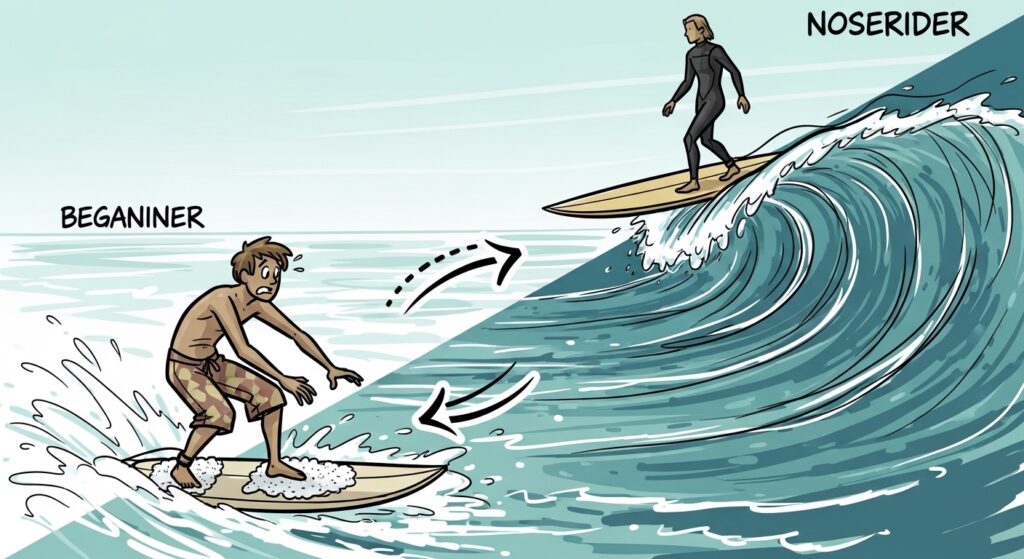
If you are still in the early stages of learning to surf, noseriding might feel like a distant goal. The good news is that the path from beginner to competent noserider follows a logical progression. Start by getting comfortable on a stable, forgiving board. Our guide to the best surfboards for beginners will help you choose the right starter board that builds foundational skills.
Once you can consistently catch waves, pop up smoothly, and trim along the wave face, begin practising weight shifts and small steps forward. You do not need to reach the nose right away. Even moving one or two steps forward from your normal stance will start training the balance and wave-reading skills you need.
Surfers who have experience with board sports like snowboarding sometimes find the balance element intuitive, though the wave-reading component is entirely new. If you are coming from a snow background, our comparison of surfing and snowboarding explains the key similarities and differences that will shape your learning curve.
Pro Tips for Better Noserides
Study footage of the masters. Watching surfers like Joel Tudor, Kassia Meador, and Harrison Roach will teach you more about timing and style than any written guide. Pay attention to how they set up each noseride, how long they wait before walking forward, and how they use their arms for balance.
Practise on land first. Set your longboard on soft sand or grass and practise walking from tail to nose and back again. This builds the muscle memory and confidence to execute cross-steps without thinking when you are on a wave. It might feel silly, but nearly every competitive longboarder includes dry-land practice in their routine.
Film yourself from the beach or ask a friend to record your sessions. Video reveals mistakes you cannot feel in the moment, such as a hunched posture, rushed steps, or poor wave positioning. Review your footage alongside clips of professional longboarders to identify specific areas for improvement.
Finally, be patient. Noseriding is one of the most difficult manoeuvres in surfing to master consistently. Even world-class longboarders do not land every noseride attempt. Celebrate small victories, enjoy the process, and remember that the journey itself is what makes longboarding so rewarding.
Embrace the Longboard Lifestyle
Noseriding is more than a manoeuvre. It is a philosophy of surfing that values flow, connection with the ocean, and stylish expression over raw aggression. Whether you ride a classic single-fin log or a modern performance longboard, learning to walk the board and ride the nose will transform your relationship with waves.
Take the time to choose the right equipment, study the waves, and practise the fundamentals. With dedication and patience, you will experience the unmistakable thrill of hanging ten on a perfect peeling wave, and you will understand why longboarders around the world call it love.