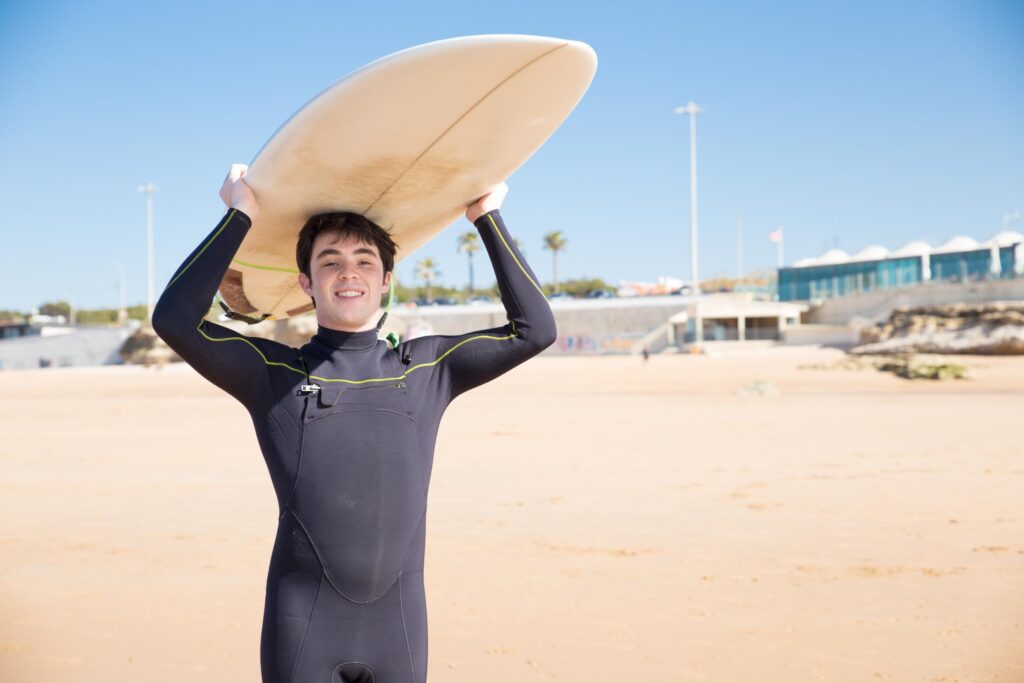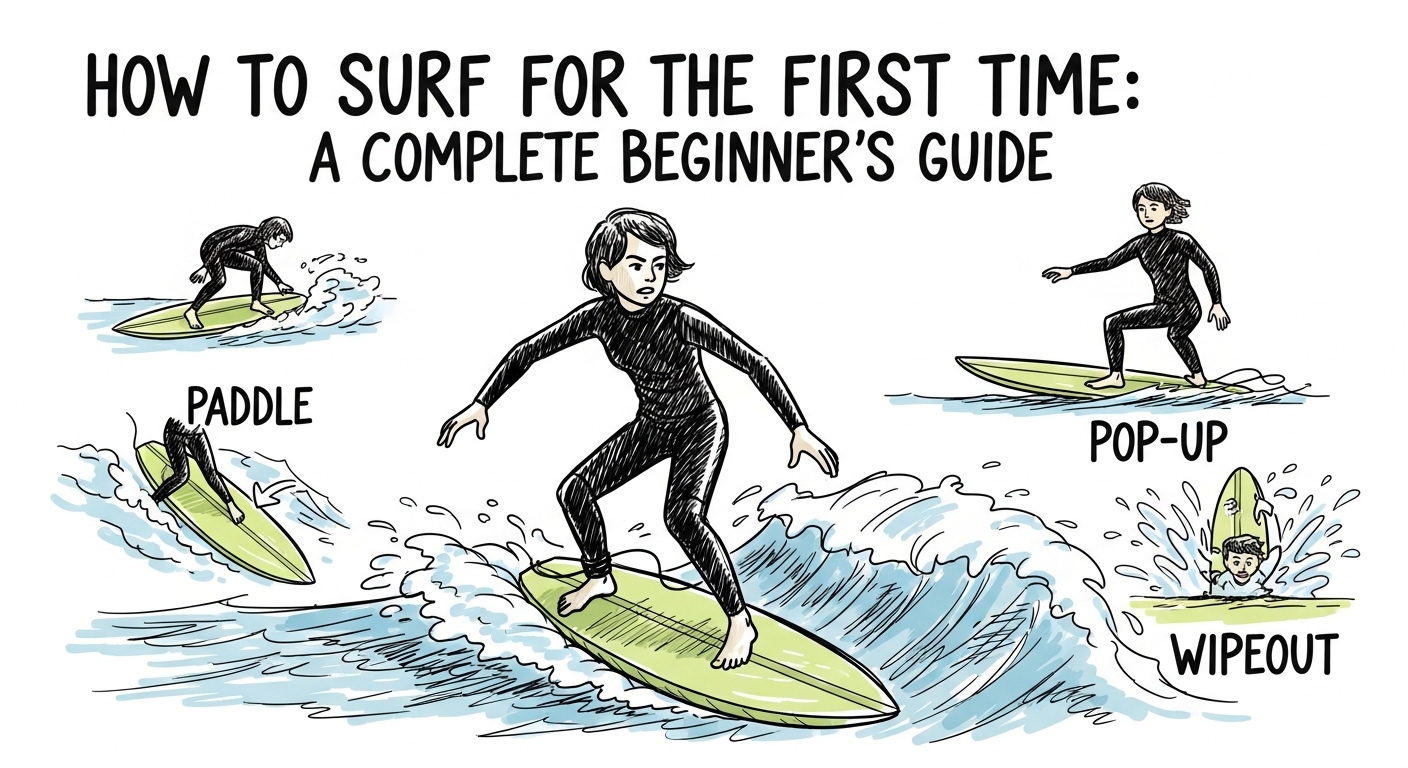

Learning how to surf for the first time is one of the most exciting experiences you can have in the ocean. There is nothing quite like the feeling of catching your first wave and standing up on a surfboard, even if it only lasts a few seconds. Whether you have been dreaming about surfing for years or you just booked a spontaneous beach trip, this guide will walk you through everything you need to know before you paddle out.
Surfing looks effortless when you watch experienced riders glide across a wave. The reality is that your first session will be humbling, tiring, and probably a little chaotic. But that is completely normal. Every surfer on the planet started exactly where you are right now. With the right preparation, the right gear, and the right mindset, your first surf session can be the beginning of a lifelong passion.
Why Surfing Is Worth Learning
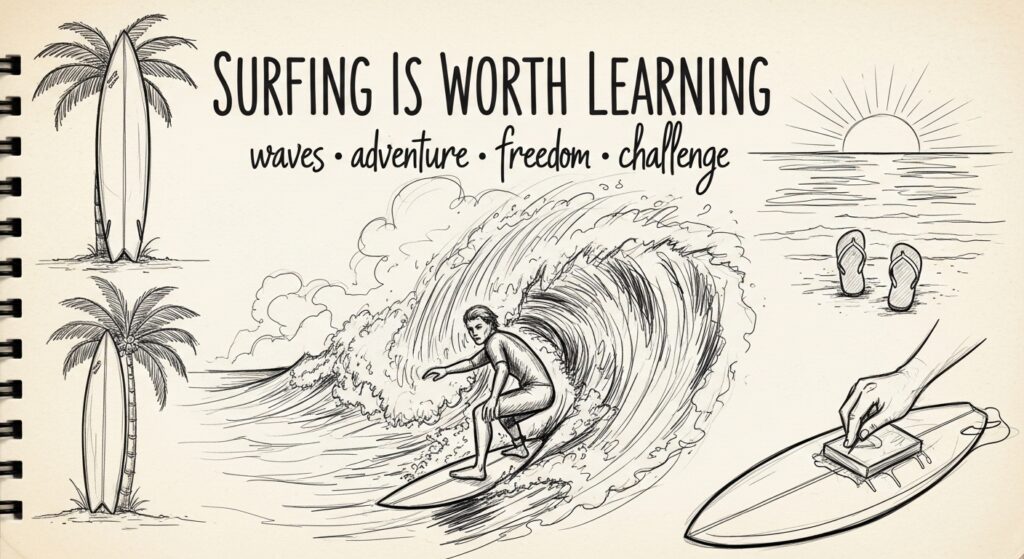
Before we dive into the how, let us talk about the why. Surfing is more than just a sport. It is a full-body workout that builds strength, balance, and endurance. It connects you with nature in a way that few other activities can. And it offers real, science-backed benefits for your mind.
Studies consistently show that time spent in the ocean reduces stress, improves mood, and promotes mental clarity. The combination of physical exertion, fresh air, and the rhythmic sound of waves creates a powerful reset for your brain. If you want to explore this further, our deep dive into the mental health benefits of surfing covers the research behind why surfers tend to be some of the happiest people around.
Beyond the health benefits, surfing opens the door to an incredible global community and a culture rich with history, creativity, and adventure. From its ancient Polynesian roots to the modern competitive circuit, the history of surf culture is a fascinating journey that you become part of the moment you catch your first wave.
How to Surf for the First Time: Choosing the Right Surfboard
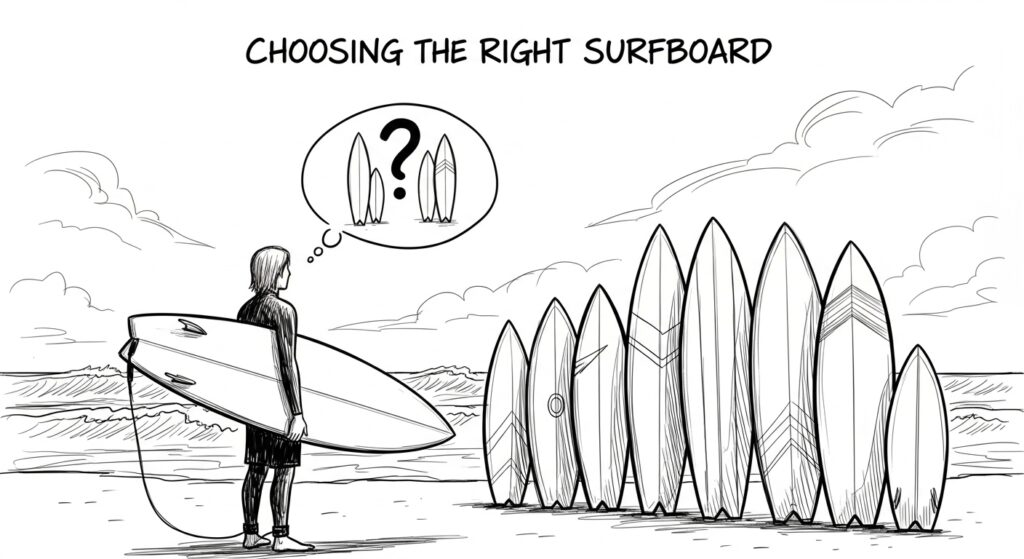
Your surfboard is the most important piece of equipment for your first session, and choosing the wrong one is the single biggest mistake beginners make. The board you see advanced surfers riding is almost certainly not the board you should be learning on.
For your first time surfing, you want a board that is long, wide, and thick. These dimensions give you more stability, more paddle power, and a much easier time standing up. Foam surfboards, often called soft tops or foamies, are the gold standard for beginners. They are forgiving when you fall, buoyant enough to keep you floating, and stable enough to give you a real chance at standing up on your first day.
If you are shopping for your first board, our guide to the best surfboards for beginners breaks down the top options by price, size, and skill level. Longboards are another excellent choice for first-timers thanks to their extra length and stability. Check out our recommendations for the best longboard surfboards if you want something you can grow into as your skills improve.
Getting the right size board for your body is also critical. A board that is too small will feel wobbly and unstable, while one that is too large can be difficult to maneuver. Our guide on how to choose surfboard size explains how your height, weight, and fitness level all factor into finding the perfect match.
What to Wear for Your First Surf Session
What you wear in the water matters more than you might think. The right gear keeps you comfortable, protected from the elements, and focused on learning rather than shivering or dealing with chafing.
In warm tropical water, you might get away with board shorts or a swimsuit paired with a rash guard for sun protection. In cooler water, you will need a wetsuit. The thickness of your wetsuit depends on the water temperature at your location. A 3/2mm wetsuit works for most temperate conditions, while colder water may require a 4/3mm or even a 5/4mm suit with booties and gloves.
If you are unsure what to pack, our complete guide on what to wear surfing covers every scenario from tropical beaches to cold water destinations. For a deeper look at wetsuit selection specifically, our article on how to choose a wetsuit for surfing walks you through materials, fit, and temperature charts.
Preparing Your Board Before You Paddle Out
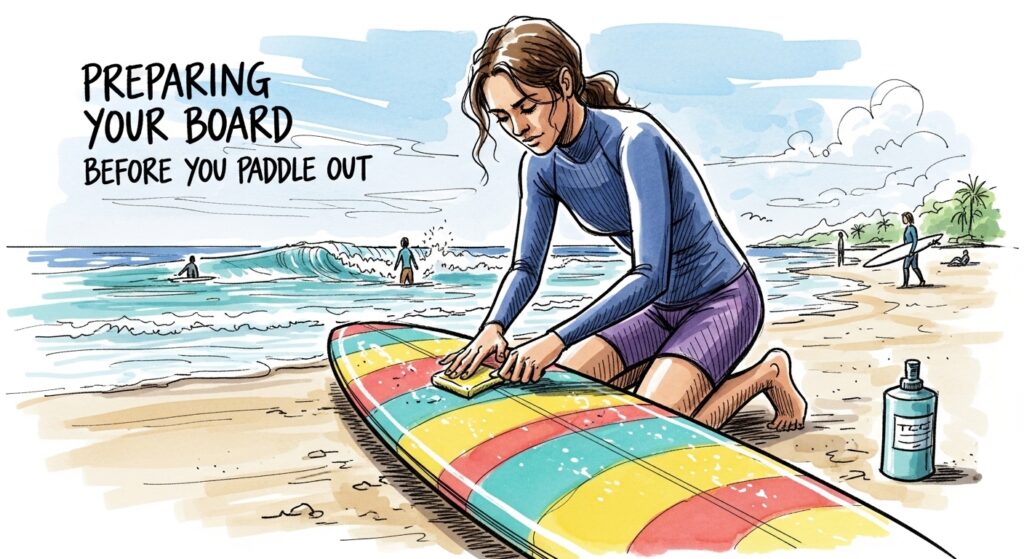
Before you hit the water, there are a few things you need to do to prepare your board. The most important is applying surf wax. Wax creates a grippy surface on the top of your board so your feet do not slip when you try to stand up. Without it, you will slide right off.
Waxing your board properly is a simple skill, but it makes a huge difference in your performance. Our article on why you should wax a surfboard explains the science behind surf wax, the different types available for various water temperatures, and how to apply it correctly for maximum grip.
You should also attach your leash to your back ankle. The leash connects you to your board so it does not wash away every time you fall. Make sure it is the right length for your board and that the velcro strap is snug but not too tight.
Finding the Perfect Beginner-Friendly Surf Spot
Location is everything when you are learning to surf. The wrong spot can turn a fun experience into a frustrating or even dangerous one. For your first session, you want a beach with small, gentle waves that break slowly over a sandy bottom.
Avoid rocky beaches, reef breaks, and spots known for strong currents or large waves. Look for beaches with a gradual slope where the water gets deeper slowly. Lifeguard-patrolled beaches are always preferable, especially when you are just starting out.
If you are planning a surf trip specifically to learn, our list of the best surfing destinations for beginners highlights locations around the world that offer ideal conditions for first-timers, including warm water, consistent small waves, and quality surf schools.
Understanding Waves and Ocean Conditions
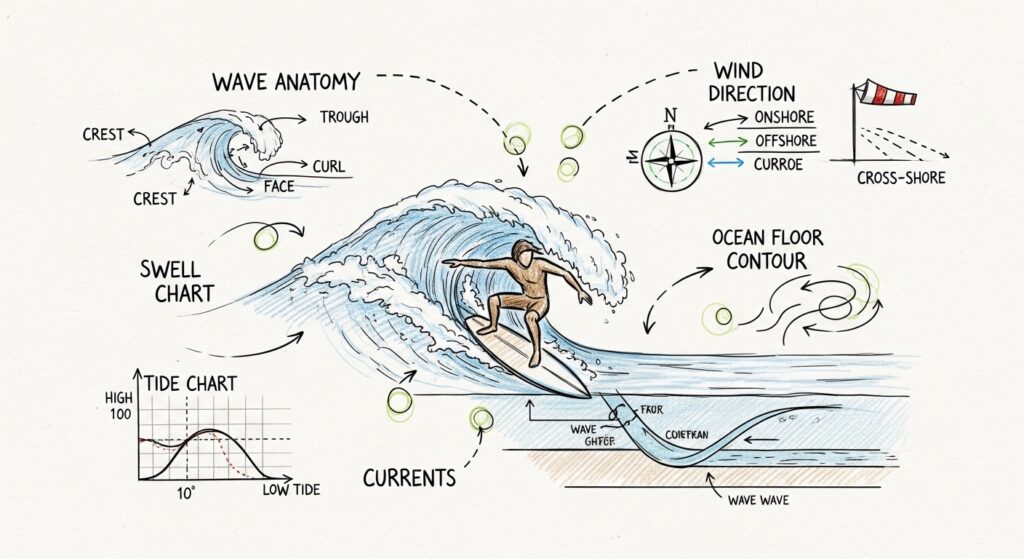
You do not need to be an oceanographer to surf, but understanding the basics of how waves work will make your first session significantly better and safer. Waves are created by wind blowing across the ocean surface. The size, shape, and speed of a wave depend on factors like swell direction, wind conditions, and the shape of the ocean floor.
Before you paddle out, spend a few minutes watching the waves from the beach. Notice where they are breaking, how big they are, and whether there are any obvious currents pulling water sideways along the shore. Learning to read the ocean is a skill that develops over time, but even basic observation will help you on day one.
For a deeper understanding of how to interpret ocean conditions, our surfing wave forecast guide teaches you how to read swell charts, understand tide schedules, and identify the best windows for clean, rideable waves.
Essential Ocean Safety for First-Time Surfers
Safety should always come first, especially when you are new to the ocean. Drowning, collisions with your board, and encounters with marine life are all real risks, but they are manageable with proper awareness and preparation.
Never surf alone during your first sessions. Ideally, go with an experienced friend or book a lesson with a certified surf instructor. Always tell someone on shore where you are going and how long you plan to be out. Stay in waist-to-chest-deep water until you are comfortable, and never paddle out further than you can comfortably swim back.
Our comprehensive guide on essential surfing safety tips for challenging ocean conditions covers everything from rip current escape techniques to how to handle wipeouts safely. Reading it before your first session could genuinely save your life.
The Pop-Up: How to Stand Up on a Surfboard
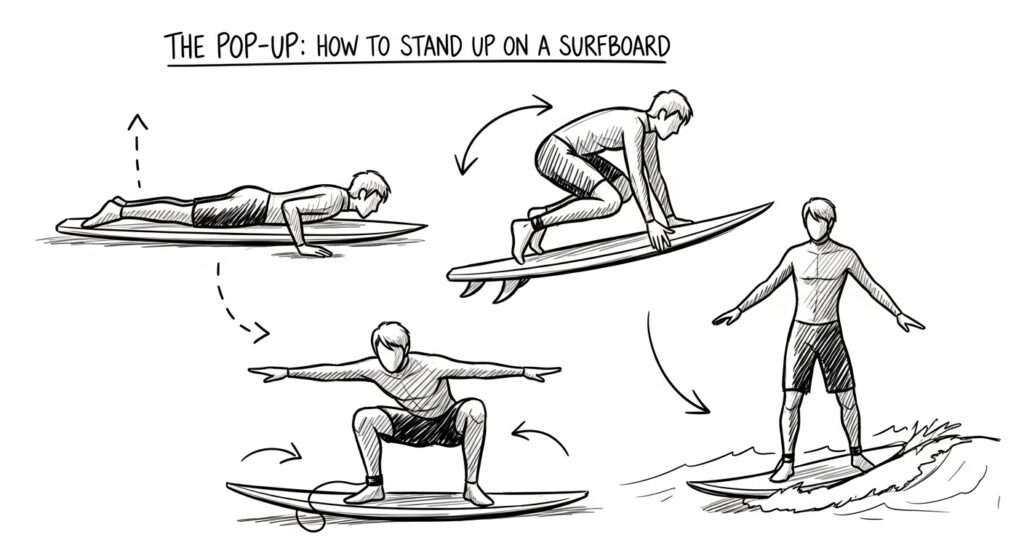
The pop-up is the fundamental movement in surfing. It is how you go from lying flat on your board to standing upright and riding a wave. Getting this right is the key to your first successful ride.
Start by practicing on the beach. Lie face down on your board with your hands flat beside your chest, as if you were about to do a push-up. In one smooth motion, push your upper body up, swing your back foot forward, and land in a low, wide stance with your knees bent and your weight centered over the board.
Your front foot should be roughly in the middle of the board, angled slightly toward the nose. Your back foot should be near the tail. Keep your knees bent, your arms out for balance, and your eyes looking forward, not down at your feet. Practice this movement twenty or thirty times on the sand before you even touch the water.
Common Pop-Up Mistakes to Avoid
The most common mistake beginners make is trying to stand up in stages, pushing to their knees first and then standing. This creates instability and almost always results in a fall. The pop-up needs to be one fluid motion. Another frequent error is looking down at the board instead of forward. Where your eyes go, your body follows. Looking down shifts your weight forward and sends you nose-first into the water.
Catching Your First Wave Step by Step
Once you have practiced your pop-up on the beach and you feel comfortable in the water, it is time to catch your first wave. Start in the whitewater, which is the foamy, already-broken part of the wave that rolls toward shore. This is where every beginner should learn.
Position yourself in waist-deep water with your board pointing toward the beach. When you see a wave of whitewater approaching, lie on your board, grip the rails, and start paddling toward shore. As the wave catches you and pushes your board forward, you will feel a surge of momentum. This is your moment. Execute your pop-up and ride the wave in.
Do not worry about turning, trimming, or doing anything fancy. Your only goal on your first wave is to stand up and stay standing for as long as possible. Everything else comes later.
How Long Will It Take to Learn?
This is one of the most common questions beginners ask, and the honest answer is that it varies. Some people stand up on their first wave within an hour. Others take several sessions before things click. Your age, fitness level, balance, previous board sport experience, and even your comfort in the ocean all play a role.
If you have experience with snowboarding or skateboarding, you may find the balance aspect comes more naturally. Many riders discover that surfing and snowboarding share surprising similarities in terms of stance, weight distribution, and edge control. That said, the ocean adds a completely unpredictable element that no other board sport prepares you for.
For a realistic timeline of what to expect at each stage of your progression, our article on how long it takes to learn how to surf breaks down the learning curve from absolute beginner to confident intermediate surfer.
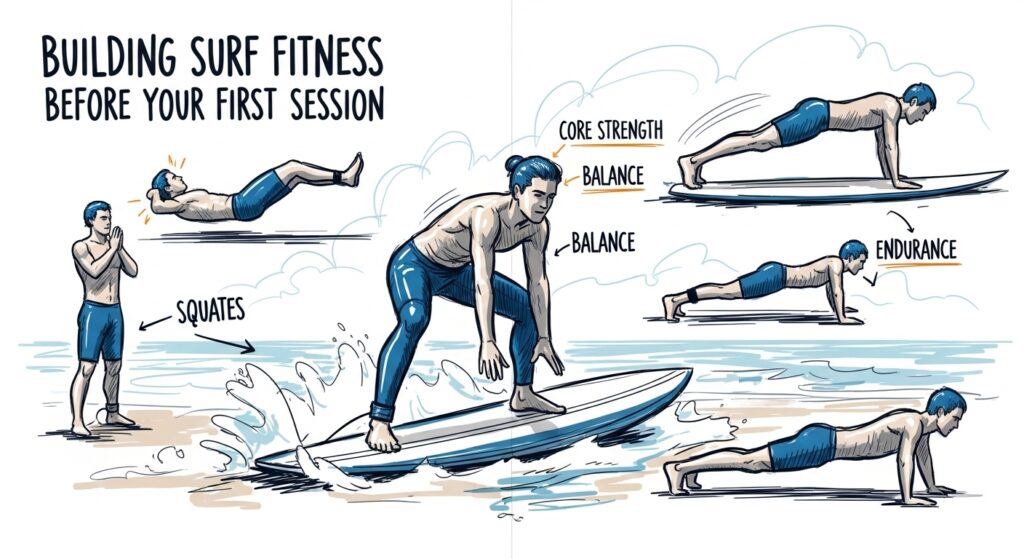
Building Surf Fitness Before Your First Session
Surfing is physically demanding in ways that might surprise you. Paddling uses your shoulders, arms, back, and core. The pop-up requires explosive upper body strength. Balancing on a moving wave engages your legs, core, and stabilizer muscles. And all of this happens while you are fighting ocean currents and getting tossed around by waves.
You do not need to be an elite athlete to learn surfing, but a basic level of fitness will make your first session much more enjoyable. Swimming is the best preparation because it builds the same muscle groups and gets you comfortable in the water. Yoga and balance training also transfer well to surfing.
For a structured approach, our surfing fitness guide outlines specific exercises designed to build paddle strength, pop-up explosiveness, and the balance and endurance you need to last longer in the water.
Surf Etiquette Every Beginner Must Know
The ocean has its own set of unwritten rules, and respecting them is essential from your very first session. Surf etiquette exists to keep everyone safe and to ensure that waves are shared fairly.
The most important rule is the right of way. The surfer closest to the peak of the wave, where it first begins to break, has priority. If someone is already riding a wave, do not drop in on them. Dropping in means taking off on a wave that another surfer is already riding, and it is the fastest way to create a dangerous situation and earn a bad reputation in the lineup.
As a beginner, stay in the whitewater or the less crowded sections of the break. Do not paddle directly into the path of oncoming surfers. When paddling back out, go around the breaking waves rather than through the lineup where people are riding. These simple courtesies will make you welcome at any beach in the world.
Should You Take a Surf Lesson?
In a word, yes. A professional surf lesson is the single best investment you can make as a first-time surfer. A good instructor will teach you proper technique from the start, keep you safe in the water, and dramatically shorten your learning curve.
Most beginner surf lessons last about two hours and cover ocean safety, board handling, the pop-up, and catching whitewater waves. The instructor will push you into waves, correct your form in real time, and give you immediate feedback that you simply cannot get when learning alone.
Group lessons are affordable and social. Private lessons offer more personalized attention. Either way, even a single lesson gives you a foundation of proper habits that will serve you for your entire surfing life. Trying to teach yourself from videos alone often leads to bad habits that become difficult to break later.
What to Do After Your First Surf Session
After your first session, take care of your body and your gear. Rinse your wetsuit and board with fresh water to remove salt and sand. Check your board for any dings or cracks, especially if you hit anything during your session. Small repairs done quickly prevent bigger problems later. Our guide on DIY eco-friendly board repairs shows you how to fix minor damage at home using sustainable methods.
Stretch your shoulders, back, and legs thoroughly. Surfing uses muscles you may not normally engage, and post-session soreness is completely normal for beginners. Hydrate well and eat a solid meal to help your body recover.
Most importantly, reflect on what went well and what you want to improve. Did you struggle with the pop-up? Was it hard to judge when to start paddling? Identifying specific areas to work on will make your next session more productive.
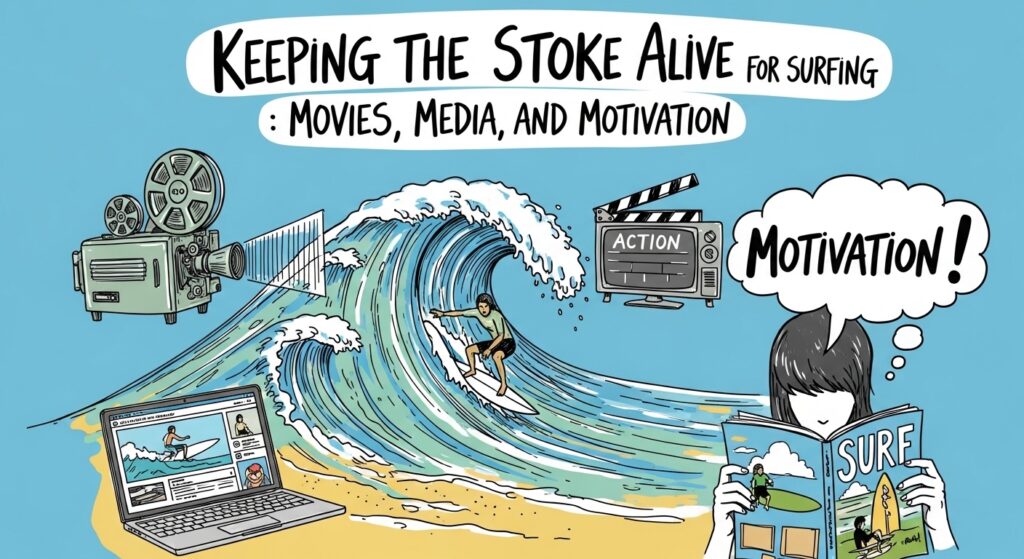
Keeping the Stoke Alive: Movies, Media, and Motivation
One of the best ways to stay motivated between sessions is to immerse yourself in surf culture. Watching great surf films can teach you about wave reading, style, and the sheer joy of riding waves. Our curated list of the best surfing movies features everything from classic documentaries to modern action films that will keep you fired up to get back in the water.
Follow surfers on social media, join local surf communities, and read about the sport. The more you surround yourself with surfing, the faster you will progress and the deeper your appreciation for the ocean will grow.
Final Tips for Your First Time Surfing
Surfing is a journey, not a destination. Your first session will not look like the surfers you see in magazines or online, and that is perfectly fine. Every wipeout teaches you something. Every failed pop-up builds muscle memory. Every session in the water makes you a little bit better and a little more connected to the ocean.
Start with the right board, wear the right gear, choose a safe and beginner-friendly spot, and respect the ocean and the surfers around you. Practice your pop-up on the sand until it feels natural. Take a lesson if you can. And above all, have fun. The moment you catch your first wave and feel the ocean carry you forward, you will understand why millions of people around the world are completely addicted to this sport.
The ocean is waiting. Go catch your first wave.