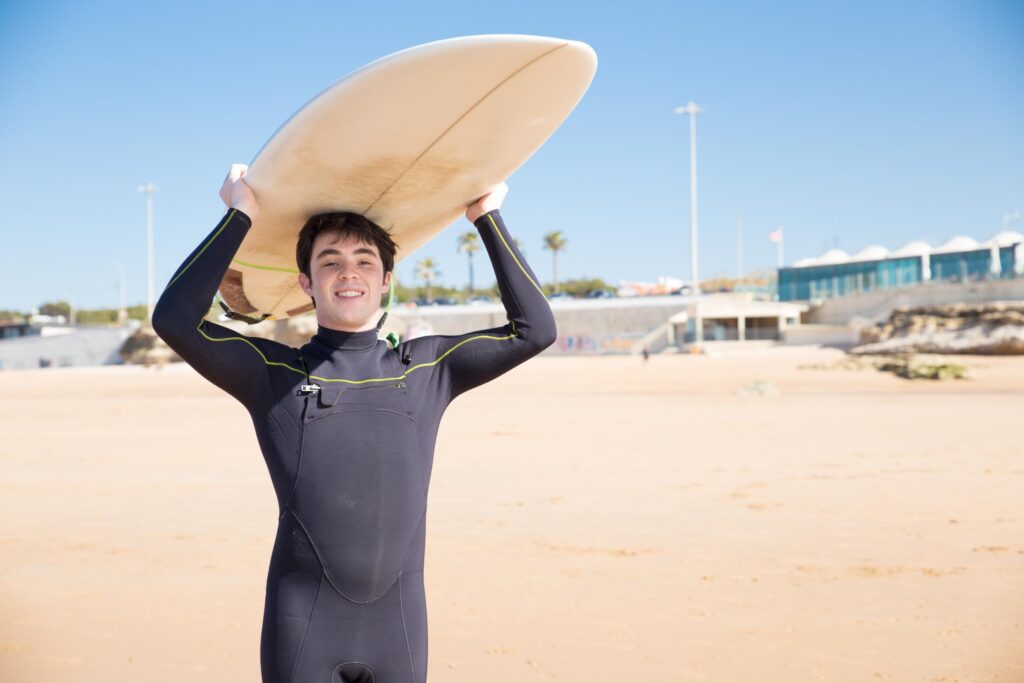
Surfing represents one of the most exhilarating water sports on the planet, offering a unique blend of physical challenge, mental focus, and deep connection with the ocean. If you’ve ever watched surfers gliding across waves and thought “I want to do that,” you’re not alone. Learning to surf might seem intimidating at first, but with the right approach, proper guidance, and realistic expectations, anyone can master the basics and begin their journey toward becoming a confident surfer.
This comprehensive guide will walk you through everything you need to know about how to learn to surf, from understanding the fundamental skills to choosing the right equipment and finding the perfect location for your first sessions.
Understanding What It Takes to Learn Surfing
Before you rush to the beach with a board under your arm, it’s important to understand that surfing requires a combination of physical fitness, ocean awareness, and mental determination. Unlike sports practiced in controlled environments, surfing takes place in the ever-changing ocean, where conditions vary constantly.
The learning curve for surfing differs significantly from person to person. Factors like your swimming ability, general fitness level, balance, and previous experience with board sports all influence how quickly you’ll progress. According to research published in the Journal of Sports Sciences, the proprioceptive demands of surfing—your body’s ability to sense its position and movement—are considerably higher than many other recreational activities.
Most beginners can expect to stand up on their first wave within their first few sessions, though mastering the sport takes considerably longer. Research shows that surfing offers tremendous mental health benefits, including stress reduction and improved mood, which can help maintain your motivation during the learning process.
Essential Physical Requirements and Preparation
While you don’t need to be an elite athlete to start surfing, certain physical capabilities will make your learning experience smoother and safer.
Swimming Proficiency
Strong swimming skills are non-negotiable for surfing. You should be comfortable swimming in open water and capable of treading water for extended periods. The ocean environment is unpredictable, and situations may arise where you’re separated from your board or need to swim through waves.
Before your first surf lesson, ensure you can:
- Swim continuously for at least 15-20 minutes
- Dive underwater and hold your breath comfortably
- Remain calm in deep water
- Navigate through choppy conditions
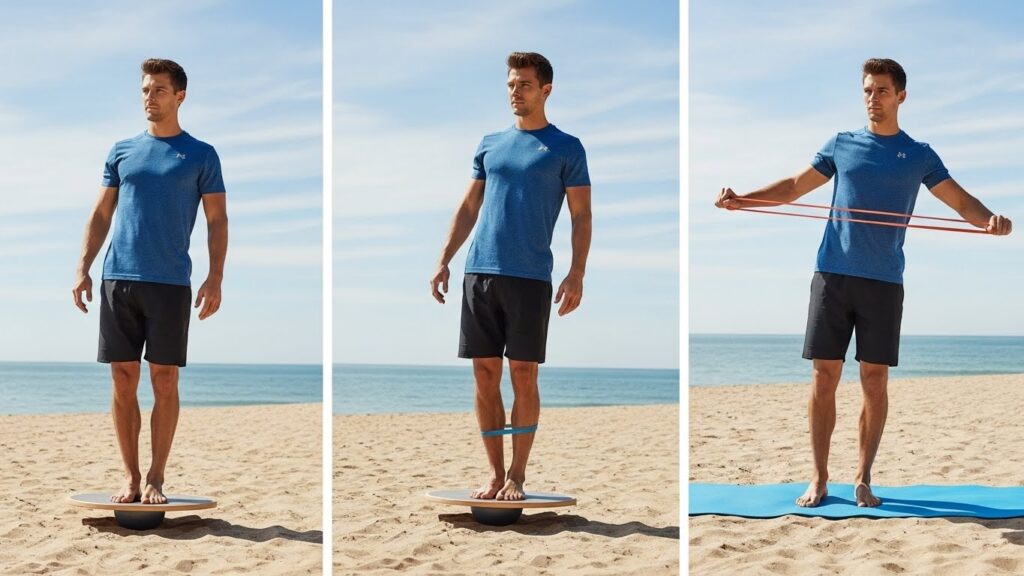
Building Surf-Specific Fitness
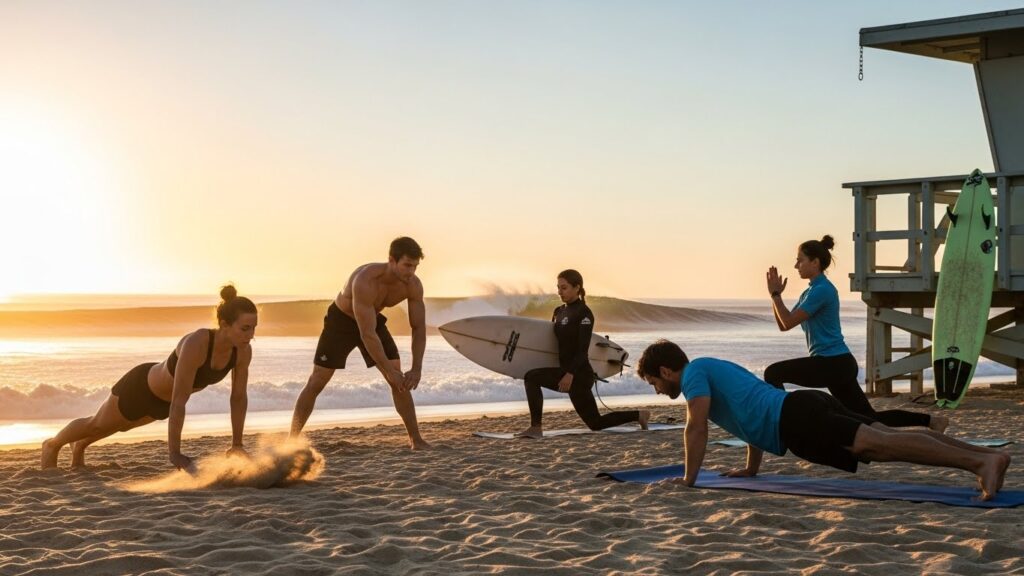
Surfing engages multiple muscle groups simultaneously, with particular emphasis on your upper body, core, and legs. Following a dedicated surfing fitness guide can significantly accelerate your progress and reduce the risk of injury.
Key areas to focus on include:
- Paddling endurance: Strengthening your shoulders, back, and arms through swimming or paddle-specific exercises
- Core stability: Developing rotational strength and balance through planks, yoga, and stability exercises
- Pop-up power: Building explosive strength in your chest and triceps to quickly transition from lying to standing
- Leg strength: Enhancing your ability to maintain a low, stable stance on the board
Starting a conditioning program 4-6 weeks before your first lesson can dramatically improve your initial experience and help prevent the common frustration of fatigue limiting your wave count.
Choosing Your First Surfboard
One of the most critical decisions when learning to surf involves selecting the right surfboard. Many beginners make the mistake of choosing boards that are too small or advanced for their skill level, leading to unnecessary frustration and slower progress.
Why Board Size Matters
Understanding how to choose surfboard size is fundamental to your early success. Larger boards provide more stability, buoyancy, and paddle power—all essential factors for catching waves as a beginner.
The Best Board Types for Learning
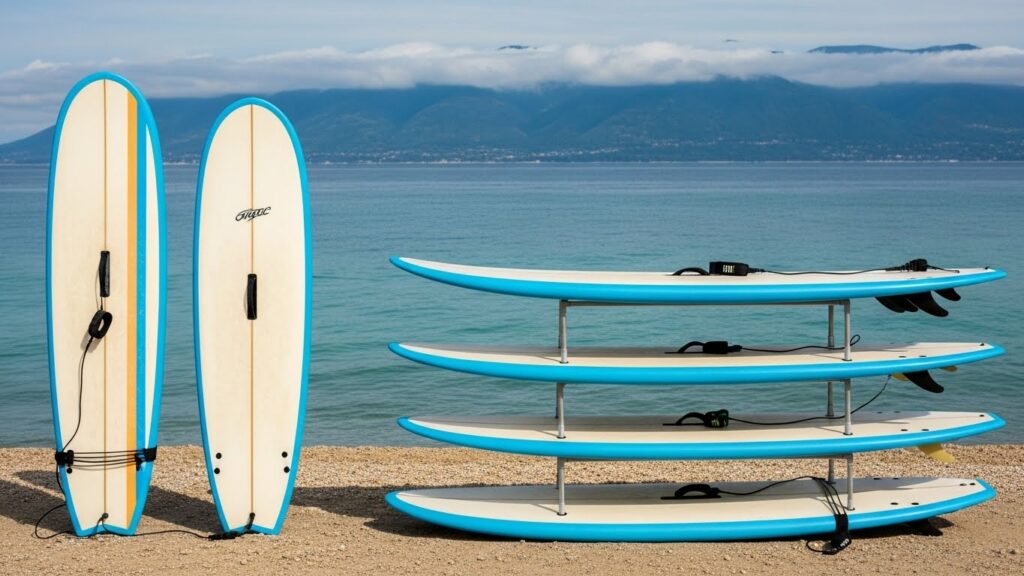
Beginner surfboards typically fall into two main categories:
Soft-top foam boards: These boards feature a soft foam deck that’s forgiving during falls and provides excellent flotation. They’re ideal for your first sessions and remain popular even among experienced surfers for casual days.
Longboards: Traditional longboard surfboards range from 8 to 10+ feet in length, offering maximum stability and wave-catching ability. Their length and volume make them perfect for learning fundamental techniques.
Your ideal beginner board should be:
- At least 2-3 feet taller than your height
- Thick and wide for maximum stability
- Made from durable materials that can withstand beginner mistakes
- Equipped with soft or flexible fins for safety
Understanding Surfboard Maintenance Basics
Even as a beginner, understanding basic board care helps protect your investment and ensures optimal performance. Knowing why you wax a surfboard and how to apply it properly is essential, as wax provides the traction you need to stay on the board.
Additionally, learning DIY eco-friendly board repairs allows you to fix minor dings quickly and sustainably, keeping your board in good condition throughout your learning journey.
Mastering the Fundamental Surfing Techniques
Learning to surf requires mastering several distinct skills that work together to create the complete surfing experience.
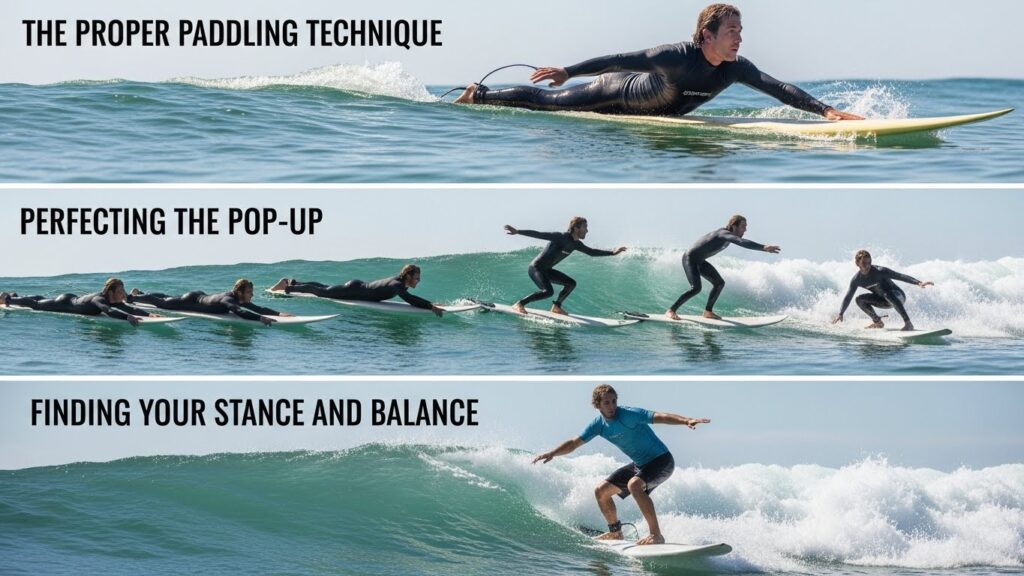
The Proper Paddling Technique
Efficient paddling is perhaps the most underrated aspect of surfing. You’ll spend more time paddling than any other activity while surfing, so developing good technique is crucial.
Position yourself on the board so that the nose is slightly above water—not submerged or pointing skyward. Your body should be centered, with your chest arched slightly off the board. Use long, deep strokes that pull water from in front of you past your hips, alternating arms in a smooth rhythm.
According to biomechanical studies published in Sports Biomechanics journal, effective paddling involves engaging your entire upper body, not just your arms. Focus on rotating your torso slightly with each stroke and maintaining a sustainable pace.
Perfecting the Pop-Up
The pop-up is the explosive movement that takes you from lying prone on your board to standing in your surfing stance. This movement needs to be swift, smooth, and practiced extensively on land before attempting it in the water.
The basic pop-up sequence:
- Paddle hard to match the wave’s speed
- Feel the wave lift and accelerate the board
- Place your hands flat on the board near your chest
- Push up explosively while bringing your back foot forward
- Land with both feet simultaneously in a low, athletic stance
- Keep your eyes looking forward, not down at the board
Practice this movement repeatedly on the beach or at home. Muscle memory developed on land translates directly to in-water performance.
Finding Your Stance and Balance
Your stance on the board determines your stability and ability to maneuver. Most people are either “regular” (left foot forward) or “goofy” (right foot forward). If you have experience with snowboarding, you’ll likely use the same stance for surfing.
Your feet should be positioned roughly shoulder-width apart, with your front foot angled slightly toward the nose and your back foot perpendicular to the board’s centerline. Keep your knees bent, weight centered, and arms out for balance.
Selecting the Right Learning Environment
Where you choose to learn to surf significantly impacts your safety and success rate.
Ideal Beach Conditions for Beginners
Beginner-friendly surfing destinations share several common characteristics:
- Gentle, rolling waves (typically 2-3 feet)
- Sandy bottom (avoiding reef or rock breaks)
- Minimal currents and consistent conditions
- Designated beginner zones away from advanced surfers
- Nearby surf schools or rental facilities
Reading Wave Forecasts
Understanding surfing wave forecasts allows you to choose optimal conditions for your skill level. As a beginner, look for days with smaller swell sizes, longer periods between sets, and light offshore or no wind.
Key forecast elements to consider:
- Swell height and period
- Wind direction and speed
- Tide times and their impact on the break
- Water temperature and visibility
Seasonal Considerations
Many regions have distinct surf seasons. Summer often provides gentler conditions ideal for learning, while winter swells can be powerful and dangerous for beginners. Research your local area’s patterns and plan accordingly.
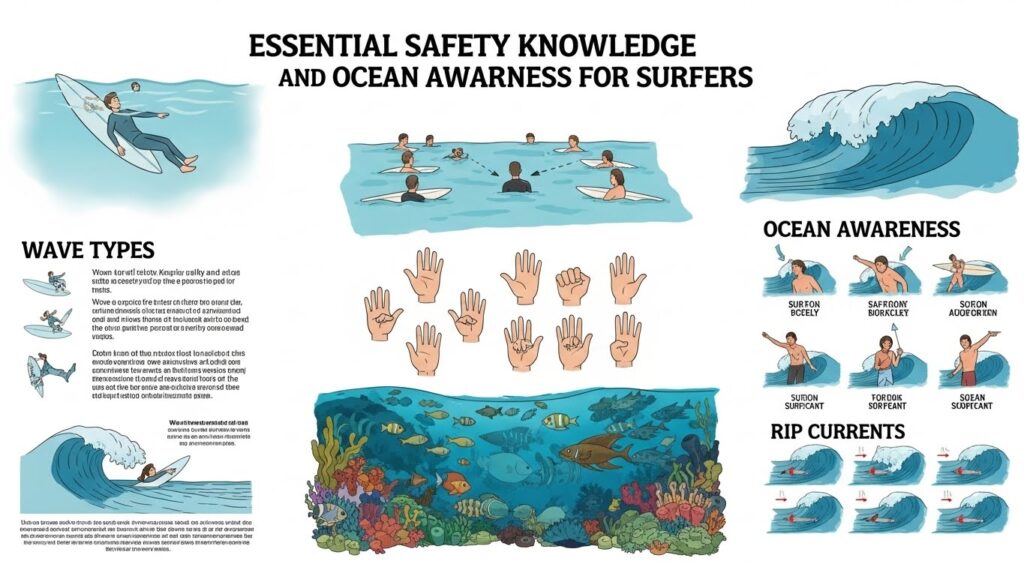
Essential Safety Knowledge and Ocean Awareness
Ocean safety represents the most critical aspect of learning to surf. The water demands respect and understanding.
Understanding Rip Currents
Rip currents are powerful, narrow channels of water moving away from shore. They’re responsible for most beach rescues and can be dangerous for inexperienced swimmers. Learning to identify and escape rip currents is mandatory before surfing.
If caught in a rip current:
- Stay calm and don’t fight the current
- Swim parallel to the shore until free from the current
- Then swim diagonally back to shore
- Signal for help if needed
Wave Set Patterns and Positioning
Waves typically arrive in sets, with larger waves followed by smaller ones and lulls between sets. Observing these patterns helps you time your paddle-out and position yourself correctly in the lineup.
Essential Safety Guidelines
Following essential surfing safety tips protects both you and others in the water:
- Never surf alone as a beginner
- Always use a leash to keep your board attached
- Learn to fall safely (flat and away from your board)
- Respect other surfers and right-of-way rules
- Know your limits and don’t paddle out in conditions beyond your ability
- Check for hazards like rocks, piers, or marine life
- Be aware of changing tides and their effects on breaks
According to the International Surfing Association, most surfing injuries occur due to collisions with one’s own board or other surfers, making awareness and proper technique crucial for safety.
What to Wear When You Learn to Surf
Choosing appropriate surfing attire depends on water temperature, sun exposure, and personal comfort.
Wetsuit Selection
Selecting the right wetsuit for surfing involves matching the suit’s thickness to water temperature:
- 2mm suits for warm water (72°F+)
- 3/2mm for moderate temperatures (62-68°F)
- 4/3mm for cold water (52-60°F)
- 5/4mm or thicker for very cold conditions (below 52°F)
Proper wetsuit fit is crucial—too tight restricts movement, while too loose allows water to flush through, reducing warmth. The suit should feel snug but not constricting, with no gaps at the neck, wrists, or ankles.
Sun Protection
Even on overcast days, harmful UV rays penetrate the water’s surface. Apply reef-safe, water-resistant sunscreen 30 minutes before entering the water, focusing on your face, ears, neck, and hands.
Consider wearing:
- Rash guards for additional sun and abrasion protection
- Surf hats or caps in intense sun
- Zinc oxide on particularly sensitive areas
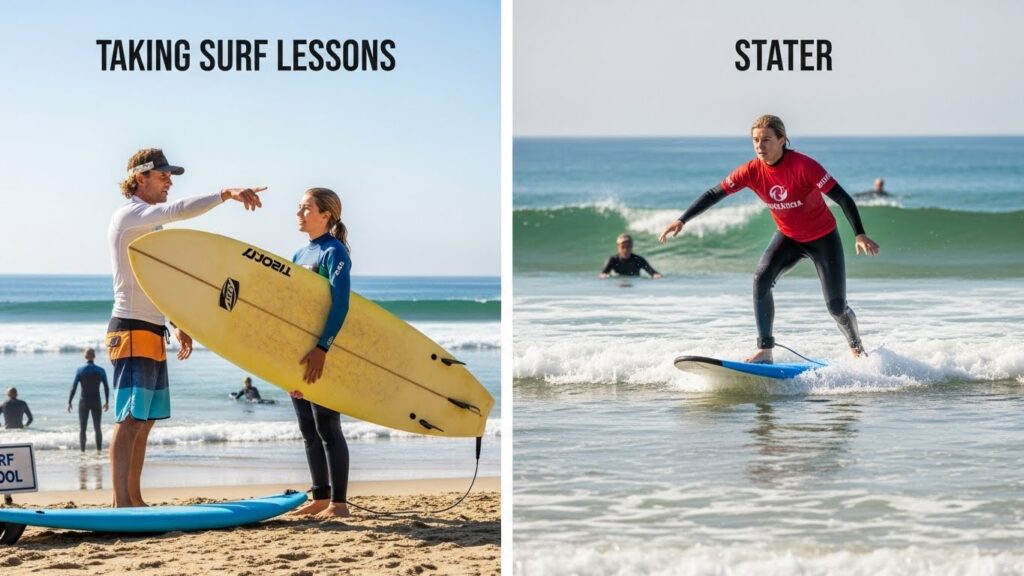
Taking Surf Lessons vs. Self-Teaching
While it’s possible to teach yourself to surf, professional instruction significantly accelerates your learning curve and establishes proper technique from the beginning.
Benefits of Professional Surf Lessons
Qualified surf instructors provide:
- Immediate feedback on your technique
- Safety supervision in the water
- Local knowledge about conditions and hazards
- Properly sized equipment for your skill level
- Motivation and encouragement during challenging moments
Most surf schools offer group lessons (more affordable) or private instruction (faster progress). A typical beginner course involves 3-5 lessons, each lasting 2-3 hours, providing enough instruction to continue independently.
The Self-Teaching Approach
If professional lessons aren’t accessible, self-teaching is possible but requires extra caution and patience. Invest time in watching instructional videos, reading comprehensive guides, and starting in very gentle conditions. Having a friend who surfs accompany you adds both safety and guidance.
Realistic Timeline: How Long Does It Take to Learn to Surf?
The time it takes to learn how to surf varies widely based on numerous factors.
Initial Milestones
- First sessions (1-3 days): Learning to paddle effectively, position on the board, and catch broken waves
- Weeks 2-4: Consistently standing up on whitewater waves, improving balance
- Months 2-3: Beginning to catch unbroken green waves, basic turning
- Months 4-6: Developing wave selection skills, riding along the wave face
- Year 1: Building consistency, reading the ocean, basic maneuvers
Factors Affecting Learning Speed
Your progression depends on:
- Frequency of practice (surfing 2-3 times weekly accelerates learning)
- Previous board sport experience
- Physical fitness and flexibility
- Quality of instruction
- Consistency of surf conditions
- Personal determination and patience
Remember that surfing is a lifelong journey. Even professional surfers continue learning and refining their skills throughout their careers. According to data from the Surf Industry Manufacturers Association, most surfers consider themselves “intermediate” after surfing regularly for 2-3 years.
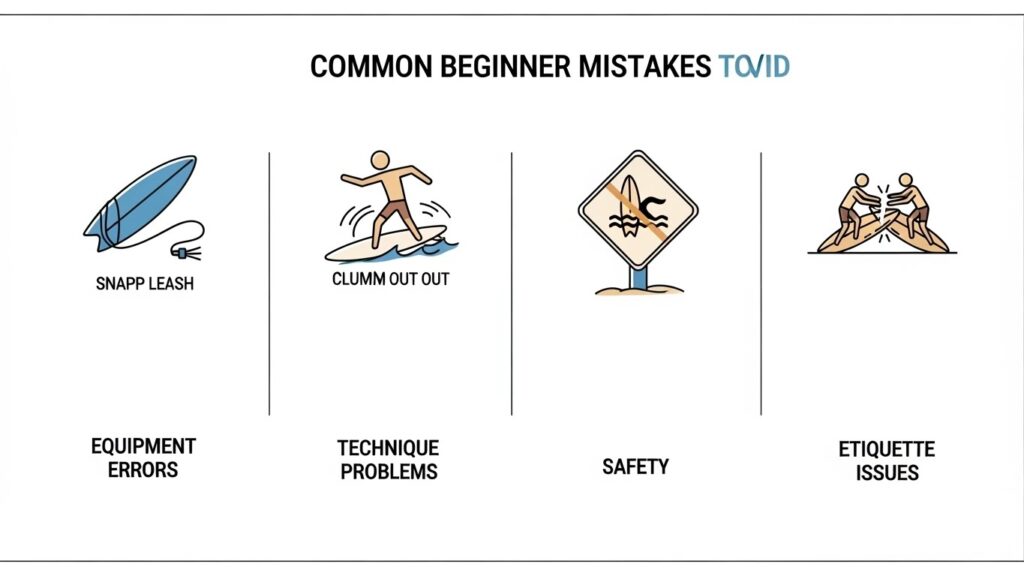
Common Beginner Mistakes to Avoid
Learning from others’ mistakes saves time and frustration.
Equipment Errors
- Starting with an advanced shortboard instead of a beginner-friendly board
- Neglecting to use a leash
- Forgetting to wax the board properly
- Using a wetsuit inappropriate for water temperature
Technique Problems
- Looking down at the board instead of ahead
- Popping up too early or late relative to the wave
- Standing up with feet too close together
- Gripping the rails instead of using a flat-hand push-up
- Failing to paddle hard enough to match the wave’s speed
Safety and Etiquette Issues
- Paddling out through the lineup instead of using channels
- Dropping in on other surfers’ waves
- Surfing in conditions beyond your ability
- Not learning basic surf etiquette and right-of-way rules
Building Your Surfing Knowledge and Culture
Understanding surfing extends beyond physical techniques into the rich culture and history surrounding the sport.
Exploring Surf Culture
The history of surf culture reveals how surfing evolved from ancient Polynesian tradition to modern global phenomenon. This context deepens your appreciation for the sport and its values of respect for the ocean, community, and personal progression.
Surf Media and Inspiration
Watching the best surfing movies provides both inspiration and education. Classic surf films showcase technique, different surfing styles, and the adventurous spirit of surf culture. Modern competition footage demonstrates high-level performance and wave-riding possibilities.
Creating a Sustainable Practice Routine
Consistency is the key to surfing progression. Developing a sustainable practice routine ensures continuous improvement without burnout or injury.
Balancing Surf Sessions with Rest
Surfing is physically demanding, particularly for beginners using muscles in new ways. Structure your routine to include:
- 2-3 surf sessions per week initially
- Rest days for muscle recovery
- Cross-training activities (swimming, yoga, skateboarding)
- Stretching and mobility work
Setting Realistic Goals
Establish short-term and long-term objectives:
- Immediate: Paddle confidently, pop up on whitewater waves
- Short-term: Catch green waves, complete basic turns
- Medium-term: Navigate the lineup, catch multiple waves per session
- Long-term: Develop a personal style, tackle different wave types
Track your progress through a surf journal, noting conditions, wave count, and technique improvements. This documentation helps identify patterns and celebrate achievements.
Dealing with Frustration and Plateaus
Every surfer experiences periods where progress seems to stall. During plateaus:
- Return to fundamentals and drill basic techniques
- Try different surf breaks or conditions
- Seek feedback from more experienced surfers
- Watch video of your surfing to identify areas for improvement
- Remember why you started and reconnect with the joy of being in the ocean
Progressing Beyond the Basics
Once you’ve mastered the fundamentals, surfing offers endless possibilities for advancement and specialization.
Developing Your Wave Selection
Learning to read the ocean and choose the best waves separates intermediate surfers from beginners. Study how waves break, identify peaks, and position yourself strategically in the lineup.
Expanding Your Maneuver Repertoire
After basic riding, you can progress to:
- Bottom turns and top turns
- Cutbacks and carving
- Generating speed through pumping
- Trimming across the wave face
- Eventually, more advanced moves like snaps and floaters
Exploring Different Wave Types
Each surf break offers unique challenges. Expanding your experience to include:
- Beach breaks (sand-bottomed)
- Point breaks (waves wrapping around a point)
- Reef breaks (coral or rock-bottomed)
- Different wave sizes and power levels
The Lifelong Journey of Surfing
Learning to surf is just the beginning of an incredible journey. Unlike many sports with defined skill ceilings, surfing offers infinite room for growth, exploration, and personal expression. The ocean constantly provides new challenges, from tiny summer ripples to powerful winter swells, each requiring adaptation and skill refinement.
Surfing also connects you to a global community of wave riders, opens doors to travel adventures seeking perfect waves, and provides a profound relationship with the natural world. The physical benefits of cardiovascular fitness, strength, and flexibility combine with mental rewards of stress relief, increased focus, and the meditative quality of being present in the moment.
As you embark on your surfing journey, embrace both the challenges and triumphs. Each wave you catch, every wipeout you endure, and all the sessions spent paddling contribute to your development as a surfer. Stay patient with yourself, respect the ocean and fellow surfers, and never stop learning.
The path to becoming a skilled surfer requires dedication, but the rewards—the feeling of gliding across a wave, the satisfaction of reading and riding the ocean’s energy, the community you’ll join—make every moment of effort worthwhile. Now grab your board, head to the beach, and start catching waves. Your surfing adventure awaits.