
Picking the right surfboard can make or break your surfing experience. Whether you’re just starting out or looking to upgrade your quiver, understanding how to choose surfboard size is crucial for catching more waves and progressing faster.
The wrong size can leave you frustrated and struggling in the water, while the right board will have you paddling confidently and popping up with ease.
In this guide, we’ll break down everything you need to know about surfboard sizing, from understanding volume measurements to matching your skill level with the perfect dimensions. Let’s dive in and find your ideal ride.
Understanding Surfboard Volume
Surfboard volume, measured in liters, is the most important factor when choosing your board size. Think of it like this: more volume means more flotation, which translates to easier paddling and wave catching. Less volume offers better maneuverability but requires more skill to control.
Volume is calculated based on three key dimensions:
- Length: Measured from nose to tail in feet and inches
- Width: The widest point of the board, typically around the center
- Thickness: How thick the board is through its center point
When combined, these measurements determine the total volume. A beginner-friendly board might have 50-60 liters of volume, while an advanced shortboarder might ride something with just 25-30 liters.
How Your Weight Affects Board Size
Your body weight is the primary factor in determining the right volume for your surfboard. Heavier surfers need more volume to stay afloat and paddle efficiently, while lighter riders can get away with smaller boards.
Here’s a general guideline based on weight and skill level:
| Weight (lbs) | Beginner Volume (L) | Intermediate Volume (L) | Advanced Volume (L) |
|---|---|---|---|
| 100-140 | 40-50 | 30-38 | 22-30 |
| 140-160 | 50-60 | 38-45 | 28-35 |
| 160-180 | 60-70 | 45-52 | 32-40 |
| 180-200 | 70-80 | 52-60 | 38-48 |
| 200-220 | 80-90 | 60-68 | 45-55 |
| 220+ | 90+ | 68+ | 52+ |
Keep in mind these are starting points. Your fitness level, wave conditions, and personal preferences will also influence your ideal volume.
Matching Board Size to Your Skill Level
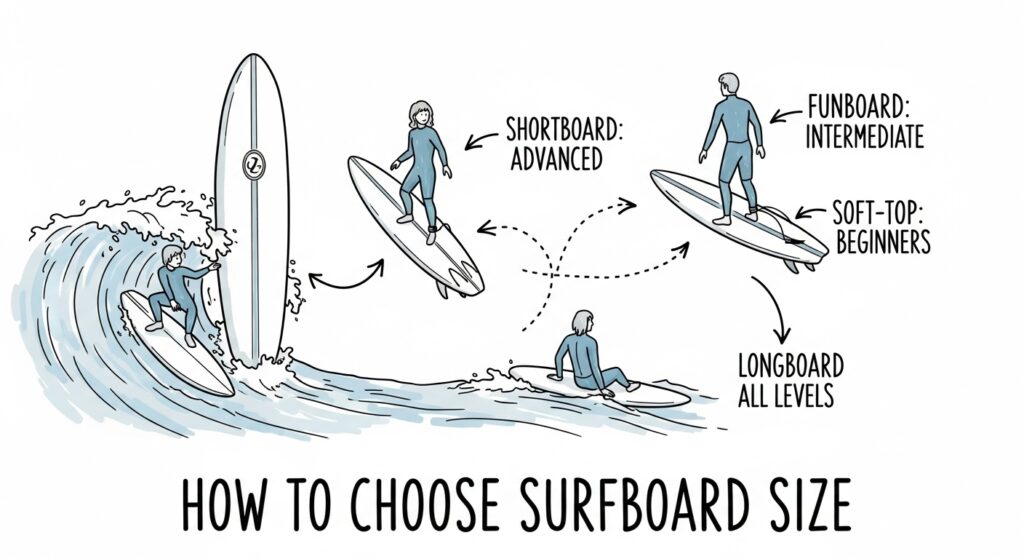
Beginner Surfers
If you’re just learning how to surf, you’ll want maximum volume and stability. Beginners should look for boards that are:
- 7 to 9 feet long (or longer for heavier riders)
- At least 20-22 inches wide
- 2.5 to 3+ inches thick
- 50+ liters in volume
Foam boards and longboards are perfect starting points. The extra foam helps you catch waves easily and gives you a stable platform to practice your pop-up. Check out our guide on best surfboards for beginners for specific recommendations.
Intermediate Surfers
Once you’re consistently catching unbroken waves and can perform basic turns, you’re ready to downsize slightly. Intermediate riders typically ride:
- 6’6″ to 7’6″ funboards or mini-mals
- 19-21 inches wide
- 2.5 to 2.75 inches thick
- 40-55 liters depending on weight
This size range lets you maintain paddle power while starting to develop more dynamic surfing. You’ll notice improved turning capability compared to your beginner board.
Advanced Surfers
Experienced surfers riding performance shortboards can handle significantly less volume because their refined technique compensates for reduced flotation. Advanced boards typically measure:
- 5’8″ to 6’4″ in length
- 18-19.5 inches wide
- 2.25 to 2.5 inches thick
- 25-40 liters depending on weight and wave conditions
How to Choose Surfboard Size for Different Wave Conditions
The waves you’ll be surfing should heavily influence your board choice. Here’s how conditions affect sizing:
Small, Mushy Waves (1-3 feet)
These conditions require extra paddle power to catch waves. Go with more volume and width. Add 3-5 liters to your normal volume and consider a board that’s 1-2 inches wider. Groveler designs with fuller noses work great here.
Medium Waves (3-5 feet)
This is your “all-rounder” zone. Stick close to the recommended volume for your weight and skill level. Most surfers find their sweet spot here with a board that works across various conditions.
Larger, Powerful Waves (5+ feet)
Big wave conditions require less volume for control and easier duck diving. Advanced surfers often drop 2-4 liters from their standard volume. The increased wave power makes catching waves easier, so you don’t need as much flotation.
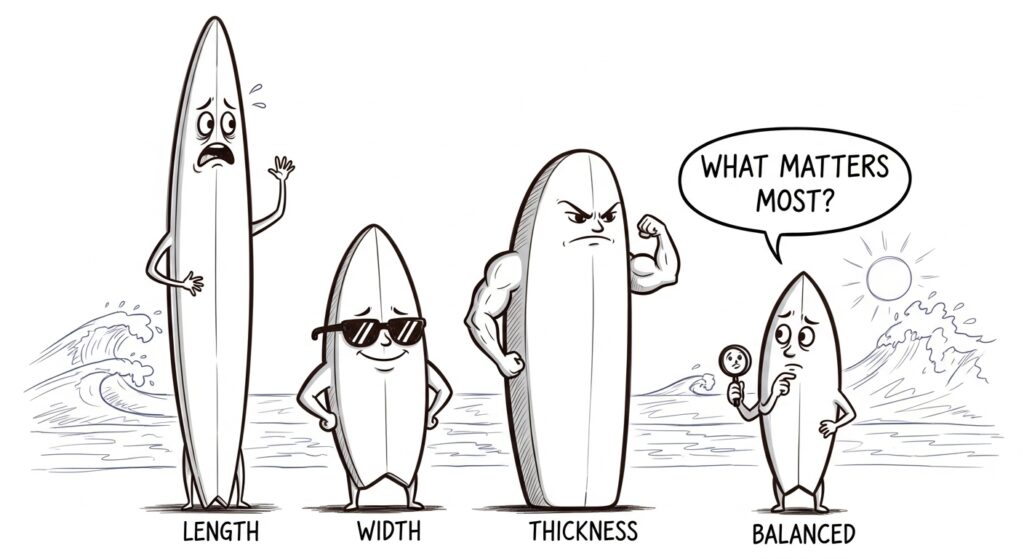
Length vs. Width vs. Thickness: What Matters Most?
While all three dimensions contribute to volume, they affect performance differently:
Length primarily impacts paddling speed and wave catching ability. Longer boards paddle faster and catch waves earlier. They’re also more stable but harder to turn.
Width affects stability and flotation. Wider boards are more forgiving and stable but feel sluggish during turns. Narrower boards are more responsive but require better balance.
Thickness adds volume without dramatically changing the board’s footprint. It’s the secret weapon for adding flotation while maintaining a performance outline. However, very thick boards can feel “corky” and disconnected from the water.
The best approach? Prioritize volume first, then adjust individual dimensions based on your surfing style and the waves you ride most often.
Common Sizing Mistakes to Avoid
Going Too Small, Too Soon: This is the number one mistake we see. Riders get excited to progress and buy a board that’s way below their skill level. The result? Frustration, slower progression, and significantly less fun. Be honest about your ability.
Ignoring Wave Conditions: Buying a high-performance shortboard when you surf mushy beach break most of the time is a recipe for disappointment. Match your board to your local conditions.
Following Someone Else’s Specs: Just because your friend rips on a 5’10” x 18.5″ x 2.3″ doesn’t mean you will. Everyone’s body type, fitness level, and skill differs. Use other surfers’ boards as reference points, not absolutes.
Forgetting About Fitness: Your surfing fitness level directly impacts how much volume you need. If you’re not paddling regularly or maintaining good conditioning, you’ll need extra volume to compensate.
Testing Before Buying
Whenever possible, demo boards before making a purchase. Many surf shops offer rental programs or demo days where you can test different sizes. Pay attention to:
- How easily you catch waves
- Your ability to paddle into position
- How the board feels during turns
- Whether you feel stable or wobbly
- Your overall confidence level
Take mental notes on what works and what doesn’t. If a board feels too small (you’re sinking, struggling to catch waves), add volume. If it feels too big (sluggish, hard to duck dive), go smaller.
Additional Factors That Influence Sizing
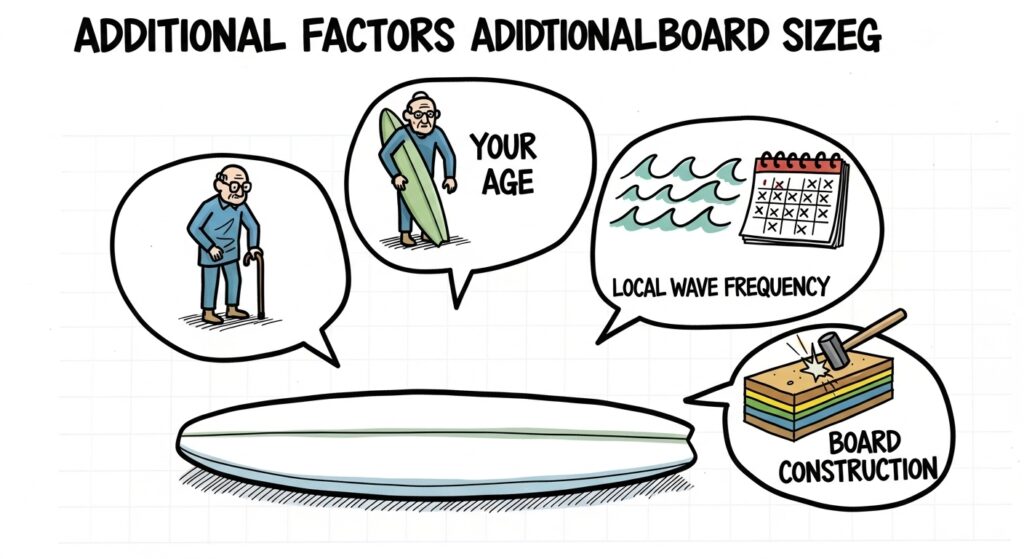
Your Age
Older surfers often benefit from slightly more volume as flexibility and paddle fitness decrease with age. There’s no shame in riding a board that maximizes your wave count and fun factor.
Local Wave Frequency
If you only surf once a month, opt for more volume. Regular surfers who are in the water 3-4 times per week can handle boards closer to the lower end of their volume range because their paddle fitness stays sharp.
Board Construction
The materials matter too. Epoxy boards with EPS foam cores are more buoyant than traditional polyester resin boards with polyurethane foam, so you might need slightly less volume with epoxy construction.
Tips for Choosing Your Next Board
Ready to make a purchase? Here’s a quick checklist:
- Calculate your ideal volume range using your weight and skill level
- Consider the waves you surf most often
- Be honest about your current ability (not where you hope to be in six months)
- Consult with a knowledgeable shaper or surf shop employee
- Demo different sizes if possible
- Don’t forget about other important factors like what to wear surfing and choosing the right wetsuit for complete comfort
Understanding why wax a surfboard is also essential for getting the most out of your new board once you’ve found the perfect size.
When to Size Up or Down
As you progress, you’ll naturally want to adjust your board size. Here are clear indicators it’s time for a change:
Signs You Need More Volume:
- Constantly struggling to catch waves while others around you aren’t
- Feeling exhausted after short sessions
- Unable to paddle fast enough to make sections
- Feeling unstable during pop-ups
Signs You Need Less Volume:
- Your board feels slow and unresponsive
- You’re catching waves too easily compared to everyone else
- Wanting to perform more aggressive maneuvers
- Duck diving is becoming challenging due to too much flotation
Making Peace with Volume
There’s an unfortunate stigma around riding larger boards, especially among male surfers. Let’s be clear: the best surfers ride boards that maximize their performance, not their ego. You’ll see world-class surfers on everything from high-volume fish to tiny performance thrusters, depending on conditions.
The goal isn’t to ride the smallest board possible—it’s to ride the board that gets you the most waves and the most fun. Some of the most progressive surfing happening today is on alternative shapes with healthy volumes. Don’t let anyone shame you for riding a board that works for your body and ability.
Seasonal Considerations
Many experienced surfers own multiple boards for different seasons. Summer might call for a higher-volume groveler for smaller waves, while winter conditions might suit a scaled-down design for powerful swells. As you advance and budget allows, building a quiver that covers different conditions is ideal.
Before heading out, always check the surf forecast to pick the right board from your collection and review essential safety tips for the conditions you’re facing.
Final Thoughts
Choosing the right surfboard size is both science and art. The volume formulas and charts provide excellent starting points, but your personal feel and experience in the water ultimately guide the decision. Don’t rush the process, ask questions, and remember that having the right board makes all the difference between frustration and progression.
The perfect surfboard size is the one that gets you excited to paddle out, helps you catch more waves, and keeps you stoked session after session. Start with the recommendations in this guide, fine-tune based on your experience, and don’t be afraid to experiment. Your ideal board is out there waiting for you.
Now that you understand how to choose surfboard size, it’s time to get out there and put this knowledge to work. Every session is a chance to learn more about what works for your unique style and local waves. Happy surfing!