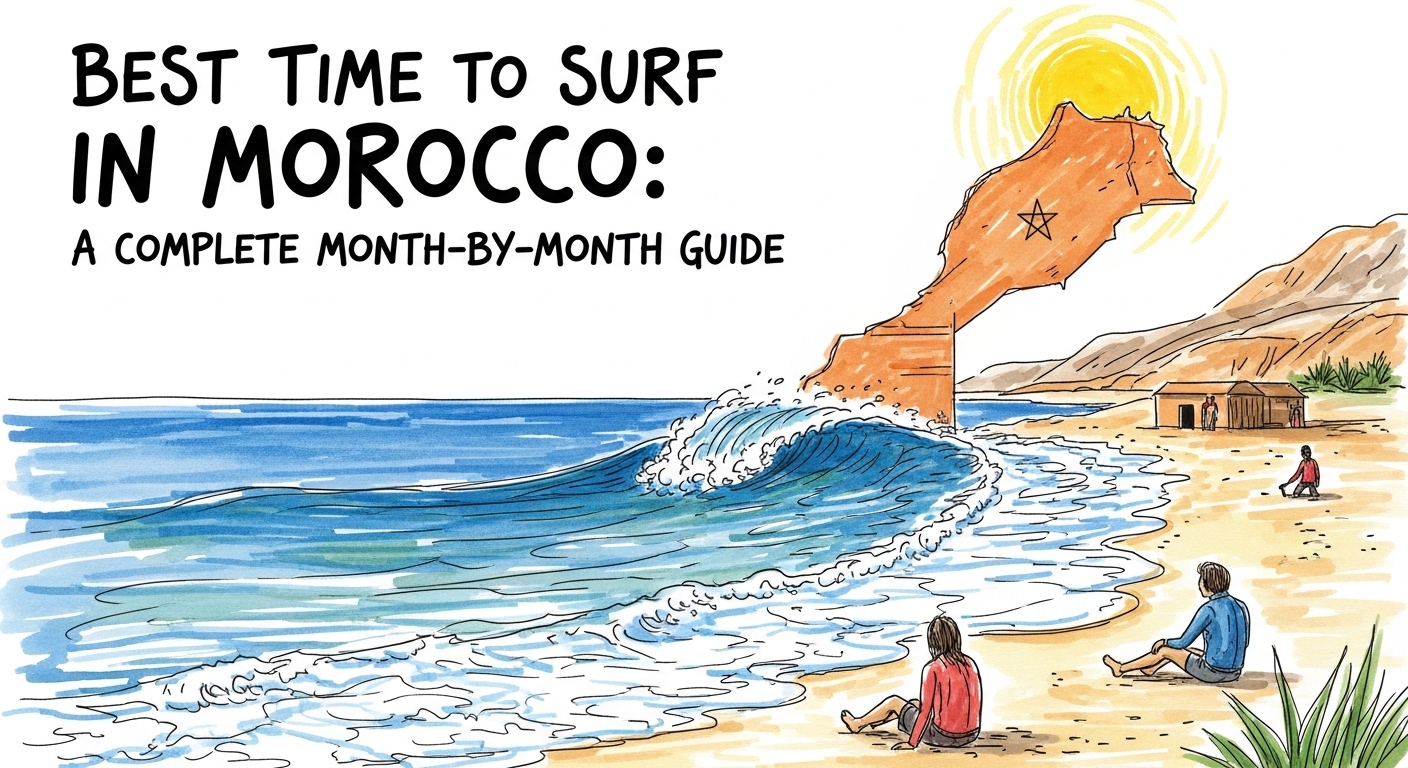

Morocco has earned its reputation as one of the world’s premier surf destinations, drawing wave riders from every corner of the globe. Understanding the best time to surf in Morocco is the key to scoring epic sessions, whether you’re chasing powerful winter swells or mellow summer waves perfect for learning. Stretching over 3,500 kilometres of Atlantic and Mediterranean coastline, this North African country delivers consistent surf nearly year-round.
From the legendary right-hand point breaks of Taghazout to the remote reefs of the Western Sahara, Morocco offers something for every skill level. If you’re just beginning your surf journey, check out our guide to the best surfing destinations for beginners to see how Morocco stacks up against other world-class spots.
Why Morocco Is a World-Class Surf Destination
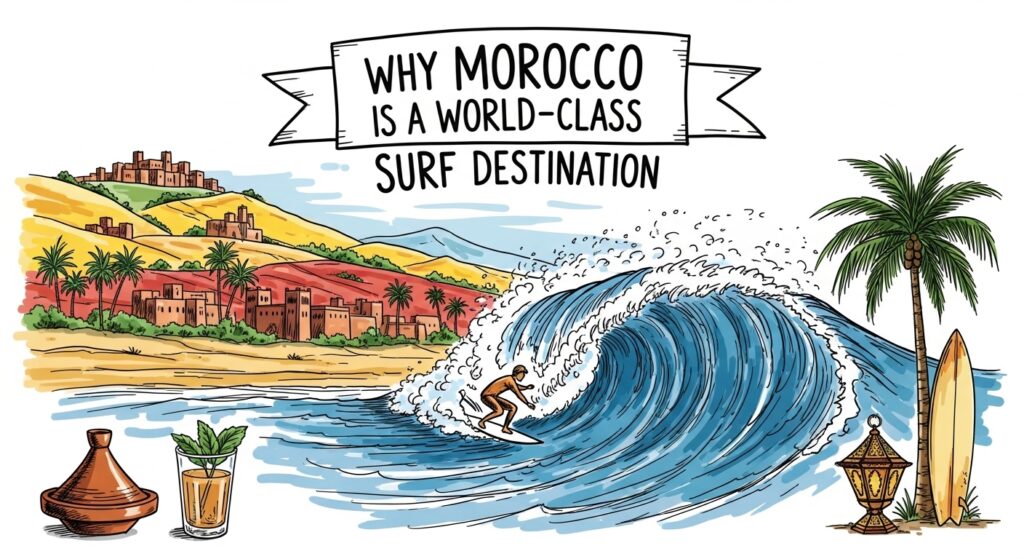
Morocco sits in the direct path of powerful North Atlantic swells generated by storms that track across the ocean between Iceland and the Azores. These swells travel thousands of miles before hitting the Moroccan coastline, arriving as well-organised, long-period waves that break with remarkable consistency during the prime season.
Beyond the waves, Morocco’s appeal lies in its affordability, warm culture, and incredible food. A surf trip here costs a fraction of what you would spend in destinations like Hawaii or the Maldives. The country’s rich surf culture has grown steadily since the 1960s when travelling surfers first discovered the lineups around Essaouira and Agadir.
The variety of breaks is another major draw. You will find beach breaks, point breaks, reef breaks, and river mouth setups, all within relatively short driving distances along the coast. This diversity means you can always find a wave suited to your ability and the conditions of the day.
Overview of Morocco’s Surf Seasons
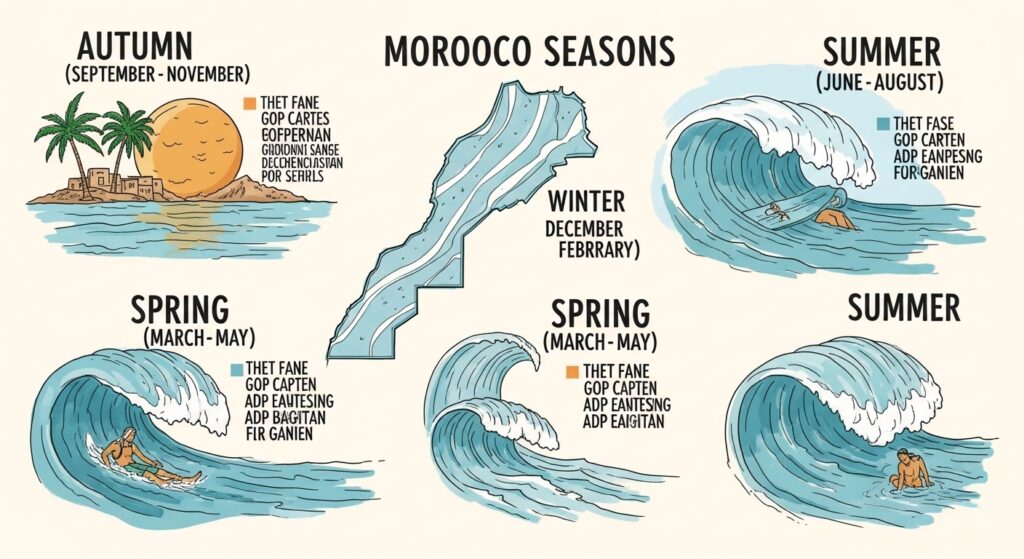
Before diving into the month-by-month breakdown, it helps to understand Morocco’s two primary surf seasons. The peak season runs from October through March, when large North Atlantic swells deliver powerful, overhead-plus waves to the coastline. The shoulder and off-season months, from April through September, bring smaller, cleaner swells that are ideal for beginners and intermediate surfers.
Water temperatures range from around 16°C in winter to 22°C in summer. Knowing how to choose a wetsuit for surfing will help you pack the right neoprene for your trip. A 3/2mm fullsuit is the go-to for most of the year, while a 4/3mm may be necessary during the coldest winter months.
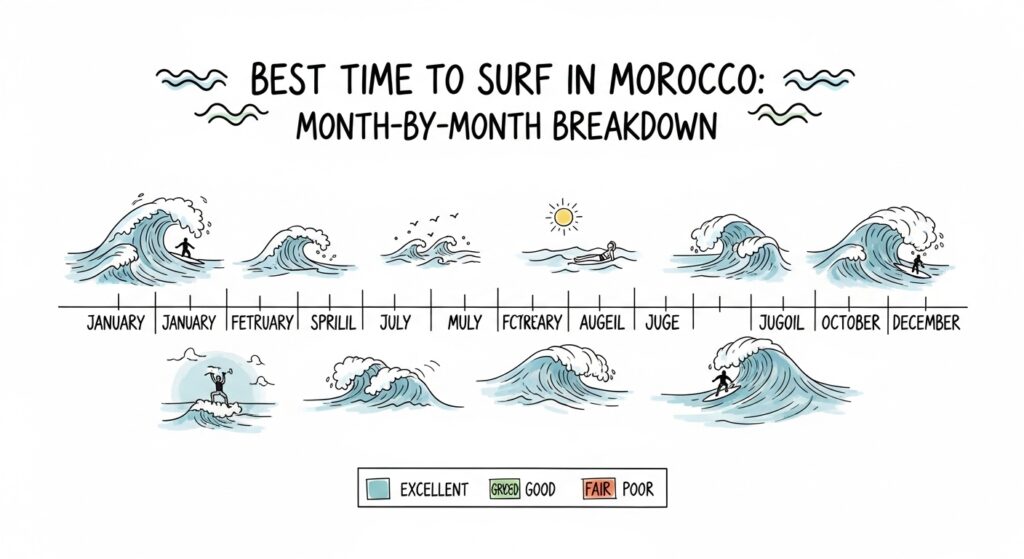
Best Time to Surf in Morocco: Month-by-Month Breakdown
January: Big Swells and Cold Water
January is the heart of the winter surf season in Morocco. Powerful ground swells from the North Atlantic arrive consistently, producing waves that regularly exceed two metres at exposed breaks. Spots like Anchor Point and Killer Point near Taghazout light up with long, peeling walls that advanced surfers dream about.
Water temperatures sit around 16–17°C, and air temperatures hover between 10–18°C. You will want a quality 4/3mm wetsuit with boots for early morning sessions. For guidance on layering and gear, our article on what to wear surfing covers everything you need.
February: Consistent Peaks and Fewer Crowds
February continues to deliver excellent swell, often rivalling January in size and consistency. The main difference is that the post-holiday lull means slightly thinner crowds at popular spots. This makes February one of the best-kept secrets for experienced surfers looking to score uncrowded lineups.
Conditions remain cold, so the same winter wetsuit setup applies. Reading a wave forecast guide becomes essential during this period, as swell direction shifts can dramatically change which spots are working on any given day.
March: The Transition Month
March marks the beginning of the transition from winter to spring. Swells are still frequent but start to decrease in size and power compared to the peak winter months. This makes March an excellent time for solid intermediate surfers who want overhead waves without the extreme power of mid-winter sessions.
Air temperatures begin to warm, and the days grow longer. It is a great time to explore different breaks along the coast. If you are working on progressing your skills, understanding how to choose the right surfboard size can make a real difference in how quickly you improve during your trip.
April: Spring Surf and Pleasant Weather
April brings noticeably warmer air temperatures and cleaner, more organised swell. The wave size drops to around one metre on average, though solid pulses of swell still push through. Beach breaks like Imessouane’s Bay and the beaches around Tamraght are ideal during this period.
This is a fantastic month for intermediate surfers looking to practise manoeuvres on manageable waves. A 3/2mm wetsuit is typically sufficient. Many surf camps ramp up their schedules in April, making it easy to find lessons and guided sessions along the coast.
May: The Start of the Off-Season
May signals the official start of the off-season, but that does not mean the waves disappear. Smaller, fun-sized swells continue to arrive, and the water temperature climbs to around 19°C. The lack of powerful swell means this is one of the best months for beginners to learn in Morocco.
If you are wondering how long it takes to learn to surf, a two-week trip to Morocco in May gives you ideal conditions to progress from your first white-water rides to catching green waves. Pair your sessions with a beginner-friendly surfboard and you will be standing in no time.
June: Warm Weather, Mellow Waves
June is characterised by warm weather, clear skies, and small, gentle waves. Swell heights hover around half a metre to one metre, making it a playground for longboarders and learners. The beaches around Essaouira can get windy in June, so heading south towards Agadir and Taghazout often provides calmer conditions.
This is the perfect month to cruise on a longboard. If you are in the market for one, our roundup of the best longboard surfboards will help you find the right fit. Water temperatures are comfortable enough for a shorty or a spring suit.
July: Summer Vibes and Beach Breaks
July is peak summer in Morocco, with air temperatures regularly hitting 30°C and water sitting around 20–22°C. Swell is at its smallest, and the surf tends to be limited to wind-generated waves and small beach breaks. Surfing in board shorts or a thin spring suit is common.
While July is not the month for experienced shortboarders chasing overhead barrels, it is perfect for families and beginners. The relaxed atmosphere makes it a wonderful time to enjoy Morocco’s coastal towns, explore the souks, and soak in the mental health benefits of surfing in a stress-free environment.
August: Flat Spells and Cultural Exploration
August is statistically the flattest month for surf in Morocco. Swells are rare and typically small when they do arrive. Many dedicated surfers use this month to rest, travel inland to the Atlas Mountains, or explore cities like Marrakech and Fez.
If you still want to surf, focus on exposed beach breaks that pick up any available swell. This is also a great time to work on your surfing fitness so you are in peak condition when the autumn swells return. Yoga, swimming, and skate sessions are popular ways surfers stay active during flat spells.
September: The Awakening
September is when the surf in Morocco begins to stir again. Early-season North Atlantic storms start to generate the first autumn swells, and wave size creeps back up. The water is still warm at around 21°C, and the air remains pleasant, creating some of the most enjoyable surfing conditions of the year.
This month offers a sweet spot of warming-up swell, thin crowds, and affordable accommodation. It is an underrated window that savvy surfers target for value and quality waves. If you are into action sports crossover, you might enjoy our comparison of surfing and snowboarding to see how the skills transfer.
October: The Season Ignites
October marks the true start of the prime surf season. Swell frequency increases dramatically, and the point breaks around Taghazout and Imsouane begin to fire. Wave sizes climb to one to two metres, with occasional larger sets on the biggest days.
The weather remains warm enough for a 3/2mm wetsuit, and the lineups are not yet as crowded as they will be in December and January. October is arguably the best overall month for the combination of wave quality, weather, and crowd levels. Make sure your board is in top shape before the season; our guide to eco-friendly board repairs can help you fix any dings from summer storage.
November: Solid Swell, Building Momentum
November ramps up the swell size and frequency. Consistent overhead waves become the norm at point breaks, and beach breaks offer plenty of options on smaller days. The surf community in towns like Taghazout, Tamraght, and Imsouane starts to buzz with arriving international surfers.
Water temperatures drop to around 18–19°C, so you may want to step up to a thicker wetsuit. Understanding surfing safety in challenging ocean conditions is important as the waves grow in power. Always check the conditions before paddling out at unfamiliar breaks.
December: Peak Season in Full Swing
December is when Morocco’s surf truly hits its peak. Large, powerful swells arrive every few days, and the country’s best point breaks produce world-class waves. Anchor Point, Boilers, and Killer Point all deliver long, barrelling rides for advanced surfers.
The trade-off is that December brings the highest crowds of the year, particularly around the Christmas and New Year holidays. Booking accommodation well in advance is essential. Remember to wax your surfboard with cool-water wax for the best grip in winter temperatures.
Essential Tips for Planning Your Morocco Surf Trip
Choosing the right time to visit is only part of the equation. Here are a few practical tips that will make your Moroccan surf adventure smoother and more enjoyable.
First, book your flights into Agadir Al Massira Airport for the easiest access to the main surf region between Taghazout and Essaouira. Marrakech is another option with more international connections, but it requires a three-hour drive to the coast.
Second, consider your skill level honestly. If you are a beginner, the months of April through September offer the most forgiving conditions. If you are an experienced surfer, the October through March window is where the magic happens. Matching your ability to the right season will make your trip far more rewarding.
Third, hire a local surf guide for at least your first few sessions. Morocco’s breaks can be powerful and have sharp, rocky bottoms. A guide will show you the safest entry and exit points and help you find the spots that suit your level. Watching a few classic surfing movies before your trip is a great way to get hyped and learn about the culture around the sport.
When Should You Go? Final Thoughts
The best time to surf in Morocco depends entirely on what you are looking for. For powerful, world-class waves and the full Moroccan surf experience, the October to March window is unbeatable. For mellow, beginner-friendly conditions with warm weather, April through September delivers a relaxed and enjoyable trip.
No matter when you choose to visit, Morocco’s coastline will reward you with memorable waves, delicious tagine, warm hospitality, and sunsets that make every session feel special. Start planning your trip, pack the right gear, and get ready for the surf adventure of a lifetime.