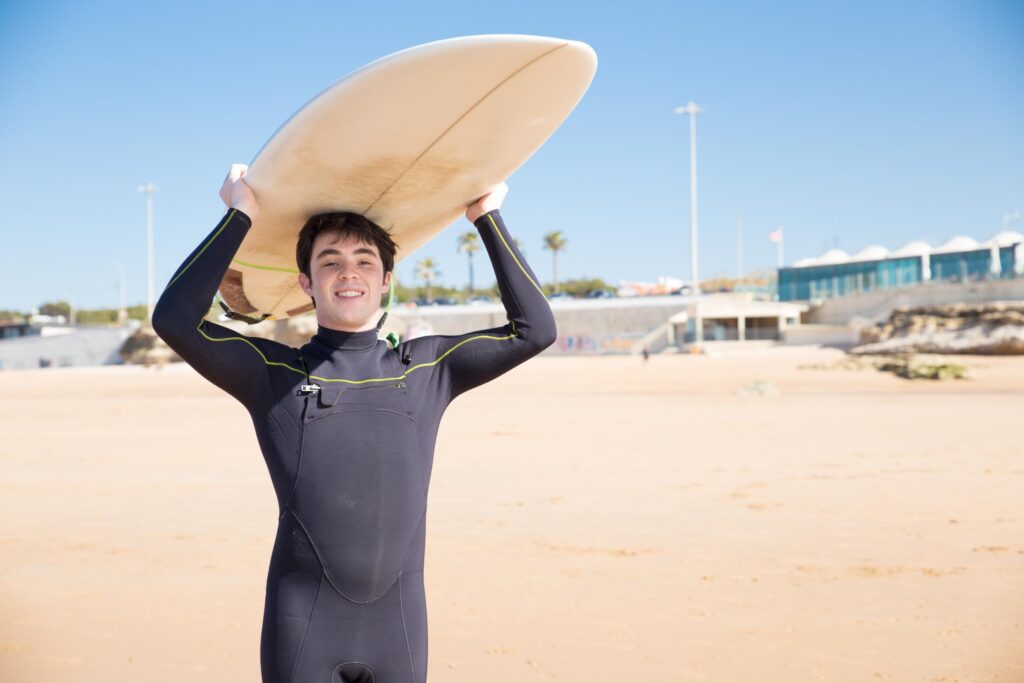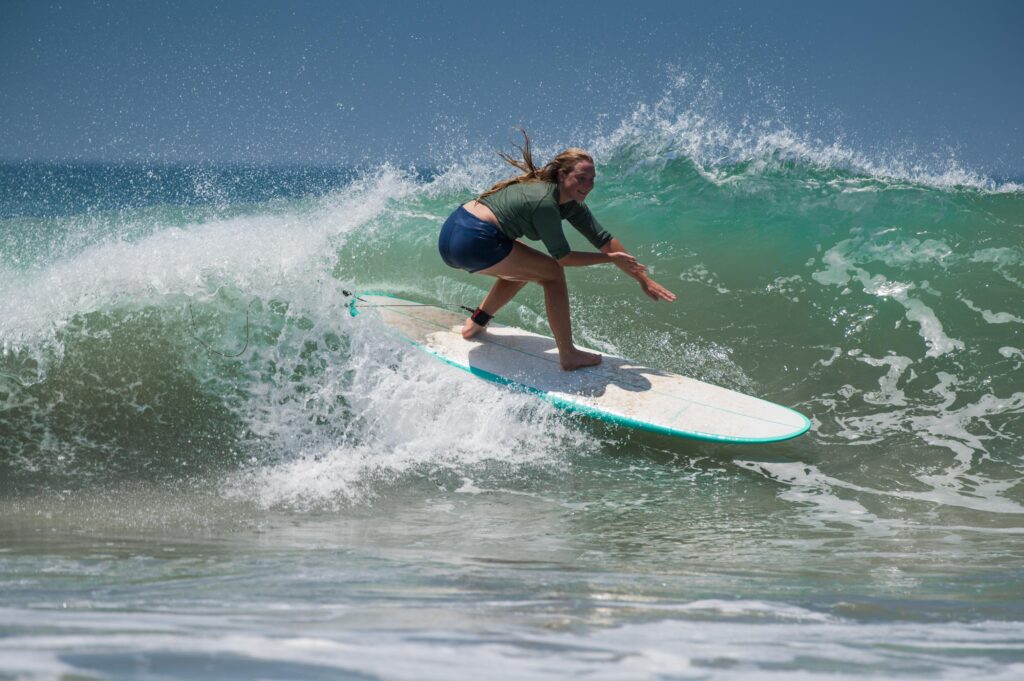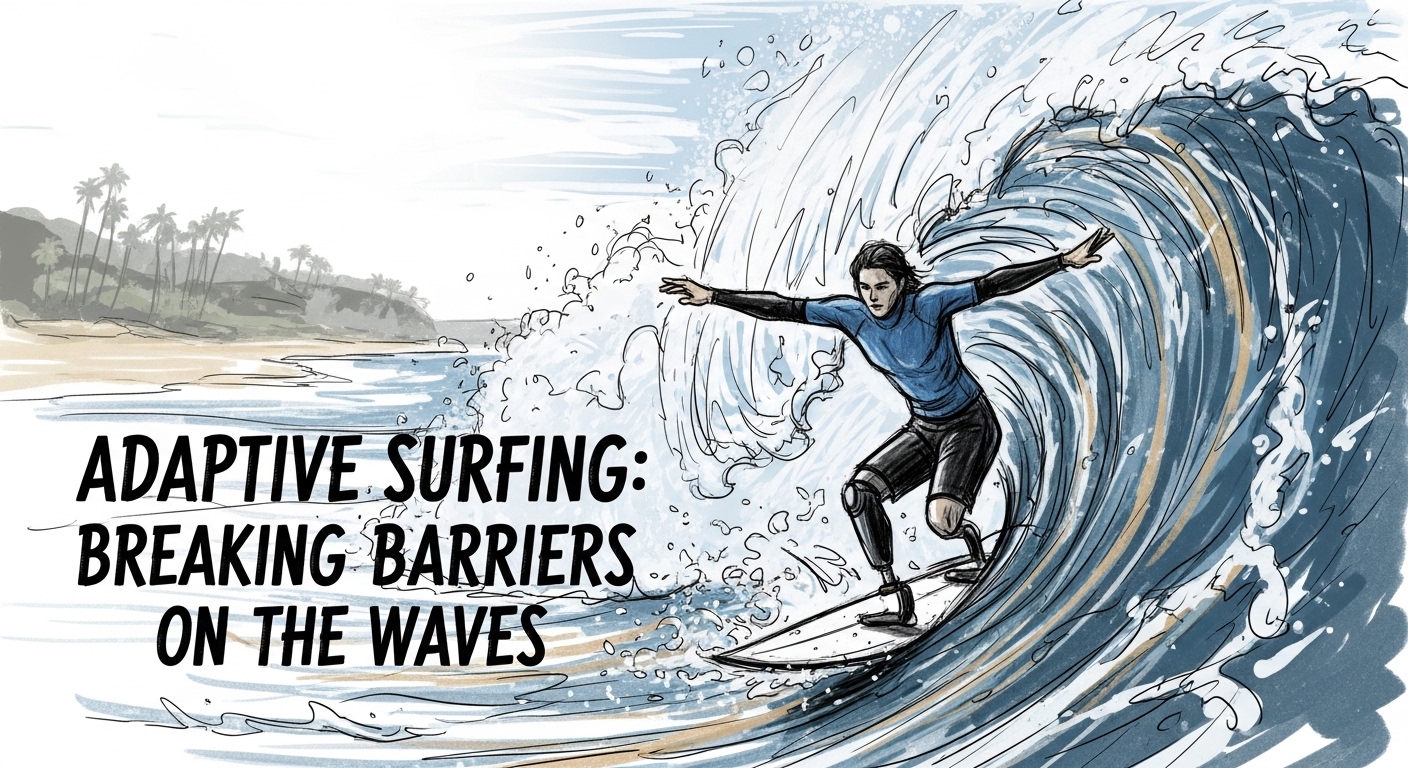

Adaptive surfing is transforming the way people with physical disabilities, visual impairments, and neurological conditions experience the ocean. What was once considered an inaccessible sport has evolved into a global movement that proves the stoke of riding a wave belongs to everyone. From amputees carving down open faces to wheelchair users catching whitewater on custom boards, adaptive surfing is redefining what it means to be a surfer.
The growth of this discipline has been remarkable. International competitions now draw athletes from dozens of countries, specialised equipment makes the lineup more inclusive than ever, and organisations worldwide are dedicating resources to getting more people into the water. Whether you are exploring surfing for the first time or you are a seasoned rider curious about the adaptive community, this guide covers everything you need to know.
What Is Adaptive Surfing?
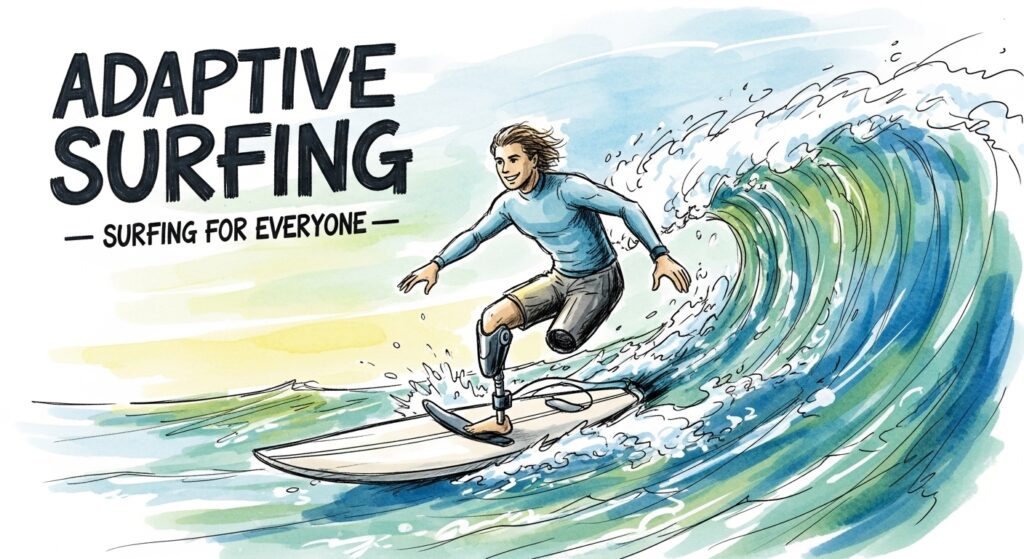
Adaptive surfing refers to any modification of equipment, technique, or support that allows individuals with disabilities to ride waves. The adaptations vary widely depending on the surfer’s needs. Some athletes surf standing with prosthetic limbs, while others ride prone or seated on specially shaped boards.
The term covers a broad spectrum of conditions including limb loss, spinal cord injuries, cerebral palsy, post-traumatic stress disorder, autism, and visual impairment. Each category brings unique challenges, and the adaptive surfing community has developed creative solutions for nearly all of them.
At its core, adaptive surfing shares the same foundation as mainstream surfing. Riders still need to understand how to read wave forecasts, respect ocean conditions, and develop timing and balance. The difference lies in how equipment and assistance are tailored to each individual.
A Brief History of Adaptive Surfing
Surfing has always had deep roots in community and inclusion. The history of surf culture shows that riding waves has connected people across backgrounds for centuries. However, formal adaptive surfing programmes only began gaining traction in the early 2000s.
Organisations like the International Surfing Association (ISA) played a pivotal role by introducing the first World Adaptive Surfing Championship in 2015 in La Jolla, California. That inaugural event featured athletes from 18 countries and helped bring international attention to the sport.
Since then, the ISA has expanded the championship annually, adding new competition divisions and attracting broader media coverage. Countries like Australia, Brazil, South Africa, and the United Kingdom have developed strong national adaptive surfing programmes that feed talent into the international circuit.
Adaptive Surfing Categories and Classifications
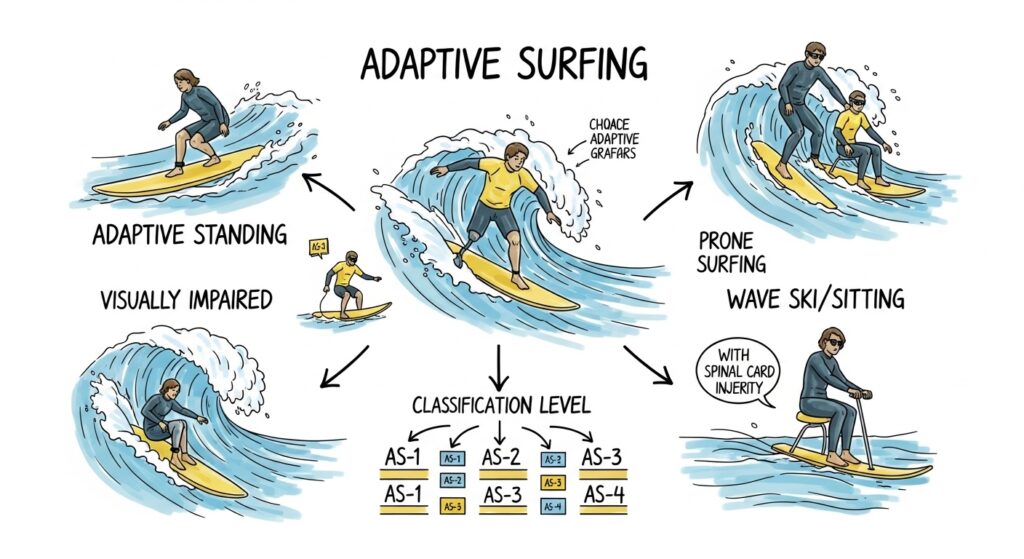
Competitive adaptive surfing uses a classification system to ensure fair competition. Athletes are grouped based on the nature and extent of their disability. While exact divisions can vary between organisations, the most widely recognised categories include the following.
Standing Categories
These divisions are for surfers who can stand on a board with or without prosthetics. Athletes may have upper or lower limb impairments, and the classification considers factors like range of motion and muscle strength. Many standing adaptive surfers use standard shortboards or longboards, sometimes with minor modifications like extra traction pads or adjusted fin setups.
Prone Categories
Prone surfers ride lying on the board, typically due to lower-body paralysis or conditions that prevent standing. Board design is critical here. Prone boards are often wider and thicker to provide stability, and they may feature handles or straps to help the surfer maintain position during the ride. If you are curious about how board dimensions affect performance, understanding how to choose surfboard size is a great starting point.
Seated and Kneel Categories
Some surfers ride in a kneeling or seated position, often using boards with built-in seat attachments or modified shapes that accommodate a lower centre of gravity. These setups require careful balance between stability and manoeuvrability.
Visually Impaired Category
Visually impaired surfers rely on verbal coaching from the beach or from a guide in the water. They develop an extraordinary sense of balance and wave feel. Safety protocols are especially important for this group, and essential surfing safety tips apply even more critically when vision is limited.
Equipment and Gear for Adaptive Surfing
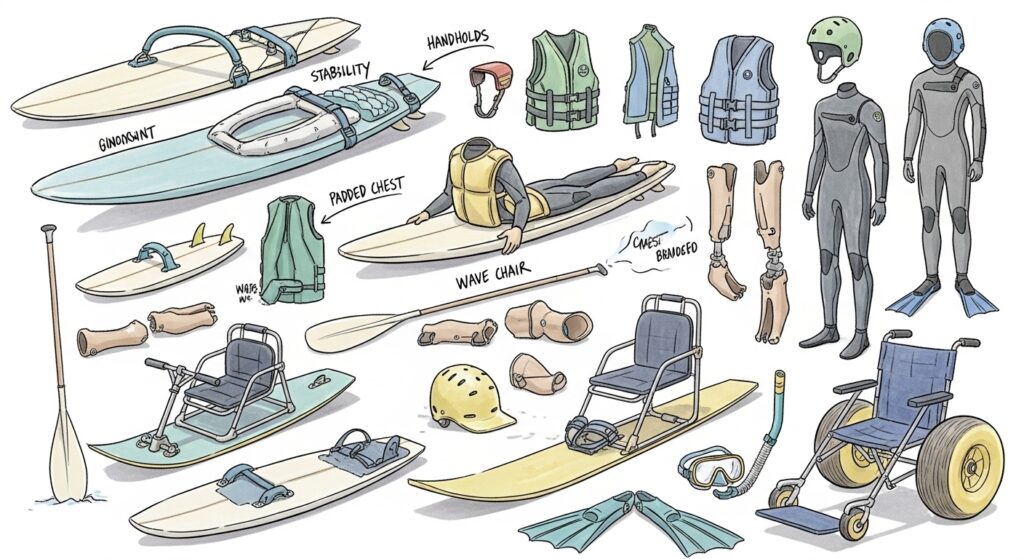
The right equipment makes adaptive surfing possible. While some surfers use standard boards with minimal changes, others require purpose-built gear. Here is what to know about the key equipment categories.
Surfboards
Board selection depends heavily on the surfer’s ability and preferred riding position. Soft-top longboards are popular for beginners in adaptive programmes because they offer maximum stability and forgiveness. Our guide to the best surfboards for beginners covers many options that work well for adaptive riders starting out.
For more experienced adaptive surfers, longboard surfboards remain a favourite due to their glide and paddling ease. Prone surfers often use custom-shaped boards with wider outlines and reinforced deck areas to handle the different weight distribution.
Wetsuits and Apparel
Choosing the right exposure gear is just as important for adaptive surfers as it is for anyone else. Depending on the water temperature, knowing how to choose a wetsuit for surfing ensures comfort and safety. Some adaptive surfers need wetsuits with modified zippers or entry systems that accommodate prosthetics or limited dexterity.
Beyond wetsuits, understanding what to wear surfing helps adaptive athletes prepare for varying conditions. Rash guards with UV protection, reef-safe sunscreen, and proper footwear all play a role in a comfortable session.
Assistive Devices and Modifications
Adaptive surfing has inspired a wave of innovation. Board-mounted handles, chest straps, tandem boards for guide-assisted riding, and even motorised fins are all part of the modern adaptive toolkit. Proper board maintenance matters too. Learning about eco-friendly board repairs helps adaptive surfers keep their custom equipment in top shape without relying on a shaper for every ding.
Traction is another critical factor. Many adaptive surfers apply extra wax or traction pads to prevent slipping. If you are new to board preparation, our article on why you should wax a surfboard explains the basics.
The Mental Health Benefits of Adaptive Surfing
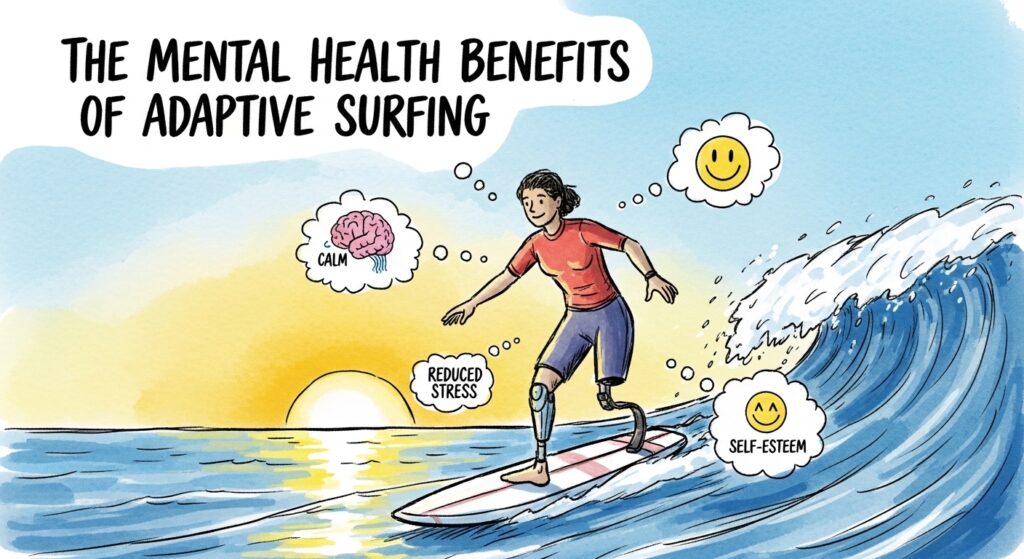
One of the most powerful aspects of adaptive surfing is its impact on mental well-being. For many participants, the ocean becomes a space of freedom, confidence, and connection. The mental health benefits of surfing are well documented, and they are amplified in the adaptive community where surfing often represents a breakthrough moment of independence.
Research published by the National Institutes of Health has shown that surf therapy programmes produce significant improvements in mood, self-esteem, and social connectedness among participants with physical and psychological challenges. Veterans’ programmes, in particular, have demonstrated reductions in PTSD symptoms through regular ocean-based activity.
The physical benefits compound the mental gains. A solid surfing fitness routine helps adaptive surfers build core strength, improve balance, and increase cardiovascular endurance. These improvements translate directly into daily life, making everyday tasks easier and boosting overall quality of life.
How to Get Started With Adaptive Surfing
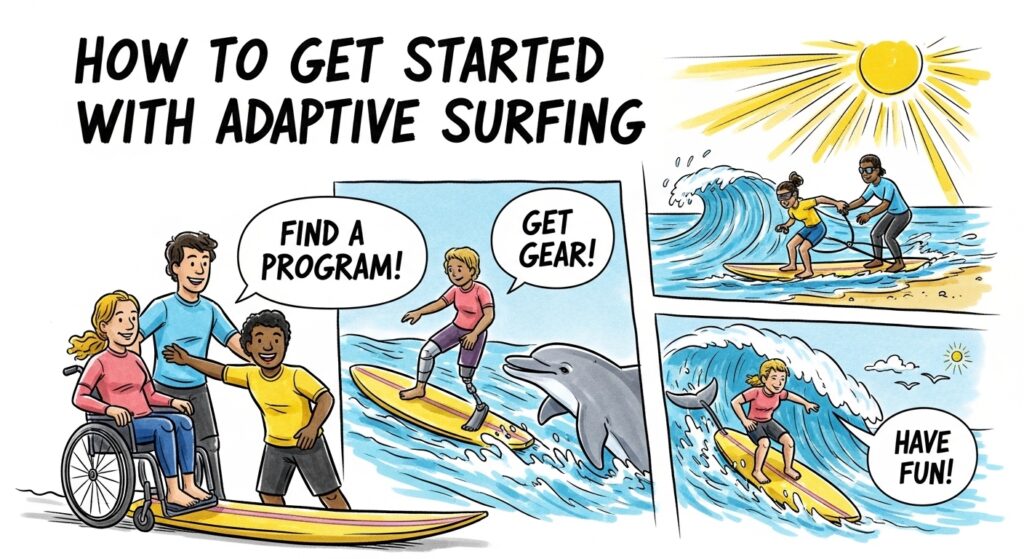
Getting into adaptive surfing is more accessible than many people realise. Here is a practical roadmap for beginners.
Find a Programme Near You
Dozens of organisations around the world offer adaptive surf lessons and clinics. Groups like AmpSurf, Surfers Healing, and The Wave Project run regular sessions with trained instructors and water volunteers. Many programmes provide all equipment free of charge.
If you are wondering how long it takes to learn how to surf, the timeline varies for adaptive surfers just as it does for anyone. Some riders catch their first wave on day one, while others take several sessions to build confidence. The important thing is showing up and trusting the process.
Choose the Right Spot
Location matters. Gentle, sandy-bottom beach breaks with consistent whitewater are ideal for adaptive surfing sessions. Many of the world’s best surfing destinations for beginners also happen to be excellent for adaptive programmes because of their forgiving wave conditions and accessible beach entries.
Work With Trained Instructors
Adaptive surf instructors are trained to assess each surfer’s abilities and match them with the right board, position, and level of water support. Unlike standard surf lessons, adaptive sessions often involve multiple volunteers in the water to assist with launching, catching waves, and ensuring safety throughout the experience.
Adaptive Surfing in Competition
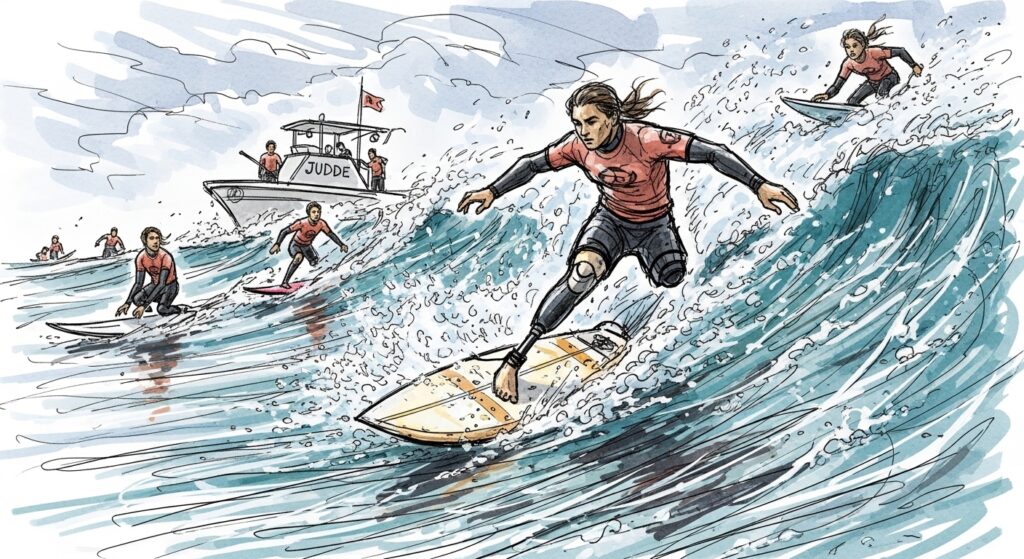
Competitive adaptive surfing has grown rapidly. The ISA World Adaptive Surfing Championship remains the premier event, but regional competitions and national tours are now common in surfing nations worldwide. Athletes are judged on the same criteria as mainstream competitive surfing: wave selection, manoeuvres, speed, power, and flow.
The push for adaptive surfing’s inclusion in the Paralympic Games has gained momentum. Advocacy groups argue that the sport meets all requirements for Paralympic consideration, and the surfing community has rallied behind the cause. While a formal timeline has not been confirmed, the conversation is active and growing louder.
If you enjoy watching incredible athletes push boundaries in the water, adaptive surfing competitions are just as compelling as anything you would find in our roundup of the best surfing movies. The athleticism, determination, and pure joy on display are unforgettable.
How Adaptive Surfing Compares to Other Board Sports
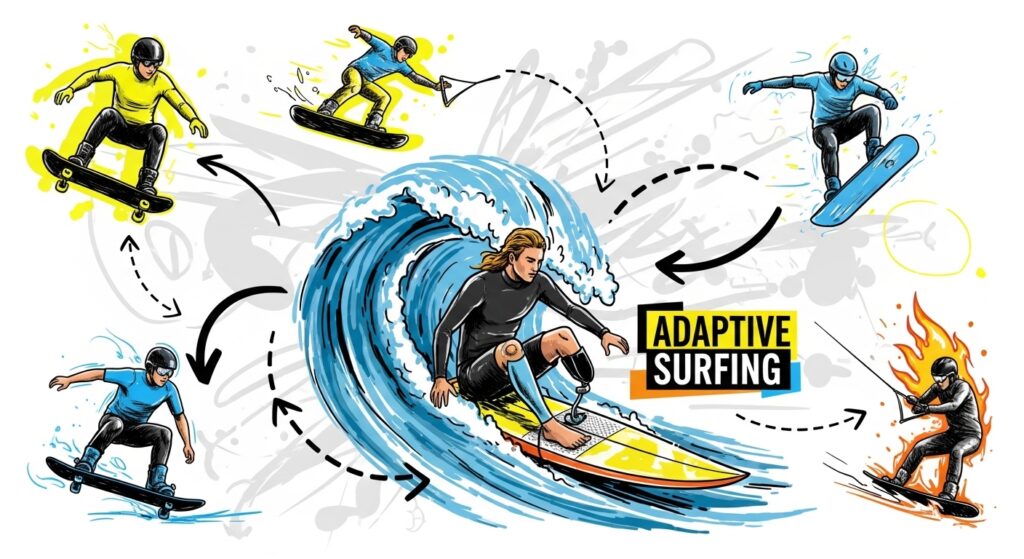
People often ask whether skills from other board sports transfer to adaptive surfing. The answer is yes, to a degree. Balance, coordination, and board awareness from activities like snowboarding or skateboarding can provide a useful foundation. Our comparison of surfing and snowboarding explores these crossovers in more detail.
However, the ocean introduces unique variables that no land-based sport can replicate. Waves are unpredictable, currents shift constantly, and salt water affects everything from grip to buoyancy. Adaptive surfers quickly learn that ocean awareness is a skill built through time in the water, not imported from another sport.
The Future of Adaptive Surfing
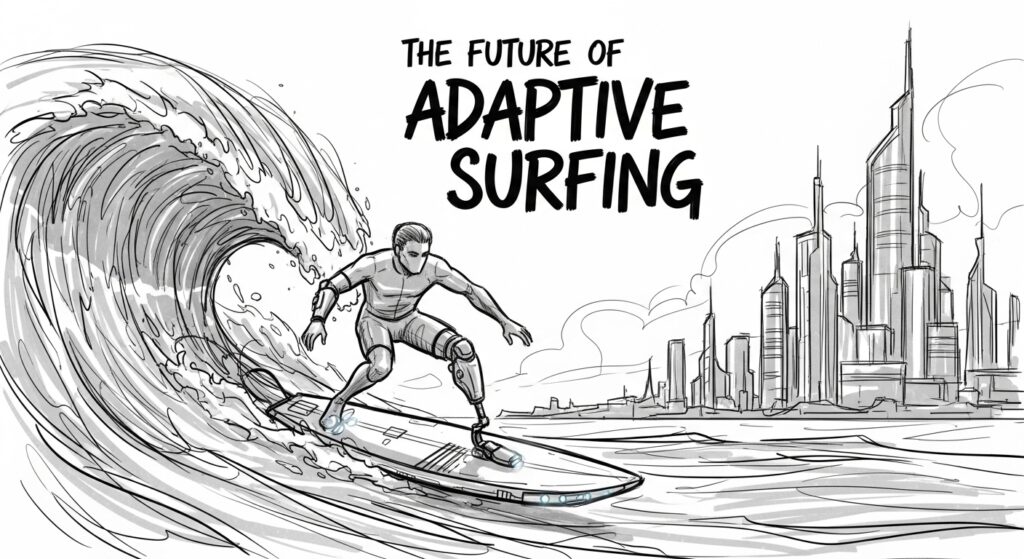
The future of adaptive surfing looks bright. Equipment technology continues to advance, with 3D-printed prosthetics, GPS-enabled boards for visually impaired surfers, and AI-powered wave prediction tools all in development or early use. These innovations are lowering barriers and expanding who can participate.
Community growth is equally encouraging. Social media has given adaptive surfers a global platform to share their stories, inspire newcomers, and connect with sponsors. Surf brands are increasingly recognising the adaptive market, leading to better gear options and greater visibility for the sport.
At the grassroots level, more surf schools are adding adaptive programmes to their offerings. Beach accessibility improvements, including ramp access, beach wheelchairs, and accessible changing facilities, are making it easier for disabled surfers to reach the water independently.
Final Thoughts
Adaptive surfing is more than a sport. It is a movement that challenges assumptions about ability, celebrates human resilience, and proves that the ocean is for everyone. Whether you are a person with a disability looking to try surfing, a surf instructor wanting to expand your skills, or simply someone who believes in a more inclusive lineup, the adaptive surfing community welcomes you.
The barriers that once kept people out of the water are falling, one wave at a time. All it takes is the willingness to paddle out.